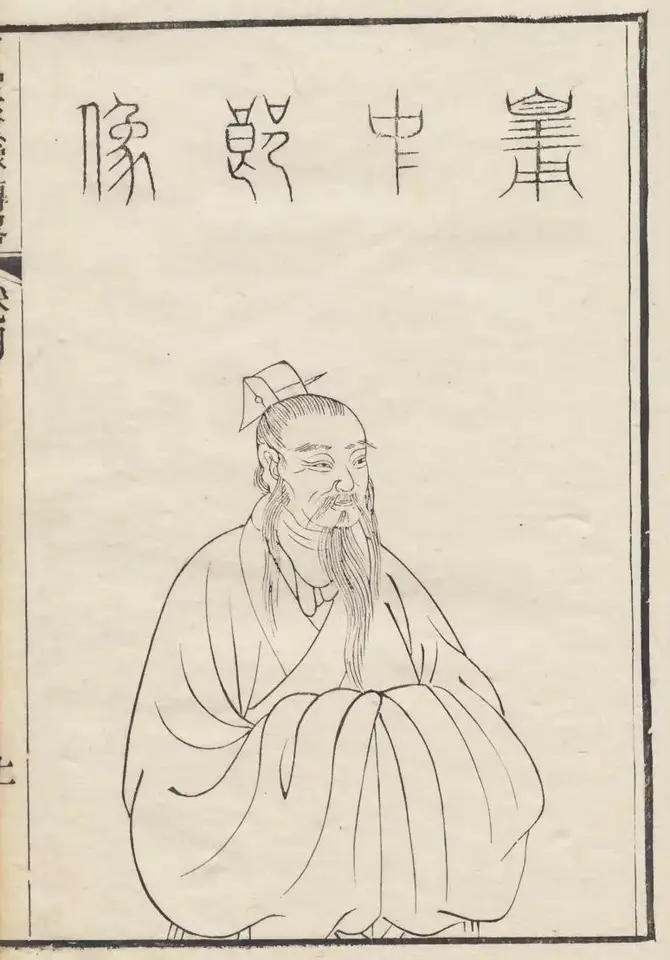
Biography
Illustrious Martial Lineage and Strategic Insight
Huangfu Gui was born into a distinguished frontier family in Chaona County, Anding Commandery. His grandfather Huangfu Leng had served as General Who Crosses the Liao, and his father Huangfu Qi had held the office of Military Commandant of Fufeng. He was thoroughly versed in Confucian classics such as the Classic of Poetry and the Classic of Changes, as well as ancient military treatises.
During the Han'an era under Emperor Shun, the Western Qiang tribes launched a massive revolt across the Guanzhong and Longyou commanderies. The imperial court appointed General Who Conquers the West Ma Xian to lead an army of 100,000 to suppress the insurrection. Huangfu Gui was living as a private citizen. Analyzing Ma Xian's operational deployment, he recognized that Ma Xian relied solely on brute force without precautions against ambushes in difficult terrain. He submitted an analytical memorial to the Commandery Administrator warning that Ma Xian's column would inevitably face destruction.
The provincial officials disregarded the commoner's warning. Soon after, Ma Xian marched into Shegu Mountain, fell into a deep Qiang ambush, and was killed alongside his two sons. The Administrator of Anding immediately summoned Huangfu Gui, appointing him officer of merit and entrusting him with the commandery's 800 garrison troops. Huangfu Gui deployed ambushes against the advancing Qiang vanguard, slaying dozens of enemy fighters and driving the invaders back.
Bold Rectitude at Court and Teaching in Retirement
In 144 CE, Huangfu Gui was nominated as Worthy and Excellent, Square and Upright, traveling to Luoyang for imperial examinations. In his policy responses, he fearlessly exposed administrative abuses and directly condemned the overbearing tyranny of General-in-Chief Liang Ji.
Enraged by his candor, Liang Ji instructed the examiners to rate Huangfu Gui in the lowest tier. Realizing the court was dominated by treasonous factions, Huangfu Gui feigned illness and returned home. Liang Ji secretly ordered regional inspectors and commandery administrators to fabricate charges against him, bringing him close to judicial murder several times. Huangfu Gui remained unperturbed, closing his gates and establishing a private academy where he taught the Poetry and Changes to more than 300 students over fourteen years. In 159 CE, Emperor Huan purged Liang Ji and issued five successive imperial summons within one month to bring Huangfu Gui back into government service.
Pacifying Taishan and Exposing Frontier Abuses
At that time, bandit chieftain Shusun Wuji had assembled tens of thousands of insurgents in Taishan Commandery, capturing cities and routing government forces. The court appointed Huangfu Gui Administrator of Taishan. Arriving at his post, he deployed an integrated approach of blockading rebel supply lines while offering amnesty to deserters, quickly pacifying the commandery.
In 161 CE, the Lingwu and Xianling Qiang tribes invaded Guanzhong, overrunning military stockades. Huangfu Gui submitted a hard-hitting memorial arguing that persistent border turmoil was caused not by tribal malice, but by the corruption and brutality of imperial officers who fabricated body counts and pocketed logistical funds while ordinary soldiers starved. He requested permission to take the field personally. Emperor Huan granted him the title Household Director with imperial credentials to oversee military affairs across the western passes.
Victory at Anding and Compassion in the Great Epidemic
Huangfu Gui marched into Anding, where over 10,000 rebel horsemen blocked the mountain passes. He placed ambushes along the wings, lured the enemy forward with a feigned retreat, and struck decisively, decapitating thousands of rebels. Maintaining strict discipline, he announced that all who submitted would be spared. Over 100,000 Qiang tribesmen emerged from the mountains to tender their surrender.
In 162 CE, as he pursued the remaining insurgent tribes in Longyou, a devastating epidemic swept through the army, claiming the lives of nearly forty percent of his troops. In the face of this catastrophe, Huangfu Gui personally walked through the sick wards each day, boiling medicinal broths and consoling the wounded. Moved to tears by his boundless paternal care, the soldiers swore to fight to the death. When the enemy attempted a surprise attack, they found the Han fortifications fully manned and resolute. Disheartened, the hostile tribes surrendered, reopening communication routes across Liangzhou.
Purging Corruption and Self-Exoneration
Following the pacification of Guanzhong and Longyou, Huangfu Gui ruthlessly rectified provincial administration. Formerly, Grand Administrator of Anding Sun Jun had extorted the populace through rampant bribery, Dependent State Commandant Li Xi and Army Censor Zhang Bing had slaughtered surrendered Qiang tribesmen to claim unearned combat rewards, while Inspector Guo Hong and Grand Administrator of Hanyang Zhao Xi neglected state business under the protection of court cliques. Taking office without personal bias, Huangfu Gui impeached over a hundred corrupt regional magistrates, dismissing and prosecuting guilty parties to cleanse the western bureaucracy. Convinced by his uncompromising justice, Shendi Qiang chieftains Dianchang and Jitian led more than one hundred thousand tribesmen to pledge allegiance, pacifying the western frontier.
However, Huangfu Gui's refusal to grant private favors or flatter palace eunuchs aroused bitter enmity among metropolitan grandees. Slanderous officials accused him of using state funds to bribe the Qiang into staged surrenders. When Emperor Huan issued imperial reprimands based on these falsehoods, Huangfu Gui submitted an impassioned memorial enumerating his services: he had pacified the western regions and saved the state over a hundred million coins, earning the vengeance of over a hundred corrupt magistrates whom he had purged. Stating that his household lacked even a single bushel of grain and that pacifying the border through strategic gifts was standard statecraft, his eloquent plea moved the emperor to contrition.
Rejecting Bribes, Imprisonment, and Public Vindication
In the winter of the fifth year of the Yanxi era (162 CE), the court summoned Huangfu Gui to serve as Court Consultant (Yilang), where his military merits merited enfeoffment as a marquis. However, the powerful palace eunuch Regular Attendant Xu Huang repeatedly sent retainers demanding massive bribes. When Huangfu Gui met them with cold refusal, Xu Huang maliciously fabricated charges of bribing the barbarians, casting Huangfu Gui into the capital prison.
When subordinate officers attempted to collect funds to ransom their general, Huangfu Gui sternly forbade them. In the capital, Imperial Academy leader Jia Biao organized over three thousand students to kneel before the palace gates submitting petitions on his behalf, while upright ministers defended his valor. Bowing to widespread public outrage, Emperor Huan issued an imperial edict granting Huangfu Gui an unconditional acquittal.
General Who Crosses the Liao and the Three Brilliances
In the sixth year of the Yanxi era (163 CE), the court appointed Huangfu Gui as General Who Crosses the Liao (Du Liao Jiangjun). Placing national border defense above personal prestige, Huangfu Gui maintained that General of the Household Zhang Huan possessed superior tactical acumen, vigorously recommending Zhang to hold the post while offering to serve as his deputy. The court accepted his counsel, assigning Zhang Huan as General Who Crosses the Liao and transferring Huangfu Gui as General of the Household for the Southern Xiongnu, before reappointing Huangfu Gui as General Who Crosses the Liao once Zhang Huan was promoted to Grand Minister of Agriculture.
Guarding the northern frontier for years with fortified watchtowers, Huangfu Gui subdued the Southern Xiongnu, Wuhuan, and Xianbei without needless bloodshed. When Emperor Ling ascended the throne, Huangfu Gui served as Master of Writing (Shangshu) and Regular Mounted Attendant (Shizhong), speaking fearlessly against autocratic favorites. In 174 CE (the third year of the Xiping era), he passed away in office from lifelong exhaustion at the age of seventy-one. Historians honored him alongside Zhang Huan and Duan Jiong as the "Three Brilliances of Liangzhou" (Liangzhou San Ming), celebrating them as the pillars who defended the eastern Han frontier.
Western Frontier Administration and Pacifying the Qiang Tribes
Assuming office as Colonel-Protector of the Qiang (Hu Qiang Xiaowei), Huangfu Gui recognized that military punitive expeditions addressed only symptoms, whereas enduring stability required institutional reform and civil rehabilitation. He traveled in person through Huangzhong and the Hexi Corridor, visiting Qiang and Hu settlements to investigate local grievances. Targeting predatory border officials who levied unauthorized corvee and requisitioned livestock without compensation, Huangfu Gui enacted strict regulations forbidding Han soldiers from encroaching upon tribal pastures.
Commanders who mistreated surrendered tribesmen or fabricated enemy decapitations were court-martialed according to strict military statutes. Simultaneously, he established government-supervised border markets at strategic passes, allowing nomadic populations to exchange horses and woolen blankets for Central Plains iron agricultural implements, textiles, and grain under fair trading rules. Reassured by his benevolence and integrity, rebellious tribes submitted voluntarily, abandoned farmlands were brought back under cultivation, and the western commanderies enjoyed lasting peace.