Birth in Lanxi
Born on the twenty-eighth day of the ninth lunar month into a scholarly lineage in Lanxi, Zhejiang, exhibiting an astonishing memory and investigative talent.
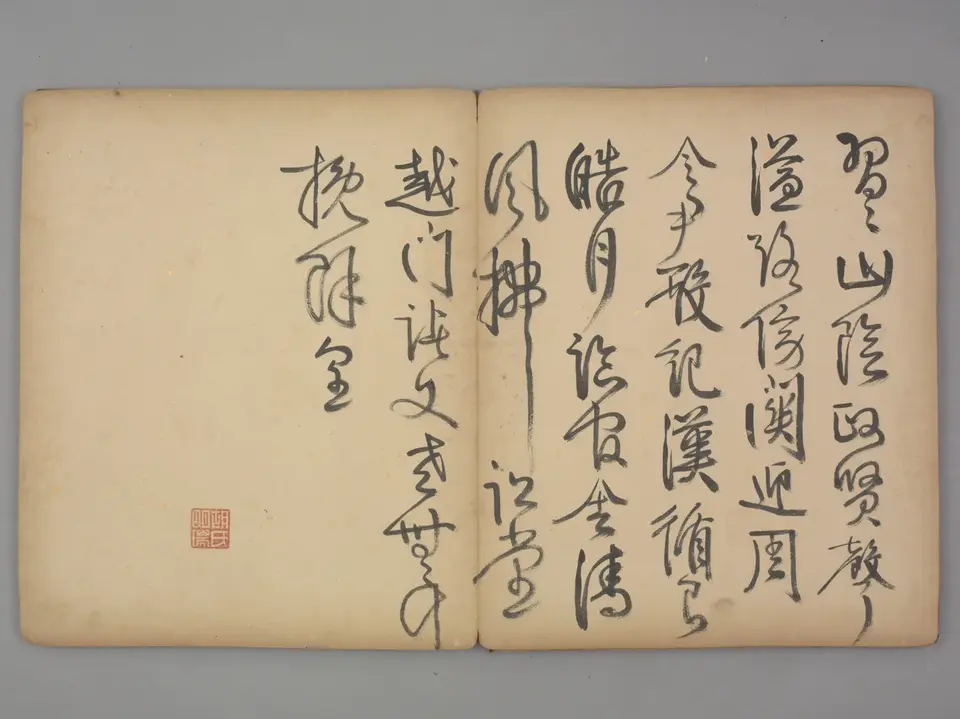
胡应麟
Hu Yinglin (October 27, 1551 – 1602), courtesy name Yuanrui and art names Shaoshi Shanren and Shiyang Sheng, was a native of Lanxi County, Jinhua Prefecture, Zhejiang (present-day Lanxi City, Zhejiang Province). An outstanding scholar, philologist, bibliographer, book collector, and poetic critic during the Jiajing, Longqing, and Wanli reigns of the Ming dynasty, he was a pivotal pioneer who led late Ming scholarship from…
Hu Yinglin (October 27, 1551 – 1602), courtesy name Yuanrui and art names Shaoshi Shanren and Shiyang Sheng, was a native of Lanxi County, Jinhua Prefecture, Zhejiang (present-day Lanxi City, Zhejiang Province). An outstanding scholar, philologist, bibliographer, book collector, and poetic critic during the Jiajing, Longqing, and Wanli reigns of the Ming dynasty, he was a pivotal pioneer who led late Ming scholarship from speculative emptiness toward rigorous evidential research (shixue kaoju). Endowed with extraordinary intellect and photographic memory from childhood, Hu passed the Zhejiang provincial examination in 1576 as a provincial graduate (juren). Thereafter, though his literary fame resounded across the realm, Hu faced unrelenting hardship in the imperial examinations, sitting sixteen times for the metropolitan examinations in the capital between 1577 and 1599 without passing. Consequently, he abandoned aspirations for official office, retiring to his native Baisha Stream to construct the Eryou Mountain Studio (Eryou Shanfang), where he gathered over 40,000 volumes of rare editions and unique manuscripts. Deeply admired and promoted by literary leader Wang Shizhen, Hu directed Jiangnan literati circles for decades as a commoner scholar. Working with tireless devotion, he established groundbreaking milestones in evidential scholarship, classical philology, textual authenticity verification, bibliography, poetics, and fiction and drama criticism. He authored the forty-eight-volume Shaoshi Shanfang Bicong, the twenty-volume Shisou, and the 120-volume Shaoshi Shanfang Leigao. His Sibu Zheng'e is universally recognized as China's first systematic monograph on textual authenticity criticism.
Born on the twenty-eighth day of the ninth lunar month into a scholarly lineage in Lanxi, Zhejiang, exhibiting an astonishing memory and investigative talent.
Constructed a retreat at the Sandong Mountain Temple to study extensively across the Hundred Schools of Thought and ancient literary anthologies.
Placed twenty-eighth in the Zhejiang provincial civil examination, gaining wide literary acclaim across Jiangnan.
Failed the dingchou metropolitan examination in Beijing, but befriended prominent literary figures such as Wang Daokun and Wang Shimao, beginning two decades of examination struggles.
Traveled to Yanshan Garden in Taicang to visit supreme literary leader Wang Shizhen, who marvelled at his writings and forged a lifelong friendship across generations.
Built the Eryou Mountain Studio in Lanxi, spending his family assets to acquire rare editions and collating over 40,000 volumes.
Progressively compiled various sections of Shaoshi Shanfang Bicong and completed his poetic monograph Shisou, earning nationwide acclaim.
After failing his sixteenth metropolitan examination, severed all attachments to official examinations and returned to Lanxi to devote himself solely to scholarship.
Passed away at his Eryou Mountain Studio in Lanxi at fifty-two, leaving behind vast manuscripts printed and passed down to posterity.
Hu Yinglin was born on October 27, 1551 (the twenty-eighth day of the ninth lunar month in the thirtieth year of the Jiajing reign) in Lanxi County, Jinhua Prefecture, Zhejiang. The Hu lineage had flourished in Wuzhou as an agrarian and scholarly family for generations; his father Hu Tingbin served as assistant surveillance commissioner of Yunnan, admired for incorruptible governance and devotion to historical scholarship. This affluent household environment and deep scholarly lineage provided ideal conditions for Hu's early intellectual development.
Hu displayed precocious intelligence and voracious curiosity, reciting ancient yuefu folk ballads at five and mastering Confucian classics and standard histories by seven. He read with astonishing rapidity, scanning ten lines at a glance and retaining information permanently. As a youth, he avoided trivial street amusements, indulging solely in hunting down and examining rare books. In the late Jiajing era, fleeing regional turmoil, Hu sought refuge at Sandong Mountain Temple in his home county, where he secluded himself for years studying the Three Comprehensive Histories, the Nine Classics, philosophical treatises, and Song-Yuan vernacular plays, earning widespread renown across Zhejiang for his encyclopedic erudition.
In 1576 (the fourth year of the Wanli reign), the twenty-six-year-old Hu took the Zhejiang provincial examinations, ranking twenty-eighth as a provincial graduate (juren) through masterful policy essays. Contemporaries in Jiangnan believed his extraordinary literary powers would allow him to capture highest honors in the metropolitan examinations with effortless ease. Fate, however, subjected this erudite scholar to cruel and protracted tribulations.
The following year, in 1577 (the fifth year of the Wanli reign), Hu traveled to Beijing full of confidence for the dingchou metropolitan examination, only to suffer failure. Over the ensuing twenty-two years, from 1577 to 1599, Hu traveled across stormy waters and the Yellow River to the imperial examination halls in Beijing sixteen separate times. Each time, his sweeping, imaginative, and unconstrained prose clashed with the rigid conventions of eight-legged essays, resulting in rejection by examiners. Despite enduring psychological devastation across sixteen examination failures, Hu transformed his bitter frustration into creative energy, touring Mount Tai, visiting Qufu, inspecting northern stone stelae, and forging friendships with foremost scholars.
In 1581 (the ninth year of the Wanli reign), disheartened by another examination failure, Hu visited Yanshan Garden in Taicang, South Zhili, to pay respects to Wang Shizhen, leader of the Latter Seven Masters who had dominated the literary scene for decades. Observing Hu's youth, encyclopedic erudition, and eloquent argumentation, Wang stepped from his seat, clasped Hu's hand, and exclaimed that Hu was a transcendent genius and extraordinary scholar. The two conversed continuously for three days and three nights, discussing literature from antiquity down through Wei, Jin, Tang, and Song poetics, establishing an enduring friendship that transcended their age difference.
Wang held Hu in the highest regard, praising his talents in verse and lending him his private collection of rare calligraphic and painted masterpieces for authentication. With Wang's patronage, Hu's stature soared within literati circles. Celebrated scholars such as Wang Daokun, Wang Shimao, Dong Qichang, Tu Long, and Chen Jiru eagerly sought his acquaintance. Operating as a commoner among high officials and literary doyens, Hu maintained an unbending pride and noble demeanor, becoming an authoritative critical master of the Wanli era.
Around 1588 (the sixteenth year of the Wanli reign), having suffered repeated setbacks in the civil service examinations, Hu realized that official careers were transient, whereas moral and literary contributions endure for eternity. By the banks of Baisha Stream in Lanxi, he constructed several pavilions and named his library Eryou Mountain Studio, invoking Prince Xiao Yi of Liang's classical allusion to the subterranean book caches of Mount Eryou.
To furnish the studio, Hu expended his family fortune, pledging garments and family heirlooms to purchase rare editions, Song-Yuan woodblocks, unique copies of Song-Yuan dramas, unofficial historical notes, and exotic geographic atlases. He personally sat at his desk for hours, transcribing hundreds of thousands of words in freezing winter without fatigue. His collection rapidly expanded to over 40,000 volumes, filling shelves from floor to ceiling. Hu personally collated, organized, and authenticated every volume, establishing the Eryou Mountain Studio as the most extensive and meticulously cataloged private library and research center along the southeastern coast in the late Ming.
Living in scholarly seclusion at Eryou Mountain Studio, Hu pursued research with extraordinary discipline. By day, he authenticated ancient and contemporary texts; by night, he composed notes and anthologies by lamplight. He progressively compiled his forty-eight-volume encyclopedic evidential research masterpiece Shaoshi Shanfang Bicong, his systematic poetic critique Shisou, and his monumental complete literary collection Shaoshi Shanfang Leigao.
In 1599 (the twenty-seventh year of the Wanli reign), approaching fifty, Hu journeyed to Beijing for his sixteenth and final metropolitan examination, once again meeting with failure. This final blow led him to renounce civil examinations forever. Returning home, he closed his doors to visitors, devoting his remaining energies to revising his lifelong manuscripts. Decades of ceaseless desk labor took a heavy toll on his health. In 1602 (the thirtieth year of the Wanli reign), this master scholar who devoted his life to textual verification passed away peacefully in Eryou Mountain Studio at fifty-two. After his passing, his monumental scholarly writings were rediscovered by literati, serving as a vital fountainhead that inspired the Qianlong-Jiaqing evidential school of the Qing dynasty.
Hu Yinglin's foremost contribution to Chinese intellectual history was establishing a rigorous discipline of textual authenticity studies (bianwei xue). In traditional China, spurious and forged books had proliferated since the pre-Qin, Han, and Tang eras, yet scholars routinely accepted texts uncritically. Although predecessors like Liu Zhiji and Chao Gongwu had examined isolated spurious works, systematic methodology and theoretical syntheses were lacking. Drawing on decades of textual collation, Hu produced the three-volume monograph Sibu Zheng'e (later incorporated into Shaoshi Shanfang Bicong).
Sibu Zheng'e was China's first systematic monograph dedicated exclusively to textual authenticity verification. In it, Hu pioneered an empirical methodology based on four criteria: first, examining chronological disparities in literary style and vocabulary; second, verifying historical evolutions of official titles, geographic names, and ritual customs; third, analyzing the lineage of bibliographical treatises in standard histories and private library catalogs; fourth, assessing internal contradictions between an author's biographical era and philosophical doctrines. Applying these criteria, Hu exposed over one hundred ancient works accepted as authentic for centuries, such as Kongzi Jiayu, Huangdi Yinfujing, Zihuazi, and Guanyinzi, ending centuries of unsystematic guesswork and laying a scientific foundation for modern philology.
In classical bibliography and library science, Hu achieved foundational theoretical breakthroughs. Within Shaoshi Shanfang Bicong, he authored the four-volume Jingji Huitong, systematically reviewing and reflecting upon the evolution of Chinese bibliographical enterprises and classification schemes since the Han dynasty.
Hu argued that bibliographical classification was not a rigid, unalterable dogma, but a dynamic system that evolved alongside academic disciplines and expanding book production. He traced the progression from Liu Xiang's Qi Lüe and Ban Gu's Hanshu Yiwenzhi—which subordinated historical works to the Six Arts—to Wang Jian's establishment of the History section in the Six Dynasties, culminating in the fourfold division (Classics, Histories, Masters, Collections) finalized in the Sui and Tang. Hu evaluated the relative merits of official imperial catalogs versus private bibliographies, vigorously promoting scientific cataloging and preservation protocols for private collections, outlining the first comprehensive historical narrative of Chinese bibliographical scholarship.
Hu's masterpiece in literary theory and poetic criticism was his twenty-volume Shisou. Divided into Inner, Outer, Miscellaneous, and Continued Sections, this grand and coherent work marked the historical transition of Ming poetic commentary from fragmented musings to systematic poetic philosophy. Hu inherited the spirit of Southern Song critic Yan Yu's Canglang Shihua, which championed High Tang poetry, but he opposed the rigid and mechanical archaism of the Latter Seven Masters, constructing an academically rigorous critical framework.
In Shisou, Hu formulated his celebrated doctrine of two fundamental poetic dimensions: metrical form and tonal resonance (tige shengdiao) versus inspired imagery and spiritual vitality (xingxiang fengshen). He asserted that poetic composition consists essentially of these two facets: metrical form and tonal cadence can be mastered through human study, whereas inspired imagery and spiritual vitality cannot be achieved through mere cleverness. He demanded that poets master disciplined prosody while attaining transcendent aesthetic vitality. Through thorough historical analysis spanning pre-Qin yuefu ballads down to Ming verse, he corrected the mechanical flaws of Huang Tingjian's poetic transmutation theories, creating late Ming China's most authoritative treatise on poetic criticism.
Possessing extraordinary foresight, Hu was among the rare elite scholars of ancient China who treated popular fiction, fantasy narratives, and theatrical drama as serious subjects of academic inquiry. In treatises within Shaoshi Shanfang Bicong, such as Jiuliu Xulun, Zhuangyue Weitan, and Eryou Zhuiyi, Hu conducted pioneering investigations into the origins, generic evolution, and nature of ancient Chinese fiction.
Hu examined the fiction entries cataloged in the Hanshu Yiwenzhi, tracing the conceptual evolution of fiction from fragmented gossip into imaginative narrative art. In global literary criticism, Hu was the first to delineate clearly the two core genres of classical-language fiction: anomalous tales (zhiguai) and supernatural romances (chuangi), noting that Six Dynasties zhiguai emphasized bizarre phenomena, whereas Tang chuanqi used the supernatural to explore human emotions. Crucially, Hu praised vernacular fiction, demonstrating scientifically that Da Song Xuanhe Yishi was the direct narrative source for Shuihu Zhuan (Water Margin), while declaring the Shanhaijing (Classic of Mountains and Seas) to be the ancestor of all ancient fantasy literature. When modern literary pioneer Lu Xun authored A Brief History of Chinese Fiction, he adopted Hu's taxonomy and critical distinctions, praising Hu's work as the initial cornerstone of Chinese fiction historiography.
As a celebrated late Ming bibliophile, Hu's Eryou Mountain Studio held an exalted status in Chinese bibliographical and printing history. Confronted with negligent official editions and substandard commercial imprints, Hu maintained rigorous scholarly standards, personally proofreading and publishing rare ancient works.
Synthesizing thousands of critical essays, textual verifications, epigraphic studies, and literary treatises composed over thirty years of study, he produced the forty-eight-volume encyclopedia Shaoshi Shanfang Bicong. Encompassing sixteen independent monographs, the work ranged from ancient classical textual lineages to urban popular anecdotes, examining edition variants, chronological authenticity, phonetic loan characters, and textual corruptions. The breadth and precision of Bicong stood in stark contrast to the vacuous intellectual debates of the late Ming, heralding the rise of empirical evidential scholarship in the Qing dynasty.
FIGURES ASSOCIATED WITH THIS DYNASTY