Entering Imperial Service
Began serving as court dietitian in the imperial medical household during the reign of Emperor Renzong.
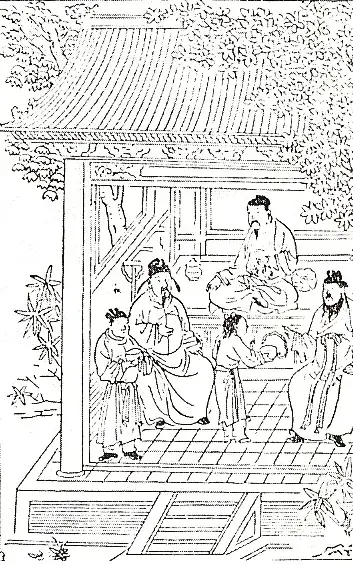
忽思慧
Hu Sihui (忽思慧, also romanized as Husihui) was a celebrated court physician and nutritionist of the Yuan Dynasty, renowned as the father of traditional Chinese clinical dietetics. Serving in the imperial court during the reigns of Emperor Renzong (Buyantu Khan), Emperor Yingzong (Gegeen Khan), and Emperor Wenzong (Jayaatu Khan), he held the official post of Imperial Dietitian (Yinshan Taivi), responsible for overseeing…
Hu Sihui (忽思慧, also romanized as Husihui) was a celebrated court physician and nutritionist of the Yuan Dynasty, renowned as the father of traditional Chinese clinical dietetics. Serving in the imperial court during the reigns of Emperor Renzong (Buyantu Khan), Emperor Yingzong (Gegeen Khan), and Emperor Wenzong (Jayaatu Khan), he held the official post of Imperial Dietitian (Yinshan Taivi), responsible for overseeing the daily cuisine, dietary health, and medical regimens of the royal family. In 1330 (the third year of the Tianli era), Hu Sihui compiled and presented to Emperor Wenzong his landmark medical treatise, Principles of Correct Diet (Yinshan Zhengyao). This revolutionary work systematically integrated Chinese herbal food therapy with Central Asian, Mongolian, and Middle Eastern culinary and nutritional practices, creating the world's earliest extant monograph dedicated entirely to systematic dietary therapy, preventive nutrition, and culinary hygiene.
Began serving as court dietitian in the imperial medical household during the reign of Emperor Renzong.
Continued managing imperial culinary nutrition and evaluating the physiological effects of medicinal foods under Emperor Yingzong.
Commissioned by the court to synthesize decades of clinical observations and palace dietary recipes into a comprehensive medical manual.
Formally submitted the three-volume Principles of Correct Diet to Emperor Wenzong, who ordered its official publication and distribution.
His principles of nutritional balance and preventative dietetics were adopted across the imperial administration and subsequent Chinese dynasties.
Hu Sihui was a physician of Central Asian or Mongol origin who served for decades in the inner court of the Yuan Dynasty. As the Mongol Empire incorporated diverse Eurasian territories, the imperial capital Dadu became a cosmopolitan metropolis where dietary traditions from China, the steppe, Central Asia, and Persia converged. The Mongol ruling elite, accustomed to meat-heavy nomadic diets while living sedentary court lives, frequently suffered from metabolic disorders, gout, and digestive ailments.
Appointed as Imperial Dietitian, Hu Sihui made it his life's mission to harmonize nomadic dietary preferences with traditional Chinese dietary therapeutics (shiliao). He meticulously documented the nutritional and medicinal properties of everyday meats, grains, vegetables, fruits, herbs, and dairy products. He conducted extensive clinical observations on the culinary preparations served to emperors, empresses, and royal princes, analyzing how various ingredients interacted to promote vitality or induce bodily disharmony.
In the third year of the Tianli era (1330), during the reign of Emperor Wenzong, Hu Sihui completed his monumental three-volume manuscript, Principles of Correct Diet (Yinshan Zhengyao). Accompanied by the Grand Imperial Councilor and court medical directors, he formally presented the treatise to the throne.
Emperor Wenzong was profoundly impressed by the scientific rigor, clear categorization, and practical utility of the work. Recognizing its immense value for royal longevity and public welfare, the emperor commanded the imperial printing office to carve wooden blocks and distribute the work widely. Hu Sihui's groundbreaking text established dietary therapy as an independent, highly respected medical discipline within traditional Chinese medicine.
Hu Sihui's magnum opus, Yinshan Zhengyao, consists of three comprehensive volumes that constitute the world's earliest specialized monograph on dietetics and preventive nutrition:
The book introduced groundbreaking preventative principles such as "curing illness before it arises through proper nourishment" and emphasized moderate eating, balanced hydration, and food safety.
Yinshan Zhengyao stands as a unique cultural and scientific monument of the Pax Mongolica, achieving a profound synthesis of traditional Han Chinese herbal pharmacology with the food culture of the Eurasian steppes and the Islamic world. The treatise documents numerous non-Han ingredients and recipes, including Central Asian roasted mutton (kebab), fermented mare's milk (airag), saffron, black pepper, and Middle Eastern spiced pastries.
By analyzing nomadic and foreign ingredients through the theoretical framework of yin-yang, five elements, and meridian tropism, Hu Sihui demonstrated the universal applicability of dietary science. His work exerted an enduring influence on subsequent Ming and Qing medical treatises, including Li Shizhen's Bencao Gangmu, and remains an indispensable primary source for the history of global gastronomy and medicine.
FIGURES ASSOCIATED WITH THIS DYNASTY