Lineage Birth
Born into a prominent indigenous family of Baxi; displayed early physical prowess and mastery of archery.
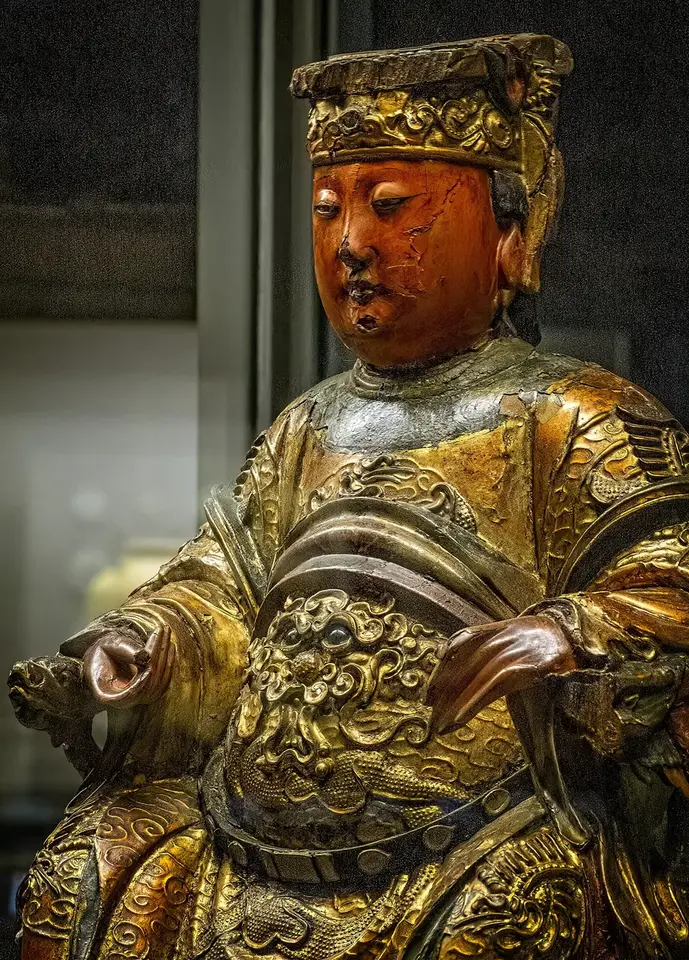
510 CE–561 CE
侯瑱
Hou Zhen (侯瑱, 510–561), courtesy name Boyu, was a native of Chongguo in Baxi Commandery (modern southern Nanchong, Sichuan Province). He was a paramount military commander during the Southern Liang and Southern Chen dynasties and a foremost founding meritorious statesman of the Chen empire, rising to Grand Defender, Grand Marshal, and Duke of Lingling Commandery. Born into a powerful indigenous chieftain clan of western Shu,…
Hou Zhen (侯瑱, 510–561), courtesy name Boyu, was a native of Chongguo in Baxi Commandery (modern southern Nanchong, Sichuan Province). He was a paramount military commander during the Southern Liang and Southern Chen dynasties and a foremost founding meritorious statesman of the Chen empire, rising to Grand Defender, Grand Marshal, and Duke of Lingling Commandery. Born into a powerful indigenous chieftain clan of western Shu, Hou Zhen was renowned from his youth for intrepid battlefield bravery and unshakeable martial resolution. After his father Hou Hongyuan was slain during a tribal campaign against rebel leader Zhang Wen'e, young Hou Zhen volunteered to lead the vanguard, decapitating Zhang Wen'e in hand-to-hand combat and winning early acclaim throughout Sichuan, becoming the trusted sword of Xiao Fan, Prince of Poyang. During the catastrophic Hou Jing Rebellion, Hou Zhen assisted Xiao Si in marching to relieve the besieged imperial citadel of Taicheng, subsequently holding regional commands in Jianghan. Following Hou Jing's decisive defeat at the Battle of Baling, Hou Zhen executed Hou Jing's occupation partisans in Yuzhang to align with the loyalist armies of Emperor Yuan of Liang, enduring the agonizing sacrifice of his wife, children, and younger brother, who were murdered in retaliation by Hou Jing. Operating as vanguard commander under Grand Commander Wang Sengbian, Hou Zhen spearheaded the final naval offensive, routing Hou Jing's fleeing armada on the Wusong River and securing the submission of Qiantang. Later, he garrisoned Dongguan with three thousand infantry to rout a Northern Qi invasion force under Guo Yuanjian, escorted Prince Xiao Fangzhi back to the capital of Jiankang, and repulsed Northern Qi forces from Xiachen. Following Chen Baxian's execution of Wang Sengbian, Hou Zhen rode to the capital to submit personally; Chen Baxian treated him with unreserved magnanimity, restoring his titles and honoring him as Minister of Works. In 560 (the first year of the Tianjia reign), regional warlord Wang Lin allied with Northern Qi to launch a massive naval campaign downstream, threatening the very existence of the nascent Chen dynasty. Emperor Wen of Chen appointed Hou Zhen supreme commander to direct the counteroffensive. At the decisive Battle of Wuhu, Hou Zhen exploited shifting winds to launch fireships and utilized giant mechanical crushers and molten iron to incinerate Wang Lin's armada, capturing Northern Qi commanders Liu Boqiu and Murong Zihui and driving Wang Lin into exile. Shortly thereafter, he defeated Northern Zhou naval commander Dugu Sheng at Xijiangkou and Yangyezhou, securing the middle Yangtze. In 561, Hou Zhen succumbed to illness while returning to the capital at the age of fifty-two. The imperial court posthumously promoted him to Grand Marshal, awarded him the posthumous name Zhuansu, and enshrined his spirit tablet in the ancestral temple of Emperor Wu of Chen.
Born into a prominent indigenous family of Baxi; displayed early physical prowess and mastery of archery.
Slew rebel chieftain Zhang Wen'e to avenge his father's death; rose to fame in Shu and joined Xiao Fan's staff.
Accompanied Xiao Si to relieve the besieged palace at Taicheng during the insurrection of Hou Jing.
Following Xiao Fan's death, took command of the troops and executed suspicious rival Zhuang Tie to hold Yuzhang.
Purged Hou Jing's partisans in Yuzhang despite the slaughter of his family; routed Hou Jing's fleet at Wusong River.
Fortified Dongguan to shatter Northern Qi general Guo Yuanjian's army, winning promotion to General Pacifying the North.
Escorted Prince Xiao Fangzhi back to Jiankang after the fall of Jiangling, appointed Inspector of Jiang Province.
Submitted in person to Chen Baxian after military setbacks; restored to ducal status with profound royal trust.
Annihilated Wang Lin's fleet and Northern Qi reinforcements at Wuhu, securing the foundational survival of the Chen dynasty.
Routed Northern Zhou naval commander Dugu Sheng at Xijiangkou and Yangyezhou, locking down the middle Yangtze.
Enfeoffed as Duke of Lingling and Inspector of Xiang Province; passed away on the road to the capital at fifty-two, honored as Grand Marshal.
Hou Zhen, courtesy name Boyu, was a native of Chongguo County in Baxi Commandery (modern southern Nanchong, Sichuan Province). His father, Hou Hongyuan, belonged to an illustrious indigenous aristocratic clan that exercised vast regional sway across western Shu. During the Zhongdatong era of Southern Liang, regional rebel Zhang Wen'e entrenched himself in the Baiya Mountains with over ten thousand bandits, terrorizing the western valleys. Xiao Fan, Prince of Poyang and Inspector of Yi Province, dispatched Hou Hongyuan to suppress the insurrection. Hou Hongyuan fell in battle during the fierce assault. Upon receiving the tragic news, young Hou Zhen petitioned passionately to lead the counteroffensive to avenge his father. Charging through enemy missile barrages at the head of his troops, Hou Zhen engaged in ferocious close-quarters fighting, personally decapitating Zhang Wen'e on the battlefield.
Xiao Fan marveled at Hou Zhen's martial courage and elevated him to command staff, assigning him to subdue recalcitrant indigenous tribes throughout the rugged mountain defiles. Demonstrating tactical agility, Hou Zhen scored continuous victories, successively earning promotions to Middle Adjutant of the Light Chariots, Administrator of Jinkang, and General of Superb Martial Prowess concurrently serving as Administrator of Fengyi. When Xiao Fan assumed regional command over Yong Province, Hou Zhen accompanied him as his primary operational commander, subsequently relocating with the princely garrison to Hefei.
In 548, northern rebel Hou Jing besieged the imperial citadel of Taicheng in Jiankang. Xiao Fan dispatched Hou Zhen to assist his eldest son Xiao Si in leading relief columns toward the capital. Following the tragic sack of the imperial palaces, Hou Zhen and Xiao Si retreated to Hefei, subsequently accompanying Xiao Fan south to Penbi. In 550, Xiao Fan and Xiao Si succumbed to illness in rapid succession. Hou Zhen assumed command of their surviving regiments and sought shelter under Zhuang Tie, Administrator of Yuzhang. Sighting that Zhuang Tie harbored fatal suspicions against his growing military presence, Hou Zhen staged a deceptive conference, executing Zhuang Tie and seizing military control of Yuzhang.
Shortly afterward, Hou Jing's general Yu Qing launched an overwhelming southward campaign against Yuzhang. Finding his isolated garrison besieged without supplies, Hou Zhen was compelled to surrender. Yu Qing escorted Hou Zhen to Hou Jing's headquarters. Because they shared the same surname, Hou Jing claimed kinship with Hou Zhen, showering him with superficial honors while detaining his wife, children, and younger brother in custody as hostages. Hou Zhen was subsequently assigned to serve under Yu Qing in pacifying the Linan commanderies.
In 552, Hou Jing suffered a catastrophic defeat at the Battle of Baling against western loyalist forces led by Wang Sengbian. Recognizing that the rebel regime was collapsing, Hou Zhen immediately initiated a mutiny in Yuzhang, putting all of Hou Jing's occupation partisans to the sword and declaring allegiance to Emperor Yuan of Liang. In cruel retaliation, Hou Jing executed Hou Zhen's brother, wife, and children. Emperor Yuan praised Hou Zhen's ultimate loyalty, commissioning him General of Martial Chivalry, Inspector of South Yan Province, and Marquis of Pixian. Joining Wang Sengbian's armada as vanguard commander, Hou Zhen fought fiercely in the recapture of Taicheng. When Hou Jing fled eastward toward Wujun, Hou Zhen pursued him relentlessly, destroying his rearguard armada at Wusong River and forcing rebel commanders Xie Daren and Lü Zirong to surrender at Qiantang. For these achievements, he was promoted to Inspector of South Yu Province at Gushu.
In 553, Northern Qi launched an invasion, dispatching General Guo Yuanjian with over ten thousand troops via Ruxu. Wang Sengbian assigned Hou Zhen with three thousand elite infantry to fortify Dongguan. Anticipating enemy approaches, Hou Zhen laid an ambush and crushed Guo Yuanjian's army under the ramparts, inflicting immense casualties. The Liang court promoted him to General Pacifying the North and granted him noble households.
In 554, Western Wei invaded Jiangling. Wang Sengbian dispatched Hou Zhen as advance commander to relieve the capital, but Jiangling fell before his divisions could arrive. Hou Zhen redirected his forces to Jiujiang, escorting Prince of Jin'an Xiao Fangzhi back to Jiankang. The prince elevated Hou Zhen to Palace Attendant, Commander of Military Affairs in Four Provinces, Inspector of Jiang Province, and Duke of Kangle County, with the title General of Chariots and Cavalry. Soon after, Grand Minister Lu Fahe defected to Northern Qi from Ying Province. Hou Zhen marched toward Xiachen, cutting Northern Qi supply routes and forcing enemy general Murong Shide to sue for terms.
When Chen Baxian executed Wang Sengbian in 555, Wang Sengbian's brother Wang Sengyin plotted to seize Hou Zhen's armies. Hou Zhen uncovered the scheme and neutralized Wang Sengyin's faction, compelling Wang Sengyin to flee to Northern Qi.
In 556, Hou Zhen was elevated to Left Equerry with Equal Honors. Occupying the middle Yangtze with seasoned troops, he maintained formal obedience toward the court while remaining independent. When regional rival Yu Xiaoqing fortified Xinxu to challenge him, Hou Zhen left his household at Yuzhang under his cousin Hou Yun and besieged Yu Xiaoqing throughout the autumn and winter.
Disaster struck behind the lines when Hou Yun clashed with commander Hou Fang'er. Enraged, Hou Fang'er mutinied, looting Hou Zhen's headquarters and defecting to Chen Baxian. Left stranded with disintegrating supply lines, Hou Zhen fled to Penbi. General Jiao Sengdu urged Hou Zhen to seek asylum in Northern Qi, but Hou Zhen replied that Chen Baxian was an magnanimous sovereign of historical vision who would certainly receive him. Hou Zhen rode alone to Jiankang to submit. Convinced of his sincerity, Chen Baxian restored all his aristocratic ranks. When Chen Baxian ascended the throne in 557, he confirmed Hou Zhen as Palace Attendant and General of Chariots and Cavalry, elevating him to Minister of Works in 558.
In late 558, southern warlord Wang Lin allied with Northern Qi and advanced downstream, wiping out the imperial armies of Zhou Wenyu and Hou Andu at Duankou. The court appointed Hou Zhen supreme commander to confront the threat at Liangshan. In 559, following the accession of Emperor Wen of Chen, Hou Zhen was promoted to Grand Defender, confronting Wang Lin at Zhakou for over a hundred days in a strategic deadlock.
In the second month of 560, spring floods opened the watercourses around Dongguan. Leading a colossal armada from Chaohu, Wang Lin sailed downstream in magnificent array. Hou Zhen deployed his fleet at Shoukianzhou, while Wang Lin anchored along the western shore. After a preliminary skirmish, a violent northeast gale struck during the night, shattering Wang Lin's fleet against the sandbars. Simultaneously, Northern Zhou forces besieged Wang Lin's rear base at Yingzhou. Realizing his rival was trapped, Hou Zhen anchored at Hupu to await the final moment. Desperate, Wang Lin surged toward Wuhu, linking up with Northern Qi general Liu Boqiu's naval host of ten thousand and Murong Zihui's two thousand heavy cavalry.
Hou Zhen ordered his troops to breakfast at dawn and deployed in combat formations at the tail of Wuhu island. When a southeast breeze arose, Hou Zhen unleashed fireships downwind. General Zhang Zhaoda charged into the center of the Yangtze aboard grand warships, dropping massive mechanical crushing-arms to demolish enemy decks. Flanking assault vessels and leather-clad rams poured molten iron across enemy gunwales, setting the northern armada ablaze. Wang Lin's land cavalry panicked in the river marshes, and Chen forces captured Qi commanders Liu Boqiu and Murong Zihui alongside tens of thousands of prisoners. Wang Lin escaped in a tiny skiff, fleeing into exile in Northern Qi.
Following his triumph at Wuhu, Hou Zhen was commissioned Commander of Military Affairs in Five Provinces, garrisoning Penbi. In the autumn of 560, Northern Zhou generals Dugu Sheng and Heruo Dun launched a coordinated riverborne invasion toward Ba and Xiang provinces. Emperor Wen appointed Hou Zhen Supreme Commander of the Western Expedition, ordering him to join forces with Xu Du at Baqiu.
In the tenth month, Hou Zhen intercepted Dugu Sheng at Xijiangkou, devastating the Northern Zhou fleet and capturing mountains of military supplies. Dugu Sheng retreated to Yangyezhou, where Hou Zhen attacked again, capturing all remaining enemy vessels and forcing Dugu Sheng to retreat ashore to construct earthen stockades. Hou Zhen sealed the river, starving the invaders and thwarting Northern Zhou's southward expansion.
In the second month of 561, the court rewarded his monumental services by appointing him Commander of Military Affairs in Six Provinces, Inspector of Xiang Province, and Duke of Lingling Commandery, with seven thousand households. Struck by chronic illness, Hou Zhen submitted a memorial requesting permission to return to the capital. On the ninth day of the third month, he passed away on the road at the age of fifty-two. The court posthumously promoted him to Grand Marshal, bestowed the posthumous name Zhuansu, and enshrined his spirit tablet in the imperial ancestral temple of Emperor Wu of Chen.
The Battle of Wuhu in 560 was the defining naval confrontation of the early Southern Chen dynasty. Supported by the full might of the Northern Qi empire, Wang Lin's armada threatened to extinguish the southern imperial house.
Exercising supreme operational patience, Hou Zhen wore down the enemy over a hundred days, accurately anticipated environmental shifts, and deployed fire attacks, mechanical hull-crushers, and molten iron to incinerate the enemy armada. His decisive victory eliminated the paramount internal threat to the regime and stabilized the southern dynasty.
During the horrors of the Hou Jing Rebellion, Hou Zhen initially surrendered to protect his troops, but severed ties with the rebel regime the moment loyalist armies turned the tide at Baling.
He purged Hou Jing's garrison in Yuzhang despite knowing his wife, children, and brother would be executed in retaliation. He subsequently served as vanguard commander under Wang Sengbian, destroying Hou Jing's fleeing armada on the Wusong River and restoring order to the lower Yangtze.
Following the pacification of Wang Lin, Northern Zhou dispatched elite amphibious divisions under Dugu Sheng to penetrate the middle Yangtze.
Hou Zhen intercepted the invaders at Xijiangkou and Yangyezhou, destroying their flotillas and severing their logistics. His victories stabilized the borders of Hunan and Hubei, establishing the strategic frontier that preserved the Chen dynasty for decades.
Navigating the turbulent transition between the Liang and Chen dynasties, Hou Zhen demonstrated profound political realism. When his rear base was looted and his forces scattered in 556, he rejected advice to defect to the northern barbarians, choosing instead to ride alone to Jiankang to submit to Chen Baxian.
Chen Baxian's trust was answered with unshakeable fidelity; Hou Zhen served Chen Baxian and Emperor Wen with absolute loyalty, standing as the supreme sword of the Chen dynasty and earning enshrinement in the founding emperor's ancestral temple.
FIGURES ASSOCIATED WITH THIS DYNASTY