Birth in Guangdong
Born into a farming and tutoring family in Guanlubu, Hua County.
洪仁玕
Hong Rengan (洪仁玕, February 20, 1822 – November 23, 1864), courtesy name Jifu, art name Qianyi, was the supreme civilian chancellor, prime minister, and modernizing strategist of the late Taiping Heavenly Kingdom. A younger cousin of Heavenly King Hong Xiuquan, he helped found the God Worshipping Society in 1843 in his native Hua County, Guangdong. When mountain blockades prevented him from joining the initial Jintian Uprising…
Hong Rengan (洪仁玕, February 20, 1822 – November 23, 1864), courtesy name Jifu, art name Qianyi, was the supreme civilian chancellor, prime minister, and modernizing strategist of the late Taiping Heavenly Kingdom. A younger cousin of Heavenly King Hong Xiuquan, he helped found the God Worshipping Society in 1843 in his native Hua County, Guangdong. When mountain blockades prevented him from joining the initial Jintian Uprising in Guangxi, he fled to Hong Kong, where he was baptized by Swedish missionary Theodore Hamberg and worked for years alongside James Legge of the London Missionary Society, mastering Protestant theology, modern world geography, mathematics, astronomy, and Western statecraft. In 1859, following the destructive internal purges of the Tianjing Incident, Hong Rengan completed a perilous journey to the insurgent capital of Tianjing, where Hong Xiuquan immediately elevated him to Prime Minister and Shield King (Prince Gan). In governance, he rebuilt the political core by securing princely ranks for young commanders Chen Yucheng and Li Xiucheng, designed the strategic counter-offensive that broke the Siege of the Jiangnan Great Camp in 1860, and authored A New Treatise on Aiding Administration, China earliest blueprint for modernization based upon Western capitalism. After the fall of Tianjing in 1864, he escorted the Young Heavenly King through enemy encirclements, was captured in Jiangxi, and was executed in Nanchang at age forty-three after boldly affirming his loyalty.
Born into a farming and tutoring family in Guanlubu, Hua County.
Co-founded the God Worshipping Society with Hong Xiuquan, smashing local village idols.
Failed to reach the Jintian Uprising due to Qing cordons, hiding in eastern Guangdong.
Reached Hong Kong and was baptized by missionary Theodore Hamberg, narrating the Taiping origins.
Traveled to Shanghai seeking passage to Tianjing; returned to Hong Kong to assist James Legge.
Infiltrated Qing lines to reach Tianjing, appointed Prime Minister and Shield King (Prince Gan).
Promulgated A New Treatise on Aiding Administration, promoting westernized reforms.
Engineered the diversionary raid on Hangzhou, breaking the imperial Jiangnan Great Camp.
Led armies to relieve Anqing; retreated to Tongcheng after sustaining military setbacks.
Escorted the Young Heavenly King from fallen Tianjing; captured in Shicheng, Jiangxi.
Composed a defiant autobiographical statement and was executed by dismemberment.
Hong Rengan was born on February 20, 1822, in Guanlubu Village, Hua County, within the maritime province of Guangdong. His father was Hong Mingyang and his mother was Madame Wen; he was the youngest of five brothers. Enrolled in village schools at age eight, he memorized classical literature with the goal of passing the civil service examinations. He shared a close fraternal bond with his elder cousin Hong Xiuquan. In 1836, when Hong Xiuquan fell into delirious fever after failing the provincial examinations, sixteen-year-old Hong Rengan attended his bedside, deeply moved by the visions recounted by his cousin.
At seventeen, Hong Rengan sat for the local licentiate examination but was unsuccessful. By 1843, he earned a living as a village schoolmaster. That same year, Hong Xiuquan studied Liang Fa Christian tract Good Words for Exhorting the Age and founded the God Worshipping Society. Hong Rengan and Feng Yunshan became his earliest converts. In a dramatic act of iconoclasm, Hong Rengan threw the tablet of Confucius out of his schoolroom and shattered local earth gods, composing hymns with Hong Xiuquan. The scandal enraged local villagers and family elders; students fled the school, and his elder brother beat him and drove him from the house.
In 1844, when Hong Xiuquan and Feng Yunshan departed for Guangxi, Hong Rengan relocated to neighboring Qingyuan County to teach, secretly converting fifty disciples. In early 1847, Hong Rengan and Hong Xiuquan spent a month in Guangzhou studying Christian theology under American Southern Baptist missionary Issachar Jacox Roberts. In late 1850, the Jintian Uprising erupted in Guangxi, establishing the Taiping Heavenly Kingdom. Hong Xiuquan dispatched messengers to escort his clan members to Guangxi, but Hong Rengan, detained by friends in Qingyuan, missed the initial departure, leaving him trapped behind imperial lines.
In the summer of 1851, following initial Taiping victories, Qing authorities unleashed violent reprisals against Hong Xiuquan kin in Guangdong, desecrating the Hong ancestral graves and arresting relatives. Leading fifty kinfolk, Hong Rengan made a desperate trek toward Guangxi, only to find Xunzhou heavily blockaded by imperial garrisons. Forcing his companions to turn back, Hong Rengan assumed the alias Hou and slipped through rural checkpoints. In 1852, when an affiliated uprising collapsed in Guling, Hong Rengan and a dozen companions were captured by village militia. Untying his bonds during a nocturnal storm, he escaped into mountain ravines. Suffering from starvation and despair over the deaths of his companions, he attempted suicide by hanging himself with his sash, stopped only by a fleeing companion.
After hiding in caves for days, Hong Rengan boarded a junk to Xin'an County and arrived in Hong Kong in spring 1853. Introduced to Swedish Basel Missionary Theodore Hamberg, he was formally baptized on September 20, 1853. During their association, Hong Rengan provided Hamberg with an exhaustive oral history of Hong Xiuquan early life and religious visions, which Hamberg published in English as The Visions of Hung-Siu-tshuen and Origin of the Kwang-si Insurrection, preserving an invaluable primary source for modern historians.
In May 1854, determined to join the rebellion in Nanjing, Hong Rengan traveled to Shanghai aboard a Western steamer. However, Shanghai was engulfed in urban warfare between the Small Swords Society and imperial forces, with all waterways to Nanjing severed. Residing with London Missionary Society doctor Walter Henry Medhurst, Hong Rengan studied the New Testament and wrote a commentary on First Corinthians. Returning to Hong Kong in late 1854, he worked for four years under Sinologist James Legge, serving as preacher, Chinese language tutor, and editorial assistant at the Anglo-Chinese College. In colonial Hong Kong, Hong Rengan observed Western municipal administration, naval technology, steam shipping, corporate banking, and English jurisprudence, gaining an internationalist perspective unprecedented among contemporary Chinese literati.
Despite his secure position in Hong Kong, Hong Rengan remained determined to serve the Heavenly Kingdom. In 1858, following his mother death in Guangdong, he considered his filial obligations fulfilled. Disguising himself as an itinerant herb-seller, he slipped out of Hong Kong into the mainland. Traversing thousands of miles across Guangdong, Jiangxi, and Hubei, he used his medical skills to treat wealthy Qing local magistrates, earning funds to disguise himself as an affluent merchant. Boarding river junks through Anhui, he reached Taiping outposts and entered Tianjing on April 22, 1859.
At that moment, Tianjing was reeling from the catastrophic internal bloodbath of 1856, in which Eastern King Yang Xiuqing and Northern King Wei Changhui had been slaughtered, and Wing King Shi Dakai had abandoned the capital with his veteran armies. Desperate for loyal administrative leadership, Heavenly King Hong Xiuquan welcomed his worldly cousin with unbridled joy. Over twenty days of private consultations, Hong Xiuquan was captivated by Hong Rengan vision of global politics and administrative modernization. Breaking his solemn pledge never to enfeoff another prince, Hong Xiuquan conferred upon Hong Rengan the supreme title of Nine Gates Imperial Forest Faithful Military Counselor and Prince Gan (Shield King), making him prime minister of the Heavenly Kingdom.
Aware that his sudden elevation provoked resentment among battle-hardened veteran generals, Hong Rengan handled his authority with political tact. He repeatedly petitioned to resign his titles, taking the podium before the assembled court to deliver eloquent addresses on global strategy, earning the title of the Literary Star. To unite the fractured military command, he successfully petitioned the throne to enfeoff victorious young commanders Chen Yucheng as the Brave King and Li Xiucheng as the Loyal King, establishing the constitutional maxim that civil domestic affairs were decided by Prince Gan, military field affairs by the Brave King, and supreme decrees by the Heavenly King.
Assuming office, Hong Rengan drafted the monumental state program A New Treatise on Aiding Administration, which Hong Xiuquan approved for imperial distribution. In early 1860, the military survival of Tianjing was threatened by the imperial Jiangnan Great Camp, whose siege fortifications choked capital supply routes. Hong Rengan devised a brilliant diversionary strategy: rather than assaulting the siege lines head-on, mobile Taiping cavalry should strike southeastward to capture the weakly defended supply hubs of Hangzhou and Huzhou. When imperial commanders panicked and detached veteran units to protect the wealthy south, the main Taiping armies would converge upon the weakened siege works.
Loyal King Li Xiucheng executed Hong Rengan plan, capturing Hangzhou in March 1860. Imperial commander Hechun fell into the trap, dispatching provincial cavalry southward. In April, converging Taiping armies under Chen Yucheng and Li Xiucheng smashed through the Jiangnan Great Camp, killing imperial commander Zhang Guoliang and driving Hechun to suicide, lifting the three-year siege of Tianjing in a single stroke. Hong Rengan followed this victory by directing armies eastward into the silk centers of Suzhou and Changzhou, securing the economic backbone of the late Taiping state. In October 1860, Yung Wing, the first Chinese graduate of an American university, visited Tianjing; Hong Rengan warmly endorsed his proposals for modern military academies and commercial banks, though wartime pressures hindered their implementation.
In 1861, strategic focus shifted westward to the critical fortress of Anqing, which was besieged by Zeng Guofan Xiang Army. Hong Rengan personally took command of relief forces in Anhui, but lacking operational combat experience, his forces suffered defeats against imperial cavalry led by Duo Long'a and Bao Chao. Anqing fell in September 1861, shattering Taiping defenses along the upper Yangtze. Hong Rengan stepped down from active command, and as Hong Xiuquan grew increasingly suspicious in his final years, his diplomatic responsibilities were transferred to Lin Shaozhang.
In April 1864, imperial forces encircled Tianjing. Hong Rengan was dispatched to Guangde in Anhui to collect grain and organize reinforcements. On July 19, 1864, Xiang Army forces detonated mines under the walls and sacked Tianjing, following the death of Hong Xiuquan from illness. Grief-stricken, Hong Rengan rallied retreating units at Guangde, receiving the teenage Young Heavenly King Hong Tianguifu and escorting him southward to join Huang Wenjin at Huzhou. Surrounded by imperial armies, Hong Rengan attempted to lead the remnants westward across Jiangxi to join Chen Decai forces in Hubei.
In late August 1864, commander Huang Wenjin died of illness in the mountains of Changhua, causing the remaining troops to disintegrate. Escorting the Young Heavenly King toward southern Jiangxi, Hong Rengan forces were ambushed at Yangjiapai in Shicheng on October 9 by imperial cavalry under Xi Baotian. Hong Rengan was captured after fierce resistance and transported in iron chains to the provincial prison in Nanchang. Enduring brutal interrogations, he refused to beg for mercy, composing a long autobiographical manifesto comparing his fate to Southern Song patriot Wen Tianxiang and asserting that the spirit of the Heavenly Kingdom would rise again. On November 23, 1864, Hong Rengan was executed by slow slicing in Nanchang, meeting martyrdom with composure at age forty-three.
Hong Rengan supreme intellectual legacy is A New Treatise on Aiding Administration, promulgated in 1859. As the primary policy document of the late Taiping state, it stands in Asian history as the first comprehensive national reform manifesto designed to transform traditional China into a modern capitalist nation. Structured around centralized authority and legal modernism, the treatise outlined twenty-eight systemic reforms.
Politically, Hong Rengan sought to eliminate factional warlordism by consolidating central legislative power. He introduced embryonic representative mechanisms, pioneering the establishment of provincial press bureaus, regular newspapers, and official press officers to combat bureaucratic corruption and reflect public opinion. He proposed installing confidential grievance boxes in all government offices, enabling common citizens to petition the throne directly.
Economically, the treatise was revolutionary, repudiating millennia of Confucian anti-mercantilism. Hong Rengan advocated state-supported industrialization, urging the nationwide construction of railroads and steam navigation networks. He called for the private development of mineral resources, including coal, iron, gold, and silver. In finance, he proposed establishing modern commercial banks, issuing paper banknotes, founding insurance corporations, and instituting patent protections for mechanical inventions.
Socially and culturally, Hong Rengan launched an uncompromising assault against feudal oppression. He banned the purchase and sale of human slaves, prohibited the murder of female infants, outlawed foot-binding, and criminalized the cultivation and smoking of opium. He advocated converting Buddhist and Daoist temples into hospitals, orphanages, and schools teaching modern science. In diplomacy, he established the principle of sovereign equality, welcoming foreign trade and technological cooperation while forbidding imperialist interference in Chinese domestic affairs. A New Treatise on Aiding Administration served as the direct intellectual forerunner to the Self-Strengthening Movement and the Hundred Days of Reform.
In military strategy, Hong Rengan demonstrated extraordinary geopolitical insight during the crisis of 1860. The imperial Jiangnan Great Camp had encircled Tianjing with continuous earthworks, bringing the rebellion to the brink of starvation. Recognizing that direct counterattacks against fortified lines were suicidal, Hong Rengan designed a diversionary maneuver that targeted the imperial rear in Zhejiang.
He persuaded Li Xiucheng to execute a rapid march on Hangzhou, forcing imperial generals to divert their cavalry away from the siege lines. When imperial defenses around Tianjing were hollowed out, Hong Rengan coordinated the simultaneous return of five field armies, shattering fifty-four imperial bastions and killing top Qing commanders. Building upon this victory, he directed armies eastward into Jiangsu and Zhejiang, establishing the wealthy southern base that sustained the Taiping resistance for four additional years.
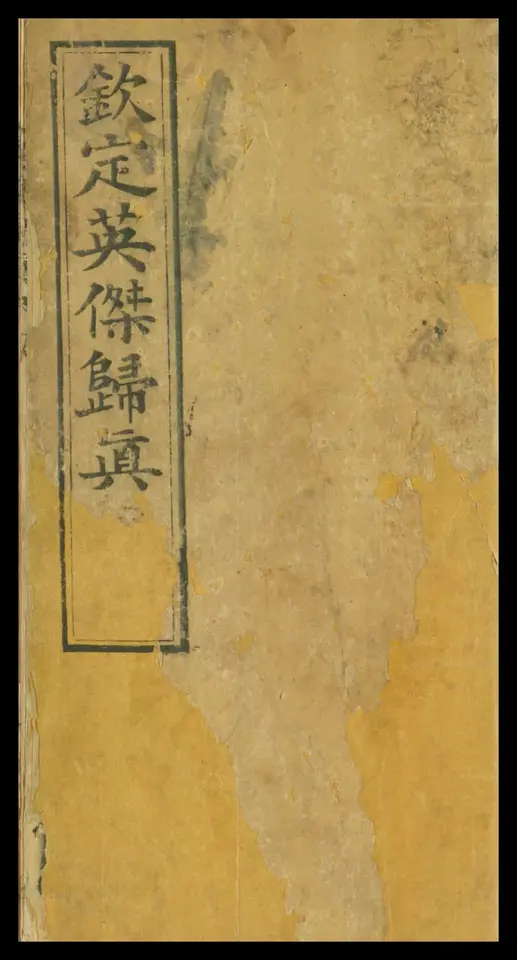
Hong Rengan attempted to reform the religious doctrine and administrative codes of the Taiping state. Having observed how early Taiping leaders used shamanistic trances to usurp authority, Hong Rengan authored treatises like The Return of Heroes to Truth, seeking to replace mystical superstition with orthodox Protestant concepts of moral redemption.
In calendrical science, he addressed structural flaws in the Taiping calendar. Introduced in 1852, the initial Heavenly Calendar lacked leap years, producing a three-day seasonal error every three years that disrupted agricultural planting. Drawing upon his studies of Western astronomy in Hong Kong, Hong Rengan directed the revision of the Heavenly Calendar in 1859, reconciling seasonal solstices with the solar year while maintaining the Taiping seven-day week, establishing a scientifically viable calendar.
Hong Rengan is recognized as the founding theorist of modern Chinese journalism. In A New Treatise on Aiding Administration, he became the first Chinese statesman to integrate a free press into statecraft. He established that newspapers must observe strict factual accuracy, mandating that journalists be individuals of incorruptible moral integrity who operated independently of local bureaucratic intimidation. He endorsed commercial advertising and autonomous circulation, anticipating the structural evolution of modern Asian media.
In literature and bureaucratic administration, Hong Rengan attacked the archaic prose style of the Tongcheng School and the rigid eight-legged examination essays. Issuing the Edict Prohibiting Superficial and Deceptive Prose, he mandated that all official dispatches be written in direct, transparent vernacular language. He overhauled the imperial examinations, replacing rote memorization of Confucian commentaries with international geography, industrial mechanics, and military logistics, publishing the Imperial Regulations for Scholar Degrees to establish a utilitarian educational paradigm.
FIGURES ASSOCIATED WITH THIS DYNASTY