Birth in Changzhou
Born into an impoverished household in Yanghu County, losing his father at six.
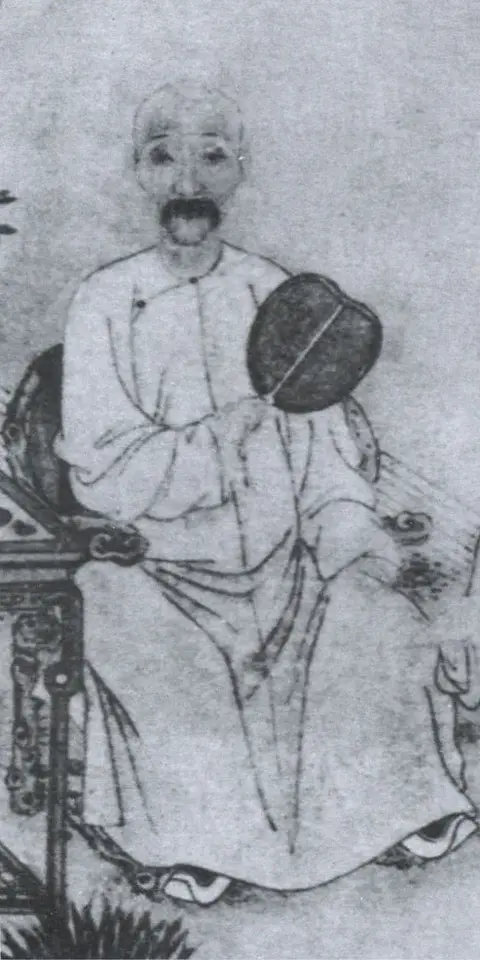
洪亮吉
Hong Liangji (洪亮吉, October 17, 1746 – June 24, 1809), courtesy names Junzhi and Zhicun, art name Beijiang and later known as Gengsheng Jushi, was a prominent philosopher, scholar, historical geographer, and demographic theorist of the mid-Qing dynasty, hailing from Changzhou, Jiangsu. Universally celebrated in world intellectual history as the founding father of modern Chinese population theory and acclaimed as the Chinese…
Hong Liangji (洪亮吉, October 17, 1746 – June 24, 1809), courtesy names Junzhi and Zhicun, art name Beijiang and later known as Gengsheng Jushi, was a prominent philosopher, scholar, historical geographer, and demographic theorist of the mid-Qing dynasty, hailing from Changzhou, Jiangsu. Universally celebrated in world intellectual history as the founding father of modern Chinese population theory and acclaimed as the Chinese Malthus, he lost his father at age six and was educated in poverty by his mother. Closely allied with poets Huang Jingren and Sun Xingyan, he passed decades in private secretariats under patrons Zhu Yun and Bi Yuan, mastering historical geography, epigraphy, and classical philology. In 1790, at age forty-five, Hong Liangji graduated second in the imperial palace examinations (bangyan), entering the Hanlin Academy and later serving as Commissioner of Education of Guizhou, where he used his stipend to purchase classical libraries for southwestern academies. In 1799, outraged by bureaucratic lethargy, he submitted a fearless memorial castigating ministers for moral cowardice and opportunism; incensed, the Jiaqing Emperor condemned him to death before commuting the sentence to exile in Ili, Xinjiang. Pardoned after one hundred days, he retired to write in seclusion. In his seminal essays On Governance and On Livelihood, published five years before Thomas Malthus Essay on the Principle of Population, he formulated the mathematical theory that population outpaces agricultural land, establishing a landmark in Asian demographic and geographical thought.
Born into an impoverished household in Yanghu County, losing his father at six.
Formed a celebrated literary fraternity with Huang Jingren and Sun Xingyan.
Joined the secretariats of Zhu Yun and Bi Yuan, directing regional gazetteer compilations.
Placed second in the metropolitan palace examination, appointed Hanlin compiler.
Appointed Commissioner of Education of Guizhou, purchasing libraries for regional academies.
Served in the Imperial Study, instructing royal great-grandsons in classical canons.
Imprisoned for his daring memorial denouncing bureaucratic corruption; exiled to Ili.
Pardoned during imperial prayers for rain; returned home and adopted the name Gengsheng Jushi.
Directed the compilation of the Jingxian and Ningguo Prefectural gazetteers in Anhui.
Passed away at his home in Changzhou at age sixty-four, mourned by scholars nationwide.
Hong Liangji was born on October 17, 1746, in Yanghu County, Changzhou Prefecture, Jiangsu Province. His distant ancestors originated from She County in Huizhou, having relocated to Changzhou during the late Ming dynasty. When Hong Liangji was six years old, his father died suddenly, plunging the household into destitution. His widowed mother, Madame Wu, maintained the family by spinning hemp and needlework through harsh winters, while teaching young Hong Liangji to recite the classical canons by lamplight. Demonstrating acute intellect, Hong Liangji gained early local renown for historical scholarship and verse.
During his twenties, Hong Liangji formed an inseparable bond with fellow Changzhou natives Huang Jingren and Sun Xingyan. The three gifted young men, all struggling against poverty, shared lodgings and composed passionate verses along the Baiyun Stream. Yet the imperial examinations proved repeatedly disappointing for Hong Liangji, who failed consecutive provincial trials. To support his mother, he served as a private secretary in the headquarters of prominent patrons, including Anhui Education Commissioner Zhu Yun and Shaanxi Governor Bi Yuan. In Shaanxi, Bi Yuan entrusted him with compiling official gazetteers for Chunhua, Changwu, and Chengcheng counties, affording Hong Liangji the opportunity to survey historical battlefields, examine ancient stone monuments, and construct a rigorous foundation in historical geography.
In 1790, at the age of forty-five, Hong Liangji sat for the metropolitan palace examination in Beijing. His examination essay displayed majestic prose and sharp practical policy solutions, deeply impressing the Qianlong Emperor, who personally ranked him second in the empire as the bangyan laureate. Hong Liangji was appointed Compiler in the Hanlin Academy and concurrent editor in the State Historiography Institute, concluding decades of hardship.
In 1792, Hong Liangji was appointed Commissioner of Education of Guizhou. Remote and mountainous, Guizhou had long suffered from cultural isolation and scarce classical texts. Upon arriving in the province, Hong Liangji traveled through rugged mountainous counties, strictly prohibiting bribery among examination proctors. Distressed by the lack of books among southwestern students, he donated his entire official integrity stipend to purchase thousands of volumes of Confucian canons, official dynastic histories, and classic literary anthologies from Jiangnan, distributing them among academies throughout Guizhou. His educational initiative revitalized scholarship across the southwestern frontier, nurturing generations of southwestern intellectuals.
In 1796, Hong Liangji completed his provincial service and returned to the imperial capital, being appointed in 1797 to serve in the Imperial Study to tutor the royal great-grandsons. Following the death of the Qianlong Emperor in early 1799, the Jiaqing Emperor assumed direct rule and executed the corrupt grand chancellor Heshen. The new sovereign issued an edict soliciting frank criticisms from civil officials. However, court ministers, paralyzed by bureaucratic inertia, submitted formulaic and superficial memorials.
Assigned to compile the Veritable Records of Emperor Gaozong, Hong Liangji could no longer tolerate the pervasive hypocrisy of the bureaucracy. In autumn 1799, using the pretext of requesting home leave, he addressed his celebrated Memorial on Current Administration to Prince Cheng. With uncompromising moral courage, he exposed the moral bankruptcy of the court, castigating ministers for regarding opportunism as wisdom, weakness as prudence, and sycophancy as advancement, declaring that the talent of the empire was exhausted and scholar-officials had abandoned shame. The Jiaqing Emperor took extreme offense, ordering Hong Liangji immediately arrested and sentenced to execution by decapitation. Following urgent appeals from Prince Cheng and senior statesmen, the sovereign commuted the death sentence to banishment to the garrison frontier of Ili in northern Xinjiang.
Accepting his exile with serene composure, Hong Liangji embarked upon his ten-thousand-mile trek across the Gobi Desert. Although forbidden by imperial decree from drinking wine or composing verse, the vast horizons of the Celestial Mountains and the desert inspired him. Crossing the Jiayu Pass, he recorded the geography and customs of Central Asia in numerous poems. In early 1800, he arrived in Huiyuan City, Ili, where he resided in an ancient army garrison. During his hundred-day stay in Ili, he surveyed water systems, postal routes, and ethnic nomad cultures, authoring the geographical treatises Chats on the Celestial Mountains and Ili Diary.
In April 1800, when a persistent drought parched northern China, the Jiaqing Emperor fasted to pray for rain. Regretting his harsh treatment of an honest remonstrator, the emperor issued an imperial pardon releasing Hong Liangji and ordering his return. Rain fell upon the capital the day the pardon was signed, prompting the emperor to remark that heaven itself was moved by Hong Liangji sincerity. Returning to Changzhou, Hong Liangji styled himself Gengsheng Jushi (The Reborn Scholar) and retired permanently from public office. He directed the compilation of the gazetteers of Jingxian and Ningguo in Anhui. He passed away peacefully at his home on June 24, 1809, at age sixty-four.
Hong Liangji most renowned contribution to global intellectual history was formulating a comprehensive theory of population and resource limits in the late eighteenth century. Observing that prolonged dynastic peace during the High Qing era had sparked an explosive population surge past three hundred million, Hong Liangji articulated his demographic theory in 1793 in the essays On Governance and On Livelihood within his anthology Collected Works of the Juanshi Studio.
In On Governance, Hong Liangji observed that population grows by geometric multiplication, stating that population increases fivefold every thirty years and tenfold every sixty years, whereas land reclamation and food production increase only marginally by one, three, or five times. He stated that the supply of land and houses remains persistently inadequate while the numbers of households and mouths remain persistently excessive, deducing that unchecked reproduction leads to soaring grain prices, widespread impoverishment, and civil violence.
To mitigate this crisis, he identified two balancing mechanisms: celestial adjustments, wherein natural disasters such as droughts, floods, and epidemics cruelly decimate population numbers; and governmental adjustments, wherein rulers implement land reclamation, frontier migration, tax reductions, and price controls. His demographic model appeared five years before Thomas Malthus published An Essay on the Principle of Population in 1798. Recognized globally as the Chinese Malthus, Hong Liangji was the first Asian thinker to conceptualize the structural tension between human fertility and ecological carrying capacity.
Hong Liangji was a titan in the evidential school of historical geography. Rejecting armchair speculation, he regarded geographic verification as the key to understanding dynastic history. Across decades of research, he authored an array of specialized monographs, including Historical Geography of the Three Kingdoms, Historical Geography of the Sixteen Kingdoms, Historical Geography of the Eastern Jin, and Critical Investigations into Four Histories.
In these works, he tracked thousands of administrative county borders, ancient fortifications, and toponymic changes across fifteen hundred years, resolving hundreds of geographical contradictions that had baffled historians since antiquity. His frontier treatises Chats on the Celestial Mountains and Ili Diary, composed during his exile in Xinjiang, documented the physical topography, desert oases, military watchtowers, and nomadic migrations of Central Asia, serving as foundational reference materials for the later Northwest Frontier History School and official dynastic geographies like the Gazetteer of Xinjiang.
Hong Liangji was a reformer of Chinese local gazetteers. Over his lifetime, he supervised the compilation of more than ten influential local histories across Shaanxi, Henan, and Anhui, including the gazetteers of Chunhua, Chengcheng, Changwu, Dengfeng, Huaiging, Jingxian, and Ningguo, as well as the fifty-volume Imperial Illustrated Gazetteer of Prefectures and Counties.
In gazetteer theory, Hong Liangji formulated three strict scientific maxims: first, to trust verified historical records rather than oral legends, expelling myths and uncorroborated folklore; second, to prize continuity over arbitrary structural innovation, preserving traditional cartographic lineages; and third, insisting that a gazetteer is fundamentally a geographic text, demanding that editors record terrain, waterways, census figures, grain taxes, and natural disasters while minimizing flippant poetry and eulogistic prose. Scholar Zhou Zhongfu praised his gazetteers as possessing the structural rigor of the Tang dynasty Yuanhe Maps and Gazetteers, establishing standard benchmarks for late imperial historical documentation.
In classical literature, Hong Liangji was an influential critic and poet. In his six-volume Poetic Remarks of Beijiang, he rejected the artificial imitation promoted by Shen Deqian and the overly bookish evidential verse of Weng Fanggang, castigating pedantic poets as dissecting scriptures without inner sentiment. He advocated that poetry must reveal unique perception and genuine human emotion, celebrating verse marked by lofty spirit and natural sincerity.
Having traveled across China and the Central Asian frontiers, his landscape poetry captured wild mountains and frozen expanses with vivid power. His frontier verses, such as Song of the Celestial Mountains, On the Anxi Road, and Snow Deepens at the First Outpost, infused traditional frontier poetry with authentic geographic detail and psychological resilience. His parallel prose was celebrated by Yuan Mei for antique dignity and soaring eloquence, earning him an honored comparison in poetic anthologies to the chivalric warrior monk Lu Zhishen of the Water Margin.
FIGURES ASSOCIATED WITH THIS DYNASTY