Birth in Suzhou
Born in Xuanqiao Lane, Wu County, Suzhou, Jiangsu, into an educated gentry family, studying classics and history from youth.
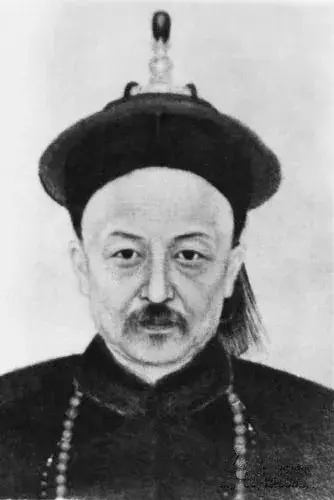
洪钧
Hong Jun (1839–1893), courtesy name Taoshi and art name Wenqing, was a native of Wu County, Suzhou Prefecture, Jiangsu Province. He was an eminent zhuangyuan scholar, diplomat, historian, and high-ranking minister during the Tongzhi and Guangxu reigns of the late Qing dynasty. Born into an illustrious scholar family in Suzhou, he achieved first-class first rank (zhuangyuan) in the imperial palace examinations of 1868,…
Hong Jun (1839–1893), courtesy name Taoshi and art name Wenqing, was a native of Wu County, Suzhou Prefecture, Jiangsu Province. He was an eminent zhuangyuan scholar, diplomat, historian, and high-ranking minister during the Tongzhi and Guangxu reigns of the late Qing dynasty. Born into an illustrious scholar family in Suzhou, he achieved first-class first rank (zhuangyuan) in the imperial palace examinations of 1868, appointed senior compiler in the Hanlin Academy, successively serving as Commissioner of Education for Hubei and Jiangxi, Academician of the Grand Secretariat, Vice Minister of Rites, and Senior Vice Minister of War, while concurrently serving as Minister of the Zongli Yamen (Foreign Office). In 1887, Hong was commissioned as Imperial Envoy to Russia, Germany, Austria-Hungary, and the Netherlands. Accompanied by his concubine Sai Jinhua, he served in Europe with dignified Confucian grace, engaging extensively with Western political and intellectual elites. During his European posting, Hong was astonished to discover that Western scholars utilized Persian texts—most notably Rashid al-Din's Jami al-Tawarikh—and Arabic archives to study Genghis Khan's western conquests. Driven by determination to match foreign scholarship, Hong expended considerable funds acquiring Mongolian and Central Asian histories preserved across Western Europe, employing multilingual scholars to translate them into Chinese and cross-referencing them against the History of Yuan and other classical Chinese records. Over several years, he authored the landmark thirty-volume Translations and Annotations on the History of Yuan (Yuanshi Yiwen Zhengbu), shattering centuries of reliance on Chinese-only texts and pioneering the modern use of foreign primary sources to study Central Asian historical geography and the Mongol Empire. Following his return to China, Hong served in the Zongli Yamen overseeing northwestern border diplomacy. During boundary negotiations with Tsarist Russia over the Pamir Plateau, misunderstandings arising from Russian-made boundary maps provoked fierce domestic impeachment by conservative censors. Overwhelmed by grief and stress, Hong succumbed to illness in Beijing in 1893 at age fifty-five, leaving an enduring academic monument and a tragic diplomatic legacy.
Born in Xuanqiao Lane, Wu County, Suzhou, Jiangsu, into an educated gentry family, studying classics and history from youth.
Passed the Jiangnan provincial civil service examination to become a juren, gaining high literary esteem across the region.
Placed first (zhuangyuan) in the imperial palace examinations, appointed Senior Compiler in the Hanlin Academy.
Appointed Commissioner of Education for Hubei, reforming examination discipline and earning praise from Governor-General Li Hongzhang.
Reassigned as Commissioner of Education for Jiangxi, renovating Bailudong Academy and encouraging pragmatic statecraft learning.
Took Sai Jinhua as concubine and was commissioned as Imperial Envoy to Russia, Germany, Austria-Hungary, and the Netherlands.
Gathered Persian, Russian, and French historical sources on Mongol history in Berlin and St. Petersburg, compiling Yuanshi Yiwen Zhengbu.
Recalled upon completing his diplomatic tenure, appointed Senior Vice Minister of War and Minister of the Zongli Yamen.
Published the thirty-volume Yuanshi Yiwen Zhengbu, creating an academic sensation across Chinese and international scholarly circles.
Boundary negotiations with Russia over the Pamirs stalled; impeached by court censors over Russian-printed boundary map discrepancies.
Succumbed to chronic nephritis and emotional distress in Beijing at age fifty-five, buried outside Suzhou.
Hong Jun was born in 1839 in Xuanqiao Lane, Wu County, Suzhou Prefecture, Jiangsu Province. The Xuanqiao Hong family was a prominent scholarly lineage of Suzhou that had passed down classical traditions for generations. Highly precocious with an extraordinary photographic memory, Hong mastered the classics, histories, philosophical treatises, and literary collections in his youth. Before reaching adulthood, he excelled in classical examination essays and policy treatises, distinguished by balanced, elegant prose and keen analytical thought.
In 1864, at age twenty-six, Hong sat for the Jiangnan provincial examination and earned the juren degree. In 1868, at age thirty, he traveled to Beijing for the metropolitan examinations. In the palace examination held in the Hall of Preserving Harmony, his policy response exhibited lofty vision and refined calligraphy, earning unanimous praise from evaluating grandees. The Tongzhi Emperor and Empress Dowagers Ci'an and Cixi conferred upon him the highest imperial honor: first place in the first class (zhuangyuan), appointing him Senior Compiler in the Hanlin Academy.
In the Hanlin Academy, Hong served with prudence and broad erudition, repeatedly appointed as associate examiner for metropolitan and provincial examinations. In 1770, he was commissioned as Commissioner of Education for Hubei. During his tenure, he strictly enforced examination regulations, rooted out fraud, and traveled across regional prefectures to recruit impoverished students of genuine talent. In 1876, he was transferred to serve as Commissioner of Education for Jiangxi, where he restored the ancient White Deer Grotto Academy (Bailudong Shuyuan), donated funds to acquire books, and guided southern scholars toward pragmatic statecraft, building immense moral prestige.
Beginning in 1883, Hong returned to Suzhou to observe three years of filial mourning following his mother's death. During this period, having been widowed for years, Hong met the celebrated courtesan Fu Caiyun (later renamed Sai Jinhua) in Suzhou. Captivated by her beauty and intellect, he took her as his concubine. In 1887, upon completing his mourning obligations, Hong experienced a major turning point in his administrative career. As the Self-Strengthening Movement progressed amidst mounting border crises, the Qing court sought erudite, prudent statesmen to represent the dynasty in Europe. The Guangxu Emperor issued an imperial decree appointing Hong as Imperial Envoy to Russia, Germany, Austria-Hungary, and the Netherlands.
Accompanied by Sai Jinhua and diplomatic aides, Hong sailed for Europe. During his three-year tenure, Hong deployed classical Confucian dignity alongside an open-minded diplomatic perspective, circulating through courts and diplomatic salons across St. Petersburg, Berlin, Vienna, and The Hague. Youthful and articulate, Sai Jinhua accompanied Hong to imperial banquets and diplomatic receptions as the minister's consort, gaining fame across European high society and enhancing the public visibility and goodwill of the Qing legation.
While serving in Europe, Hong observed the rapid rise of Western industrial civilization alongside China's military lag. He inspected Prussian army organization and Russian railway expansion in the Far East, submitting detailed intelligence reports to the Zongli Yamen urging accelerated domestic naval and railway modernization, reflecting the foresight of a Self-Strengthening pioneer.
Outside demanding diplomatic duties, Hong devoted his hours to historical scholarship. In discussions with European Sinologists and orientalists, Hong made a startling discovery: European scholars utilized thirteenth-century Persian historian Rashid al-Din's Jami al-Tawarikh (Compendium of Chronicles), alongside Arabic, Armenian, and Russian archives, to reconstruct Genghis Khan's lineage, western campaign routes, and the Ilkhanate with precision. Conversely, the Ming-era official History of Yuan (Yuan Shi) compiled by Song Lian and others contained sparse records on the northwestern frontier, filled with erroneous transcriptions of Mongol princes and generals.
Distressed that Chinese historical scholarship trailed foreign researches on China's own past, Hong resolved to utilize his diplomatic mission to rectify this deficiency. Facing language barriers, Hong expended personal funds to acquire French, Russian, and German translations of Persian and Central Asian manuscripts, employing legation translators and Chinese diplomats to translate passages orally sentence by sentence into Chinese.
Night after night beside his legation desk, Hong transcribed texts and cross-examined Western translations against the History of Yuan, Secretariat Annals, History of Liao, History of Jin, and Secret History of the Mongols. After more than three years of exhaustive labor, on the eve of his departure from Europe, he completed the thirty-volume monumental treatise Translations and Annotations on the History of Yuan (Yuanshi Yiwen Zhengbu), filling a historic void in Chinese historiography regarding foreign primary sources and the Mongol conquests.
In 1890, upon completing his European mission, Hong was promoted to Senior Vice Minister of War and appointed to serve in the Zongli Yamen, joining the supreme decision-making council directing Qing foreign policy. Upon returning home, Hong financed the woodblock printing of his thirty-volume Yuanshi Yiwen Zhengbu in Suzhou and Beijing. The work created an immediate sensation, acclaimed by subsequent historians such as Chen Yinke and Wang Guowei as a foundational masterwork.
However, as Hong pursued diplomatic initiatives in the Zongli Yamen, a diplomatic crisis erupted. Around 1892, Tsarist Russia exploited Qing military weakness on the northwestern frontier to occupy vast territories west of the Sarykol Range in the Pamir Plateau, precipitating a dangerous border dispute.
In handling negotiations with Russia, Hong had earlier acquired several Russian-printed Central Asian maps while serving in St. Petersburg, having aides translate place names into Chinese and archiving them at court. Because Qing cartographic surveying was obsolete, and the Russian cartographers had deliberately manipulated boundary lines eastward to claim Chinese territory, Tsarist diplomats used Hong's archived translation against China during negotiations, asserting that the Qing court had already recognized Russian cartographic delineations. Court censors, ignorant of actual frontier conditions, launched ferocious impeachments against Hong, accusing him of gullibly accepting Russian maps, ceding sovereign territory, and disgracing the dynasty. Confronted by unmerited accusations, Hong was overwhelmed by stress and despair, developing severe chronic kidney disease.
On October 2, 1893 (the 23rd day of the 8th lunar month of the 19th year of Guangxu), the fifty-five-year-old statesman died in grief at his Beijing residence. The untimely passing of this zhuangyuan diplomat was deeply mourned, and his remains were transported to his native Suzhou for interment.
Hong Jun's most enduring scholarly monument was his thirty-volume masterpiece Translations and Annotations on the History of Yuan (Yuanshi Yiwen Zhengbu). The work is celebrated as a pivotal milestone marking the transition of modern Chinese historiography from insular classical philology to global comparative history.
Compiled hastily during the early Ming dynasty under Song Lian, the official History of Yuan suffered from severe lacunae regarding the rise of the Mongols, Genghis Khan's campaigns across Persia and the Kipchak steppes, the four successor khanates, and interactions with Central Asian Islamic civilization. Hong drew upon European translations of Rashid al-Din's Jami al-Tawarikh, translating and synthesizing research produced by British, French, German, and Russian scholars.
In Yuanshi Yiwen Zhengbu, Hong established dozens of thematic monographs examining ancestral genealogies, imperial princes, khanate histories, and northwestern historical toponyms. His evidential research corrected hundreds of erroneous dates and garbled transliterations in the History of Yuan, extending Chinese historiographical horizons into Central Asia, the Middle East, and Eastern Europe, pioneering modern Central Asian studies and global Mongol studies in China.
During his diplomatic service in Russia, Germany, Austria-Hungary, and the Netherlands, Hong demonstrated adaptability and intercultural poise as a late-Qing diplomat. Representing a weakened empire surrounded by imperialist powers, Hong upheld sovereign dignity while defending national interests.
In St. Petersburg, he engaged Russian foreign ministers over smuggling and border violations along the Heilongjiang and Xinjiang frontiers, protesting encroachment attempts; in Berlin, he met with the Krupp armament company to inspect modern European arms manufacturing, facilitating coastal artillery procurements for the Beiyang Fleet and provincial armies; in The Hague and Vienna, he discussed international public law and the harms of extraterritoriality, securing appropriate diplomatic protocol for Qing representatives. Through his diplomatic conduct, Hong presented an image of an enlightened, civilized empire rooted in deep classical culture.
Hong's European mission accompanied by his concubine Sai Jinhua became a legendary episode in late-Qing cross-cultural history. In a conservative society where taking a former courtesan abroad as a diplomatic consort invited severe censure, Hong acted with open-minded confidence, guiding Sai Jinhua into European diplomatic protocol.
In Berlin and St. Petersburg, Sai Jinhua utilized remarkable linguistic gifts to acquire conversational German and Russian, attending court balls and aristocratic salons in silk robes. Interacting with German Emperor Wilhelm II, Empress Augusta Victoria, and Chancellor Otto von Bismarck, her poised elegance captivated European media and society, challenging Western stereotypes of Chinese women as bound-footed, illiterate, and oppressed, serving as an early instance of modern Chinese public diplomacy.
Hong's direction of the Sino-Russian Pamir negotiations in his final years was a tragic episode of modern Chinese diplomacy. In the late nineteenth century, Britain and Russia engaged in the "Great Game" over the Pamir Plateau, with Russia occupying two hundred thousand square kilometers west of the Sarykol Range to establish facts on the ground. The Qing court, preoccupied with naval defense along the coast, had neglected northwestern garrisons.
Negotiating with Russian Minister Arthur Cassini, Hong defended Chinese claims under earlier treaties, yet the Russian side exploited the archived Russian maps for diplomatic leverage. Uninformed court censors scapegoated Hong for imperial retreat, subjecting him to harsh condemnation.
Modern historians—including Jiang Tingfu and Fan Wenlan—have demonstrated that the loss of the Pamirs was an inevitable consequence of late-Qing military decline and frontier neglect, not the fault of Hong's map translations. Hong's sincere patriotism remained spotless. Dying prematurely under political attack and diplomatic humiliation, his life reflected the tragic burdens borne by early modern Chinese diplomats.
FIGURES ASSOCIATED WITH THIS DYNASTY