何福
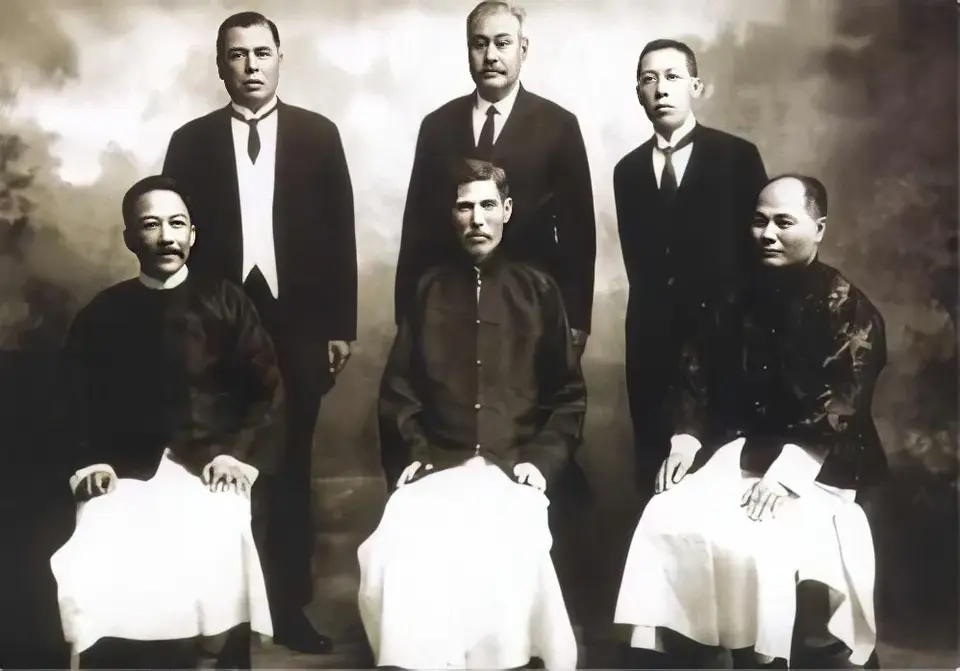
Historical photograph of Ho Fook
Image creditsUnknown authorUnknown author · Public domainImage source

Historical figure

He Fu (何福)

何福

He Fu (何福, died 1410), originally from Haozhou (modern Fengyang, Anhui), was a battle-hardened military commander and founding noble of the early Ming dynasty who held the title of Marquis of Ningyuan. Entering the military during the early Hongwu era, he rose through the ranks via sheer tactical prowess and operational discipline. Accompanying General Fu Youde in the grand expedition that conquered Yunnan, he was…

Era not stated

PROFILE

He Fu (何福, died 1410), originally from Haozhou (modern Fengyang, Anhui), was a battle-hardened military commander and founding noble of the early Ming dynasty who held the title of Marquis of Ningyuan. Entering the military during the early Hongwu era, he rose through the ranks via sheer tactical prowess and operational discipline. Accompanying General Fu Youde in the grand expedition that conquered Yunnan, he was promoted to Assistant Commissioner-in-Chief of the Front Chief Military Commission. Between the late Hongwu and early Jianwen eras, He Fu repeatedly commanded imperial forces in the southwest, defeating the Yuezhou rebel chieftain Azi and pacifying the massive Luchuan rebellion of Dao Ganmeng by inducing seventy thousand tribal warriors to surrender. During the Jingnan Campaign, He Fu served as a senior commander in the imperial armies, battling the insurgent forces of Zhu Di (the Prince of Yan) across Huaibei in the Battle of Xiaohe. Following Zhu Di's accession as Emperor Chengzu, the emperor recognized He Fu's decades of seasoned frontier command and appointed him Regional Commander of Ningxia, with authority over regional armies in Shaanxi, Shanxi, and Henan. For years, He Fu reinforced the Great Wall fortifications, promoted irrigation, and established self-sustaining military agricultural colonies (tuntian), turning Ningxia into an impregnable bulwark. In 1410, he accompanied the emperor on the First Northern Expedition into Mongolia as vanguard commander, shattering the main Tatar forces along the Onon River. En route home, victimized by malicious slanders from jealous colleagues, He Fu committed suicide to defend his martial honor, later receiving imperial posthumous rehabilitation.

Date of Death
1410 (Yongle 8)
Ancestral Home
Haozhou (present-day Fengyang County, Anhui Province)
Highest Office
Marquis of Ningyuan, General Who Quells the Barbarians, General for Pacifying the Cuan
Historical Identity
Founding veteran general of the Ming dynasty, commander of southwestern pacification, vanguard of the Yongle northern expedition

LIFE TIMELINE

Relationship graph

BIOGRAPHY

Chronology

  • 1381 (Hongwu 14) | Expedition to Yunnan | Campaigned under Fu Youde in Yunnan, storming Baishijiang and securing the pacification of the region.
  • 1391 (Hongwu 24) | Pacification of Yuezhou | Commissioned as General for Pacifying the Qiang, annihilating the rebel chieftain Azi in Yuezhou.
  • 1397 (Hongwu 30) | Governance of Shuixi | Appointed Regional Commander in Guizhou, pacifying over a thousand mountain tribes in Shuixi.
  • 1399 (Jianwen 1) | Suppression of Luchuan | Appointed General Who Quells the Barbarians, crushing Dao Ganmeng's revolt and accepting the surrender of seventy thousand rebels.
  • 1402 (Jianwen 4) | The Jingnan War | Commanded imperial armies in the Battle of Xiaohe, repelling northern insurgent cavalry before retreating south.
  • 1403 (Yongle 1) | Enfeoffment and Ningxia Command | Enfeoffed as Marquis of Ningyuan and appointed Regional Commander of Ningxia to fortify the northwestern border.
  • 1410 (Yongle 8) | Northern Expedition and Death | Directed the vanguard army that routed the Tatars at the Onon River; committed suicide following malicious false accusations.

Life and Career

Early Service and the Conquest of Yunnan

He Fu was born into a military household in Haozhou, Anhui. From youth, he demonstrated decisive courage and mastered horsemanship and tactical archery. Enlisting in the early Hongwu era, he participated in numerous mopping-up operations against residual Yuan forces across the Huai valley and Central Plains, rising to Vice Commander of the Jinwu Rear Guard.

In 1381, Emperor Taizu launched a massive 300,000-man expedition led by Fu Youde, Lan Yu, and Mu Ying to conquer Yunnan from the Mongol Prince of Liang and the Duan regime of Dali. He Fu commanded vanguard forces. At the critical Battle of Baishijiang near Qujing, He Fu directed an amphibious crossing under heavy missile fire, engaging enemy lines in hand-to-hand combat and slaying several Mongol captains. Following this victory, he cleared mountain passes across Wusa, Dongchuan, and Mangbu, capturing dozens of rebel strongholds. For his distinguished service, he was promoted to Assistant Commissioner-in-Chief.

In 1391, the Yuezhou tribal leader Azi revolted with tens of thousands of warriors, raiding imperial post stations. He Fu was commissioned as General for Pacifying the Qiang to suppress the rebellion. Employing diversionary tactics, he ambushed the rebels in a rugged mountain defile, killing over a thousand enemy fighters and decapitating Azi. In 1397, He Fu pacified over a thousand mountain villages in Shuixi, establishing regular guard garrisons that brought long-term stability to Guizhou.

The Luchuan Campaign and the Surrender of Seventy Thousand

In 1399, a severe tribal revolt erupted in the southwestern frontier realm of Luchuan. Chieftain Dao Ganmeng rebelled, drove out the imperial pacification commissioner Silunfa, and pillaged the Yunnan borders. The young Jianwen Emperor appointed He Fu as General Who Quells the Barbarians to lead Yunnan garrisons against the rebels.

Advancing to the Jinsha River, He Fu refrained from reckless charges into the dense jungles. Instead, he fortified choke points, isolated rebel strongholds, and deployed psychological appeals to native clan leaders. Once enemy positions were scouted, He Fu coordinated an assault using heavy infantry and firearms units. Ming gunners bombarded enemy palisades with artillery and incendiary rockets, completely collapsing the rebel defensive line.

With Dao Ganmeng's core lieutenants killed, He Fu offered clemency to the surrounding forces. Over seventy thousand tribal fighters laid down their weapons and surrendered. He Fu swiftly mopped up outlying mountain stockades, executed the rebel ringleaders, and reinstated Silunfa, completely restoring imperial control over Luchuan.

Battles of the Jingnan War and Enfeoffment

When Zhu Di launched the Jingnan Campaign from Beiping, the Jianwen court urgently recalled He Fu to direct field armies in the north. In 1402, He Fu joined forces with Sheng Yong and Ping An in Huaibei.

At the Battle of Xiaohe, He Fu deployed his troops with their backs to the river, directing disciplined volleys of heavy crossbows and polearms that halted Zhu Di's cavalry charges and inflicted heavy casualties on the northern insurgents. However, during the subsequent Battle of Lingbi, operational communications broke down, and Zhu Di launched a devastating night surprise attack. Ping An and other generals were captured, and the southern army collapsed. He Fu fought through encirclement lines with sword in hand, escaping south to Nanjing.

When Zhu Di took the throne as Emperor Chengzu, he pardoned He Fu, recognizing his lifelong frontier merits and political innocence. In 1403, the emperor enfeoffed He Fu as Marquis of Ningyuan with an annual stipend of one thousand bushels of grain and hereditary privileges.

Safeguarding Ningxia and the Northern Expedition

In the autumn of 1403, Emperor Chengzu appointed He Fu as Regional Commander of Ningxia, with overall operational control over garrisons in Shaanxi, Shanxi, and Henan. Facing continuous nomadic incursions from across the Yellow River, He Fu instituted comprehensive defense measures. He rebuilt wall ramparts, erected beacon towers, and organized disciplined cavalry patrols.

Crucially, He Fu pioneered large-scale military agricultural colonies, redirecting Yellow River irrigation to reclaim tens of thousands of acres of fertile farmland. These measures filled regional granaries, ensuring border garrisons were fully self-sufficient. Under his tenure, the northwestern frontier remained peaceful and secure.

In 1410, Emperor Chengzu embarked on the First Northern Expedition against the Eastern Mongol Tatars led by Bunyashiri Khan and Arughtai. He Fu was summoned to command the vanguard army. At the Battle of the Onon River, He Fu led cavalry charges that broke the Tatar lines, pursuing the enemy for dozens of miles and capturing vast quantities of livestock and equipment.

During the journey back to Beijing, imperial secret police and envious commanders submitted secret memorials accusing He Fu of failing to maintain proper operational decorum during the march. Known for his unbending pride, He Fu was heartbroken that his lifelong loyalty was questioned by slanderers. Weeping in his quarters, he lamented that a veteran commander should not suffer humiliation from prison wardens, and committed suicide by his own sword. Emperor Chengzu deeply regretted his suspicious reaction, ordering that He Fu's heirs inherit his noble title and burying him with high honors.
Key Achievements

Suppression of the Luchuan Rebellion

Commanded the expedition that crushed Dao Ganmeng's southwestern rebellion in 1399, inducing the surrender of seventy thousand rebel fighters and stabilizing the Yunnan frontier.

Strategic Fortification and Agrarian Development of Ningxia

Served as Regional Commander of Ningxia, constructing extensive Great Wall beacon networks and developing massive Yellow River irrigation colonies that made the northwestern border fully self-sufficient.

Vanguard Commander of the First Northern Expedition

Spearheaded the vanguard forces during the 1410 Mongol campaign, crushing Tatar legions at the Onon River and securing the victory of the Yongle Emperor's first imperial expedition.

Historical Relationships

  • Campaign Commander: Fu Youde, founding Ming general under whom He Fu campaigned in the conquest of Yunnan.
  • Jingnan Comrades: Sheng Yong and Ping An, senior generals alongside whom He Fu fought in Huaibei.
  • Sovereign Patron: Zhu Di (Emperor Chengzu), who recognized He Fu's military genius, enfeoffed him as Marquis of Ningyuan, and entrusted him with the Ningxia frontier.

Historical Evaluation

  • The History of Ming praises He Fu: "He Fu was fierce, valiant, and rich in strategic wisdom. He served in the frontier armies for decades, repeatedly achieving monumental victories. His administration of Ningxia intimidated the western frontiers, and his vanguard service in the northern expedition surpassed all other commanders."
  • Emperor Chengzu remarked: "He Fu campaigned for forty years, veteran in military science and possessing both wisdom and bravery; the empire relied upon him across every frontier."

Related Entries

  • [[Jingnan Campaign]]
  • [[Fu Youde]]
  • [[Sheng Yong]]
  • [[Ningxia Garrison]]
  • [[Yongle Northern Expeditions]]

FIGURES ASSOCIATED WITH THIS DYNASTY

Bibliography

  • History of Ming, Volume 144
  • Veritable Records of Ming Taizu
  • Veritable Records of Ming Taizong
  • Records of Dynastic Worthies, Volume 10