Birth in Renhe
Born into an esteemed scholarly family in Renhe County, Hangzhou, displaying extraordinary memory and lifelong dedication to learning.
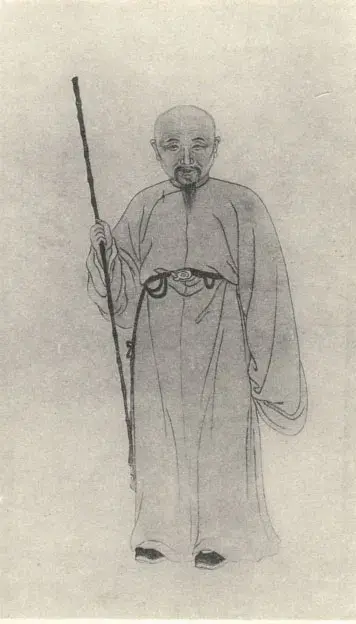
杭世骏
Hang Shijun (1696–1773), courtesy name Dazong, art name Jinpu, and late sobriquets Qinting Laomin and Chunshui Laoren, was a native of Renhe (modern Hangzhou, Zhejiang Province). He was an eminent Qing dynasty classical scholar, historian, man of letters, and bibliophile. Blessed with precocious intellect and encyclopedic erudition, he earned the provincial degree (juren) during the Yongzheng reign and placed fifth in the…
Hang Shijun (1696–1773), courtesy name Dazong, art name Jinpu, and late sobriquets Qinting Laomin and Chunshui Laoren, was a native of Renhe (modern Hangzhou, Zhejiang Province). He was an eminent Qing dynasty classical scholar, historian, man of letters, and bibliophile. Blessed with precocious intellect and encyclopedic erudition, he earned the provincial degree (juren) during the Yongzheng reign and placed fifth in the first class of the special Boxue Hongci imperial examination in 1736, the inaugural year of the Qianlong reign. Appointed a Senior Compiler in the Hanlin Academy, he participated in collating the imperial Wuying Hall editions of the Thirteen Classics and Twenty-Four Dynastic Histories, and co-compiled the Exegesis of the Three Rites. In 1743, the Qianlong Emperor issued an imperial call for frank remonstrance amidst northern drought and held a special examination for supervisory censors. Upholding unbending literati rectitude, Hang submitted the controversial Memorial on Current Affairs (Shiwu Ce), arguing that the imperial court must transcend ethnic divides between Manchus and Han, and passionately urging the throne to entrust high military-administrative posts to Jiangnan Han intellectuals. Enraged by this challenge to dynastic conventions, the emperor referred him to the Ministry of Justice for execution. Thanks to desperate pleas from court ministers, his life was spared, though he was dismissed from office and banished to his hometown. Following his dismissal, Hang adopted an untrammeled lifestyle, hanging a banner in Hangzhou's busiest market reading "Imperial Commission to Buy and Sell Scrap Iron," a satirical gesture that became celebrated in literati lore. In his later years, Hang served as headmaster of the Yuexiu Academy in Guangdong and the Anding Academy in Yangzhou, before having his official Hanlin status restored during the Qianlong Emperor's southern tour in 1751. He established the Daogutang and Bushiting libraries, accumulating over one hundred thousand rare volumes and conducting rigorous research across the classics, dynastic histories, epigraphy, and historical phonology. He authored hundreds of volumes of scholarship—including Doubts on the Dynastic Histories, Commentary on the Two Han Histories, Supplementary Notes on the Records of the Three Kingdoms, and Collected Works of Daogutang—standing as a towering pillar of Qianlong-Jiaqing evidential scholarship and southeastern literature. He passed away in Hangzhou in 1773 at age seventy-eight.
Born into an esteemed scholarly family in Renhe County, Hangzhou, displaying extraordinary memory and lifelong dedication to learning.
Passed the Zhejiang provincial civil service examination to become a juren, gaining widespread literary fame across the southeast.
Headed the compilation of the Bibliography Treatise in the Zhejiang Provincial Gazetteer, later serving as associate examiner in Fujian.
Recommended by Governor-General Cheng Yuanzhang, placed fifth in the Boxue Hongci special exam and appointed Hanlin Senior Compiler.
Assigned to the Wuying Hall editorial bureau, collating the Thirteen Classics and Twenty-Four Dynastic Histories, and editing ritual compendia.
Submitted the Memorial on Current Affairs urging Manchu-Han administrative parity; condemned to death, spared, and stripped of office.
Retired to Hangzhou, building the Daogutang library, lecturing on classics, and exchanging verse with poets like Li E and Zhao Yu.
During the Qianlong Emperor's first southern tour, his official Hanlin compiler rank was fully restored by imperial favor.
Journeyed to Guangzhou to head the prestigious Yuexiu Academy, mentoring southern scholars and inspiring local classical studies.
Reassigned as headmaster of the Anding Academy in Yangzhou, debating historical texts with scholars like Quan Zuwang and Yuan Mei.
Passed away peacefully at his Hangzhou residence at age seventy-eight, leaving behind an immense body of scholarly writing.
Hang Shijun was born in 1696 in Renhe County, Hangzhou Prefecture, Zhejiang Province. For generations, his ancestors resided beside West Lake, maintaining deep family traditions of classical learning. Highly gifted from early childhood, Hang possessed a photographic memory and an insatiable desire to explore the entire corpus of ancient philosophical canons and dynastic annals. In 1724, at age twenty-nine, he sat for the Zhejiang provincial civil service examinations, earning the juren degree through rigorous and eloquent policy essays.
Following his provincial success, Hang gained widespread renown throughout Jiangnan, yet he did not rush to Beijing to pursue administrative office. Instead, he concentrated on textual collation and regional historical research. In 1731, Zhejiang Governor-General Li Wei initiated the compilation of the Zhejiang Provincial Gazetteer, specifically commissioning Hang to direct the compilation of the notoriously intricate Treatise on Bibliography. Throughout the editorial process, Hang maintained strict historical objectivity, insisting on recording late Ming and early Qing literati works faithfully and refusing to excise passages deemed sensitive by officialdom. His uncompromising stance earned the deep respect of scholars throughout the province. That same year, he was appointed an associate examiner for the Fujian provincial examinations, identifying several genuine men of evidential learning.
In 1736, upon ascending the throne, the Qianlong Emperor decreed a special Boxue Hongci examination to recruit scholars of extraordinary erudition from across the empire. Zhejiang Governor-General Cheng Yuanzhang vigorously recommended Hang. In the palace examination held in the Hall of Preserving Harmony, Hang demonstrated dazzling wit and classical citations, placing fifth in the first class and earning appointment as a Senior Compiler in the Hanlin Academy. Assigned to the Wuying Hall editorial office, he collated imperial editions of the Thirteen Classics and Twenty-Four Dynastic Histories, concurrently assisting in compiling the Exegesis of the Three Rites. Immersed among imperial archives and the Yongle Dadian, his erudition broadened immensely.
During the early Qianlong reign, Hang earned a formidable reputation in the capital for his soaring intellect and blunt personality. Rigorous and intellectually uncompromising, he once engaged in a fierce scholarly debate with Vice Minister of Rites Fang Bao concerning archaic ritual protocols, citing classical authorities with such overwhelming precision that Fang—the acknowledged patriarch of the Tongcheng literary school—was left speechless.
In 1743, northern provinces suffered months of severe drought, bringing widespread peasant distress. Following ancient ritual precedent, the Qianlong Emperor issued an edict soliciting unvarnished advice on state affairs, simultaneously establishing a special examination to recruit supervisory censors. Convinced that the monarch was genuinely receptive to criticism, Hang poured his lifelong administrative reflections into a multi-thousand-character submission entitled Memorial on Current Affairs (Shiwu Ce).
In this explosive document, Hang confronted the imperial court's most guarded taboo, declaring that "rulers must harbor no preconceived bias, nor should administrative boundaries be overly drawn." He pointed out that while Han Chinese accounted for eighty to ninety percent of the empire's population and intellect, and Manchus represented a fraction, provincial governors were divided equally, and not a single viceroy governing multiple provinces was Han Chinese. He observed that while Jiangnan was the historical fountainhead of civil culture, the court repeatedly promoted inexperienced candidates from remote border regions while eminent Jiangnan scholars languished in subaltern posts for a decade without promotion, attributing this to entrenched ethnic distrust. Striking at the core of imperial power arrangements, the memorial incensed the emperor, who hurled the manuscript to the floor, denouncing Hang for malicious agitation and ethnic discord.
The Ministry of Justice was ordered to deliberate the case and obediently proposed the death penalty for high treason. At the critical hour, Minister of Justice Xu Ben kowtowed repeatedly before the throne, pleading that Hang was merely an eccentric Jiangnan literatus given to bombastic speech without subversive intent, knocking his forehead against the stones until it bled. Remembering Hang's distinction in the Boxue Hongci exam, the Qianlong Emperor commuted the death sentence to dismissal from the Hanlin Academy and permanent banishment to his native village under perpetual exclusion from officialdom.
When news of his dismissal arrived, Hang was attending a dinner banquet at a colleague's residence. Terrified of imperial retaliation, the host and guests panicked and hurriedly ejected him into the street, and former associates across the capital shut their doors against him. Only Zheng Xie (Zheng Banqiao), who was then serving in the capital, ignored the danger to send his celebrated Letter to Hang Shijun, offering warm solidarity and praising Hang's unbending moral integrity.
Confronted with the fickleness of worldly fortune and the wreckage of his political career, Hang remained entirely untroubled, packing his bags and heading south to his native soil. Returning to West Lake, he showed not the slightest trace of melancholy. Hearing reports from Beijing that the Qianlong Emperor had mockingly dismissed him as an eccentric peddler fit only to collect scrap metal, Hang leased a small roadside stall in the heart of Hangzhou's commercial district. Over it, he hung a large cloth banner reading "Imperial Commission to Buy and Sell Scrap Iron," sitting calmly beside his wares and trading jokes with passersby. Dense crowds assembled to watch, and Hangzhou citizens marvelled at his witty, fearless nonconformity.
During his twenty years of rural seclusion, Hang never set foot inside administrative yamens, never inquiring about former colleagues who rose to governors-general or grand secretaries. When Assistant Grand Secretary and Minister of Personnel Liu Lun visited Hangzhou and called upon him, Hang casually asked what office he currently held; Liu laughed and replied that he had been a Grand Secretary for years, prompting both men to break into shared laughter that entered regional lore.
During his retirement, Hang devoted his entire energy to assembling rare books, reading, and composing scholarship. In Hangzhou, he constructed the "Daogutang" and "Bushiting" libraries, seeking rare editions throughout Jiangnan and borrowing manuscripts for transcription from renowned book collectors including Zhenqitang, Feihongtang, and Zhibuzuzhai. His collection eventually surpassed one hundred thousand volumes, encompassing historical documentation of China's classical heartland.
In 1751, the Qianlong Emperor embarked on his first southern tour of Jiangnan. Reflecting on Hang's preeminent literary reputation and recognizing that he harbored no seditious treason, the emperor issued an imperial edict rehabilitating Hang and restoring his original rank as Hanlin Senior Compiler. The following year, at the invitation of the Governor-General of Guangdong and Guangxi, the fifty-seven-year-old scholar traveled thousands of miles to Guangzhou to serve as headmaster of the Yuexiu Academy. Over several years in the south, he trained students in philological rigor and historical inquiry, transforming regional intellectual life.
In 1758, Hang accepted an invitation to direct the Anding Academy in Yangzhou, the most prestigious academic institution in Jiangnan. During his tenure, aspiring scholars flocked from all quarters. Hang engaged in frequent scholarly exchanges and historical debates with luminaries like Quan Zuwang and Yuan Mei, serving as a founding architect of academic academy education across Jiangnan.
In his final years, Hang retired to the foot of Mount Qinting in Hangzhou, adopting the sobriquets "Qinting Laomin" and "Chunshui Laoren," wandering beside lakes and hills with books constantly in hand. In 1765 and 1773, when the Qianlong Emperor made subsequent southern tours to West Lake, Hang joined regional elders at Broken Bridge to welcome the imperial barge. Seeing the white-haired scholar standing hale and vigorous, the emperor smiled and asked, "Are you not dead yet?" Hang replied in a ringing voice, "Your subject still awaits the opportunity to sing songs of glorious peace!" The monarch smiled warmly in return.
In 1773, this intellectual titan passed away peacefully at his Hangzhou home at the age of seventy-eight. Throughout his life, Hang was uncompromising and plainspoken, leaving an indelible imprint on the history of Chinese intellectual thought through his scholarly achievements and independent moral character.
Hang Shijun's courageous submission of the Memorial on Current Affairs protesting ethnic distinctions between Manchus and Han represents one of the most intellectually daring episodes in Qianlong-era intellectual history, an age marked by suffocating literary inquisitions. In his memorial, he asserted that imperial recruitment should harbor no preconceived regional prejudice, and that administrative appointments should not discriminate based on Manchu or Han ancestry. Highlighting the monopoly of governorships and viceroyalties by Manchu nobility while accomplished Jiangnan Han scholars were sidelined, he advocated merit, moral integrity, and administrative competence as the sole criteria for governance.
Although this remonstrance triggered severe imperial fury and nearly cost Hang his life, it reverberated powerfully throughout mid-Qing intellectual circles. It tore through the Qing court's official pretense of universal harmony, prompting subsequent scholar-officials to reflect on meritocracy, systemic justice, and cultural dignity.
Hang was not only a courageous remonstrator, but also a foundational pioneer of Qianlong-Jiaqing evidential scholarship. He immersed himself in the classical canons, with special mastery of archaic ritual studies (Lixue). During his service collating the Wuying Hall editions of the classics and histories, he consulted ancient woodblocks previously unseen by earlier commentators, compiling Textual Discrepancies in the Stone Classics and Continuation of Collected Commentaries on the Book of Rites.
In historiography, Hang's achievements were extraordinary. To correct centuries of manuscript corruptions and omissions across the dynastic histories, he authored foundational treatises including Doubts on the Dynastic Histories, Evidential Research on the Records of the Grand Historian, Commentary on the Two Han Histories, Supplementary Notes on the Records of the Three Kingdoms, Supplementary Biographies and Appraisals for the Book of Jin, and Gleanings from the Northern History. He also recovered lost materials to reconstruct the missing records of the Jurchen Jin dynasty in Supplement to the History of Jin. In local bibliography, he compiled the Treatise on Bibliography of the Two Zhe and Treatises on Literature through the Dynasties, cataloging over ten thousand texts and rendering immense contributions to the preservation of southeastern literary heritage.
In pure literature and epigraphy, Hang achieved equal prominence. His poetry was imaginative, classical, and soaring, earning him equal footing in his youth alongside poet Li E under the joint moniker "Hang and Li." During his time in Beijing, he composed twenty-four verses entitled Poems on the Square Mirror, whose profound classical allusions and epigraphic resonance prompted high court dignitaries to compose matching verses in wide circulation.
His prose was rich, elegant, and incisive, excelling in philological analysis and historical debate, preserved in his forty-eight-volume Collected Prose of Daogutang and twenty-six-volume Collected Poetry of Daogutang. He insisted that literary composition must be grounded in classical and historical research, rejecting empty ornamental rhetoric and exerting a profound influence on the evolution of the Western Zhejiang literary school during the mid-Qing era.
As a celebrated Qing bibliophile, Hang's Daogutang and Bushiting libraries were crucial pillars of Jiangnan cultural preservation. He expended family resources to acquire forgotten manuscripts from across China, amassing a private collection exceeding one hundred thousand volumes. Crucially, Hang rejected the secretive hoarding common among traditional collectors, actively sharing, copying, and loaning rare texts with major Jiangnan bibliophiles, ensuring the survival of countless unique editions.
In his late career leading the Yuexiu and Anding academies, Hang shared the treasures of Daogutang with generations of students across Guangdong and Jiangnan. By inculcating methods of evidential research and historical skepticism, he nurtured generations of philologists and bibliographers across southeastern China, securing the continuous vitality of classical Chinese learning.
FIGURES ASSOCIATED WITH THIS DYNASTY