Birth in Sui Estate
Born in the residence of the Duke of Sui as the youngest son of Yang Jian and Dugu Jialuo.
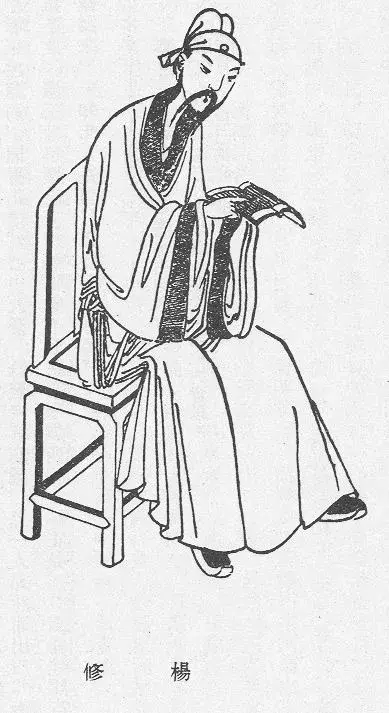
杨谅
Yang Liang (杨谅, 575–605), courtesy name Dezhang, was a native of Huayin, Hongnong (modern Huayin, Shaanxi). He was an imperial prince of the Sui dynasty, the fifth and youngest son of Emperor Wen (Yang Jian) and Empress Dugu Jialuo, and the younger maternal brother of Emperor Yang (Yang Guang). In 581, upon the founding of the Sui dynasty, he was ennobled as the Prince of Han. He subsequently served as Governor of Yongzhou,…
Yang Liang (杨谅, 575–605), courtesy name Dezhang, was a native of Huayin, Hongnong (modern Huayin, Shaanxi). He was an imperial prince of the Sui dynasty, the fifth and youngest son of Emperor Wen (Yang Jian) and Empress Dugu Jialuo, and the younger maternal brother of Emperor Yang (Yang Guang). In 581, upon the founding of the Sui dynasty, he was ennobled as the Prince of Han. He subsequently served as Governor of Yongzhou, General-in-Chief of the Right Guard, and General-in-Chief of the Left Guard. In 597, Yang Liang was appointed Area Commander-in-Chief of Bingzhou, overseeing the civil and military affairs of fifty-two prefectures across the Taihang Mountains in former Northern Qi territory. Emperor Wen bestowed upon him the exceptional imperial prerogative to act at discretion without being bound by ordinary statutes. In 598, he served as Commander-in-Chief of an expeditionary force of three hundred thousand troops against Goguryeo, which ended in withdrawal due to relentless rains, supply failures, and pestilence. During the final years of the Renshou era, witnessing the sequential deposition of his eldest brother Yang Yong and fourth brother Yang Xiu, Yang Liang grew intensely apprehensive. Within Bingzhou, he harbored fugitives, stockpiled weapons, and recruited southern commanders such as Xiao Mohe while actively plotting insurrection. Following Emperor Wen's death in July 604 and Yang Guang's accession, the new emperor dispatched Commander Qutu Tong to summon Yang Liang to the capital. Realizing the political danger, Yang Liang imprisoned his subordinate Sima Huangfu Dan and launched a massive rebellion from Bingzhou under the banner of executing the prime minister Yang Su and clearing the sovereign's court. While over fifty prefectures east of the mountains joined his cause, Yang Liang suffered from acute strategic indecision. Rejecting Pei Wen'an's master plan for a swift cavalry strike into Guanzhong to seize the capital, he dispersed his forces. Emperor Yang dispatched the supreme commander Yang Su, who crushed the rebel armies at Gaobi and Haoze, finally besieging Bingzhou. Facing utter collapse, Yang Liang surrendered; he was stripped of all titles, reduced to commoner rank, and placed under permanent house arrest, dying in confinement shortly thereafter at the age of thirty-one.
Born in the residence of the Duke of Sui as the youngest son of Yang Jian and Dugu Jialuo.
Created Prince of Han upon the founding of the Sui dynasty, deeply cherished by his parents.
Appointed Governor of Yongzhou and Upper Pillar of State, serving as General-in-Chief of the Right Guard and later Left Guard.
Appointed Area Commander-in-Chief of Bingzhou governing fifty-two prefectures, granted power to act at discretion.
Served as Commander-in-Chief of three hundred thousand troops against Goguryeo, forced to withdraw due to heavy rains and plague.
Witnessed the deposition of Crown Prince Yang Yong and began stockpiling weapons and recruiting warriors to safeguard his regional base.
Refused summons upon Emperor Wen's death, raised troops in Bingzhou, and declared a campaign against Yang Su.
Failed to execute an advance on Guanzhong, suffered devastating defeats against Yang Su at Gaobi and Qingyuan, and surrendered Bingzhou.
Stripped of titles and demoted to commoner status, died while imprisoned under permanent imperial surveillance at age thirty-one.
Yang Liang was born in Chang'an in 575 during the Northern Zhou dynasty. His father, Yang Jian, held the noble title of Duke of Sui, while his mother, Dugu Jialuo, hailed from the prestigious Dugu clan of the Eight Pillars of State. As the youngest of the five sons born to Yang Jian and his consort, Yang Liang was exceptionally handsome, sharp-witted, and indulged with immense parental affection from his earliest childhood. In 581, when Yang Jian accepted the abdication of the Northern Zhou emperor and established the Sui dynasty, the seven-year-old Yang Liang was formally created Prince of Han. In 592, he was appointed Governor of Yongzhou and granted the rank of Upper Pillar of State alongside the military post of General-in-Chief of the Right Guard, transitioning the following year to General-in-Chief of the Left Guard to command the imperial palace guards.
In 597, considering the vast extent, strategic sensitivity, and turbulent population of the conquered Northern Qi territories in North China, Emperor Wen resolved to station his closest blood kin at Taiyuan. Prior to his departure, Emperor Wen hosted a grand farewell banquet for Yang Liang at the hot springs of Lintong. The Area Command of Bingzhou entrusted to Yang Liang encompassed fifty-two prefectures stretching from Mount Hua in the west to the Bohai Sea in the east, and from Yanmen Pass in the north to the Yellow River in the south. To ensure that his beloved young prince would not be obstructed by external administrative bureaucracy, Emperor Wen granted Yang Liang the extraordinary privilege of handling civil and military affairs at his own discretion without being constrained by regular imperial codes and statutes, giving him unprecedented regional authority among Sui princes.
In 598, King Yeongyang of Goguryeo launched a cavalry raid into the Liaoxi frontier. Enraged by the border incursion, Emperor Wen issued an imperial decree designating Yang Liang and Upper Pillar of State Wang Shiji as commanders-in-chief of the expeditionary army, alongside Zhou Luohou commanding the naval fleet, mustering a joint land and naval force of three hundred thousand soldiers. However, the military expedition coincided with the torrential rainy season of late summer and early autumn. Supply routes across the frontier deteriorated into impassable mud, pestilence decimated the land forces as they forced the Liao River, and heavy gales wrecked the maritime fleet in the Bohai Sea. Yang Liang was compelled to withdraw his battered forces without achieving strategic objectives. Emperor Wen excused the failure on account of Yang Liang's youth and inexperience. In 599, when the Tujue raided the northern frontier, Yang Liang was nominally appointed commander-in-chief again, though he did not direct front-line engagements directly.
Around 600, intense political tremors shook the core of the Sui court. The eldest son and crown prince, Yang Yong, was framed and deposed by his ambitious younger brother Yang Guang, the Prince of Jin, while the fourth son, Yang Xiu, Prince of Shu, was similarly disgraced and stripped of power in Yizhou. Observing the ruthless fall of his elder brothers, Yang Liang realized that the succession struggle was fraught with mortal danger and that the cunning Yang Guang would never tolerate a powerful regional rival. Relying on the formidable geographic bastions and cavalry strength of Bingzhou, Yang Liang harbored treasonous intentions and resolved to arm himself against imperial encroachment. He repeatedly submitted memorials to Emperor Wen claiming that escalating threats from northern nomads necessitated comprehensive military preparations at Taiyuan. Emperor Wen fully endorsed his son's requests. Yang Liang exploited this sanction to mobilize tens of thousands of corvee laborers to reconstruct fortifications, manufacture weapons and armor, recruit outlaws and martial retainers, and enlist talented officers, including Wang Kui, son of the renowned Liang general Wang Sengbian, and the battle-hardened former Chen general Xiao Mohe.
In July 604, Emperor Wen passed away at the Renshou Palace under contentious circumstances, and Crown Prince Yang Guang ascended the throne as Emperor Yang. Fully aware that Yang Liang commanded vast armies and held subversive designs in Taiyuan, the newly enthroned emperor dispatched Commander Qutu Tong with an imperial edict ordering Yang Liang to immediately return to the capital for funeral ceremonies. Upon Qutu Tong's arrival, Yang Liang detected evasive behavior in the envoy and inconsistencies within the imperial documents. Concluding that Emperor Wen had died and that a palace usurpation had occurred, Yang Liang adamantly refused to travel to the capital. When his commandery administrator, Sima Huangfu Dan, repeatedly urged him not to disobey imperial authority, an enraged Yang Liang threw him into prison.
Yang Liang then summoned his civil and military subordinates to raise the banner of outright revolt. His advisor Wang Kui analyzed the situation: "The families and ancestral homes of the officers and soldiers under Your Highness's command largely reside in Guanzhong. If you intend to employ them effectively, you must execute a lightning strike directly upon Chang'an, which could settle the empire within ten days. If, on the other hand, your goal is merely to hold the former lands of Northern Qi, you must rely entirely on eastern commanders and local support." Lacking the strategic decisiveness to commit to either path, Yang Liang attempted an ineffective compromise. He formally published a denunciation accusing Right Servant of the Department of State Affairs Yang Su of orchestrating treason and issuing forged edicts, declaring that his military mobilization was solely intended to eliminate Yang Su and purify the imperial court. Resenting the harsh centralizing policies of the Sui court, former Northern Qi officials and regional commanders across the Taihang range rallied in droves, placing dozens of prefectures under rebel control.
Pei Wen'an, an administrator of military affairs in Bingzhou, presented a bold plan to Yang Liang: "All territory west of Jingxing is firmly under our control, and the forces east of the mountains obey your command. Your Highness should assign second-rate troops to guard the mountain passes and personally lead the cavalry elite through Pukin Pass. I volunteer to lead the vanguard to assault Bashang. With Guanzhong thrown into panic before loyalist reinforcements can gather, the capital will fall within ten days!" Yang Liang initially approved the maneuver, dispatching Yu Gongli toward Heyang, Qi Liang toward Liyang, Liu Jian into Hebei, and Qiao Zhongkui toward Yanmen, while placing Pei Wen'an, Hedan Gui, and Wang Dan in command of the primary strike force marching toward Pujin Pass.
However, when the vanguard advanced to within a hundred miles of Pujin Pass, Yang Liang's chronic vacillation and suspicious disposition crippled the campaign. Fearing that Pei Wen'an might turn traitor once inside the mountain passes, Yang Liang abruptly changed his orders, commanding Hedan Gui to demolish the pontoon bridge over the Yellow River and retreat into Puzhou, while recalling Pei Wen'an back to Taiyuan. Pei Wen'an galloped back to the headquarters in Jinyang and vehemently argued: "In warfare, speed is paramount, and surprise achieves victory. Since Your Highness neither leads the main assault nor permits the vanguard to strike, abandoning this golden opportunity will invite total ruin!" Yang Liang obstinately ignored the advice, completely surrendering the strategic offensive against the capital.
Upon learning of the rebellion, Emperor Yang promptly dispatched the empire's preeminent strategist, Yang Su, leading five thousand elite cavalry in a rapid dash to Pujin. Yang Su completely outmaneuvered and shattered the defenses of Wang Dan and Hedan Gui, forced a crossing of the Yellow River, and advanced directly toward Taiyuan with an expanded force of forty thousand infantry and cavalry. Yang Liang dispatched General Zhao Zikai to hold the formidable mountain pass of Gaobi near Jiexiu. Utilizing the mountainous terrain, Yang Su executed a covert flanking maneuver that dismantled the rebel barricades and routed Zhao Zikai's garrison.
When news of the collapse reached Jinyang, a terrified Yang Liang personally marched his remaining forces to Haoze (north of modern Fenyang, Shanxi) to set up a defensive barrier. Torrential rain fell incessantly, turning roads into impassable quagmires. Yang Liang lost his nerve and prepared to retreat, but Wang Kui pleaded: "Yang Su's army has marched deep into our territory without external support; their men and horses are exhausted. If Your Highness commits your elite troops to an immediate battle, victory is certain. If you retreat before engaging, the entire army will collapse!" Yang Liang dismissed the counsel and retreated in panic toward Qingyuan (modern Qingxu, Shanxi). Yang Su seized the momentum, launching a fierce assault that decimated the disorganized rebel lines. Over eighteen thousand rebel soldiers were killed, and the famed general Xiao Mohe fell in battle. Yang Liang fled in disgrace back into the walled city of Bingzhou. Yang Su surrounded the city and erected assault scaling ladders. Facing imminent annihilation, Yang Liang opened the city gates and surrendered, bringing the month-long rebellion to an ignominious end. The court ministers universally demanded Yang Liang's public execution, but Emperor Yang theatrically proclaimed: "Between brothers of the same flesh and blood, I cannot bear to execute him." An imperial edict was issued demoting Yang Liang to commoner rank, expelling him from the imperial genealogy, and sentencing him to perpetual imprisonment. In 605, Yang Liang died in desolate confinement at the age of thirty-one. His son Yang Hao was likewise subjected to long-term house arrest until he perished during the Jiangdu mutiny.
In 597, Emperor Wen placed Yang Liang in charge of the Bingzhou Area Command, which controlled fifty-two prefectures east of Mount Hua. Bingzhou was not only the former dynastic heartland and power base of Northern Qi, but also the crucial strategic bastion for defending against northern nomadic federations and controlling the Central Plains. Emperor Wen conferred upon Yang Liang the extraordinary power to handle administrative and military affairs at his discretion without following statutory codes. This mandate granted Yang Liang regional political, military, and fiscal independence that far exceeded that of any other Sui prince. He exploited these privileges to amass vast quantities of provisions, forge armaments, and expand his garrison troops, laying the military foundation for the later uprising.
In 598, following Goguryeo incursions along the Liaoxi border, the twenty-three-year-old Prince of Han was appointed Commander-in-Chief of an expeditionary force of three hundred thousand soldiers to conduct a punitive campaign in Liaodong. This enterprise represented the largest foreign military mobilization undertaken by the Sui dynasty up to that time. However, lacking adequate command experience and logistical expertise for large-scale operations, Yang Liang was unable to overcome torrential rains, supply disruption, and widespread dysentery. His armies were forced to retreat without achieving battlefield victory. This costly defeat demonstrated Yang Liang's strategic inadequacies in military command and prompted him to redirect his ambitions toward domestic political intrigue.
In July 604, Yang Liang initiated the Bingzhou Rebellion under the pretext of eliminating Yang Su and cleansing the imperial court, triggering the largest internal armed rebellion among imperial princes since the establishment of the Sui dynasty. In the opening phase, drawing upon extensive regional reserves and capitalizing on local resentment among former Northern Qi subjects toward Sui central rule, Yang Liang's forces rapidly swept across dozens of prefectures north of the Yellow River, shaking the imperial court in Guanzhong. However, due to his strategic myopia and indecisiveness between a rapid strike on Chang'an and a defensive partition of northern lands, he dismantled bridges and recalled his vanguard, squandering the decisive opportunity to march on the capital. His rebellion was swiftly crushed by Yang Su's veteran armies. The failure of this uprising marked the definitive collapse of large-scale armed resistance by eastern clans and Northern Qi remnants against the Guanzhong ruling elite.
FIGURES ASSOCIATED WITH THIS DYNASTY