Birth in Khorchin
Born on the Khorchin steppe to Jaisang-buhe, hereditary Beile of the Borjigit clan.
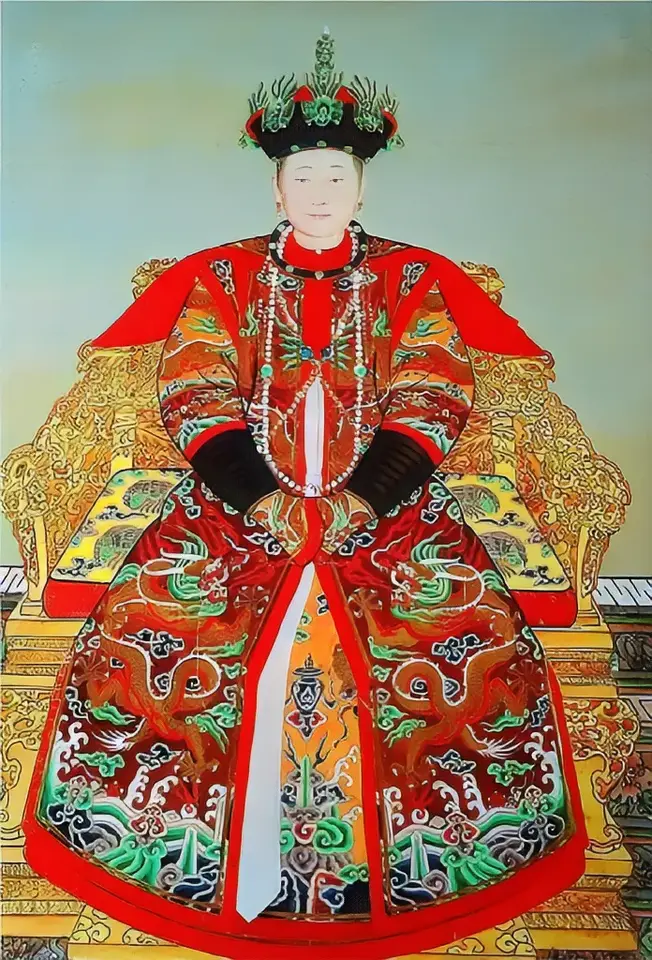
海兰珠
Harjol (海兰珠, 1609 – October 22, 1641), of the Mongol Borjigit clan and formally known in imperial records as Consort Chen of Guanju Palace, was the paramount beloved imperial consort of Hong Taiji (Emperor Taizong of Qing). Descended from Genghis Khan's brother Qasar, she was the daughter of Jaisang-buhe, Beile of the Khorchin Mongols, the biological niece of Empress Xiaoduanwen (Jerjer), and the elder sister of Empress…
Harjol (海兰珠, 1609 – October 22, 1641), of the Mongol Borjigit clan and formally known in imperial records as Consort Chen of Guanju Palace, was the paramount beloved imperial consort of Hong Taiji (Emperor Taizong of Qing). Descended from Genghis Khan's brother Qasar, she was the daughter of Jaisang-buhe, Beile of the Khorchin Mongols, the biological niece of Empress Xiaoduanwen (Jerjer), and the elder sister of Empress Dowager Xiaozhuang (Bumbutai). In November 1634 (the eighth year of Tiancong), she arrived in Mukden escorted by her elder brother Ukshan and was formally received as an imperial consort by Hong Taiji at the age of twenty-six. In 1636, upon establishing the Qing Empire, Hong Taiji created the "Inner Five Palaces" system and elevated Harjol to Consort Chen of Guanju Palace, an evocative reference to the classic opening ode of the Book of Songs. Within the imperial harem hierarchy, she was ranked second only to Empress Jerjer, presiding above the consorts of the Linzhi, Yanqing, and Yongfu palaces. When she gave birth to Hong Taiji's eighth son in 1637, the emperor rejoiced immensely, holding state banquets and issuing the first nationwide imperial amnesty in Qing history specifically commemorating the birth of an imperial prince. Although the infant tragically died within months, Hong Taiji's profound devotion to Harjol remained undiminished. In October 1641, during the critical Battle of Songjin against Ming armies, Hong Taiji received news of Harjol's sudden grave illness and galloped through the night from the Liaodong front to Mukden; however, Harjol passed away hours before his arrival at the age of thirty-three. Hong Taiji was utterly shattered by her sudden passing, repeatedly losing consciousness in grief. He granted her an unprecedented four-character posthumous name, Primary Consort Minhuigonghe, and suspended court festivities, banquets, and musical performances across the empire for over a year. Harjol's life exemplified the height of Qing-Mongol dynastic alliances, while her tragic romance with Hong Taiji remains one of the most poignant emotional narratives in Chinese imperial history.
Born on the Khorchin steppe to Jaisang-buhe, hereditary Beile of the Borjigit clan.
Escorted to Mukden by her brother Ukshan; received with grand ceremonies by Hong Taiji.
Elevated to Consort Chen of Guanju Palace, taking precedence as second lady of the Five Palaces.
Bore Hong Taiji's eighth son; the emperor proclaimed a grand empire-wide amnesty.
The unnamed prince died in infancy, plunging Harjol into deep emotional anguish.
Hong Taiji bestowed high noble titles and ceremonial retinues upon Harjol's mother Boli.
Died suddenly in Guanju Palace on October 22; Hong Taiji rushed from the Songjin battlefield in grief.
Posthumously invested as Primary Consort Minhuigonghe; the emperor personally poured sacrificial wine.
Hong Taiji declined to attend the victory celebration for the Battle of Songjin due to ongoing mourning.
Entombed in an imperial garden mausoleum five li outside Mukden's Dizai Gate.
Harjol was born in 1609 on the grasslands of the Khorchin Mongol region. Her Mongol name, Harjol (or Harjula), translated to "radiant jade." Her family traced direct descent from Khabutu Qasar, the heroic second brother of Genghis Khan, holding hereditary leadership over the Khorchin Left Wing. Her father, Jaisang-buhe, was an influential Beile who later received the posthumous peerage of Prince Zhongqin of the First Rank. During the consolidation of Later Jin rule in Manchuria, Nurhaci and Hong Taiji vigorously pursued strategic intermarriages with the Khorchin Mongols to secure their northern flank and absorb formidable steppe cavalry into the Eight Banners system.
Harjol's aunt Jerjer had wed Hong Taiji in 1614, later presiding as Primary Consort of the Central Palace. Her younger biological sister Bumbutai (the future Empress Dowager Xiaozhuang) had married Hong Taiji in 1625. In late 1634, amid deepening Manchu-Mongol alliances, the Khorchin leader Ukshan personally escorted his younger sister Harjol to Mukden. Hong Taiji rode out ten li accompanied by his senior consorts and banner princes to welcome her, hosting elaborate banquets in the imperial palace. Although Harjol was twenty-six years old—nine years older than when her sister Bumbutai had entered the palace—her refined beauty, gentle demeanor, and graceful manners immediately captivated Hong Taiji, who bestowed upon her his undivided devotion.
In May 1636, Hong Taiji officially proclaimed the founding of the Great Qing Empire at Mukden, transitioning the realm from a tribal steppe confederation into a bureaucratic dynastic empire. As part of this comprehensive institutionalization, Hong Taiji established the "Inner Five Palaces" system to formalize inner court hierarchy. On July 10, 1636, a solemn investiture ceremony was held at the Hall of Great Government.
Hong Taiji invested Harjol as Consort Chen of Guanju Palace (Eastern Palace). The name "Guanju" was selected personally by the emperor from the opening stanza of the Book of Songs ("Guan guan cry the ospreys, on the islet in the river. A modest, retiring, virtuous lady, for our gentleman a good mate"), symbolizing his profound marital devotion. Furthermore, the title "Chen" denoted the North Star and imperial palace quarters, an exalted title rarely granted to concubines in earlier dynasties. In the hierarchy of the Five Palaces, Consort Chen ranked directly below her aunt Empress Jerjer of Qingning Palace, outranking Consort Guifei of Linzhi Palace, Consort Shufei of Yanqing Palace, and her sister Consort Zhuang of Yongfu Palace.
On August 27, 1637, Consort Chen gave birth to Hong Taiji's eighth son at Guanju Palace. Hong Taiji, then forty-six years old, was overjoyed. Viewing the child—who united Manchu imperial royalty and Mongol Borjigit lineage—as his rightful dynastic successor, Hong Taiji resolved to elevate the occasion into a grand state event.
The emperor held celebrations at the Hall of Great Government and decreed a general amnesty throughout the Qing Empire. The imperial decree stated: "From antiquity, whenever a sovereign celebrated the birth of a prince, an amnesty was proclaimed throughout the realm. Now, favored by Heaven, Consort Chen of Guanju Palace has borne an imperial heir. We consult ancient ceremonial precedents so that wherever our political influence extends, all may receive grace." Except for treason and capital religious crimes, all prisoners were pardoned and released. This marked the very first nationwide amnesty declared for an imperial prince's birth in Qing history. Simultaneously, Hong Taiji conferred the noble title of Princess Consort of the First Order upon Harjol's mother Boli, presenting her with an imperial carriage and official retinue.
However, the favored infant prince fell severely ill and died on March 13, 1638, before he was even given an official personal name. The emperor was deeply grieved, while Harjol suffered an unbearable emotional collapse. Falling into persistent melancholy, her physical health rapidly deteriorated. Despite this misfortune, Hong Taiji demonstrated tender compassion, spending extended time at her bedside to comfort her.
In the autumn of 1641, the Battle of Songjin—the decisive military confrontation between the Qing Empire and Ming China—reached its critical climax in western Liaodong. Ming commander Hong Chengchou commanded an army of 130,000 soldiers besieging Songshan. Suffering from nosebleeds and physical exhaustion, Hong Taiji had personally led Banner cavalry to encircle the Ming forces.
On October 16, as tactical maneuvers hung in the balance, an imperial courier galloped from Mukden reporting that Consort Chen had fallen gravely ill. Alarmed, Hong Taiji entrusted frontline operations to his banner commanders and set off on horseback before dawn the next day. Riding furiously through the night, he arrived at the frontier border late on October 21, only to receive a second message warning that the consort was in critical condition. Hong Taiji broke camp in the dark and rode through exhaustion. At dawn on October 22, a third messenger arrived with the news that Consort Chen had passed away. Devastated, the emperor galloped through Mukden's gates and rushed into Guanju Palace, but thirty-three-year-old Harjol had already closed her eyes forever.
Confronting the lifeless body of his beloved, Hong Taiji broke down in tears. Official records note that his weeping was so intense that he collapsed and lost consciousness from midday until dusk. Banner princes, grand secretaries, and palace ladies knelt around him, pleading with him to preserve his imperial health. Although Hong Taiji acknowledged in sorrow that Heaven had not created him merely for the sake of a woman, he was unable to shake the overwhelming devastation of losing his partner.
Hong Taiji orchestrated an elaborate funeral for Harjol that surpassed all previous dynastic precedents. On November 2, the emperor led civil and military officials in performing sacrificial rites, kneeling in person to pour wine and issuing an imperial eulogy that granted her the rare four-character posthumous title of Primary Consort Minhuigonghe. Throughout subsequent months, Hong Taiji conducted regular monthly and seasonal sacrifices at her tomb. In early 1642, he cancelled traditional New Year court audiences and barred all musical performances and banquets across the realm. Even during the grand banquet in April 1642 celebrating the capture of Hong Chengchou and Zu Dashou at Songjin, Hong Taiji refused to attend in person because he remained in mourning robes for Harjol.
During the remaining two years of his life, whenever Hong Taiji rode outside Mukden on hunting trips or administrative inspections, he stopped before Harjol's tomb five li outside Dizai Gate to weep uncontrollably. The relentless grief took an irreversible toll on his health. In September 1643, less than two years after Harjol's passing, Hong Taiji died suddenly in Qingning Palace at the age of fifty-one. Harjol was solemnly interred in her own garden mausoleum outside Mukden, immortalizing their extraordinary bond.
Harjol's singular status in the early Qing court represented an extraordinary chapter in Manchu imperial history. When Hong Taiji established the Inner Five Palaces in 1636, he designated Guanju Palace for Harjol, assigning her precedence over all consorts except Empress Jerjer of the Central Palace.
Her ascendancy was founded on profound personal affinity and emotional companionship with Hong Taiji. Despite entering the court later than her sister Bumbutai and without adult children, Harjol enjoyed exclusive favor, establishing Guanju Palace as the emperor's primary domestic retreat. This marital bond reshaped inner court dynamics and reflected the paramount prestige accorded to the Khorchin Mongol royal house during the dynasty's formative years.
The celebration surrounding the birth of Harjol's son in 1637 established a major institutional precedent in Qing ceremonial governance. In early Manchu custom, royal childbirth was treated primarily as an internal family matter commemorated by palace feasts.
By ordering a comprehensive nationwide amnesty and hosting state banquets for Mongolian envoys and banner elites, Hong Taiji elevated the birth of Consort Chen's son into a dynastic milestone. Although the prince died in infancy, the ceremonial framework established on this occasion set an enduring benchmark for imperial favor and succession politics throughout the Qing dynasty.
Hong Taiji's abandonment of the Songjin frontline to rush to Harjol's deathbed is an iconic moment in Chinese military and imperial history. In the midst of the most consequential siege campaign against the Ming dynasty, the supreme commander chose to risk military cohesion to attend to his ailing consort.
Galloping hundreds of li across Liaodong and riding multiple horses to death, Hong Taiji demonstrated personal devotion that defied conventional expectations of ruthless empire-builders. This dramatic episode has been studied by historians as a compelling intersection of supreme military responsibility and profound human vulnerability.
The elaborate mourning protocols and posthumous honors instituted for Harjol transformed early Qing court rites. By conferring the four-character posthumous title "Minhuigonghe," Hong Taiji initiated the custom of granting multi-character posthumous names to imperial consorts, an honor previously restricted to empresses.
Furthermore, his strict enforcement of mourning restrictions—penalizing princes and nobles who played music during her funeral with deprivation of peerages and corporal punishment—underscored the extraordinary solemnity of her memory. The construction of her dedicated mausoleum outside Mukden cemented her legacy as the defining love of Hong Taiji's life.
FIGURES ASSOCIATED WITH THIS DYNASTY