Birth in Wenxian
Born in Wenxian, Heyang; fell in love with mountains and streams, studying ancient masterpieces.
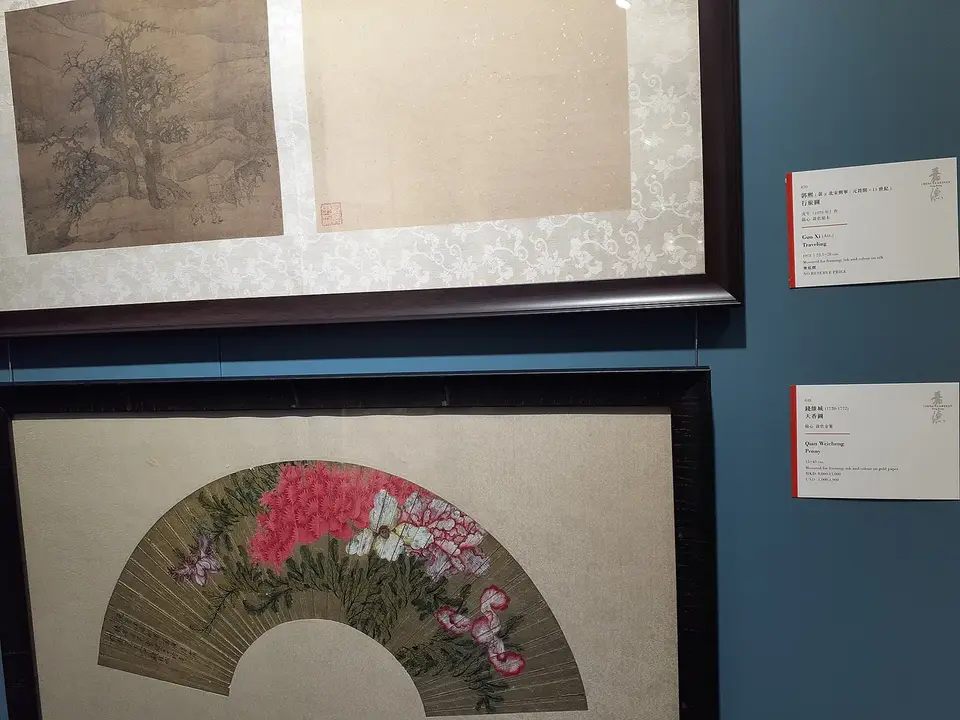
郭熙
Guo Xi (郭熙, b. 1023) was a paramount master of Chinese landscape painting and an influential art theorist of the Northern Song dynasty. Hailing from Wenxian in Heyang, he immersed himself in the natural landscapes of Mount Taihang from youth, studying painting techniques diligently. He initially followed the five-dynasties northern landscape master Li Cheng before absorbing the masterworks of earlier artists to forge an…
Guo Xi (郭熙, b. 1023) was a paramount master of Chinese landscape painting and an influential art theorist of the Northern Song dynasty. Hailing from Wenxian in Heyang, he immersed himself in the natural landscapes of Mount Taihang from youth, studying painting techniques diligently. He initially followed the five-dynasties northern landscape master Li Cheng before absorbing the masterworks of earlier artists to forge an innovative, monumental style. In 1068, Guo Xi was summoned by imperial decree into the Hanlin Painting Academy under Emperor Shenzong, serving successively as Academic Painter (Yixue) and Waiting Official in the Hanlin Academy (Hanlin Daizhao Zhichang), enjoying deep imperial trust and favor. Guo Xi excelled at painting monumental, deep mountain vistas and winter forests, pioneering the "curled cloud" texture strokes (juanyun cun, also known as ghost-face strokes) for rocky crags, while depicting tree branches in sharp, downward-reaching "crab-claw" forms with vigorous brushwork and luminous ink washes. Emperor Shenzong commissioned him to evaluate the imperial palace collection of historical paintings and tasked him with painting screens and walls throughout the imperial palace. Celebrated alongside Li Cheng as "Li-Guo," his art theory was compiled by his son Guo Si into An Essay on Landscape Painting (Linquan Gaozhi), which formulated the renowned "Three Distances" (sanyuan) spatial perspective theory, establishing a landmark in Chinese art theory. His surviving masterpieces, Early Spring (Zaochun Tu) and Level Distance from Stony Heap (Keshi Pingyuan Tu), are celebrated national treasures.
Born in Wenxian, Heyang; fell in love with mountains and streams, studying ancient masterpieces.
Mastered Li Cheng's landscape style, becoming celebrated among scholar-officials for majestic landscapes.
Summoned by Emperor Shenzong into the Hanlin Painting Academy as Academic Painter, painting screens for palace halls.
Completed his immortal masterpiece Early Spring, characterized by towering crags and delicate spring mist.
Painted Level Distance from Stony Heap, displaying mastery over flat distance and spacious autumn mist.
Appointed Waiting Official in the Hanlin Academy and tasked with cataloging and ranking palace paintings.
His son Guo Si compiled his lifelong lectures into Linquan Gaozhi, establishing monumental landscape theories.
In 1023, Guo Xi was born in Wenxian, Heyang. Flanked by the southern slopes of Mount Taihang and the surging Yellow River, he grew up surrounded by dramatic topography that fostered his deep affinity for natural landscapes. He spent his youth exploring deep ravines and rocky precipices, observing how morning mist and shifting clouds transformed trees and stones across four seasons, sketching with charcoal and stones to hone his innate artistic talent.
As a young artist, Guo Xi adopted the stylistic tradition of Li Cheng (courtesy name Xianxi, style name Yingqiu), the tenth-century master celebrated for sparse, clear winter forests across northern plains. Guo Xi absorbed Li Cheng's atmospheric ink washes while looking beyond factional boundaries. He incorporated the rugged structural force of Jing Hao and Guan Tong, alongside the moist, atmospheric greenery of southern masters Dong Yuan and Juran. As his brushwork matured, Guo Xi became famous across the Central Plains, with prominent ministers vying to acquire his painted screens.
In 1068, Emperor Shenzong ascended the throne, determined to revitalize the dynasty through institutional reform while fostering dynamic cultural achievements. Favoring expansive, majestic landscapes, the emperor learned of Guo Xi's preeminence and summoned him to Kaifeng to join the Hanlin Painting Academy.
Initially appointed Academic Painter (Yixue), Guo Xi was granted private audiences with Emperor Shenzong, who admired his mature brushwork and commissioned him to paint monumental murals and screens for imperial halls. Palace buildings, including the Department of State Affairs, the Secretariat, the Bureau of Military Affairs, and Emperor Shenzong's personal quarters at the Ruisi Hall, were adorned with Guo Xi's towering landscape murals.
Emperor Shenzong treated Guo Xi with high favor, commanding that the entire imperial collection of Tang and Five Dynasties masterworks be brought out for Guo Xi to inspect, catalog, and rank. This unprecedented access expanded Guo Xi's artistic vision, transforming his early fine-line precision into the heroic, breathtaking style of his late career, leading to his promotion as Waiting Official in the Hanlin Academy (Hanlin Daizhao Zhichang).
During his decades in the imperial academy, Guo Xi reached the pinnacle of his creative powers. In 1072, at the age of fifty, he created the monumental hanging scroll Early Spring (Zaochun Tu). Depicting the awakening of nature as snow thaws and spring mists rise among soaring crags, the scroll merged northern alpine grandeur with the moist vitality of southern spring, achieving the highest ideal of rhythmic vitality in Chinese landscape art.
In 1078, Guo Xi produced Level Distance from Stony Heap (Keshi Pingyuan Tu), capturing a serene autumn riverbank. Employing a level-distance perspective, the painting depicts a winding stream, jagged boulders, and bare trees with astonishing spatial depth and atmospheric transparency. Literary luminaries including Su Shi, Su Zhe, and Huang Tingjian admired his art intensely; Su Shi famously composed verse praising his work: "Sitting in the Jade Hall facing the hazy spring, one recalls the scenic recesses of Jiangnan; suddenly seeing a scroll from Heyang, wind rises chilly from ancient pines."
In his final years, Guo Xi imparted his artistic philosophy and painting techniques to his son Guo Si. Guo Si, who rose to Auxiliary in the Huiyou Pavilion, meticulously compiled his father's lectures, studio conversations, and technical instructions into the seminal treatise An Essay on Landscape Painting (Linquan Gaozhi).
In Linquan Gaozhi, Guo Xi articulated a comprehensive philosophy of landscape art, covering metaphysical contemplation, spatial perspective, ink techniques, and connoisseurship. He formulated the celebrated "Three Distances" (sanyuan) perspective theory and the aesthetic standard of landscapes that are "walkable, viewable, tourable, and livable," elevating Chinese landscape theory from technical guidelines into a mature aesthetic philosophy. Guo Xi passed away peacefully in Kaifeng during the late Yuanfeng era, leaving a legacy that influenced generations of painters.
Guo Xi's technical innovations transformed the visual vocabulary of Chinese landscape painting. To depict the weathered, rugged limestone mountains of northern China, he innovated the "curled cloud texture stroke" (juanyun cun, also known as ghost-face strokes). Applying curving, swirling brushstrokes layered with varied ink washes, he conveyed the weathered volume, interlocking crags, and shifting light of mountainous masses.
For depicting winter forests, he developed the renowned "crab-claw branch" method (xiezhao zhi). The trunks of his ancient pines and oaks rose like tempered steel, while their downward-curving branches twisted with razor-sharp intensity like the pincers of a crab, exuding immense vitality. His brushwork combined monumental force with crystalline clarity, creating an atmosphere where distant mountains resembled swirling mists, while near details revealed microscopic precision.
In the "Landscape Instruction" (Shanshui Xun) section of Linquan Gaozhi, Guo Xi formulated the "Three Distances" theory, the most important spatial perspective doctrine in classical Chinese art: "Mountains have three distances: looking up to the mountain peak from below is called High Distance (gaoyuan); peeking behind the mountain from the front is called Deep Distance (shenyuan); looking from near mountains toward distant mountains is called Level Distance (pingyuan)."
High Distance evokes towering grandeur; Deep Distance reveals layers of receding ravines; Level Distance conveys spacious, tranquil openness. Guo Xi realized this spatial philosophy in his masterpieces Early Spring (synthesizing High and Deep Distance) and Level Distance from Stony Heap (the exemplar of Level Distance), providing Chinese painters with a dynamic, multi-point perspective framework that transcended Western single-point focus.
Guo Xi's most profound philosophical contribution was defining the spiritual purpose of landscape painting for the literatus. In Linquan Gaozhi, he opened with the question: "Why does the superior man love mountains and streams? Cultivating his nature in gardens is his constant habit; singing among springs and stones is his perpetual joy... Among landscapes, there are those one can walk through, those one can view, those one can tour, and those one can live in. Any painting attaining these enters the Divine Class; but being walkable and viewable is not as desirable as being tourable and livable."
He argued that a landscape painting was not a literal topographical map, but a spiritual sanctuary where the scholar-official could cleanse his mind and preserve moral purity amidst bureaucratic pressures. A true masterpiece had to embody living nature so authentically that viewers felt transported into its valleys.
During the Xuanhe era under Emperor Huizong, the imperial collection cataloged thirty masterworks by Guo Xi, including Strange Rocks and Cold Forest, Ancient Trees and Distant Mountains, and Twin Pines and Water Pavilion.
Among surviving Northern Song landscape masterworks, Guo Xi's Early Spring (in the National Palace Museum in Taipei) and Level Distance from Stony Heap (in the Palace Museum in Beijing) are revered worldwide. Early Spring, with its panoramic composition and luminous ink tones, remains the definitive monument of Northern Song civilizational confidence and artistic grandeur.
FIGURES ASSOCIATED WITH THIS DYNASTY