Birth
Born into an official gentry family in Guangzong, named "Queen" by her admiring father
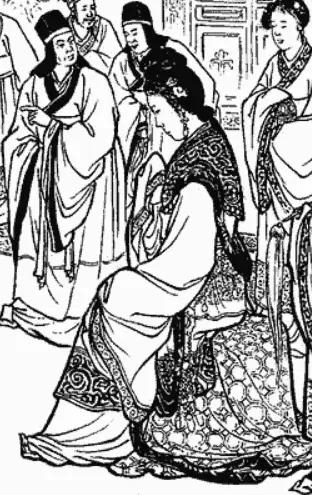
郭女王
Guo Nvwang (郭女王; 184–235), courtesy name Nvwang, was a native of Guangzong in Anping. She was the empress of Emperor Wen of Wei (Cao Pi) and the empress dowager to Emperor Ming (Cao Rui) during the Three Kingdoms period. Renowned for her acute intellect and political wisdom from youth, her father praised her exceptional brilliance with the courtesy name "Nvwang" (Queen among Women). Orphaned during the catastrophic yellow…
Guo Nvwang (郭女王; 184–235), courtesy name Nvwang, was a native of Guangzong in Anping. She was the empress of Emperor Wen of Wei (Cao Pi) and the empress dowager to Emperor Ming (Cao Rui) during the Three Kingdoms period. Renowned for her acute intellect and political wisdom from youth, her father praised her exceptional brilliance with the courtesy name "Nvwang" (Queen among Women). Orphaned during the catastrophic yellow turban wars and warlord upheavals of the late Han Dynasty, she was eventually chosen for Cao Pi's princely household. During the fierce succession rivalry between Cao Pi and his brother Cao Zhi, Guo Nvwang served as a brilliant strategic adviser, formulating crucial schemes that secured Cao Pi's confirmation as heir apparent. In 222, Cao Pi overcame bureaucratic objections to consecrate her as Empress. She instituted strict frugality, emulating Empress Ma of the Eastern Han, restrained her maternal relatives from obtaining government office or noble fiefs, and protected meritorious officials from slander, intervening decisively to save the founding general Cao Hong from execution. Following Cao Pi's death, she was honored as Empress Dowager. She died in 235 and was buried beside Cao Pi at the Shouyang Mausoleum with the posthumous title Empress Wende.
Born into an official gentry family in Guangzong, named "Queen" by her admiring father
Orphaned by war and entered Cao Pi's princely household, earning extraordinary trust
Advised Cao Pi on political survival, helping him defeat Cao Zhi to become crown prince
Conferred the rank of Lady of Pure Character upon Cao Pi's dynastic founding of Cao Wei
Consecrated as Empress of Cao Wei despite aristocratic opposition
Issued strict decrees forbidding maternal kin from meddling in state affairs or seizing land
Honored as Empress Dowager upon the accession of Emperor Ming (Cao Rui)
Severely reprimanded maternal kin seeking luxury, mandating spartan living
Died in Xuchang Palace at the age of fifty-two, interred at Shouyang Mausoleum
Guo Nvwang was born into a respected bureaucratic family in Guangzong in Anping. Her father, Guo Yong, served as the Governor of Nan Commandery during the late Eastern Han Dynasty. When Guo Nvwang was born, unusual celestial omens were said to attend her birth. From an early age, she exhibited astonishing political insight, composed bearing, and acute intellect. Marvelling at her maturity, Guo Yong told his kinsmen: "She is truly the queen among women in our household!" Accordingly, he gave her the unusual courtesy name Nvwang (literally "Queen").
Tragedy struck during her youth when the Yellow Turban Rebellion and ensuing warlord wars engulfed the Central Plains. Both her parents and siblings died amidst widespread violence and famine. The noble Guo lineage collapsed, leaving the young Guo Nvwang an impoverished orphan wandering across war-torn provinces before finding shelter as a domestic attendant in the household of the Marquis of Tongdi. Despite servitude, she maintained an aristocratic dignity, immersing herself in historical records and imperial chronicles.
In 213, Cao Cao was ennobled as Duke of Wei and created the Wei princely state. Possessing remarkable poise and intelligence, Guo Nvwang was selected into the eastern palace of the heir-designate, Cao Pi. Captivated by her strategic intellect, Cao Pi held her in supreme esteem, seeking her counsel on state affairs.
At the time, Cao Cao hesitated between Cao Pi and his third son, the peerless poet Cao Zhi, for the succession. Supported by brilliant strategists like Yang Xiu and Ding Yi, Cao Zhi frequently dazzled Cao Cao with poetic brilliance, placing Cao Pi in mortal political jeopardy. In this desperate crisis, Guo Nvwang acted as Cao Pi's chief confidential adviser. Penetrating Cao Cao's suspicious temperament, she instructed Cao Pi to display unvarnished modesty, filial grief, and prudent frugality while suppressing arrogant ambition. Coordinating with external ministers such as Jia Xu and Sima Yi, her counsel steered Cao Pi through court minefields. In 217, Cao Pi triumphed, being officially designated crown prince of Wei, largely due to Guo Nvwang's political planning.
In 220, following Cao Cao's death, Cao Pi deposed Emperor Xian of Han and founded the Cao Wei Dynasty. Cao Pi immediately elevated Guo Nvwang to the rank of Lady of Pure Character (Guipin), making her the foremost lady of the inner court. In 222, Cao Pi determined to appoint her Empress. Conservative ministers led by Zhan Qian objected, arguing that Lady Guo lacked an eminent ancestral lineage and that an aristocratic princess should be chosen instead. Unmoved, Cao Pi dismissed all objections and promulgated imperial edicts consecrating Guo Nvwang as Empress of Wei.
As Empress, Guo Nvwang established an exemplary standard of moral governance. She lived with spartan frugality, wearing unadorned silks and rejecting gold jewelry. She treated palace consorts with gentle equanimity, interceding to clear concubines framed by court intrigue. Mindful of the catastrophic downfalls of the Eastern Han Dynasty caused by overweening consort clans, she strictly forbade the Guo family from acquiring high bureaucratic posts, military commands, or noble estates. When Cao Pi proposed ennobling her relatives, she firmly declined. When a Guo kinsman committed a commercial theft, she ordered him punished under standard criminal statutes without clemency.
Empress Guo maintained uncompromising moral courage in checking imperial petulance. The veteran founding general Cao Hong had once refused to lend silk to the young Cao Pi due to stinginess, which the vengeful emperor never forgot. Upon taking the throne, Cao Pi used a crime committed by one of Cao Hong's retainers as a pretext to condemn the veteran general to death and confiscate his estate. Courtiers and Empress Dowager Bian pleaded in vain. Knowing that Cao Hong had once saved Cao Cao's life at Xingyang by relinquishing his own horse, Empress Guo intervened courageously. She wept before Empress Dowager Bian, urging her to threaten Cao Pi with the empress's deposition. Terrified by his mother's rage, Cao Pi relented and spared Cao Hong, preserving the loyalty of the Wei military elite.
Similarly, when the principled general Bao Xun was condemned to death by Cao Pi for strict adherence to the law, Guo Nvwang wept and pleaded before the emperor to spare the loyalist's life. Though unable to alter the outcome in that singular instance, her moral bravery won the unbounded veneration of the Wei court.
In 226, Cao Pi died after a brief reign, and his son Cao Rui (Emperor Ming) mounted the throne. Revering Guo Nvwang for her maternal care and ethical instruction, Cao Rui honored her as Empress Dowager, installing her in the Yong'an Palace. During her tenure as dowager, she maintained unbending vigilance against maternal corruption, ordering relatives to live humbly.
In February 235, Empress Dowager Guo passed away in Xuchang Palace at the age of fifty-two. Honoring her wish for a frugal burial, Emperor Ming interred her west of Cao Pi's Shouyang Mausoleum and bestowed the posthumous name Empress Wende. In the Records of the Three Kingdoms, Chen Shou praised her wisdom and self-restraint, recognizing her as an exemplary empress who shielded the dynasty from consort usurpation.
During the bitter factional struggle between Cao Pi and Cao Zhi for the Wei succession, Guo Nvwang formulated critical strategies of filial prudence and political restraint, enabling Cao Pi to secure the crown prince title and establish the Cao Wei Dynasty.
As Empress and Empress Dowager, Guo Nvwang established institutional firewalls preventing maternal relatives from obtaining governmental authority, eradicating the historic scourge of consort clan usurpation that had plagued imperial dynasties.
Guo Nvwang repeatedly balanced Cao Pi's vindictive impulses, orchestrating the rescue of foundational general Cao Hong and safeguarding the moral legitimacy of the early Cao Wei regime.
In their early years at the Prime Minister's residence in Ye, Cao Cao designated the Yongshi Terrace for Cao Pi's studies and martial training. After wedding Guo Nvwang, Cao Pi kept her constantly by his side in profound affection. Aware of her early hardships and displaced origins, Guo once sighed to Cao Pi that humble fortune might render their happiness fleeting. Deeply moved, Cao Pi pointed to the terrace and swore an oath of eternal fidelity, pledging to share life and death with her and remain steadfast to their initial covenant. Together, they navigated the mortal perils of the factional succession struggle.
Beyond her acute political intellect, Guo was deeply versed in classical music and ritual arts. As recorded in the Southern Dynasties treatise Records of Arts (Ji Lu) by Wang Sengqian, Empress Wende was exceptionally skilled in playing the pipa, producing music of ethereal clarity and refined elegance. When the young Cao Rui was captivated by her musicianship and tugged at her imperial robes pleading for a performance, the minister Yang Fu sternly remonstrated that the young sovereign must observe imperial decorum. Though Cao Rui complied, he later admitted to Yang Fu that while ancient rites must be revered, Empress Mother Guo's transcendent melodies lingered indelibly in his memory.
Regarding the passing of Empress Dowager Guo, annotations by Pei Songzhi citing unofficial chronicles such as the Weilüe and Han Jin Chunqiu recorded rumors that Emperor Ming forced her to take her own life out of resentment over the death of his birth mother, Lady Zhen. In his Notes on the Twenty-Two Dynastic Histories (Ershier Shi Zhaji), the eminent Qing textual critic Zhao Yi conducted an exhaustive historiographical refutation of this tale. Zhao Yi demonstrated that throughout the nine years from Cao Rui's accession to Empress Dowager Guo's passing, Cao Rui never wavered in according her the utmost filial reverence as Empress Dowager. Furthermore, the Book of Jin explicitly commended Cao Rui's exemplary filial devotion toward his mother following his father's death. Chen Shou recorded across the annals of Emperors Wen and Ming and the biographies of consorts in the Records of the Three Kingdoms that the Empress Dowager passed away naturally and was formally interred in the Shouyang Mausoleum. The allegation of forced death was a fictional fabrication concocted by Eastern Jin and later storytellers, whereas authentic official historiography confirms that Guo Nvwang passed away in Xuchang at the age of fifty-two, honored with full imperial rites.
During the transitional upheavals between the Han and Wei dynasties in Guanzhong, tomb robbers excavated an ancient burial of a Western Han palace lady. Within the tomb, they discovered a maiden of approximately twenty years of age, who astonishingly revived within days due to lingering warmth. Local officials escorted her to the imperial palace at Luoyang. Rather than harboring superstitious dread, Empress Guo took pity on the maiden's tragic past and took her into her inner palace at Yong'an Hall. In her leisure hours, Empress Guo engaged her in detailed inquiries regarding ancient Han palace institutions, rites, and textile crafts. The maiden replied with exquisite clarity and earned broad respect throughout the inner court. When Empress Dowager Guo passed away in 235, the maiden wept disconsolately in the palace courtyard and starved herself to death in mourning within ten days, bearing witness to Empress Wende's profound benevolence and inspiring moral character.
FIGURES ASSOCIATED WITH THIS DYNASTY