Birth
Born into a Shatuo military family in Taiyuan, displaying early gifts in archery and calligraphy.
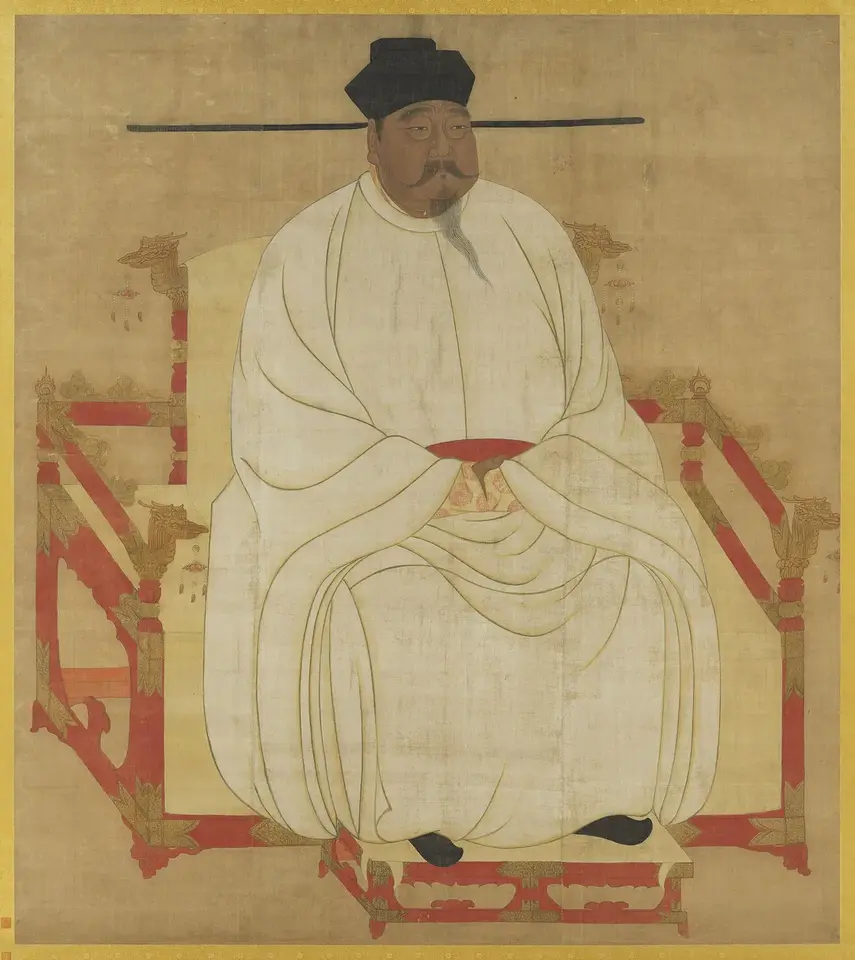
郭从义
Guo Congyi (郭从义, 909–971), granted the imperial name Li Congyi, was a prominent general of Shatuo descent who navigated the political transitions of five successive dynasties (Later Tang, Later Jin, Later Han, Later Zhou, and Northern Song). Born in Taiyuan, he was the son of seasoned officer Guo Shaogu. In addition to his tactical mastery and composure on the battlefield, Guo Congyi was uniquely accomplished in literary…
Guo Congyi (郭从义, 909–971), granted the imperial name Li Congyi, was a prominent general of Shatuo descent who navigated the political transitions of five successive dynasties (Later Tang, Later Jin, Later Han, Later Zhou, and Northern Song). Born in Taiyuan, he was the son of seasoned officer Guo Shaogu. In addition to his tactical mastery and composure on the battlefield, Guo Congyi was uniquely accomplished in literary culture and was celebrated as one of the preeminent masters of Feibai ("flying white") calligraphy of his era. Guo Congyi rose to prominence under Later Tang Emperor Zhuangzong (who adopted him as a foster son) and later served as an indispensable frontline commander under Later Han founder Liu Zhiyuan, repeatedly defeating Khitan incursions along the northern borders. In 948, when the Three Garrisons rebelled, Guo Congyi was appointed Commander-in-chief of the Campaign Forces to besiege Chang'an. Over a grueling year-long siege, he weakened rebel resolve through arrow-delivered letters and subsequently executed the ruthless insurgent Zhao Siwan in the public market, restoring imperial control over the Guanzhong plains. He held top military commands throughout the Later Zhou and gracefully relinquished his provincial commands upon the rise of the Northern Song, retiring as Grand Preceptor to the Crown Prince.
Born into a Shatuo military family in Taiyuan, displaying early gifts in archery and calligraphy.
Adopted by Later Tang Emperor Zhuangzong (Li Cunxu) and granted the name Li Congyi.
Recommended by Liu Zhiyuan as Army Inspector, repeatedly defeating invading Khitan cavalry units.
Participated in the reduction of Du Chongwei's rebellion in Yedu, promoted to Military Governor of Zhenning.
Appointed Commander-in-chief to suppress Zhao Siwan's insurrection, encircling Chang'an.
Persuaded Zhao Siwan to capitulate via arrow-messages; captured and executed three hundred rebel leaders in Chang'an.
Elevated to Minister of State by Guo Wei and appointed Military Governor of Zhongwu Circuit.
Joined Fu Yanqing at Xinkou to block allied Northern Han and Liao invaders, rewarded with the chancellorship.
Accompanied Emperor Shizong on the southern expedition against Southern Tang, transferred to Wuning Circuit.
Swore allegiance to the newly founded Song dynasty, confirmed as Director of the Secretariat.
Voluntarily retired provincial military commissions at court, appointed Senior General of the Left Jinwu Guard.
Passed away in Kaifeng at age 63; posthumously honored as Director of the Secretariat.
Guo Congyi belonged to the Shatuo military elite that spearheaded the revival of Hedong power under Li Keyong and Li Cunxu. His father, Guo Shaogu, was a respected cavalry veteran. Endowed with a keen intellect and athletic build, Guo Congyi combined physical bravery with an unusual passion for the arts, becoming an expert in the dynamic Feibai style of Chinese calligraphy.
During the Tongguang era of Later Tang, Emperor Zhuangzong recognized the young warrior's talents and took him into his royal retinue as an adopted son, bestowing upon him the name Li Congyi. Following the rise of Later Jin, he served as Vice Military Training Commissioner of Suizhou. When Liu Zhiyuan took command of Hedong Circuit, he quickly recognized Guo Congyi's tactical gifts, promoting him to Army Inspector and placing him in charge of mobile cavalry screens that repeatedly ambushed and repelled Khitan foraging columns across the northern frontier.
Following the collapse of Later Jin and the founding of Later Han in 947, Guo Congyi participated in the siege of Yedu, forcing the surrender of the recalcitrant warlord Du Chongwei. In April 948, a grave crisis shook the empire when the military governors of Hezhong (Li Shouzhen), Yongxing (Zhao Siwan), and Fengxiang (Wang Jingchong) rebelled simultaneously.
Emperor Yindi appointed Guo Congyi as Commander-in-chief of the Expeditionary Army, personally presenting him with imperial armor, weapons, and golden belts. Guo Congyi marched west and placed the ancient capital of Chang'an under an iron encirclement, being confirmed as Military Governor of Yongxing on the field. Because rebel forces fiercely held the inner ramparts and the siege dragged into 949, famine within the city reached horrifying proportions, with the garrison resorting to cannibalism.
Recognizing that the defenders were at their breaking point, Guo Congyi attached personal letters to arrows and shot them over the city battlements, offering honorable terms of surrender. Concurrently, he secured an imperial decree offering Zhao Siwan a provincial post. Swayed by the overture, Zhao Siwan surrendered in July 949. However, once outside the gates, Zhao Siwan stalled his departure, amassed gold, and secretly plotted a fresh uprising. Discerning the treason, Guo Congyi invited Zhao Siwan to a farewell banquet inside the city, ambushed and captured him on the spot, and had Zhao Siwan and three hundred of his hardened officers publicly beheaded in the bustling marketplace, pacifying the Guanzhong region.
Upon the founding of the Later Zhou dynasty in 951, Guo Wei appointed Guo Congyi as Minister of State and Military Governor of Zhongwu Circuit in Xuzhou. In 954, when Northern Han and Liao armies invaded following the death of Guo Wei, Guo Congyi marched north alongside veteran commander Fu Yanqing, holding the strategic pass at Xinkou and driving back the northern forces. He was subsequently elevated to concurrent Director of the Secretariat.
In 957, he participated in Emperor Shizong's conquest of Huainan, subsequently being transferred to govern the Wuning Circuit in Xuzhou. Following the founding of the Northern Song by Zhao Kuangyin in 960, Guo Congyi promptly offered his loyalty, retaining his high chancellorship and later governing Huguo Circuit.
In 969, as Song Emperor Taizu instituted policies to centralize military command and peacefully relieve senior military governors of their provincial armies, Guo Congyi attended an imperial banquet in Kaifeng alongside Wang Yanchao and Wu Xingde. Understanding the emperor's strategic intentions, Guo Congyi readily submitted a memorial requesting retirement from provincial governorships.
Emperor Taizu praised his loyalty and insight, appointing him Senior General of the Left Jinwu Guard and permitting him to retire with the prestigious rank of Grand Preceptor to the Crown Prince. Guo Congyi spent his final years in the capital enjoying literature and practicing calligraphy until his death in 971 at the age of sixty-three. His poem To Master Mengying was preserved in the Complete Song Poetry, and his memorial Execution of Zhao Siwan was anthologized in the Tangwen Shiyi.
Guo Congyi's year-long siege and subsequent decisive elimination of Zhao Siwan's rebellion resolved one of the most dangerous multi-front uprisings of the Five Dynasties era, safeguarding the Western Capital and stabilizing the Later Han state.
In an era characterized by illiterate military autocrats, Guo Congyi stood out as an accomplished calligrapher whose works in the Feibai style were admired across northern China. He demonstrated that martial prowess and classical refinement could be harmoniously unified.
FIGURES ASSOCIATED WITH THIS DYNASTY