Birth in Qufu
Born in Qufu, Shandong, displaying early passion for classical texts, archaic seal scripts, and epigraphic rubbings.
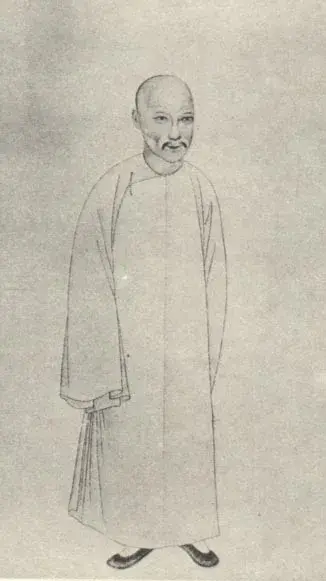
桂馥
Gui Fu (1736–1805), courtesy name Donghui, art name Weigu and Dongyuan, and alternate sobriquets Yumen, Xiaoran Shanqiao, and Laotai, was a native of Qufu County, Yanzhou Prefecture, Shandong Province. He was an eminent classical scholar, philologist, evidential researcher, calligrapher, and seal carver during the Qianlong and Jiaqing reigns of the Qing dynasty. Born in Qufu, the ancestral hometown of Confucius, he dedicated…
Gui Fu (1736–1805), courtesy name Donghui, art name Weigu and Dongyuan, and alternate sobriquets Yumen, Xiaoran Shanqiao, and Laotai, was a native of Qufu County, Yanzhou Prefecture, Shandong Province. He was an eminent classical scholar, philologist, evidential researcher, calligrapher, and seal carver during the Qianlong and Jiaqing reigns of the Qing dynasty. Born in Qufu, the ancestral hometown of Confucius, he dedicated himself to the classics, dynastic histories, and epigraphy from an early age. Frustrated in the examination halls for decades, he served as a secretarial aide across Shandong and Jiangsu, devoting over forty years to studying Xu Shen's Shuowen Jiezi and Han-Wei stone inscriptions. In 1790, at the mature age of fifty-five, he passed the metropolitan examinations to become a jinshi, subsequently appointed Magistrate of Yongping County in Dali Prefecture, Yunnan. On the southwestern frontier, he rectified wrongful convictions, repaired schools, and pacified indigenous tribes, winning deep affection from local subjects as a clean official and classical scholar before dying of exhaustion at his official residence. Gui was an exacting and encyclopedic scholar whose philological and exegetical contributions were profound. He spent four decades compiling the fifty-volume Exegesis of Shuowen Jiezi (Shuowen Jiezi Yizheng), drawing broadly upon classical canons and epigraphic records; his work was acclaimed alongside Duan Yucai's Annotations on Shuowen Jiezi, earning them the collective honor of "Duan and Gui" as the twin peaks of Qing Shuowen scholarship. His ten-volume evidential notes Zhapu was noted for analytical rigor, and his five-volume Miaozhuan Fenyun laid foundational stones for the modern study of Han seal script and epigraphy. Gui was equally accomplished in the fine arts. His clerical script (lishu) was celebrated as the finest of his era, capturing the antique majesty of Han dynasty steles, leading scholar Ruan Yuan to praise him as "unrivaled in eight-part clerical script in contemporary times." In seal carving, he followed Qin and Han traditions, while his dramatic cycle The Later Four Cries of the Ape (Hou Si Sheng Yuan) inherited Xu Wei's expressive spirit to voice profound existential reflections. Combining the erudition of a classical scholar with the mastery of an artist, Gui occupies a distinguished place in Chinese intellectual and art history.
Born in Qufu, Shandong, displaying early passion for classical texts, archaic seal scripts, and epigraphic rubbings.
Resolved at age twenty-one to annotate Xu Shen's Shuowen Jiezi, beginning lifelong collection and verification of classical citations.
Passed the Shandong provincial civil service examination to earn the juren degree, gaining literary fame throughout Shandong.
Traveled across Shandong and Jiangsu serving as a secretarial aide, befriending scholars like Zhou Yongnian, Huang Yi, and Sun Xingyan.
Completed the five-volume Miaozhuan Fenyun after years of research, establishing an essential guide for Han seal engraving.
Passed the palace examination to become a jinshi at age fifty-five, drawing attention from court luminaries as a late-blooming scholar.
Resided in Jinan and founded Tanxi Hermitage, investigating local aquifers and designating the "Seventy-Third Spring."
Appointed Magistrate of Yongping County in Dali Prefecture, Yunnan, traveling thousands of miles to assume office in the southwest.
Finished the fifty-volume manuscript of Exegesis of Shuowen Jiezi after forty years of exhaustive philological labor.
Established charitable schools, rebuilt city walls, and conciliated tribal populations, prompting local citizens to erect a living shrine.
Died of illness and overwork at his Yongping magistrate post at age seventy, later reinterred in the Gui ancestral cemetery in Qufu.
Gui Fu was born in 1736 in Qufu County, Yanzhou Prefecture, Shandong Province. As the birthplace of Confucius, Qufu was steeped in Confucian learning, and the Gui clan had resided there for generations, handing down traditions of agriculture, study, and classical propriety. From early childhood, Gui exhibited remarkable intellect, recognizing archaic bronze and stone scripts by age seven or eight. Guided by senior clan elders, he immersed himself in the classics, histories, and the principles of character formation expounded in Xu Shen's Shuowen Jiezi.
During the Qianlong reign, evidential scholarship flourished as scholars shifted from Song-Ming philosophical metaphysics toward the empirical verification of Han learning. As a youth, Gui wandered daily among the steles of the Temple of Confucius and the Apricot Altar, gathering bronze fragments and Han pictorial stones scattered across rural hamlets. In 1756, at age twenty-one, while reading Shuowen Jiezi in his study, he reflected that existing commentaries had suffered corruptions through centuries of transmission, and that Song-era recensions were overly rigid and failed to incorporate Han epigraphic physical artifacts and canonical glosses. The young scholar vowed to devote his life to scouring Han and Wei epigraphy and phonology to illuminate the authentic principles of Xu Shen's lexicon.
In 1768, at age thirty-three, Gui traveled to Jinan for the Shandong provincial examination, passing with high honors to become a juren through essays grounded in rigorous evidential research. Following his provincial triumph, his literary fame echoed across Shandong. Eager to serve the realm, he traveled to Beijing to sit for the metropolitan examinations. However, because his essays were packed with archaic citations and stone epigraphs rather than stylized examination rhetoric, he repeatedly failed the metropolitan exams over the next two decades.
Undeterred by academic disappointment, Gui resided in historic temples and bookshops across Beijing, seeking out eminent contemporary scholars. He associated frequently with Siku Quanshu Chief Editor Ji Yun, classical scholar Weng Fanggang, and epigraphic masters Huang Yi and Bi Yuan, exchanging rare editions, rubbing impressions, and debating Han steles and archaic phonology, continually expanding his intellectual horizons.
Decades of traveling for examinations depleted Gui's modest family resources, leaving his dependents in straitened circumstances. To support his household and finance his search for rare texts, Gui left his studio to embark on a twenty-year career as a private secretarial aide (muyou).
During these travels, Gui served in provincial administrative yamens across Shandong and Jiangsu, drafting correspondence, collating rare texts, and editing local gazetteers. While nomadic, this life offered exceptional opportunities to locate ancient inscriptions. Whenever official duties allowed, Gui walked through remote villages, ruined monasteries, and abandoned tombs with walking stick in hand, producing thousands of paper rubbings of Han, Wei, Tang, and Song steles. Across Qufu, Wenshang, Jining, Pingyin, and Ta'an, countless ancient cliff inscriptions and pictorial stones were cleaned, transcribed, and brought to light through his efforts.
While residing in Jinan, Gui formed an intimate friendship with bibliographic scholar Zhou Yongnian, who advocated public library collections under the "Confucian Canon" (Ruzang) concept. Sharing scholarly devotion, Gui and Zhou established the celebrated "Jieshuyuan" (Book-Borrowing Garden). They borrowed rare manuscripts from public and private collections, transcribing texts by candlelight through the night and contributing immensely to the preservation of Shandong literature. When Huguang Governor-General Bi Yuan opened an editorial office to compile the Continuation of Zizhi Tongjian, he invited Gui to join his staff, relying heavily upon his expertise in historical institutions and official titles.
During his epigraphic explorations, Gui was deeply troubled by the arbitrary invention of seal characters prevalent among seal carvers since the Ming dynasty. Knowing that the miao-zhuan script utilized in Han seals formed the orthodox lineage of philology, he expended decades examining tens of thousands of Han seal impressions, compiling the five-volume Miaozhuan Fenyun in 1787. Classifying Han seal forms by rhyme category, the work provided reliable standards for scholars and seal engravers, transforming Qing epigraphic practice.
In 1790, on the occasion of the Qianlong Emperor's eightieth birthday, the court held a special imperial examination to recruit senior scholars. Gui, now fifty-five years old with graying hair, entered the examination hall with serene composure. His deep evidential learning impressed the examiners, and he passed the palace examination to become a jinshi in the Gengxu class, eliciting celebrations among scholars nationwide who rejoiced at his late triumph.
Following his success, Gui awaited official appointment in Beijing and Jinan while refining his manuscripts. In 1791, Gui and his literary associates pooled funds to erect a study named "Tanxi Hermitage" beside Longtan in Jinan, creating a gathering place for local scholars. While excavating the foundations to channel water into a pool, workmen uncovered a bubbling cold spring with crystal-clear water. Referencing Jin dynasty writer Yuan Haowen's record of Jinan's seventy-two famous springs, Gui playfully yet solemnly christened it the "Seventy-Third Spring," composing a stone inscription commemorating the discovery.
In 1796, upon the ascension of the Jiaqing Emperor, the sixty-one-year-old Gui was selected through the official lottery system as Magistrate of Yongping County in Dali Prefecture, Yunnan. Yongping lay deep within the rugged mountains of western Yunnan, thousands of miles from Beijing through malarial valleys and rugged paths, inhabited by diverse non-Han tribal communities. Concerned by his frail health and advanced age, friends urged him to plead illness and remain home to write. Gui laughed, declaring: "A man serving in office belongs to the four quarters; how can one evade duty because of distance?" He packed his meager belongings and embarked on the arduous overland journey to the southwest.
After months of grueling travel, Gui reached Yongping in 1797. The county yamen was dilapidated, banditry was frequent, tax accounts were chaotic, and feuds between Han settlers and indigenous tribes had accumulated for years. Gui addressed these crises with Confucian benevolence, working day and night to clear legal backlogs and curb predatory sub-clerks.
In judicial administration, Gui displayed both legal acumen and moral compassion. He reviewed archival backlogs, abolished torturous interrogations, exonerated innocent civilians framed by extortionate clerks, and released dozens of prisoners, who hailed him as "Clear Sky Gui." Toward the Yi and Bai tribal peoples in mountain strongholds, Gui rejected discriminatory policies, visiting stockades in person to explain imperial policy, pacify chieftains, and resolve land disputes impartially, transforming chronic ethnic feuds into lasting communal peace.
In civil welfare and education, Gui donated his official integrity stipends to restore Yongping's defensive walls, roads, and bridges, while revitalizing the county Confucian temple. He established charitable academies, engaged regional scholars to teach, enrolled impoverished Han and tribal children without tuition, and provided paper and brushes freely. During administrative breaks, Gui visited classrooms to lecture on the Classic of Poetry, the Book of Documents, and classical moral cultivation. Under his mentorship, education flourished in frontier Yongping, and local inhabitants erected a living shrine (shengci) to honor his benevolence.
Beside demanding administrative responsibilities, Gui continued refining Exegesis of Shuowen Jiezi under flickering oil lamps deep into the night. In 1799, after forty years of relentless philological inquiry, his fifty-volume masterpiece was completed in his frontier quarters.
Prolonged labor and harsh climatic conditions in the Yunnan mountains shattered Gui's health. In August 1805, Gui passed away at his Yongping magistrate residence at the age of seventy. At his death, his quarters contained no private fortune, only clean fair-copy drafts of Exegesis of Shuowen Jiezi and boxes of stone rubbings, leaving his family unable to afford funeral costs. Citizens across Yongping wept at the news, pooling money and supplies to escort his cortege.
Gui's casket was transported by his sons across thousands of miles to his ancestral home in Qufu. Grand Secretary Ruan Yuan, deeply grieved by the loss, brushed the calligraphy for Gui's tombstone. Scholar Jiang Xiangchi composed the memorial inscription, celebrating Gui's moral integrity and monumental learning, which remain enduring treasures in Chinese intellectual history.
Gui Fu's most towering contribution to classical scholarship is his fifty-volume Exegesis of Shuowen Jiezi (Shuowen Jiezi Yizheng), to which he dedicated his life. Qianlong-Jiaqing evidential scholarship emphasized that the mastery of primary philology was the gateway to classical canons, viewing Shuowen Jiezi as the master key to ancient texts. While Duan Yucai emphasized phonological analysis and correcting textual variants based on deductive reasoning, Gui adhered strictly to empirical verification based on Han-dynasty physical artifacts and texts.
In Yizheng, Gui cited extensively from canonical commentaries, pre-Qin and Han bronze and stone inscriptions, and Six Dynasties and Tang records. Whenever ancient commentaries aligned with Xu Shen's glosses, Gui recorded them systematically, validating Xu Shen's character definitions through ancient artifacts and primary texts.
Comprising fifty volumes of exhaustive research, the work was acclaimed by scholars alongside Duan Yucai's commentary as the twin peaks of Qing Shuowen studies, celebrated in scholarship as "Duan's Notes and Gui's Exegesis."
Beyond Exegesis of Shuowen Jiezi, Gui's ten-volume evidential notes Zhapu stands as an enduring masterpiece of evidential research, analyzing pre-Qin, Han, and Wei institutional realia, variant textual readings, and phonetic borrowings. Gui approached scholarly inquiry with modesty, discussing doubtful passages with contemporary scholars. In researching Ban Gu's You Tong Fu, Gui argued that a textual character represented an archaic phonetic variant and wrote to phonologist Wang Niansun to discuss the point.
Wang replied that both character variants shared identical phonetic origins in ancient Chinese and suggested preserving both interpretations. Demonstrating pure scholarly integrity, Gui appended Wang's letter in full to the entry in Zhapu. The collection examined Han official salaries, ceremonial dress, and administrative divisions, establishing a model for Qing textual research.
Beyond classical scholarship, Gui achieved preeminent status in calligraphy, with his clerical script (lishu) regarded as supreme during the Qianlong and Jiaqing reigns. Amidst the rise of the Epigraphic Stele Movement (Beixue), Gui was among the rare masters who fully absorbed the spirit of Han steles into personal writing.
Gui practiced Han steles hundreds of times throughout his life. His small clerical script drew from the refined structure of the Cao Quan Stele and Shi Chen Stele, featuring tight, elegant composition; his large monumental characters drew from wild cliff carvings like the Xi Xia Song, displaying massive structural gravity and natural strength.
Eminent scholar Ruan Yuan repeatedly commended Gui's clerical script, declaring it the finest of contemporary times and positioning him at the core of the Epigraphic School. His calligraphy inspired later masters including He Shaoji, Zhao Zhiqian, and Bao Shichen, establishing an aesthetic benchmark of archaic grandeur.
In seal engraving and epigraphic study, Gui was a pivotal figure who bridged historical scholarship and artistic craft. During the mid-Qing, seal carving flourished, but arbitrary inventions of seal characters distorted ancient traditions.
Recognizing that seal carving descended from Qin and Han scripts, Gui collected tens of thousands of ancient seal impressions, compiling the five-volume Miaozhuan Fenyun in 1787. Arranging archaic miao-zhuan seal characters by rhyme category and tracing their evolution, he corrected widespread typographical corruptions.
Subsequently, he authored seal treatises including Continuation of the Thirty-Five Rules, analyzing composition, knife technique, and aesthetics. Associated with seal masters Huang Yi and Xi Gang, Gui's balanced, antique seal style propelled Chinese seal engraving from amateur diversion into an academic discipline.
Remarkably, Gui was also an accomplished dramatist. Influenced by Ming writer Xu Wei's dramatic cycle Four Cries of the Ape (Si Sheng Yuan), Gui composed the four-act theatrical suite The Later Four Cries of the Ape (Hou Si Sheng Yuan), drawing upon his hardships and official career.
The cycle comprised four plays: Releasing the Willow Branch, Falling into the Privy, Visiting the Army Commander, and Writing on the Garden Wall. Utilizing historical allegories and sharp satire, the plays exposed the suppression of talent under the civil examination system and voiced the anger, defiance, and aloofness of traditional scholars facing bureaucratic hypocrisy.
Departing from conventional dramatic formulas, the work featured poetic elegance and thematic depth, standing as a unique literati theatrical masterpiece in Qing dramatic history.
Gui possessed an expansive, humorous temperament and an affection for landscape scenery. While residing in Jinan during the late Qianlong era, he gathered scholars to construct Tanxi Hermitage beside Longtan, creating a prominent literati salon.
When excavating water channels, workmen uncovered a pristine spring. Rather than relying on the traditional count of seventy-two famous springs in Jinan, Gui humorously christened it the "Seventy-Third Spring," carving the Record of Tanxi Hermitage onto stone.
Gui's hydrological observations enriched Jinan's spring culture, exemplifying how Qianlong-era evidential scholars integrated serious scholarship into aesthetic daily living. His notes in Zhapu remain valuable primary documentation for regional historical geography.
FIGURES ASSOCIATED WITH THIS DYNASTY