Birth in Massachusetts
Born into a prominent shipbuilding merchant family in Salisbury, Massachusetts.
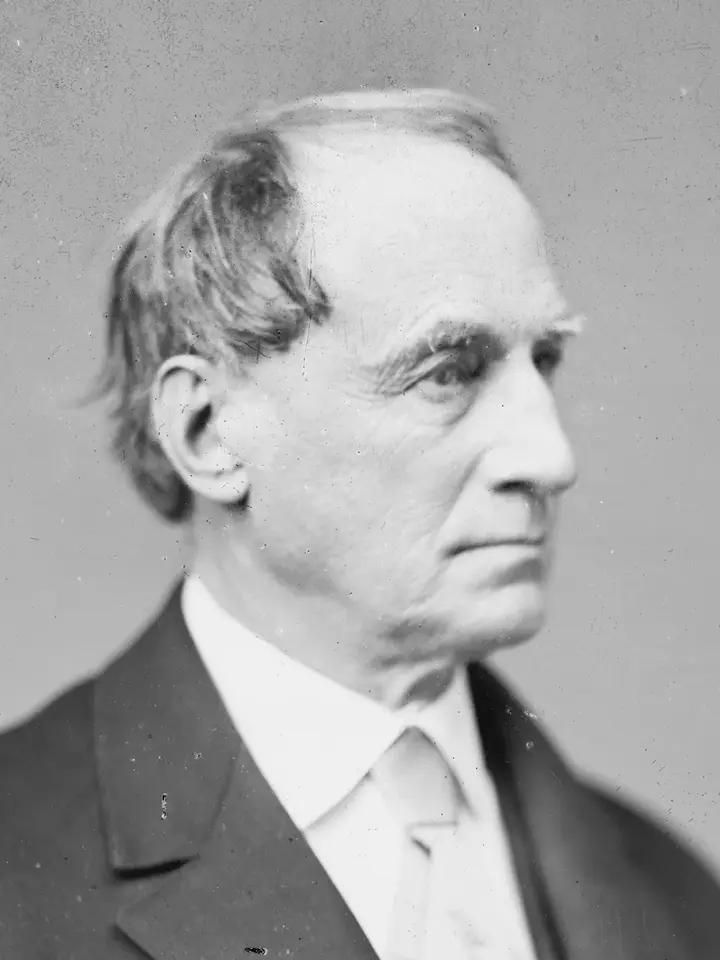
顾盛
Caleb Cushing (January 17, 1800 – January 2, 1879), rendered in Chinese historical records as Gu Sheng, was a native of Massachusetts. He was an influential nineteenth-century American statesman, jurist, and diplomat, serving as a United States Representative, the 23rd Attorney General of the United States, and the first United States Commissioner to China. Displaying formidable precocity in youth, Cushing entered Harvard…
Caleb Cushing (January 17, 1800 – January 2, 1879), rendered in Chinese historical records as Gu Sheng, was a native of Massachusetts. He was an influential nineteenth-century American statesman, jurist, and diplomat, serving as a United States Representative, the 23rd Attorney General of the United States, and the first United States Commissioner to China. Displaying formidable precocity in youth, Cushing entered Harvard University at thirteen, graduating with high honors before practicing law and entering politics. Between 1835 and 1843, he served four consecutive terms in the U.S. House of Representatives, acting as Chairman of the Committee on Foreign Affairs. Following the First Opium War, as American merchant factions demanded commercial parity with Great Britain, President John Tyler appointed Cushing as Commissioner and Envoy Extraordinary to China in 1843. Arriving with an American naval squadron in 1844, Cushing blended legal intimidation and naval posturing at Macau, coercing Imperial Commissioner Qiying to sign the Treaty of Wanghia, the first treaty between the United States and the Qing Empire. The treaty institutionalized extraterritoriality and most-favored-nation treatment, profoundly infringing upon Qing sovereignty. Returning home, Cushing served as Associate Justice of the Massachusetts Supreme Judicial Court, U.S. Attorney General under Franklin Pierce, and Minister to Spain. He died in Massachusetts in 1879 at age seventy-eight.
Born into a prominent shipbuilding merchant family in Salisbury, Massachusetts.
Graduated from Harvard University at age seventeen; tutored mathematics before entering legal practice.
Elected to the United States House of Representatives, serving as Chairman of Foreign Affairs Committee.
Commissioned by President John Tyler as Envoy Extraordinary and Commissioner to China, leading naval vessels eastward.
Negotiated and signed the Treaty of Wanghia with Qing Imperial Commissioner Qiying at Macau.
Financed and commanded the Massachusetts Volunteer Regiment during the Mexican-American War; promoted to Brigadier General.
Appointed 23rd Attorney General of the United States by President Franklin Pierce.
Appointed United States Minister to Spain, resolving diplomatic tensions over maritime incidents.
Passes away at his residence in Newburyport, Massachusetts, at the age of seventy-eight.
Caleb Cushing was born on January 17, 1800, in Salisbury, Massachusetts, to John Newmarch Cushing, a wealthy merchant and shipbuilder who commanded an extensive maritime fleet.
Endowed with exceptional intellectual gifts, Cushing entered Harvard University in 1813 at the age of thirteen, graduating with distinction in 1817. Following graduation, he remained at Harvard as a tutor in mathematics and natural philosophy while studying common law under eminent jurists. Admitted to the Massachusetts bar in 1821, he established a lucrative legal practice in Newburyport, renowned for analytical precision and classical eloquence. Entering Massachusetts state politics, he served in the state House of Representatives and Senate between 1825 and 1834. In 1835, Cushing was elected to the United States House of Representatives as a Whig, serving four consecutive terms. As Chairman of the Committee on Foreign Affairs, he forcefully advocated for American commercial expansion and the aggressive defense of maritime trading rights across the globe.
In 1842, Great Britain concluded the First Opium War by imposing the Treaty of Nanking upon the Qing Empire, seizing Hong Kong and opening five treaty ports. American merchant houses immediately demanded reciprocal privileges.
In 1843, President John Tyler, with congressional backing, appointed Cushing as the first Commissioner and Envoy Extraordinary of the United States to China. Arriving in Macau waters aboard the frigate USS Brandywine in February 1844, Cushing employed a dual strategy of diplomatic intimidation and legal assertiveness. He repeatedly notified Viceroy Qiying that unless received in Beijing by the Daoguang Emperor, he would sail American warships directly into the Bohai Gulf. Intimidated by the threat of renewed hostilities, the Qing court dispatched Qiying to Macau to negotiate. On July 3, 1844, at the Kun Iam Temple in Wanghia Village outside Macau, Cushing and Qiying signed the Treaty of Wanghia. Cushing successfully secured all commercial concessions previously granted to Britain, while introducing novel, sweeping clauses that explicitly codified extraterritoriality and naval port access, inaugurating a comprehensive framework of treaty privileges.
Returning to the United States in 1845, Cushing's diplomatic triumph elevated him to national political prominence.
Following the outbreak of the Mexican-American War in 1846, Cushing became an outspoken proponent of military action. When the Massachusetts legislature refused to appropriate war funds, Cushing raised private capital to equip a volunteer infantry regiment, personally commanding it in Mexico and earning promotion to Brigadier General. In 1852, he was appointed Associate Justice of the Massachusetts Supreme Judicial Court. In 1853, newly elected Democratic President Franklin Pierce appointed Cushing as the 23rd Attorney General of the United States. During his four-year tenure, Cushing transformed the office from an informal advisory role into a centralized, highly institutionalized cabinet department. He organized the publication of the official Opinions of the Attorney General and systematically articulated the legal foundations of federal executive power, earning recognition as one of the most brilliant Attorneys General in American history.
During the American Civil War, although politically sympathetic to states' rights, Cushing remained an ardent defender of the Union, advising Presidents Abraham Lincoln and Andrew Johnson on complex questions of wartime international law.
In 1868, Cushing was dispatched to Bogota, Colombia, to negotiate treaty arrangements concerning a prospective interoceanic canal across the Isthmus of Panama. In 1871, he served as senior American legal counsel during the historic Geneva Arbitration regarding the Alabama claims, presenting an unassailable brief that compelled Great Britain to pay fifteen and a half million dollars in damages. From 1874 to 1877, President Ulysses S. Grant appointed Cushing as United States Minister to Spain, where he defused grave diplomatic crises arising from maritime disputes. Although nominated as Chief Justice of the United States Supreme Court in 1874, partisan friction led him to withdraw. Retiring to his estate in Newburyport, Massachusetts, Cushing died peacefully on January 2, 1879, at the age of seventy-eight.
Caleb Cushing's defining action in East Asian history was negotiating and imposing the Treaty of Wanghia upon China in 1844.
Capitalizing on the Qing bureaucracy's ignorance of international law, Cushing combined belligerent posturing with meticulous legal formulation. The Treaty of Wanghia went far beyond the British Treaty of Nanking in establishing imperialist prerogatives. First, it explicitly codified extraterritoriality, mandating that American citizens accused of crimes in China would be tried solely by American consular courts under American law, fundamentally subverting Qing legal jurisdiction. Second, it permitted American warships to enter treaty ports and anchor indefinitely. Third, it introduced a twelve-year treaty revision clause that served as the legal pretext for Britain and France to initiate the Second Opium War. Through this treaty, Cushing created an institutional blueprint that all Western powers subsequently adopted in China.
In American constitutional and administrative development, Cushing laid the institutional foundations for the modern United States Department of Justice.
Serving as Attorney General from 1853 to 1857, Cushing ended the historical practice of the Attorney General functioning merely as a part-time legal advisor to the President. He instituted standardized administrative protocols, exerted centralized supervisory control over federal district attorneys, and authored foundational legal opinions delineating the executive powers of the presidency. His legal opinions established enduring precedents governing administrative procedure, cabinet governance, and federal litigation, transforming the Attorney General into an indispensable constitutional director within the executive branch.
In international law, Cushing directed one of the most celebrated and consequential arbitral proceedings of the nineteenth century.
During the American Civil War, British shipyards had constructed Confederate commerce raiders, most notably the CSS Alabama, which inflicted devastating damage on Union shipping, pushing the two powers toward open war. In 1871, Cushing was selected as chief American legal counsel before the international tribunal in Geneva. Drawing upon his encyclopedic command of maritime law and national liability, Cushing presented exhaustive evidentiary documentation establishing Britain's violation of neutral obligations. The tribunal ruled in America's favor, awarding fifteen and a half million dollars in damages. This historic victory was hailed as the first major instance of major world powers settling explosive disputes through peaceful legal arbitration rather than warfare.
Qing Imperial Commissioner Qiying reported to the throne: "Caleb Cushing is sharp, cunning, and profoundly versed in foreign legal codes. His words are full of veiled threats, consistently invoking naval force; his treaty clauses are exceptionally detailed, far surpassing ordinary foreign merchants."
President Franklin Pierce eulogized: "Caleb Cushing possessed an intellect of extraordinary vastness and profound depth. As Attorney General, his analytical acumen and constitutional wisdom made monumental contributions to the rule of law in the United States."
Associate Justice Benjamin Curtis observed: "Whether presiding on the bench, directing prosecution, or managing foreign diplomacy, Cushing's legal reasoning was so rigorous that his mastery of public international law commanded universal admiration throughout Europe and America."
Modern Chinese historiography assesses Caleb Cushing as the primary architect of the nineteenth-century treaty privileges system imposed upon China by the United States. His sophisticated legal maneuvers extracted sweeping extraterritorial and commercial concessions without firing a single shot, inflicting lasting injury on Chinese sovereignty. Conversely, Western legal historians emphasize his institutional legacy in structuring the modern American executive branch and pioneering peaceful international dispute resolution.
FIGURES ASSOCIATED WITH THIS DYNASTY