Birth in Moscow
Born into the ancient boyar Golovin lineage in Moscow, studying European military science, law, and multiple foreign languages.
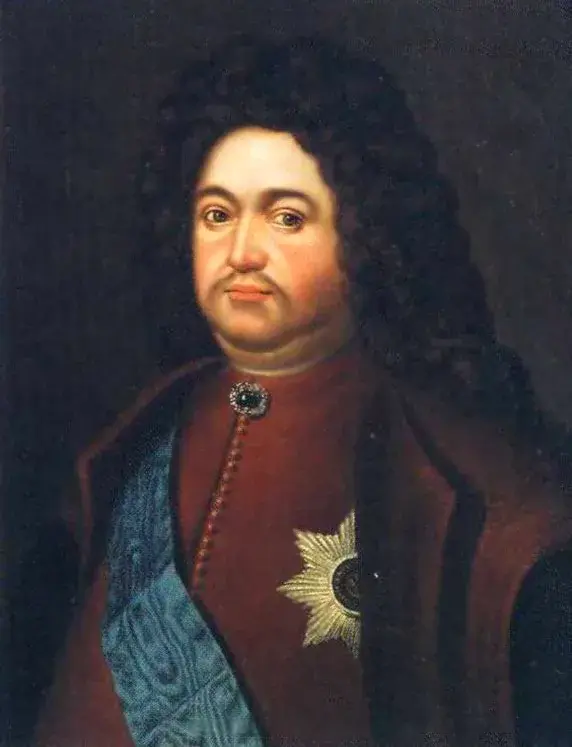
戈洛文
Count Fyodor Alekseyevich Golovin (1650–1706) was an eminent diplomat, military commander, and reformist statesman of the Tsardom of Russia during the late seventeenth and early eighteenth centuries. Standing as one of the closest councilors to Peter the Great, he played a transformative role in the history of early modern Sino-Russian relations. Born into an ancient Muscovite boyar family, he received an extensive European…
Count Fyodor Alekseyevich Golovin (1650–1706) was an eminent diplomat, military commander, and reformist statesman of the Tsardom of Russia during the late seventeenth and early eighteenth centuries. Standing as one of the closest councilors to Peter the Great, he played a transformative role in the history of early modern Sino-Russian relations. Born into an ancient Muscovite boyar family, he received an extensive European military and diplomatic education. In 1686, following Qing victories over Russian garrison troops in the Battles of Albazin along the Amur River, Regent Sophia Alekseyevna and co-tsar Peter I appointed Golovin as Ambassador Extraordinary and Plenipotentiary, dispatching him to Siberia with an elite regiment of nearly a thousand Streltsy musketeers and artillerymen to negotiate border agreements with the Qing court. In 1689 (28th year of the Kangxi reign), Golovin led the Russian delegation at Nerchinsk in historic boundary talks with Qing plenipotentiaries Songgotu, Tong Guogang, and Jesuit interpreters Jean-François Gerbillon and Tomás Pereira. Following intense military maneuvering and diplomatic bargaining, both sides concluded the Treaty of Nerchinsk, the first bilateral treaty between China and a European power grounded in early international law, legally demarcating the Amur and Ussuri river basins as sovereign Qing territory. Upon returning to Moscow, Golovin earned the absolute trust of Peter the Great, serving successively as Governor-General of Siberia, Chief of Naval Affairs, and Foreign Minister. He created Russia's first modern professional foreign service, organized the construction of the Baltic Fleet, and was honored as the premier recipient of the Order of Saint Andrew and the rank of Field Marshal, standing as a pillar of Petrine westernization. He passed away in 1706 en route to official duties.
Born into the ancient boyar Golovin lineage in Moscow, studying European military science, law, and multiple foreign languages.
Entered royal service as court chamberlain under Tsar Alexis Mikhailovich, continuing through the reign of Tsar Feodor III.
Appointed Ambassador Plenipotentiary to Eastern Siberia following the Albazin conflict, establishing headquarters at Selenginsk.
Held Selenginsk against massed assaults by Khalkha Mongol forces, securing the tsarist military foothold east of Lake Baikal.
Met with Qing plenipotentiary Songgotu at Nerchinsk to sign the Treaty of Nerchinsk, demarcating the eastern Sino-Russian border.
Returned to Moscow with high imperial honors from Peter the Great, created a Count and appointed Governor-General of Siberia overseeing frontier trade.
Traveled alongside Peter the Great as one of three chief plenipotentiaries during the Grand Embassy, studying naval architecture in Holland and Britain.
Appointed head of the Foreign Affairs Chancellery, establishing Russia's modern diplomatic corps and resident embassy network across Europe.
Invested with the first Order of Saint Andrew, promoted to Field Marshal and General-Admiral, and directed wartime logistics in the Great Northern War.
Succumbed to illness at age fifty-six while en route to Hlukhiv on military and diplomatic duties; Peter the Great wept at his funeral.
Fyodor Alekseyevich Golovin was born in 1650 into the distinguished boyar Golovin family, which had served the grand princes and tsars of Muscovy for generations. He received an elite humanist education, mastering Russian, Latin, Polish, and German while studying Western European military engineering, international treaties, and artillery ballistics, demonstrating exceptional executive coordination.
In his youth, Golovin served in the Moscow Kremlin under Tsar Alexis Mikhailovich, continuing as a senior court attendant under Tsar Feodor III. Following the Streltsy uprising of 1682 and the establishment of the regency of Princess Sophia and young Peter I, Golovin won the deep confidence of Chief Minister Prince Vasily Golitsyn and the inner court through his pragmatic administrative composure.
During the second half of the seventeenth century, Russian Cossack forces crossed the Ural Mountains in a rapid eastward expansion, moving into the Amur River valley and constructing fortified outposts such as Albazin. In 1685 and 1686, the Kangxi Emperor directed Qing forces to launch punitive counter-offensives against Albazin. Imperial siege artillery shattered the fortifications and killed commander Aleksei Tolbuzin, dealing a crushing defeat to the Russian garrison. Realizing that direct military conquest had failed, Moscow sued for peace and dispatched an embassy to negotiate border demarcations.
In January 1686, the Moscow court commissioned thirty-six-year-old Golovin as Ambassador Extraordinary and Plenipotentiary, placing him in command of an expeditionary corps of more than five hundred Streltsy musketeers, guardsmen, and artillerymen. Overcoming a two-year journey across the Siberian taiga, Golovin established his forward base at Selenginsk east of Lake Baikal. In early 1688, tens of thousands of Khalkha Mongol cavalry under the Tusheet Khan and Setsen Khan besieged Selenginsk. Exhibiting exceptional tactical nerve, Golovin employed European bastion ramparts and concentrated cannonades to hold the fortress for months until the Mongol armies withdrew, securing Moscow's strategic foothold in Transbaikalia.
In August 1689, Chinese and Russian delegations convened at Nerchinsk for historic border talks. The Qing court dispatched an embassy headed by Grand Secretary Songgotu and General Tong Guogang, assisted by Jesuit translators Jean-François Gerbillon and Tomás Pereira, accompanied by several thousand ground and naval troops. Golovin led the Russian mission, supported by his armed Streltsy escort stationed within the Nerchinsk fortress.
Discussions opened in an atmosphere of intense tension. Golovin initially demanded that the entire Amur River serve as the frontier, which would have forced the Qing to cede all territory north of the river. Songgotu rejected these claims based on prior historical possession and the victories at Albazin, insisting that the Russian presence retreat west of Lake Baikal. As negotiations repeatedly threatened to collapse, the formidable Qing military encampment demonstrated readiness for armed conflict. Aware of his logistical isolation, inferior troop numbers, and simultaneous geopolitical pressures from the Ottoman Empire and Sweden in Europe, Golovin opted for pragmatic diplomatic compromise. On September 7, 1689, the delegations formally signed the Treaty of Nerchinsk in Latin, Russian, and Manchu. The treaty established the Argun River, the Gorbitsa River, and the Stanovoy Range (Outer Khingan Mountains) to the sea as the boundary, confirming Qing sovereignty over the Amur and Ussuri river basins, while the Qing permitted peaceful border commerce and agreed to demolish the Albazin fortress.
Returning to Moscow after the conclusion of the treaty, Golovin received high honors from the newly ascendant Peter the Great. Peter praised Golovin for securing Siberian fur trade routes and defining a permanent legal border in the Far East at minimal territorial cost, elevating him to Count and Governor-General of Siberia.
In 1697, the young tsar traveled incognito to Western Europe with the Grand Embassy, selecting Golovin as one of three chief plenipotentiaries. Touring shipyards in Zaandam and dockyards in London, Golovin assisted the tsar in hiring hundreds of Western shipwrights, naval officers, and military engineers, while procuring naval armaments. Following their return, Peter appointed Golovin as the first head of the reformed Foreign Affairs Chancellery, General-Admiral of the Navy, and Field Marshal. Golovin established professional diplomatic training schools, oversaw the construction of early battle squadrons for the Baltic Fleet, and coordinated diplomatic alliances during the Great Northern War. Peter the Great celebrated him as an indispensable pillar of the empire. In 1706, Golovin died of exhaustion en route to military duties at Hlukhiv at age fifty-six, with Peter weeping at his bier.
Golovin's foremost historical legacy in international diplomacy was serving as the chief Russian plenipotentiary who negotiated and concluded the Treaty of Nerchinsk, the first formal bilateral treaty between China and Russia grounded in modern international law.
Signed amidst late seventeenth-century Eurasian geopolitical realignments, the treaty prevented an exhausting full-scale war between the Qing Empire and tsarist Russia. Operating under severe geographical isolation and local military disadvantage, Golovin exploited his legal training and diplomatic skill to capitalize on Qing anxieties regarding the rebellion of Galdan in Western Mongolia. He secured Russian sovereignty over Transbaikalia and the Nerchinsk region while preserving trade access to Beijing, in exchange for legally recognizing Qing sovereignty over the Amur and Ussuri river basins. The treaty established a stable frontier that endured for nearly one hundred seventy years, laying the foundation for early modern northern Eurasian security.
In Russian administrative modernization, Golovin served as the founding father of Russia's modern diplomatic corps.
Following Peter the Great's consolidation of power, Golovin transformed the medieval Posolsky Prikaz into a modern, European-style foreign affairs chancellery. Abandoning the practice of dispatching occasional ad hoc envoys, Golovin established permanent Russian embassies in major European capitals, including The Hague, Vienna, London, Copenhagen, and Constantinople. He codified protocol standards governing diplomatic ciphers, passports, diplomatic immunity, and the presentation of credentials. Golovin drafted foundational imperial foreign declarations and established Russia's first specialized academies for foreign languages and diplomatic training, enabling Russia to enter European balance-of-power diplomacy as a major power.
Beyond his diplomatic achievements, Golovin was a primary military architect in founding Russia's regular standing navy under Peter the Great.
Commissioned as the first Minister of the Navy in 1699, Golovin directed the Voronezh and Saint Petersburg shipyards during the Azov campaigns and the Great Northern War, recruiting English and Dutch master shipwrights to construct Russia's first multi-deck sailing ships-of-the-line. He established the Moscow School of Navigation and drafted initial naval regulations and officer rank hierarchies. In 1700, on the eve of the Great Northern War, Peter the Great instituted the Order of Saint Andrew, the highest chivalric honor of the Russian Empire, personally investing Golovin with Badge Number One and elevating him as Russia's first Field Marshal.
FIGURES ASSOCIATED WITH THIS DYNASTY