Birth in Eastern Zhejiang
Born into a scholar-recluse family in Yuyao, displaying precocious literary and artistic talent from childhood.
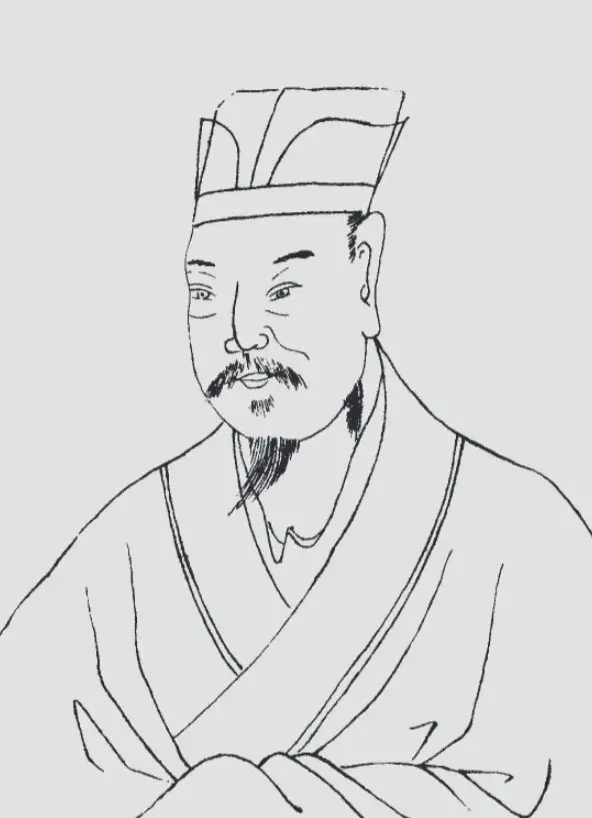
高翥
Gao Zhu (高翥, 1170–1241), originally named Gongbi, courtesy name Jiuwan, art names Jujian and Xintianchao, was a native of Yuyao, Qingyuan Prefecture. He was an acclaimed commoner poet and painter of the middle-to-late Southern Song dynasty and a core pillar of the Jianghu School (Jianghu pai) of poetry, celebrated as a wandering scholar of rivers and lakes (jianghu youshi). Endowed with an aloof, independent…
Gao Zhu (高翥, 1170–1241), originally named Gongbi, courtesy name Jiuwan, art names Jujian and Xintianchao, was a native of Yuyao, Qingyuan Prefecture. He was an acclaimed commoner poet and painter of the middle-to-late Southern Song dynasty and a core pillar of the Jianghu School (Jianghu pai) of poetry, celebrated as a wandering scholar of rivers and lakes (jianghu youshi). Endowed with an aloof, independent temperament from his youth, Gao despised the pursuit of official rank through the imperial examinations, choosing to remain a commoner throughout his life. He wandered the rivers and lakes of Wu, Yue, and Jianghuai, dedicating his life to poetic creation and ink-wash painting, achieving considerable renown in both fields. In his twilight years, impoverished and without land, he erected a tiny thatched cottage on the banks of Shanglin Lake, naming it Xintianchao (Trust-in-Heaven Nest), living in joyful contentment. In 1241, while traveling in the Huai region, he fell ill and returned to Hangzhou, passing away beside West Lake at the age of seventy-two. Gao's verse is characterized by unpretentious naturalism, colloquial vitality, and the charm of folk songs, using fine-line sketching to capture landscape scenes. His celebrated poem Drinking on Tomb Sweeping Day, anthologized in the immortal primer Poems of a Thousand Masters (Qianjia Shi), remains recited throughout China. His works are preserved in Jujian Xiaoji and Xintianchao Yigao, with his one-volume Jujian Ji transcribed in the imperial Siku Quanshu.
Born into a scholar-recluse family in Yuyao, displaying precocious literary and artistic talent from childhood.
Disdained official examination composition in his youth, resolving to live as a commoner poet wandering rivers and mountains.
Traveled across Jianghuai and Liangzhe, visiting historic landmarks such as Duojing Tower and composing verses of national longing.
Won widespread fame across the capital as Hangzhou bibliophile Chen Qi printed his verse in the monumental anthology Jianghu Ji.
Impoverished in later years, built a tiny thatched hut beside Shanglin Lake in Yuyao, naming it Xintianchao.
Witnessed border warfare and refugee flight, composing poignant poems reflecting on the hardships of the common peasantry.
Traveled to the Huai frontier and fell ill; passed away peacefully beside West Lake in Hangzhou at the age of seventy-two.
Gao Zhu was born in 1170 in Yuyao into an established scholarly household. Originally named Gongbi, he exhibited extraordinary intellectual independence from his earliest years. In an era when Southern Song scholars competed furiously for degrees and bureaucratic rank, Gao rejected such worldly pursuits, scorning civil service prose as rigid and artificial, resolving to spend his life as an unencumbered commoner.
He renamed himself Zhu and chose the courtesy name Jiuwan, invoking the mythical roc soaring ninety thousand leagues into the sky to symbolize his transcendent pursuit of personal freedom. In his twenties, he bid farewell to his ancestral home, traveling across Jiangnan with an inkstone and a zither, sailing between the Qiantang River, Lake Tai, the Grand Canal, and the Yangtze River.
Beyond his poetic genius, Gao was an accomplished painter of flower-and-bird and monochrome landscape scrolls. His light ink washes and ethereal brushwork captured the austere aesthetic of scholar-painting. He frequently traded paintings for wine, associating with like-minded wandering intellectuals and becoming a legendary wandering literatus of the southeastern realm.
During the Jiatai and Kaixi eras, commercial publishing flourished in Lin'an. Book merchant Chen Qi gathered the works of displaced poets and commoner scholars, publishing them in the widely circulated anthologies Jianghu Ji and Jianghu Houji. Gao emerged as a preeminent master of the group, exchanging verses with Zhao Shixiu, Weng Juan, Xu Ji, and Xu Zhao of the Four Refined Masters of Yongjia, as well as renowned contemporaries Dai Fugu and Liu Kezhuang.
Traveling along the military frontier of the Huai River, Gao climbed Duojing Tower in Zhenjiang. Gazing at the occupied lands north of the Yangtze, he penned his famous poem Duojing Tower, observing that beautiful scenery in the south was rare, while looking northward stirred endless sorrow for the fallen homeland. His plain, restrained phrasing integrated the melancholy of the traveler with national mourning, winning the admiration of generations of critics.
Later, during the reign of Emperor Lizong, the court banned Jianghu Ji following allegations of political subversion. Despite the political storm, Gao remained completely unperturbed, persevering in his secluded, artistic lifestyle.
In his final decades, Gao's material circumstances grew increasingly impoverished, leaving him without a single plot of land. Nevertheless, he remained serene. On the shores of Shanglin Lake in Yuyao, he constructed a fragile thatched hut barely large enough for one person, naming it Xintianchao (Trust-in-Heaven Nest) to express his absolute philosophical contentment.
Within this humble hermitage, Gao drank simple wine, chanted poetry, and penned pastoral verses such as Ballad of the Autumn Farmer, depicting the peaceful joy of agricultural life: yellow chickens fattening on millet, green tangerines weighing down fences, new wine brewed, and wedding celebrations filling the autumn season. His verse captured the dignity of the common people with folk-like simplicity.
In 1241, past seventy years of age, Gao traveled north to the Huai River to visit old companions, falling ill on his return journey. Arriving at Hangzhou, his illness worsened. Resting in a lakeside cottage beside West Lake, he observed serenely that passing away in the company of the scenic lake fulfilled his lifelong wish. He died peacefully in the autumn of 1241 at the age of seventy-two. His disciples gathered his manuscripts into Jujian Xiaoji and Xintianchao Yigao.
Gao Zhu was one of the most gifted figures of the Southern Song Jianghu School. He thoroughly abandoned the artificial pedantry of earlier poetic movements, seeking inspiration in late Tang lyricism and ancient folk songs to forge a crisp, naturalistic poetic style.
He possessed an extraordinary ability to capture the spiritual essence of everyday landscapes. In his poem Setting Out from Huangshan Temple at Dawn, he described the high and low emerald greens of mountain grass and creeks, contrasted with the subtle yellows of rape blossoms and willow groves, creating an iconic masterpiece of classical landscape verse through pure fine-line sketching.
Gao Zhu's most famous literary masterpiece is the seven-character quatrain Drinking on Tomb Sweeping Day (Qingming Ri Dui Jiu): "Graves crowd the northern and southern hills, while Tomb Sweeping mourners gather in confusion. Paper ash flutters as white butterflies, and tearful blood stains red azaleas. At sunset, wild foxes sleep upon the tombs; returning home at night, children laugh before the lamp. If one has wine in life, one must drink deep; when has a single drop ever reached the Yellow Springs!"
Later selected by late Song master Xie Fangde for Poems of a Thousand Masters (Qianjia Shi), the poem has been memorized across China for centuries. With brilliant visual contrast and existential clarity, it captures the solemn sorrow of ancestral rites alongside the fleeting vanity of human existence, standing as one of the most popular holiday poems in the Chinese literary tradition.
Living during the terminal decay of the Southern Song, Gao maintained uncompromising moral independence as a commoner, refusing to court favor with corrupt ministers. Through his verse, he articulated deep historical grief and subtle social critique.
His poetry balanced the tragic sorrow of looking northward toward lost lands with the tranquil detachment of his Trust-in-Heaven Nest. His pursuit of spiritual freedom amidst worldly decay provided an inspiring moral beacon for the loyalist scholars of eastern Zhejiang during the traumatic dynastic transition to the Yuan.
FIGURES ASSOCIATED WITH THIS DYNASTY