Birth in Ningbo
Born into a cultured gentry lineage in Yinxian; studied classical history, astronomy, and archery.
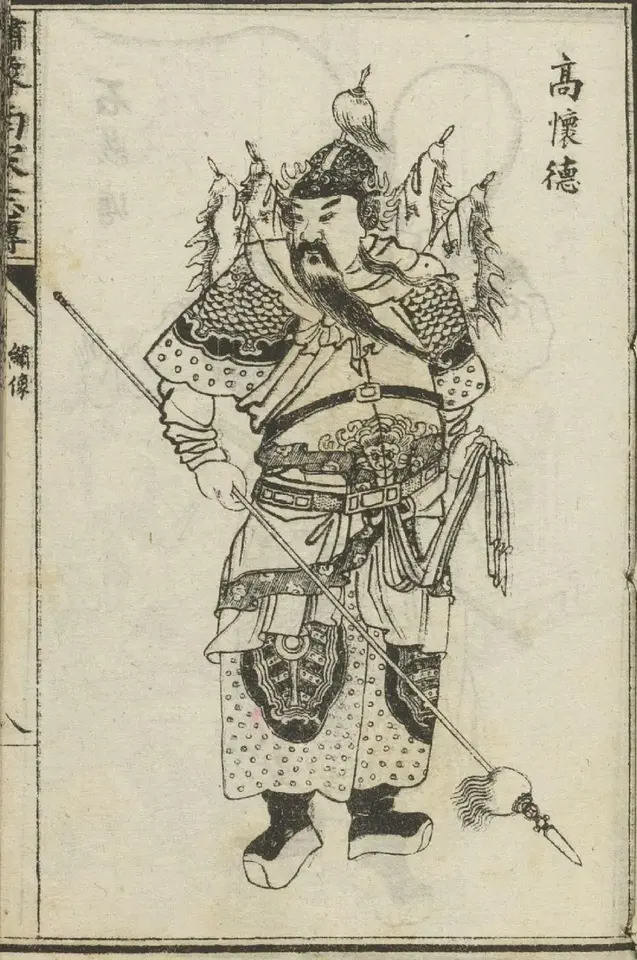
高武
Gao Wu (高武, 16th Century), courtesy name Meigu, pseudonym Meiguzi, native of Yinxian in Ningbo, Zhejiang, was a preeminent physician, medical theorist, and master of acupuncture during the Jiajing era of the Ming dynasty. Endowed with broad intellectual curiosity from youth, Gao initially mastered classical Confucian statecraft alongside astronomy, musical temperament theory, tactical strategy, and mounted archery. Passing…
Gao Wu (高武, 16th Century), courtesy name Meigu, pseudonym Meiguzi, native of Yinxian in Ningbo, Zhejiang, was a preeminent physician, medical theorist, and master of acupuncture during the Jiajing era of the Ming dynasty. Endowed with broad intellectual curiosity from youth, Gao initially mastered classical Confucian statecraft alongside astronomy, musical temperament theory, tactical strategy, and mounted archery. Passing the national military examinations during the early Jiajing reign, he surveyed northern frontier border fortresses and submitted proposals on defense strategy to the Ministry of War. Encountering factional obstruction in the capital, Gao abandoned civil ambitions, returning to Ningbo to adopt the hermit lifestyle of Master Meigu and dedicate his life to medicine. Initially skeptical of acupuncture, Gao subscribed to the prevailing scholarly belief that therapeutics rested entirely on herbal formulas. However, when repeatedly confronted in clinical practice by acute trauma, postpartum fever, and stroke that failed to respond to pharmaceuticals, Gao recognized that medicine was analogous to commanding armies: "Just as a general deploys offensive and defensive maneuvers according to the enemy, an accomplished physician applies herbs, acupuncture, and moxibustion according to the malady." Dedicating himself to the foundational texts of the Yellow Emperor's Inner Canon and the Classic of Difficult Issues, Gao synthesized sixteen major acupuncture works from antiquity to produce his four-volume magnum opus, Acupuncture Essentials Collection (Zhenjiu Juying), in 1529. Recognizing anatomical variations across gender and age, he pioneered the casting of three distinct bronze acupuncture models representing a man, a woman, and a child to standardize acupoint location. He also authored treatises on archery (Shuxue Zhinan) and pediatrics (Douzhen Zhengzong), leaving an indelible legacy on East Asian medicine.
Born into a cultured gentry lineage in Yinxian; studied classical history, astronomy, and archery.
Passed the provincial military examinations, demonstrating mastery in martial arts and border strategy.
Resigned from public service after court factions ignored his border memorials; returned home to study medicine.
Experienced the therapeutic limitations of herbal pharmaceuticals in treating acute trauma, turning to acupuncture.
Completed the seminal four-volume work Acupuncture Essentials Collection, standardizing meridian theory.
Published Acupuncture Essentials of the Inner Canon and Difficult Issues in three volumes for novice students.
Designed and cast three distinct bronze statues—man, woman, child—establishing unprecedented anatomical precision.
Penned Guide to Archery, Treatise on Musical Temperament, and Orthodox Smallpox Pediatrics.
Passed away in his hometown; his son Gao Zhizhai inherited the lineage, writing Commentary on the Spiritual Pivot.
Gao Wu was born around 1500 in Yinxian in the maritime prefecture of Ningbo, Zhejiang Province. Hailing from an intellectual lineage steeped in traditional learning, Gao displayed remarkable polymathic interests from early adolescence. Beyond the standard Confucian curriculum, he devoted himself to historical astronomy, calendar systems, musical pitch theory, military engineering, and tactical formations. Blessed with a tall, robust physical frame, he achieved extraordinary skill in horsemanship, archery, and swordplay, nurturing fervent ambitions to serve the realm on the northern borders.
During the early Jiajing reign (around 1522), Gao passed the imperial military examinations, earning the status of military licentiate. Travelling north to the capital, he inspected the frontier fortifications along the Great Wall and submitted extensive memorials detailing tactical deployments and grain logistics to the Ministry of War. However, court politics during the early Jiajing period were paralyzed by bitter factional disputes over the Great Rites Controversy, and military proposals from outsider candidates were routinely sidelined. Frustrated by bureaucratic indifference, Gao abandoned civil ambition, returning south to Ningbo, adopting the recluse moniker Master Meigu, and turning his intellectual energies toward medical healing.
Embracing the traditional ideal that an upright scholar should heal the populace if unable to govern the state, Gao embarked on an intensive study of internal medicine. Initially, he was heavily influenced by the contemporary scholar-physician bias that privileged botanical decoctions and viewed needlework as the crude, unlettered craft of itinerant barbers. Consequently, he abstained from studying needle puncture or moxibustion.
However, years of real-world clinical experience shattered this doctrinal prejudice. In treating desperate emergencies—such as febrile delirium in women following childbirth, violent acute musculoskeletal trauma, and sudden apoplexy—Gao observed that elaborate herbal decoctions often produced zero clinical efficacy while the patient perished. Experiencing profound professional helplessness, Gao recorded a celebrated passage in the preface to Acupuncture Essentials Collection: "Formerly, I mistakenly believed that the art of preserving life was confined entirely to medicinal herbs, and thus I discarded acupuncture and moxibustion without inquiry. Yet whenever I encountered febrile pathogen entering the blood chamber or severe mechanical contusions that could not be remedied by pharmaceuticals but required immediate needle insertion, I stood with tied hands and felt ashamed of my inadequacy. Thus, I perceived that treating disease is like deploying armies on the battlefield: a superior general measures the enemy to alternate between unorthodox and standard attacks; an accomplished physician administers acupuncture, moxibustion, or herbal remedies according to the precise nature of the disease."
Determined to unlock the foundational truths of acupuncture, Gao returned to the ancient canonical sources: the Yellow Emperor's Inner Canon (Suwen and Lingshu) and the Classic of Difficult Issues (Nanjing). As he surveyed the vast corpus of post-Tang and Song medical compilations, he was appalled by contradictory theories, garbled mnemonics, and crude anatomical blunders perpetuated by uncritical practitioners. Gao adopted a rigorous methodological principle: "Failing to trace the fountainhead leaves one ignorant of the ancients' legislative wisdom; failing to examine the subsequent streams leaves one unaware of the corruptions introduced by later innovations."
In 1531, Gao published Acupuncture Essentials of the Inner Canon and Difficult Issues in three volumes, reorganizing the scattered classical acupuncture aphorisms into a coherent didactic textbook for medical students. Concurrently, he conducted a comprehensive editorial comparison of sixteen major pre-Ming acupuncture works, including Wang Tao's Arcane Essentials from the Imperial Library, Wang Zhizhong's Life-Nourishing Canon of Acupuncture, and Xu Feng's Complete Collection of Acupuncture. Synthesizing consensus while rigorously critiquing anomalies with extensive personal commentary, Gao published the landmark four-volume Acupuncture Essentials Collection in 1529. The text systematically organized fourteen-channel topography, the eight extraordinary vessels, five-phase organ dynamics, specialized seasonal needle techniques, and over eighty classical memorization ballads, establishing a gold standard for early modern Chinese medical practice.
In his clinical instruction, Gao was troubled that traditional acupuncture bronze figures—such as the famous Song dynasty statue created by Wang Weiyi in 1026—were modeled exclusively on adult male anatomy. In practice, female and pediatric patients presented vastly different skeletal proportions, fat distribution, and channel depth. Applying adult male measurements to children or women invited catastrophic punctures into visceral organs.
To eliminate this operational hazard, Gao conducted extensive comparative anatomical measurements in the mid-sixteenth century. Commissioning skilled artisans, he designed and personally supervised the casting of three distinct bronze acupuncture models: one adult male, one adult female, and one child. These statues clearly demarcated channel trajectories and precise puncture depths tailored to demographic differences, representing a monumental advance in the safety and scientific standardization of clinical acupuncture worldwide. In his later years, Gao continued writing across multiple fields, producing Guide to Archery, Analysis of Musical Temperament, and Orthodox Smallpox Pediatrics. He passed away in Ningbo around 1560 at an advanced age. His legacy was sustained by his son, Gao Zhizhai, who became a renowned physician and authored Commentary on the Spiritual Pivot.
Gao's Zhenjiu Juying stands as one of the most comprehensive and academically rigorous encyclopedias of acupuncture ever composed. Spanning four volumes, it synthesized sixteen major classical works, incorporating the channel insights of Hua Shou and the tactical principles of Li Dongyuan alongside eighty classical poetic mnemonics. Its critical annotations cleared away centuries of superstition, making the text an indispensable standard for physicians across China, Japan, and the Korean peninsula for centuries.
Gao was the first medical scholar in world history to pioneer specialized anatomical models differentiated by sex and age. By casting distinct male, female, and pediatric bronze statues, he corrected the dangerous assumption that human acupuncture points follow uniform physical proportions, establishing an anatomical paradigm that elevated surgical safety and clinical accuracy.
Gao dismantled the historical rivalry between herbal pharmacology and external needle therapeutics. His formulation that "treating disease is like deploying armies" established an integrated clinical methodology wherein internal decoctions harmonize the organs while acupuncture unblocks the peripheral channels, cementing a balanced holistic standard that remains fundamental to modern Traditional Chinese Medicine.
FIGURES ASSOCIATED WITH THIS DYNASTY