Military Birth
Born into a martial family in Mengcheng, Bozhou, distinguished by imposing stature and archery skills.
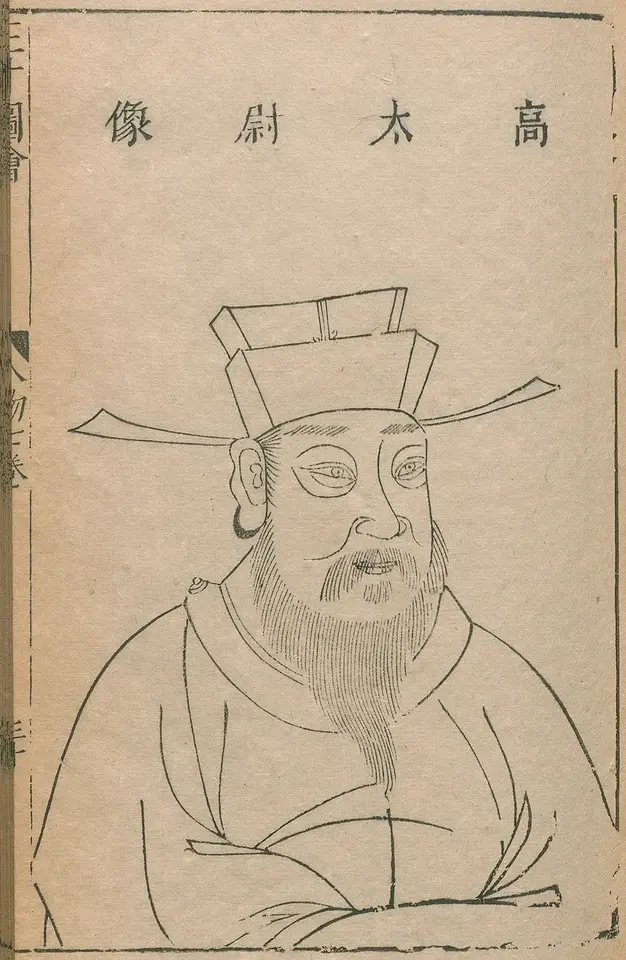
高琼
Gao Qiong (高琼, 935–1006), courtesy name Baoyuan, was an ancestral native of Mengcheng, Bozhou (modern Mengcheng County, Anhui Province), an eminent founding general and military strategist of the Northern Song dynasty. Endowed with ambitious vision, resolute fortitude, and tactical acumen, he served founding general Wang Shenqi in youth before joining the princely residence of Zhao Kuangyi (Emperor Taizong) as imperial…
Gao Qiong (高琼, 935–1006), courtesy name Baoyuan, was an ancestral native of Mengcheng, Bozhou (modern Mengcheng County, Anhui Province), an eminent founding general and military strategist of the Northern Song dynasty. Endowed with ambitious vision, resolute fortitude, and tactical acumen, he served founding general Wang Shenqi in youth before joining the princely residence of Zhao Kuangyi (Emperor Taizong) as imperial bodyguard commander, earning the sovereign's profound trust. Following the establishment of the Song, Gao Qiong took part in the conquest of Northern Han at Taiyuan and campaigns across the northern frontier, repeatedly fighting on the front lines and rising to Commander-in-Chief of the Four Wings of Longshen Guards and Military Commissioner of Baojing. In 1004, during the first year of the Jingde era, Empress Dowager Xiao and Emperor Shengzong of Liao led an invading army of 200,000 Khitan cavalry deep into Song territory, reaching Chanzhou (modern Puyang, Henan) on the northern bank of the Yellow River. Terrified court ministers urged abandoning Kaifeng: Vice Grand Councilor Wang Qinruo advocated fleeing south to Jinling, while Vice Bureau of Military Affairs Director Chen Yaosou suggested fleeing west to Chengdu. Grand Councilor Kou Zhun fiercely opposed retreat, demanding that Emperor Zhenzong personally lead the army. Holding office as Commander-in-Chief of the Palace Command and Honorary Grand Preceptor, Gao Qiong stepped forward with hand on sword, fiercely denouncing defeatist ministers and joining Kou Zhun in compelling the hesitant sovereign to cross the Yellow River. At the Chanzhou front, Gao Qiong braved the winter freeze to escort the imperial carriage across the pontoon bridge and onto the north gatehouse of Chanzhou. Beholding the yellow imperial umbrella, hundreds of thousands of Song soldiers roared with thunderous cheers that shook the plains for miles, multiplying frontline morale. Song heavy bed-crossbows subsequently shot and killed Liao commanding general Xiao Talin, breaking the enemy's offensive momentum and compelling Liao to sue for peace, culminating in the historic Chanyuan Treaty that guaranteed over a century of border tranquility. In December 1006, Gao Qiong died in Kaifeng at seventy-two. Emperor Zhenzong suspended court for five days, posthumously conferring Grand Preceptor, Palace Attendant, and the posthumous name Liewu, later elevating him to Prince of Wei.
Born into a martial family in Mengcheng, Bozhou, distinguished by imposing stature and archery skills.
Served in the princely mansion of Zhao Kuangyi; elevated upon Taizong's accession to Imperial Cavalry Commander.
Participated in the campaign extinguishing Northern Han, storming the western ramparts and earning battlefield honors.
Advanced across Yanmen Pass with Pan Mei and Yang Ye, defeating Khitan forces and advancing to Guards Commander.
Appointed Commander-in-Chief of the Palace Command and Military Commissioner of Baojing, commanding the elite metropolitan troops.
Denounced cowardly retreat proposals, guided Zhenzong across the Yellow River, and achieved the historic Chanyuan Treaty.
Passed away in the twelfth month at seventy-two; Zhenzong mourned five days, bestowing Grand Preceptor and title Liewu.
Gao Qiong was born in 935 in Mengcheng, Bozhou. From early youth, he possessed extraordinary physical strength and an unbending spirit, studying military classics and excelling in mounted archery. In his youth, he roamed the Jianghu before joining the command of Wang Shenqi, Inspector-General of the Palace Command under the Later Zhou dynasty. Recognizing his audacity, Wang Shenqi praised him as a rising commander. During the early Jianlong era of Emperor Taizu, Zhao Kuangyi was appointed Prefect of Kaifeng; Gao Qiong was selected to head his bodyguard corps, winning lasting confidence through discretion and superior martial prowess.
In 976, Emperor Taizong ascended the imperial throne and immediately promoted Gao Qiong to Imperial Cavalry Commander. In 979, during Taizong's personal campaign against Northern Han at Taiyuan, Gao Qiong led the vanguard assault on the western city walls, sustaining multiple arrow wounds while refusing to withdraw. At the Battle of Gaoliang River, where Song troops were ambushed by Liao relief forces, Gao Qiong fought desperately to cover the retreat of the sovereign's main body, earning Taizong's admiration.
In 986, during the grand three-pronged Yongxi northern offensive against the Liao, Gao Qiong accompanied western army commanders Pan Mei and Yang Ye through Yanmen Pass, capturing Yunzhou, Shuozhou, Huanzhou, and Yingzhou. Facing Khitan counterattacks, he fought at the forefront, capturing enemy banners and advancing to Commander-in-Chief of the Four Wings of Longshen Guards. Following Emperor Zhenzong's coronation, he was promoted to Military Commissioner of Zhongwu Circuit and appointed Commander-in-Chief of the Palace Command, taking full charge of the empire's imperial guard divisions.
In the autumn of 1004, Empress Dowager Xiao and Emperor Shengzong of Liao mobilized 200,000 elite Khitan cavalry, launching an overwhelming southward offensive. Bypassing fortified strongholds in Hebei such as Yingzhou and Beizhou, Liao spearheads drove straight to Chanzhou on the northern bank of the Yellow River, directly threatening the imperial capital of Kaifeng.
Emperor Zhenzong, raised in the sheltered palace, fell into panic. In state council deliberations, southern-born Vice Grand Councilor Wang Qinruo urged the emperor to abandon the Central Plains and flee south to Jinling, while Shu-born Vice Director Chen Yaosou insisted on retreating west to Chengdu. Frightened courtiers packed their household goods, and metropolitan authority hovered on the brink of collapse.
Grand Councilor Kou Zhun stood firm against the assembly, arguing passionately for an imperial campaign: "If the sovereign personally marches to the front, the soldiers' courage will multiply a hundredfold and the Khitans can be crushed; if we yield an inch, imperial morale will disintegrate." As the emperor wavered in terror, Kou Zhun exited the throne room and summoned Commander-in-Chief Gao Qiong. Kou Zhun asked sternly: "Commander, your family has enjoyed royal favor for generations. Today the altars of state are imperiled; what is your resolve?"
Gao Qiong drew himself erect, rested his hand upon his sword hilt, and declared: "As a soldier, I know only to die for my country!" Overjoyed, Kou Zhun brought him directly into the presence of the emperor. Facing the defeatist ministers, Gao Qiong glared at Wang Qinruo and shouted fiercely: "Civil officials enjoy high stipends in peacetime expounding Confucian doctrines, yet when the enemy approaches, instead of giving your lives for the realm, you peddle clever words urging His Majesty to abandon the ancestral altars! We imperial guard soldiers swear to fight to the death with the sovereign! If we flee south, who among the millions of soldiers and civilians of the Central Plains will follow? When enemy cavalry pursue us to the Yangtze River, where will the empire flee!"
These thunderous words utterly demolished the defeatist schemes. Gao Qiong knelt before the emperor: "If Your Majesty sets forth in person, we soldiers will don armor, take up lances as the vanguard, and ensure your absolute safety!" Bolstered by the commander's resolute vow, Emperor Zhenzong finally commanded the imperial carriage to advance to Chanzhou.
In the eleventh month, Emperor Zhenzong arrived amidst a blinding snowstorm at the southern city of Chanzhou on the Yellow River's southern shore. Observing the furious combat raging across the river on the northern bank, Zhenzong hesitated again, refusing to cross the pontoon bridge.
As ministers looked on in dismay, Kou Zhun turned once more to Gao Qiong. Without hesitation, Gao Qiong drew his sword and stood alongside the sovereign's carriage, commanding the royal escort forward: "Military affairs brook no delay! When the emperor crosses the river, the three armies will fight to the death!" Gao Qiong directed imperial guard battalions to shield the carriage, personally urging the procession across the pontoon bridge and ascending the northern gatehouse of Chanzhou. High above the battlements, guards hoisted the imperial yellow umbrella.
Seeing the golden standard unfurled above the walls, hundreds of thousands of Song soldiers realized their emperor had arrived on the frontline. A deafening roar of "Long Live the Emperor!" erupted across the snowfields, reverberating for miles and electrifying the defenders' fighting spirit. The Khitan offensive ground to an abrupt halt.
Gao Qiong promptly deployed specialized heavy bed-crossbow battalions along the northern approaches. When Xiao Talin, the supreme Khitan field commander, rode near the fortifications to survey the lines, Song crossbowmen triggered a massive volley. A bolt struck Xiao Talin directly in the forehead, killing him instantly. The loss of their supreme field commander threw the Liao army into despair; Emperor Shengzong and Empress Dowager Xiao wept bitterly and abandoned hopes of conquest. Under the synchronized leadership of Kou Zhun and Gao Qiong, the Song negotiated the equitable Chanyuan Treaty from a position of tactical strength, bringing decades of frontier warfare to an end and securing more than a century of peace.
In December 1006, veteran commander Gao Qiong passed away in Kaifeng at the age of seventy-two. Emperor Zhenzong suspended court audiences for five days, posthumously conferring Grand Preceptor and Palace Attendant alongside the posthumous title Liewu. Ennobled posthumously as Prince of Wei under Emperor Huizong and Emperor Gaozong, Gao Qiong was enshrined in the imperial ancestral temple as a towering founding warrior of the Northern Song.
Distinguished on battlefields across Taiyuan, Youji, and Yanmen under Taizu and Taizong, he fought through multiple wounds and rose to commander of the four wings of imperial guards.
When Liao invaded in 1004, he drew his sword in palace halls, fiercely rebuking ministers advocating flight to Jinling and demanding an imperial expedition.
Guiding the imperial carriage across the frozen Yellow River to the northern ramparts, he rallied the troops and set up the crossbow ambush that killed Xiao Talin, cementing the Chanyuan Treaty.
Guarding the throne as palace commander for decades with strict integrity, his death at seventy-two prompted five days of court suspension, Grand Preceptor honors, and creation as Prince of Wei.
FIGURES ASSOCIATED WITH THIS DYNASTY