Birth in Lingnan
Born into the premier Feng lineage of Lingnan, descendants of the celebrated Lady Xian.
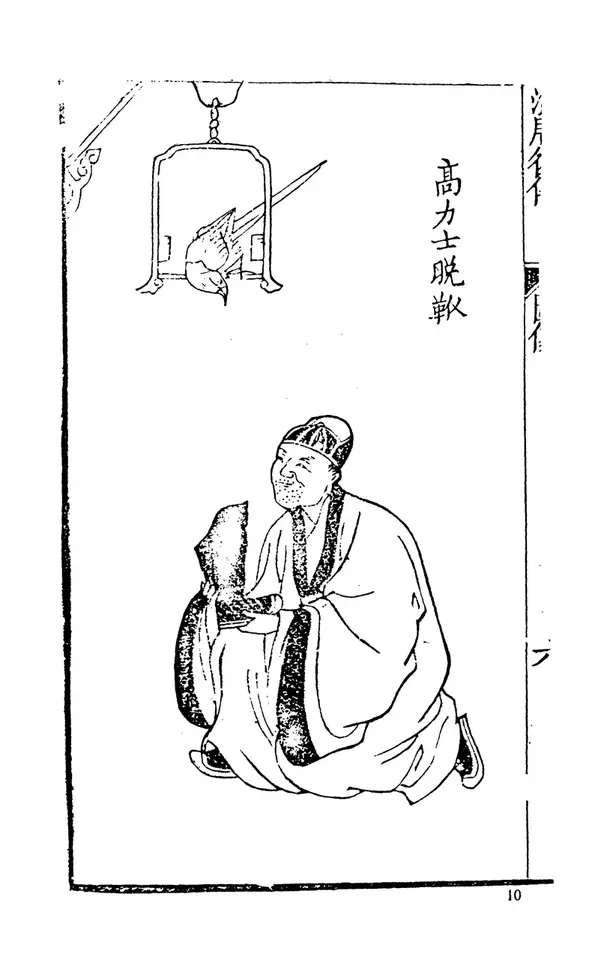
高力士
Gao Lishi (高力士, 684–762), originally named Feng Yuanyi (冯元一), was a native of Panzhou (modern Gaozhou, Guangdong Province). He was the supreme palace eunuch, primary confidant, and chief attendant to Emperor Xuanzong of Tang (Li Longji). Descended from the indigenous Feng clan of Lingnan—a prominent aristocratic chieftain lineage tracking back to Lady Xian—he was castrated and assigned to the imperial palace following his…
Gao Lishi (高力士, 684–762), originally named Feng Yuanyi (冯元一), was a native of Panzhou (modern Gaozhou, Guangdong Province). He was the supreme palace eunuch, primary confidant, and chief attendant to Emperor Xuanzong of Tang (Li Longji). Descended from the indigenous Feng clan of Lingnan—a prominent aristocratic chieftain lineage tracking back to Lady Xian—he was castrated and assigned to the imperial palace following his family's political ruin during the Wu Zhou dynasty. Attracting the attention of Empress Wu Zetian for his tall stature and keen intellect, he was adopted by senior eunuch Gao Yanfu and assumed the surname Gao. In 710, Gao Lishi joined Prince Li Longji in launching the Tanglong Coup to eliminate Empress Wei, followed by the Xiantian Coup in 713 against Princess Taiping, solidifying Xuanzong's supreme autocratic authority. Throughout the Kaiyuan and Tianbao eras, Gao Lishi commanded the palace guard and reviewed all central memorials, eventually created Duke of Qi and Senior General of Agile Cavalry. Despite immense influence, he conducted himself with remarkable prudence and humility, mediating between the emperor and authoritarian chancellors Li Linfu and Yang Guozhong while repeatedly warning Xuanzong against over-empowering border generals like An Lushan. During the An Lushan Rebellion in 756, he escorted Xuanzong to Sichuan and defused the Mawei Courier Station mutiny. Later targeted by the rising eunuch Li Fuguo under Emperor Suzong, Gao was banished to Wuzhou. Granted amnesty in 762, he learned of Xuanzong's death en route to the capital and perished from coughing blood in grief at the age of seventy-nine. He was posthumously granted the rank of Grand Commandant of Yangzhou and awarded the unique honor of satellite burial at Xuanzong's Tailing Mausoleum.
Born into the premier Feng lineage of Lingnan, descendants of the celebrated Lady Xian.
Castrated and consigned to the palace following clan downfall; adopted by eunuch Gao Yanfu.
Formed an alliance with Li Longji, securing palace gates during the overthrow of Empress Wei.
Commanded imperial guard detachments to crush Princess Taiping's faction in the Xiantian Coup.
Bestowed the title Duke of Qi and appointed Senior General of Agile Cavalry, reaching the pinnacle of influence.
Protected Emperor Xuanzong during the evacuation to Shu; brokered settlement during the Mawei Mutiny.
Slandered by rival eunuch Li Fuguo and exiled to remote Wuzhou in Hunan.
Amnestied; coughed blood and died of grief upon learning of Xuanzong's passing at age seventy-nine.
Gao Lishi was born in the first year of Guangzhai (684) in Panzhou, Lingnan. He belonged to the distinguished Feng lineage, the paramount indigenous chieftain clan that governed the southern borderlands for centuries. His great-grandfather Feng Ang had been created Duke of Geng in the early Tang, and his family was directly descended from Lady Xian, the revered sovereign matriarch of Lingnan. For generations, the Feng family held governorships over Guangzhou and Panzhou.
In 698, greedy regional administrators brought trumped-up charges of rebellion against the Feng family. The clan was shattered; young Feng Yuanyi was castrated and escorted under armed guard to the eastern capital of Luoyang. Measuring six chi and five cun with an imposing physique and refined manners, the adolescent youth drew the notice of Empress Wu Zetian, who assigned him to personal service.
Following a minor protocol lapse, he was temporarily dismissed from the inner palace. Gao Yanfu, an attendant attached to the household of Wu Sansi, was struck by the boy's calm intelligence and adopted him as his son, renaming him Gao Lishi. Through this adoption, Gao Lishi gained intimate familiarity with palace protocols and factional dynamics. Impressed by his continued maturity and impeccable discretion, Wu Zetian reinstated him in the Palace Service Bureau.
During the reign of Emperor Zhongzong, court politics descended into turmoil as Empress Wei and Princess Anle sought to monopolize imperial authority. Stationed within the palace corridors, Gao Lishi observed Prince of Linzi Li Longji assembling elite military officers and literati. Recognizing Li Longji as a transformational leader capable of salvaging the dynasty, Gao Lishi pledged secret allegiance to the young prince.
In June 710, Li Longji launched the Tanglong Coup. Gao Lishi acted as a frontline operative, seizing palace gates, coordinating intelligence with the northern garrison troops, and securing the palace precincts as Wei's cabal was wiped out. Following the restoration of Emperor Ruizong and Li Longji's designation as crown prince, Gao Lishi was promoted to Palace Attendant.
In July 713, Princess Taiping prepared to seize supreme power. Emperor Xuanzong pre-empted the rebellion through the Xiantian Coup. Donning armor and gripping a broadsword, Gao Lishi personally commanded imperial guard units to arrest and execute the conspirators Xiao Zhizhong and Cen Xi, forcing Princess Taiping to commit suicide. This decisive operation concentrated undivided imperial authority in Xuanzong's hands. Recognizing his unwavering fidelity, Xuanzong promoted Gao Lishi to General of the Right Gate Guard, placing the imperial security apparatus under his control.
Throughout Xuanzong's four-decade reign over the Kaiyuan and Tianbao eras, Gao Lishi remained the sovereign's closest personal companion. Xuanzong famously remarked: "When Lishi is on guard duty, I can sleep in absolute peace." All administrative memorials submitted by ministerial departments passed through Gao Lishi's hands before reaching the throne. Routine state affairs were vetted and endorsed by Gao; only matters of paramount national significance were forwarded for imperial rescripts.
His ranks rose commensurately. In 748, Xuanzong elevated him to Senior General of Agile Cavalry and created him Duke of Qi. Wealth, palatial residences, and agricultural estates in the capital were showered upon him. Princes and princesses of the imperial lineage respectfully addressed him as "Venerable Elder," royal consorts referred to him as "Father," and powerful chancellors like Li Linfu and Yang Guozhong solicited his goodwill to safeguard their offices.
Crucially, Gao Lishi never abused his extraordinary authority to execute petty personal vengeance. He maintained an unassuming, disciplined lifestyle, serving as a buffer against Li Linfu's vindictive persecutions and shielding Crown Prince Li Heng from repeated destabilization plots. When Xuanzong indulged in complacency and granted sweeping regional military commands to An Lushan, Gao Lishi courageously warned the sovereign of the mortal perils posed by over-mighty frontier warlords, urging reinforcement of capital garrisons—a prescient counsel that the infatuated emperor tragically disregarded.
In November 755, An Lushan launched his rebellion, sweeping across northern China. In the summer of 756, the fall of Tong Pass compelled Xuanzong to abandon Chang'an and flee toward Sichuan. At Mawei Courier Station, exhausted and famished imperial guards mutinied, slaying Chancellor Yang Guozhong and demanding the immediate execution of Lady Yang Guifei.
Paralyzed by grief and terror, Xuanzong was powerless. Stepping into the breach, Gao Lishi reasoned firmly with the mutinous commanders while impressing upon Xuanzong the brutal political reality: "The soldiers have slaughtered Guozhong; so long as the Precious Consort lives, they will not lay down their arms. Only Your Majesty's sacrifice can preserve your sacred person and the dynasty." Xuanzong yielded, and Gao Lishi escorted the consort to a Buddhist shrine, where he carried out her execution by strangulation, presenting her remains to satisfy the rebel guards and saving Xuanzong's life.
After Prince Li Heng assumed the throne as Emperor Suzong in Lingwu and recaptured Chang'an, Xuanzong returned to the capital as Retired Emperor, accompanied by Gao Lishi in Xingqing Palace. However, Suzong's chief eunuch Li Fuguo viewed Gao Lishi as a dangerous rival. In 760, Li Fuguo forcibly relocated Xuanzong to the inner palace and fabricated charges against Gao Lishi, stripping him of all rank and exiling him to Wuzhou in Hunan.
During his harsh exile, Gao Lishi sustained himself on wild plants, composing a poem reflecting his incorruptible devotion: "In the dual capitals, shepherd's purse is sold by the pound; in the five streams, no one gathers it. Though barbarian lands differ from the heartland, its intrinsic flavor never changes."
In March 762, Emperor Suzong declared an empire-wide amnesty. Exonerated, Gao Lishi began his journey back toward Chang'an. In April, upon reaching Langzhou, he met imperial couriers bearing tragic tidings: Retired Emperor Xuanzong had passed away on May 3. Overcome with devastating anguish, Gao Lishi knelt facing northwest, weeping uncontrollably until he coughed up pints of blood and refused all sustenance. Within days, he died of heartbreak at the age of seventy-nine.
Emperor Daizong commended his peerless loyalty, posthumously reinstating him as Senior General of Agile Cavalry and conferring the honorific title Grand Commandant of Yangzhou. Gao Lishi was interred beside Emperor Xuanzong at Tailing Mausoleum, standing as the solitary satellite tomb honor accompanying the Kaiyuan monarch for eternity.
Gao Lishi's primary historical achievement lay in his decisive military and security roles during the Tanglong and Xiantian coups. In an era marked by palace intrigues and usurpations, Gao's command of the palace guards shielded Li Longji against reactionary coalitions, establishing the political stability required for the flourishing of the Kaiyuan era. His vigilance over internal palace security allowed Xuanzong to concentrate on administrative, fiscal, and cultural revitalization.
Unlike subsequent Late Tang eunuchs who deposed monarchs and indulged in venal cruelty, Gao Lishi functioned as a moderating statesman. He shielded imperiled officials from Chancellor Li Linfu's draconian secret police and consistently protected Crown Prince Li Heng against factional plots. His early warnings regarding An Lushan's treasonous buildup demonstrated visionary strategic foresight, earning him respect from traditional historians as an imperial servant of exceptional integrity.
FIGURES ASSOCIATED WITH THIS DYNASTY