Renown in the North
Commanded vanguard armies under Yuan Shao, achieving equal fame alongside Zhang He.
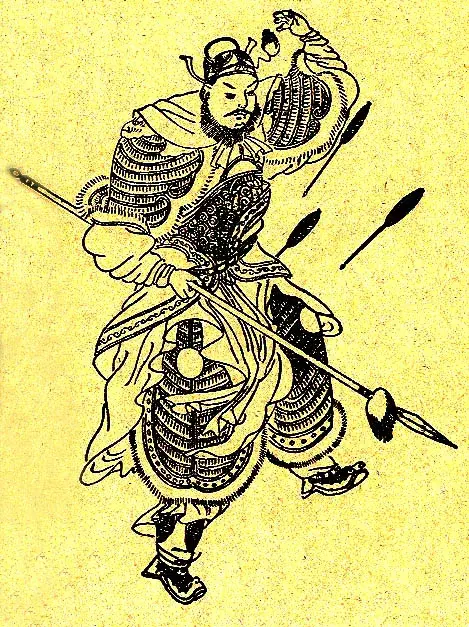
?
高览
Gao Lan (高览, dates unknown), also recorded in historical sources as Gao Huan, was a prominent military commander of the late Eastern Han dynasty who served under the northern warlord Yuan Shao before defecting to Cao Cao. Renowned throughout northern China for his tactical competence and resolute battlefield leadership, he commanded frontline divisions alongside Zhang He as one of the premier generals of the northern…
Gao Lan (高览, dates unknown), also recorded in historical sources as Gao Huan, was a prominent military commander of the late Eastern Han dynasty who served under the northern warlord Yuan Shao before defecting to Cao Cao. Renowned throughout northern China for his tactical competence and resolute battlefield leadership, he commanded frontline divisions alongside Zhang He as one of the premier generals of the northern coalition. In 200 AD, during the decisive climax of the Battle of Guandu, Cao Cao personally led elite shock troops on a nighttime raid to incinerate Yuan Shao's primary logistical depots at Wuchao. Rejecting Zhang He's advice to reinforce Wuchao with the main army, Yuan Shao adopted Guo Tu's flawed strategy of dispatching light cavalry to Wuchao while ordering Gao Lan and Zhang He to lead the heavy field army in an all-out assault against Cao Cao's heavily fortified headquarters. Facing stubborn resistance from Cao Hong and Xun Yu, Gao Lan battered the camp without achieving a breakthrough. When Wuchao fell and commander Chunyu Qiong was executed, Guo Tu slandered the forward commanders to evade responsibility for the catastrophe. Recognizing that military defeat was compounded by treacherous intrigue at court, Gao Lan and Zhang He made the fateful decision to incinerate their siege engines and lead their forces to surrender to Cao Cao. Their defection triggered the immediate, total collapse of Yuan Shao's army, forcing the northern warlord to flee across the Yellow River with merely eight hundred horsemen. Welcoming them with immense joy, Cao Cao compared their arrival to Han Xin joining Liu Bang, elevating Gao Lan to Major General and ennobling him as Marquis of Donglai. Contemporary scholar Chen Lin celebrated him as a courageous commander of exceptional valor who assisted in the pacification of northern China.
Commanded vanguard armies under Yuan Shao, achieving equal fame alongside Zhang He.
Commanded the assault against Cao Cao's headquarters at Guandu, checked by Cao Hong and Xun Yu.
Incinerated siege weapons and defected to Cao Cao; ennobled as Marquis of Donglai.
Praised by Chen Lin in formal proclamations as a resolute general of loyalty and strategic wisdom.
Gao Lan emerged from the military upheavals of northern China during the final decades of the Eastern Han dynasty, appearing in ancient records under both the names Gao Lan and Gao Huan. Following the collapse of imperial authority, Yuan Shao mobilized the gentry and regional armies of Bohai, acquiring Ji Province from Han Fu and destroying Gongsun Zan in You Province to achieve complete mastery over the territories north of the Yellow River.
Gao Lan enlisted in Yuan Shao's service during these formative campaigns. Displaying consistent bravery, a calm operational mind, and mastery of combined infantry and cavalry formations, he rose through merit to become a senior field commander. Alongside Zhang He, he formed the core tactical leadership of the northern armies, second in prestige only to the premier champions Yan Liang and Wen Chou. Because northern forces were considered the most formidable heavy cavalry and infantry in the realm, Gao Lan's rigorous discipline earned him deep respect among his troops.
In 199 AD, following the total defeat of Gongsun Zan, Yuan Shao turned his ambitions toward the central plains, deploying his host along the northern banks of the Yellow River to confront Cao Cao. As the armies concentrated along the frontier, Gao Lan was entrusted with heavy strike divisions stationed at the forward perimeter, preparing for the strategic campaign that would determine the mastery of the realm.
In the autumn of 200 AD, the Battle of Guandu reached an agonizing stalemate. Both armies confronted one another behind extensive earthen walls and deep trenches for several months. Heavily outnumbered and facing an imminent exhaustion of grain, Cao Cao's situation was critical. At this juncture, Yuan Shao's strategist Xu You defected to Cao Cao, revealing that Yuan Shao had stored all his food supplies at Wuchao under negligent security.
Acting with characteristic decisiveness, Cao Cao handpicked five thousand elite cavalry, disguised them as northern convoys, and marched by night to set fire to Wuchao. When reports of the raging fire reached Yuan Shao's headquarters, Zhang He urged an immediate relief operation: "Cao Cao has attacked in person and Chunyu Qiong cannot hold; if the granaries are lost, the war is finished; we must deploy the entire army to relieve Wuchao at once!"
However, advisor Guo Tu stubbornly opposed the move, advocating an indirect assault: "Cao Cao is absent, so his main camp at Guandu must be vulnerable. If we commit our heavy divisions to storm his base camp, Cao Cao will be forced to abandon Wuchao to save his rear." Zhang He argued that Cao Cao's fortifications were impregnable under Cao Hong and Xun Yu, but Yuan Shao foolishly adopted Guo Tu's proposal. He dispatched merely light cavalry toward Wuchao, while ordering Gao Lan and Zhang He to commit the main army to storm Cao Cao's camp. Gao Lan led continuous assaults day and night, but Cao Hong and Xun Yu held firmly behind their trenches and missile towers, repelling every assault.
While Gao Lan battered the camp without success, catastrophic news arrived from Wuchao. Cao Cao had completely overrun the depots, decapitating Chunyu Qiong and incinerating the northern grain reserves. The dispatched relief cavalry fled in panic, and the northern army at Guandu was seized with widespread demoralization.
Terrified that Yuan Shao would execute him for having devised the disastrous strategy, Guo Tu sought to shift the blame onto the forward commanders. He fabricated slanderous accusations to Yuan Shao, alleging: "Zhang He and Gao Lan were not grieved by our defeat at Wuchao; instead, they rejoiced and uttered insolent complaints against Your Lordship!" Receiving intelligence of Guo Tu's machinations from within the headquarters, Gao Lan and Zhang He realized that returning to camp would lead to their immediate execution by the paranoid warlord.
Confronting an unbreachable enemy fortress before them and fatal court intrigue behind them, Gao Lan acted with decisive clarity. Incensed by the treachery, he ordered his men to set fire to all their siege engines, assault towers, and battering rams, extinguishing any thought of retreat. He and Zhang He then marshaled their veteran divisions, opened their gates, and marched directly to Cao Cao's encampment to surrender to Cao Hong and Xun Yu.
The defection of the two primary frontline commanders delivered the coup de grace to Yuan Shao's army. The northern host, already panicking over the loss of their food supplies, completely disintegrated upon seeing their vanguard generals join the enemy. Cao Cao's forces surged out of their entrenchments in a general pursuit, inflicting tens of thousands of casualties. Yuan Shao and his eldest son Yuan Tan abandoned their army, escaping across the Yellow River with merely eight hundred horsemen.
Returning victorious from Wuchao, Cao Cao was overjoyed to learn that Gao Lan and Zhang He had surrendered. Cao Cao hosted a banquet in their honor, grasping Gao Lan's hand and exclaiming: "Formerly, Prince Weizi departed the corrupt Shang dynasty to join Zhou, and Han Xin abandoned Xiang Yu to serve the founder of Han; your arrival today is equally illustrious!" Cao Cao immediately commissioned Gao Lan as Major General and ennobled him as Marquis of Donglai.
Gao Lan's timely defection was universally recognized as the pivotal turning point that converted a precarious tactical crisis into an overwhelming strategic triumph for Cao Wei. His elevation to the rank of Major General and enfeoffment as a marquis placed him firmly among the founding nobility of the emerging northern regime.
In 211 AD, the celebrated scholar Chen Lin composed the official state proclamation Proclamation to the Military Officers of Wu, in which he explicitly praised Gao Lan's historical contribution. Chen Lin recorded: "During the campaign of Guandu, Zhang He and Gao Huan achieved historic merit by taking up arms in allegiance... Men such as these were loyal, valiant, resolute, and endowed with wisdom and virtue, consulting upon grand strategies, repelling formidable crises, capturing enemy banners, and establishing peace throughout the four seas." This definitive contemporary evidence affirms that Gao Lan continued to serve as an honored founding general of the dynasty.
During the siege of Guandu in 200 AD, Gao Lan was charged with the mission of breaching Cao Cao's central headquarters. Operating under flawed operational directives imposed by Yuan Shao and Guo Tu, Gao Lan nevertheless executed his duties with consummate professionalism.
Leading his divisions against entrenched positions protected by interlocking moats, caltrops, and heavy crossbow emplacements, Gao Lan maintained sustained pressure on the defenders.
His operational tenacity forced the defenders under Cao Hong and Xun Yu to fight at the absolute limit of their endurance, proving his caliber as a formidable frontline field commander.
Gao Lan's decision to defect at Guandu remains one of the most consequential small-group political decisions in the military history of the Three Kingdoms. Facing betrayal by court factionalists after the destruction of the grain depots, he refused to become a passive victim of political slander.
By incinerating his siege machinery and leading his heavy divisions to join Cao Cao, he instantly converted the most powerful component of the northern army into an ally of the southern regime.
This sudden reversal triggered the total psychological and operational collapse of Yuan Shao's hundred thousand troops, single-handedly converting a grueling war of attrition into an overwhelming northern rout.
Following his defection, Gao Lan was welcomed into the highest ranks of the Cao Wei military establishment, receiving the rank of Major General and the noble title of Marquis of Donglai.
His stature was formally recognized by contemporaries such as Chen Lin, who bracketed him with Zhang He as a paragon of martial virtue and strategic counsel.
His service aided in stabilizing the newly conquered territories of northern China, ensuring his permanent place among the foundational military commanders of the dynasty.
FIGURES ASSOCIATED WITH THIS DYNASTY