Birth in Fangshan
Born into an illustrious family in Fangshan, Dadu, studying Confucian classics and archery.
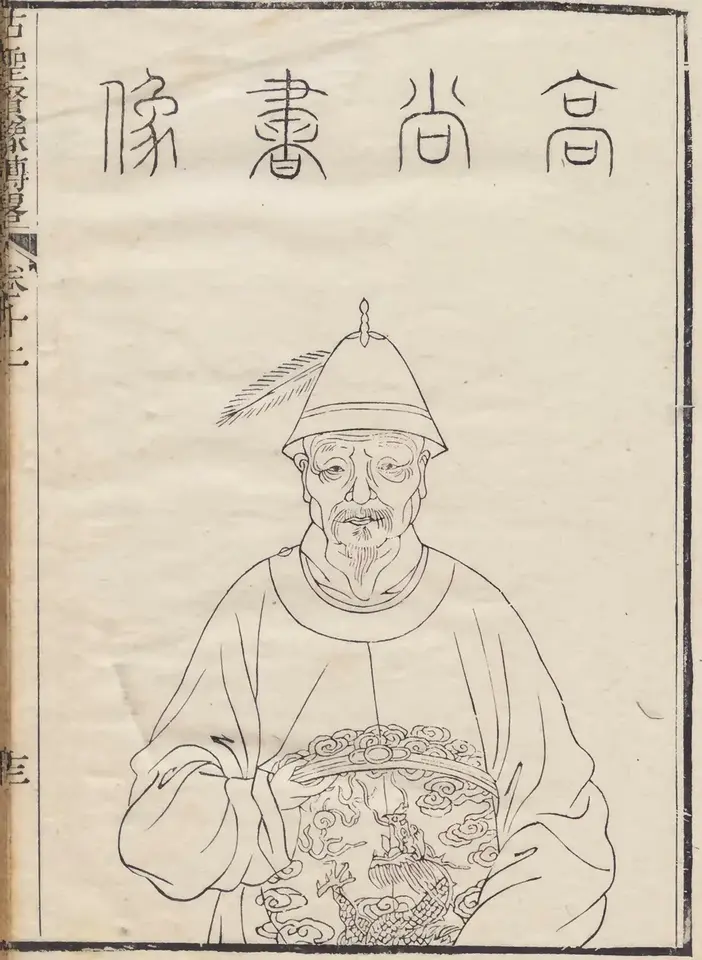
高克恭
Gao Kegong (高克恭) was an illustrious master painter, poet, and high-ranking statesman of the early Yuan Dynasty, whose courtesy name was Yanjing and literary name was Fangshan. His ancestors were of Uyghur noble lineage who migrated eastward to Dadu's Fangshan district. Upright, prudent, and deeply versed in Confucian classics, Gao entered Yuan officialdom as a scribal clerk in the Ministry of Revenue, steadily rising…
Gao Kegong (高克恭) was an illustrious master painter, poet, and high-ranking statesman of the early Yuan Dynasty, whose courtesy name was Yanjing and literary name was Fangshan. His ancestors were of Uyghur noble lineage who migrated eastward to Dadu's Fangshan district. Upright, prudent, and deeply versed in Confucian classics, Gao entered Yuan officialdom as a scribal clerk in the Ministry of Revenue, steadily rising through merit to Vice Minister of Works, Vice Minister of Justice, Governor of Daming Route, Governor of Taiyuan Route, and Assistant Administrator of the Jiangzhe Branch Secretariat, ultimately culminating as Minister of Justice. Renowned for his judicial integrity and benevolent administration, he cleared thousands of wrongful charges and protected ordinary livelihoods across northern and southern China. In the history of Chinese art, Gao Kegong stands as a monumental founding master of Yuan literati landscape and ink bamboo painting. He initially studied the misty cloud-mountains of Northern Song masters Mi Fu and Mi Youren, subsequently integrating the monumental brushwork of Dong Yuan, Juran, and Tang master Wang Wei. By fusing northern grandeur with southern atmospheric moisture, he created a transformative landscape style celebrated alongside cultural leader Zhao Mengfu under the legendary moniker "Zhao of the South, Gao of the North" (Nan Zhao Bei Gao). His ink bamboo paintings combined calligraphic strength with pristine composure. Surviving masterpieces such as Clouds Encircling Verdant Peaks (Yunheng Xiuling Tu), Spring Mountains in Clearing Rain, and Ink Bamboo and Sloping Rock are treasured across the world as supreme national treasures, exerting an enduring influence on the Ming and Qing literati landscape tradition.
Born into an illustrious family in Fangshan, Dadu, studying Confucian classics and archery.
Entered civil service as a clerk in the Ministry of Revenue, winning Kublai Khan's notice for diligence.
Appointed Assistant Surveillance Commissioner of Jianghuai, clearing false charges across eastern Zhejiang.
Promoted to Governor of Daming Route, establishing famine relief and suppressing local corruption.
Promoted to Minister of Justice in Dadu, reforming penal procedures and defending legal equity.
Appointed Assistant Administrator of the Jiangzhe Branch Secretariat in Hangzhou, painting alongside Zhao Mengfu.
Assigned as Governor of Taiyuan Route, subsequently retiring to his ancestral home in Fangshan.
Passed away in his Fangshan residence at age sixty-three, mourned by court dignitaries and scholars.
Gao Kegong was born in 1248 in Fangshan near Dadu. His ancestors were Uyghur aristocrats from Central Asia who migrated to northern China during the Mongol conquests. His household embraced Confucian culture; young Gao was precocious, memorizing the Confucian classics and ancient philosophers with remarkable ease. He possessed a robust, dignified appearance and combined scholarly learning with administrative acumen.
During the Zhiyuan era, Gao entered official service in the capital as a scribal clerk in the Ministry of Revenue. In this post, he audited treasury tax rolls, audited logistics accounts, and performed his duties with incorruptible precision. Noticing his exceptional diligence and honesty, Kublai Khan promoted him to Director in the Ministry of Revenue and subsequently to imperial household financial posts.
In 1287, Gao was dispatched south as Assistant Surveillance Commissioner of the Jianghuai Circuit. The southern territories had only recently been incorporated, and local courts were choked with backlogged lawsuits. Gao traveled extensively through rural communities, inspecting detention centers and personally re-examining disputed cases, exonerating dozens of falsely accused prisoners and punishing abusive local magnates. He also founded public schools and patronized southern Han scholars, playing a critical role in stabilizing post-war society.
During the Dade era, Gao was promoted to Governor of Daming Route. A crucial transport hub plagued by banditry and tax evasion, Daming was quickly pacified under his administration. He introduced agricultural colonies to settle famine refugees and instituted transparent taxation. Soon after, he was summoned back to Dadu as Minister of Justice. In the judicial ministry, Gao insisted on the highest standards of evidence, reviewing all capital cases personally and commuting countless unwarranted death sentences.
In 1305, Gao returned south to serve as Assistant Administrator of the Jiangzhe Branch Secretariat in Hangzhou. In Hangzhou, his administrative style was calm and benevolent. In his leisure hours, he sailed across West Lake, associating with literary and artistic luminaries including Zhao Mengfu, Xianyu Shu, Qiu Yuan, and Bai Ting, spending hours in deep aesthetic dialogue and painting.
In 1308, he was transferred to serve as Governor of Taiyuan Route in Shanxi, managing border logistics and water conservancy. Soon after, feeling the burden of advanced age, he submitted his resignation and retired to Fangshan. He passed away peacefully at home in 1310 at age sixty-three.
Gao Kegong holds an immortal position in Chinese art history as a founding patriarch of Yuan literati landscape and ink bamboo painting. In early Yuan art circles, he stood as the supreme northern counterpart to Zhao Mengfu, celebrated in the phrase "Zhao of the South, Gao of the North."
Gao initially mastered the atmospheric, wet-ink landscapes of Mi Fu and Mi Youren, but transcended their sketch-like simplicity. In his middle years, he studied the monumental hemp-fiber brushwork of Dong Yuan and Juran alongside the ink-wash shading of Wang Wei. He seamlessly unified Mi Fu's misty moisture with Dong Yuan's architectural bone structure, creating an imposing new landscape formula featuring towering peaks shrouded in billowing clouds. Ming dynasty theorist Dong Qichang ranked his landscapes as "divine works of the highest order, cleansing away artificial cleverness to achieve natural grandeur." His extant masterpieces Clouds Encircling Verdant Peaks and Spring Mountains in Clearing Rain (National Palace Museum) remain priceless treasures of world art.
Beyond monumental landscapes, Gao was an acclaimed master of ink bamboo. While contemporaries such as Zhao Mengfu, Li Kan, and Ke Jiusi achieved renown in bamboo painting, Gao pursued an independent aesthetic vision.
Drawing inspiration from Northern Song masters Wen Tong and Su Shi, he emphasized capturing the inner spirit through calligraphic brushstrokes. His bamboos typically grew from craggy precipices or mossy boulders; the culms stood resilient like forged iron, while the leaves curled gracefully in rain and wind, radiating unbending vitality. His Ink Bamboo and Sloping Rock established an enduring classical paradigm for Yuan ink bamboo.
Throughout decades of high ministerial service, Gao maintained flawless integrity. As Minister of Justice and Surveillance Commissioner, he refused all aristocratic bribes and upheld the rule of law.
In regional administrations, he consistently suppressed corruption, reduced corvee duties, and provided agricultural relief. He distributed his official salary to impoverished locals and struggling students, leaving office with almost empty pockets, earning the lasting gratitude of communities across northern and southern China.
Gao's brushwork was renowned for its sophisticated use of ink and color. He mastered Dong Yuan's broken-ink (pomo) method, achieving an aesthetic harmony where "ink does not obscure color, and color does not diminish ink."
In constructing mountain forms, he applied broad pale-ink washes to define volume and light, followed by rhythmic layers of wet texture strokes, culminating in dense applications of charred ink dots (diantai) to evoke lush mountain foliage after rain. Zhao Mengfu frequently watched him paint, praising his combination of untrammeled freedom and precise bone structure as the very model of scholar-painting.
FIGURES ASSOCIATED WITH THIS DYNASTY