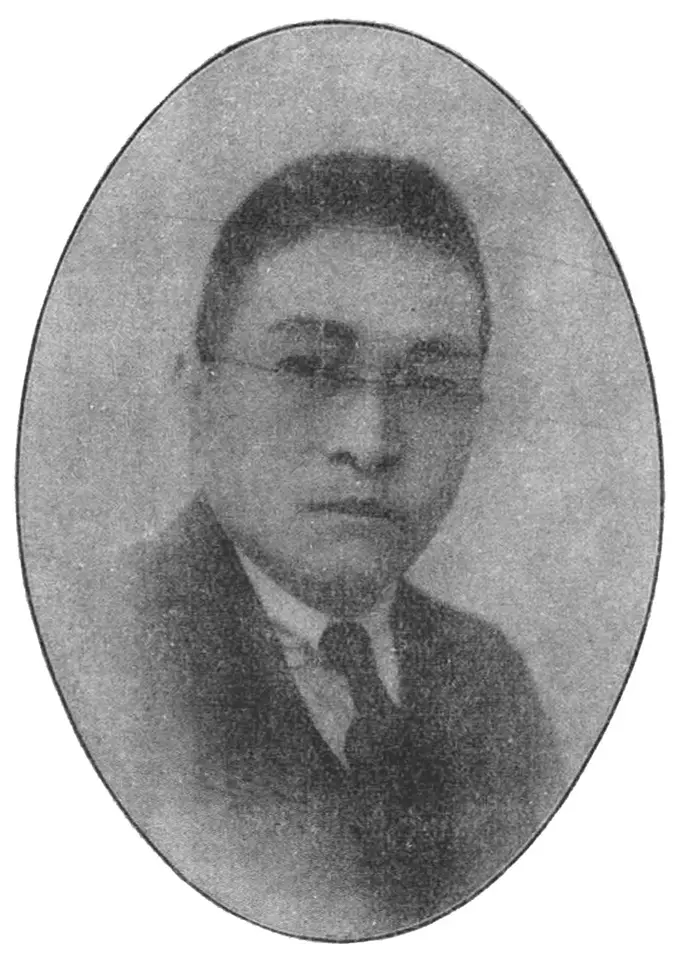
Biography
Impoverished Childhood and Apprenticeship at Shixiang Garden
On October 12, 1879 (the 27th day of the 8th lunar month in the 5th year of the Guangxu reign), Gao Jianfu was born into a rural physician's family in Yuangang Village, Panyu County, Guangzhou Prefecture, Guangdong Province. For generations, the Gao family had practiced medicine and martial arts; both his grandfather Gao Ruicai and father Gao Baoxiang possessed skill in calligraphy and painting. Gao Jianfu was the fourth among six brothers.
During his childhood, his family lived in severe poverty. The early death of his father plunged the household into dire distress. To help support his family, young Gao worked as an apothecary apprentice and porcelain decorator. In 1890, he began learning traditional painting under the guidance of a clan uncle in Huangpu, demonstrating remarkable artistic instinct. In 1892, recommended by his uncle, the fourteen-year-old Gao Jianfu formally apprenticed himself to Ju Lian, an eminent master of flower-and-bird painting, lodging in the Xiaoyueqin Pavilion within the Shixiang Garden in Guangzhou.
During more than five years of apprenticeship at Shixiang Garden, Gao Jianfu adhered strictly to classical pedagogy, sketching and copying diligently from dawn to dusk. Ju Lian was celebrated across Lingnan for his mastery of the boneless technique (mogu fa) and the innovative water-infusion and powder-infusion methods (zhuangshui zhuangfen fa), emphasizing direct and meticulous observation of living birds, insects, and botanical specimens. Living amidst rare flowers and flying birds, Gao Jianfu developed an exceptionally solid foundation in realistic traditional brushwork. Concurrently, he formed lifelong creative bonds with Chen Shuren and other fellow disciples.
Studies in Japan and Revolutionary Commitment
In the closing years of the Qing dynasty, China faced imperialist aggression and deep internal decay. Young Gao Jianfu realized that retreat into traditional scholar-gentleman painting could not salvage the nation. In 1905, he traveled to Macao, where he first encountered Western oil painting and pencil sketching techniques. In the spring of 1906, sponsored by supportive friends, he traveled to Tokyo, Japan, to pursue systematic art education.
In Japan, Gao Jianfu enrolled successively in the Tokyo Fine Arts School, the Nihon Bijutsuin, and the Pacific Painting Society, eagerly absorbing Western academic principles including linear perspective, anatomical drawing, chiaroscuro, and color optics. Simultaneously, he examined the modern Japanese painting reform movement led by Takeuchi Seiho and Kano Hogai, which harmonized Asian and Western visual languages, leaving a profound intellectual impression upon him.
In the autumn of 1906, introduced by Liao Zhongkai in Tokyo, Gao Jianfu met Dr. Sun Yat-sen, the pioneer of China's democratic revolution. Inspired by Sun's vision of national revitalization, Gao joined the Tongmenghui, swearing an oath to dedicate his life to overthrowing imperial despotism. Sun appointed him head of the Guangdong branch of the Tongmenghui and deputy chief of its assassination section.
Returning to Guangzhou, Gao used painting shops and drawing workshops as cover to establish secret revolutionary safe houses. Alongside his younger brother Gao Qifeng and painter He Xiangning, he manufactured explosives and smuggled firearms. In the spring of 1911, he helped coordinate the Huanghuagang Uprising in Guangzhou. Following the Wuchang Uprising in the autumn of 1911, he mobilized volunteer militias, contributing decisively to the peaceful liberation of Guangdong and the overthrow of the Qing monarchy.
Founding Illustrated Magazines and Harmonizing East and West
Following the establishment of the Provisional Government of the Republic of China in Nanjing, Sun Yat-sen offered Gao Jianfu prominent administrative posts in the Guangdong provincial government. However, convinced that his true mission lay in cultural renewal, Gao declined political office, resolving to awaken the national spirit through artistic innovation.
In 1912, Gao Jianfu moved to Shanghai with Gao Qifeng, founding the groundbreaking illustrated monthly The True Record (Zhenxiang Huabao) and establishing the Shenmei Bookshop. The magazine published photographic documentation, satirical political cartoons, and artworks by domestic and international masters, exposing warlord corruption and social darkness. Within its pages, Gao Jianfu formally proclaimed the slogan of the "Art Revolution," advocating the synthesis of Chinese and Western art while harmonizing the ancient and the modern.
Following the defeat of the Second Revolution, Yuan Shikai shut down the Shenmei Bookshop and issued warrants for the Gao brothers' arrest. Gao Jianfu went into exile in Japan, continuing to assist Sun Yat-sen's Chinese Revolutionary Party in campaigns against Yuan Shikai. In exile, he continued refining his techniques, determined to liberate Chinese painting from detached, formulaic imitation through modern realism.
Dedication to Art Education and Cultivating Masters
In the early 1920s, after Sun Yat-sen reconstituted the military government in Guangzhou, Gao Jianfu returned to his native province to devote himself entirely to art education. In 1923, he established the renowned Chunshui Art Academy on Zhuzi Street in Guangzhou, serving as its director.
In the Chunshui Art Academy, Gao dismantled the traditional literati model of secretive master-disciple instruction reliant exclusively on copying ancient painting manuals. He insisted that students study nature directly, leading youth out of the studio to sketch outdoors in Baiyun Mountain, Dinghu Mountain, and bustling town markets. He taught Western perspective and watercolor techniques, encouraging students to depict contemporary subjects such as telegraph poles, aircraft, locomotives, and war refugees.
The Chunshui Art Academy became the headquarters of the Lingnan School, training luminaries such as Guan Shanyue, Li Xiongcai, Yang Shanshen, Situ Qi, and Huang Shaoqiang. Subsequently, Gao served as President of the Guangdong Provincial Industrial College, President of the Guangzhou Municipal College of Art, and professor in the Art Department of National Central University at the invitation of Xu Beihong.
Wartime Resistance and Twilight in Macao
In 1937, the outbreak of the Marco Polo Bridge Incident signaled Japan's full-scale invasion of China. Japanese aerial bombardments devastated Guangzhou, destroying portions of the Chunshui Art Academy and incinerating Gao's extensive collection of manuscripts and historic paintings. Grieved by national calamity, Gao evacuated his family to Macao.
Residing at the Puji Buddhist Temple in Macao, Gao was heartbroken by the sight of refugees and war-torn landscapes. Channeling his grief into monumental realistic canvases, he painted works such as Flames on the Eastern Battlefield, Skulls Deepen National Hatred, and Air Raid Siren, infusing them with profound patriotic indignation. He organized charitable art exhibitions across Hong Kong and Macao, donating all sales proceeds to aid war orphans and refugees, exemplifying unyielding national integrity.
Following victory in 1945, Gao returned to Guangzhou to re-establish the Guangzhou Municipal College of Art. In 1950, broken in health by decades of tireless exertion, he returned to Macao for medical treatment. On June 22, 1951, the master of Chinese art modernization and revolutionary veteran passed away at Kiang Wu Hospital in Macao at the age of seventy-two.
Major Achievements
Championing the Art Revolution and Founding the Lingnan School
In the modern history of Chinese visual arts, Gao Jianfu was the foremost pioneer who sounded the call for the systematic modernization of Chinese painting.
During the late Qing period, the art world had long languished under the repetitive stylistic imitation of the Four Wangs. Literati artists detached themselves from real life, producing formulaic landscapes devoid of vitality. Gao Jianfu recognized that national political renewal required a parallel awakening of artistic and intellectual consciousness. Aligning his vision with the May Fourth New Culture Movement, he raised the banner of the "Art Revolution."
He established the foundational doctrine of "harmonizing Chinese and Western methods while synthesizing ancient and modern," arguing that Chinese painting must not remain trapped in self-satisfied isolation, but must adopt scientific principles of spatial perspective, anatomy, and color optics from Western art. Collaborating closely with his brother Gao Qifeng and fellow artist Chen Shuren, he established the internationally acclaimed Lingnan School of Painting, forming one of the three monumental schools of modern Chinese painting alongside the Beijing-Tianjin and Shanghai schools.
Innovating Realist Techniques in Chinese Ink Wash
Gao Jianfu's technical breakthroughs fundamentally expanded the expressive boundaries of Chinese painting.
Thematically, he shattered the ancient convention that restricted literati painting to hermits, plum blossoms, orchids, bamboo, and chrysanthemums. He introduced elements of modern industrial civilization and wartime conflict into his compositions, including factories, locomotives, warplanes, cannons, smoking ruins, and destitute laborers and refugees. His masterpiece Flames on the Eastern Battlefield, depicting Japanese atrocities during the Battle of Shanghai, portrayed billows of smoke, soaring flames, and crumbled ramparts, delivering unprecedented visual impact.
In brushwork and wash technique, he developed Ju Lian's water-infusion and powder-infusion methods while integrating Western watercolor wash and Japanese atmospheric rendering. He employed sweeping wet-ink washes, splashed color, and damp mist on raw xuan paper to evoke storms, morning light, and twilight battles. For structural depiction, he wielded dry, split-brush strokes and flying-white textures, achieving a balance between rhythmic vitality and realistic modeling.
Participating in the 1911 Revolution and Democratic Campaigns
Gao Jianfu was not only an artistic innovator but also a veteran revolutionary who integrated his creative pursuits with national liberation.
During his youth in Tokyo, he followed Sun Yat-sen into the revolutionary movement. Serving as a core leader of the Tongmenghui in Guangdong, he repeatedly risked execution to manufacture explosives, transport arms, and coordinate assassination attempts against corrupt Qing dignitaries. He stood on the frontline during both the 1911 Huanghuagang Uprising and the Guangzhou liberation campaign.
Following the founding of the Republic, while fellow politicians scrambled for gubernatorial posts and high office, Gao remained faithful to his civic ideals, declining official rank. When Yuan Shikai attempted to restore imperial rule, Gao threw himself into anti-monarchical campaigns, utilizing his brush as a weapon to publish biting political cartoons in The True Record, embodying the unyielding democratic spirit of modern Chinese intellectuals.
Cultivating Modern Artistic Talents through Education
Gao Jianfu recognized that individual masterpieces could not alter the broader destiny of Chinese art; only through the establishment of modern educational institutions could generations of innovative artists be nurtured.
From the founding of the Chunshui Art Academy, he dedicated three decades to art education. He enrolled students regardless of family background, waiving tuition and providing living stipends for impoverished pupils. In curriculum design, he pioneered open-air sketching, anatomical life drawing, art criticism, and the comparative study of world art history, discarding outdated methods of private apprenticeship.
Under his guidance, the Chunshui Art Academy produced masters such as Guan Shanyue, Li Xiongcai, Yang Shanshen, Su Wonong, Situ Qi, and Huang Shaoqiang. These disciples became the pillars of the Chinese art establishment in the twentieth century, founding and directing major academies including the Guangzhou Academy of Fine Arts and the Guangdong Painting Academy, ensuring the enduring vitality of the Lingnan School across the globe.