高保勖
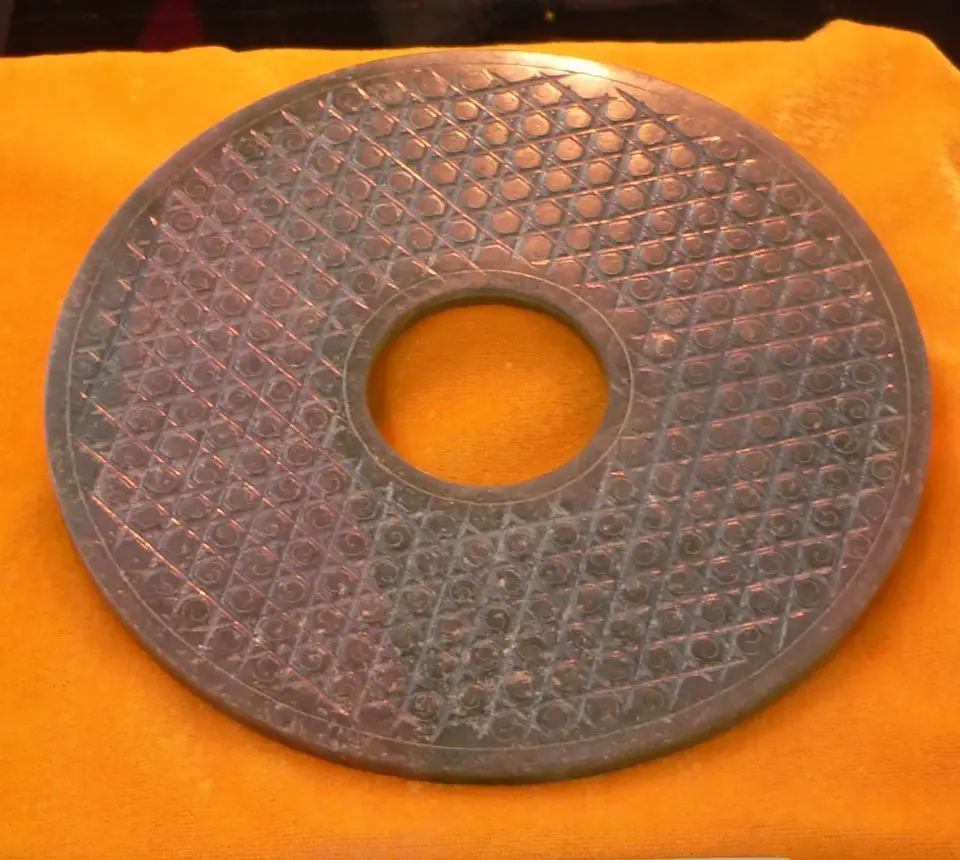
Museum artifact / seal / rubbing (Gao Baoxu)
Image creditsWikimedia Commons contributor · CC BY-SA 3.0Image source

Historical figure

Gao Baoxu (高保勖)

高保勖

Gao Baoxu (高保勖, 924–962), courtesy name Shenggong, ancestral home in Xiashi, Shanzhou (present-day southeast of Sanmenxia, Henan), was born in Jiangling. He was the fourth ruler of the Nanping (also known as Jingnan) regime based in Jiangling during the Five Dynasties and Ten Kingdoms period. The tenth son of King Wenxian (Gao Conghui) and the full younger brother of King Zhenyi (Gao Baorong), he reigned from 960 to 962.…

Era not stated

PROFILE

Gao Baoxu (高保勖, 924–962), courtesy name Shenggong, ancestral home in Xiashi, Shanzhou (present-day southeast of Sanmenxia, Henan), was born in Jiangling. He was the fourth ruler of the Nanping (also known as Jingnan) regime based in Jiangling during the Five Dynasties and Ten Kingdoms period. The tenth son of King Wenxian (Gao Conghui) and the full younger brother of King Zhenyi (Gao Baorong), he reigned from 960 to 962. Plagued by fragile health and illness from infancy, Gao Baoxu was deeply indulged by his father and his elder brother, developing a capricious, unrestrained, and self-indulgent disposition. In the early Later Zhou period, he served as Administrative Supervisor and Vice Military Commissioner of Jingnan, assisting with central administrative affairs. In the autumn of 960, as Gao Baorong lay dying, his heir Gao Jichong was deemed too young to navigate treacherous geopolitical waters. Gao Baorong followed the fraternal succession principle and bequeathed the administration to Gao Baoxu. Emperor Taizu of Song subsequently invested Gao Baoxu as Military Commissioner of Jingnan Army, Acting Grand Tutor, and Chancellor. Gao Baoxu's three-year reign was characterized by bizarre debauchery and extortionate taxation. He expended vast state reserves constructing palatial terraces, ornamental pavilions, and landscaped ponds in Jiangling, while staging wrestling bouts between soldiers and entertainers within his private chambers. His oppressive rule caused widespread resentment. In the eleventh month of 962, realizing he was fatally ill, Gao Baoxu remembered his brother's generosity and returned the seals of office to his nephew Gao Jichong before dying at the age of thirty-nine. The Song court posthumously honored him as Palace Attendant. Shortly after his demise, Song armies secured passage through Jingnan, prompting Gao Jichong to surrender his territory, bringing an end to the Nanping regime.

Courtesy Name
Shenggong
Native Place
Xiashi, Shanzhou (present-day southeast of Sanmenxia, Henan)
Date of Birth
924 (Second year of the Tongguang era, Later Tang)
Date of Death
962 (Twentieth day of the eleventh month, third year of the Jianlong era, Song)
Age at Death
39
Highest and Primary Offices
Military Commissioner of Jingnan Army, Acting Grand Tutor, Jointly Manager of Affairs with the Secretariat-Chancellery, Concurrently Grand Master of Works, posthumously Palace Attendant
Accurate Identity Orientation
Fourth sovereign of Nanping (Jingnan) during the Five Dynasties and Ten Kingdoms; tenth son of King Wenxian (Gao Conghui); regional ruler who returned authority to his nephew on his deathbed

LIFE TIMELINE

Relationship graph

BIOGRAPHY

Chronology

  • 924 (Second year of the Tongguang era, Later Tang) | Birth at Jiangling | Born in the Jingnan military headquarters; naturally frail and sickly, he was thoroughly pampered by his family.
  • 948 (First year of the Qianyou era, Later Han) | Administrative Post | Appointed Administrative Supervisor of Jingnan when his brother Gao Baorong succeeded to the regional command.
  • 954 (First year of the Xiande era, Later Zhou) | Vice Commissioner | Promoted to Vice Military Commissioner of Jingnan and Overseer of Military Affairs, adding the rank of Acting Minister of Works.
  • 960 (Eighth month, first year of the Jianlong era, Song) | Fraternal Succession | Bequeathed power by the dying Gao Baorong; invested as Military Commissioner of Jingnan Army by Emperor Taizu of Song.
  • 961 (Second year of the Jianlong era, Song) | Extravagant Misrule | Levied heavy taxes to construct luxury palaces and hosted decadent wrestling matches, provoking popular outrage.
  • 962 (Eleventh month, third year of the Jianlong era, Song) | Restoring the Throne | Fatally ill, he transferred all military and civil seals to his nephew Gao Jichong before passing away at age thirty-nine.
  • 962 (Twelfth month, third year of the Jianlong era, Song) | Posthumous Honor | Emperor Taizu of Song suspended court audiences for one day and posthumously conferred the exalted title of Palace Attendant.

Life and Career

Pampered Prince and Administrative Offices

Gao Baoxu was born in 924 in the regional military headquarters of Jiangling. His grandfather, Gao Jixing (King Wuxin), established the autonomous enclave of Jingnan, and his father was King Wenxian (Gao Conghui). Ranked tenth among the sons of Gao Conghui, he shared the same mother, Lady Peng, with his elder brother Gao Baorong.

Born prematurely and constantly afflicted with illness in his childhood, Gao Baoxu remained extremely thin and feeble. Gao Conghui doted on this youngest son, indulging his every desire. His elder brother Gao Baorong was of a generous, upright character and treated his frail sibling with boundless affection, never subjecting him to strict discipline. This permissive domestic atmosphere fostered in Gao Baoxu an eccentric, obstinate, and hedonistic temperament.

In 948, King Wenxian passed away, and Gao Baorong inherited the Jingnan military commission. Upon taking office, Gao Baorong promoted Gao Baoxu through posts including Palace Guard Inspector, Acting Minister of Works, and Administrative Supervisor of Jingnan, letting him assist in governing Jiangling.

During the early Xiande era of Later Zhou, Emperor Shizong dominated the central plains, and Gao Baorong maintained loyal vassalage. In 954, Gao Baoxu was elevated to Vice Military Commissioner of Jingnan and Overseer of Military Affairs, with the titular rank of Acting Grand Guardian. Despite holding prominent titles, actual administration remained in the hands of Gao Baorong and the learned chancellor Sun Guangxian, keeping Gao Baoxu's self-indulgence somewhat in check.

Fraternal Succession and Accession to Nanping

In early 960, Zhao Kuangyin founded the Song dynasty. Assessing the shifting balance of power, Gao Baorong quickly submitted tribute memorials declaring vassalage, receiving generous imperial recognition from Emperor Taizu of Song.

In the eighth month of that year, forty-one-year-old Gao Baorong suddenly fell critically ill. His eldest son, Gao Jichong, was only thirteen years old, lacking both experience and authority. Situated at a crossroad surrounded by powerful rival regimes, tiny Jiangling faced constant geopolitical peril.

Realizing that a child ruler could not preserve the enclave, Gao Baorong summoned his ministers to his deathbed: "My son Jichong is young and unversed in warfare and statecraft. My brother Baoxu has long participated in governance. I entrust the command of Jingnan to him; let not the achievements of our ancestors perish!" Gao Baorong died shortly thereafter.

Gao Baoxu smoothly assumed control of the military command. When the memorial reached Kaifeng, Emperor Taizu recognized the transition, investing Gao Baoxu as Military Commissioner of Jingnan Army, Acting Grand Tutor, Chancellor, and concurrently Grand Master of Works.

Extravagance, Debauchery, and Heavy Taxation

Once seated on the throne, free from the restraint of his father and brother, Gao Baoxu's repressed penchant for extravagance and bizarre hedonism surfaced rapidly.

Jingnan was a tiny realm controlling only three prefectures—Jiangling, Guizhou, and Xiazhou. Possessing scarce resources and negligible military might, previous rulers had practiced rigorous frugality and diplomatic deference to ensure survival. However, Gao Baoxu ignored his vulnerable reality and initiated massive construction projects in Jiangling, building towering pavilions, scenic belvederes, and landscaped ponds, drafting corvee laborers to exhaustion.

To finance his lavish lifestyle, he imposed arbitrary levies and exactions, mercilessly squeezing merchants and farming households, draining Jiangling's modest economic reserves.

Furthermore, his personal conduct degenerated into bizarre depravity. He frequently summoned muscular garrison guards and street entertainers into his inner palace chambers, forcing them to strip naked and grapple in wrestling contests, while he and his concubines watched from curtained verandas, cheering the spectacles. The soldiers and townspeople felt humiliated and disgusted by such shameless indecency. Senior statesmen like Sun Guangxian repeatedly submitted stern admonitions, but Gao Baoxu disregarded them completely.

Restoring Authority to His Nephew and Dynastic End

Already constitutionally frail, Gao Baoxu's health deteriorated rapidly under incessant debauchery and dissipation.

By the winter of 962, Gao Baoxu was bedridden with a terminal illness. Confronting death, he regained a measure of clarity. Aware of his misdeeds and having no adult heirs, he feared a mutiny by the garrison generals. Grateful for his late brother's selfless transfer of the realm, he summoned his senior commanders and royal kinsmen to his bedside, weeping as he declared his final will: "I received great favor from the late king to govern for three years, and now my life reaches its end. The supreme seat rightfully belongs to my late brother's son. I now restore the seals of Jingnan to Jichong. I implore you all to assist him with one heart to preserve our ancestral temple!"

On the twentieth day of the eleventh month of the third year of Jianlong (December 19, 962), Gao Baoxu died in his Jiangling mansion at the age of thirty-nine.

At Kaifeng, Emperor Taizu suspended court audiences for a day in his memory, posthumously conferred the title of Palace Attendant, and dispatched an envoy to present sacrifices.

Following Gao Jichong's succession, Jingnan was impoverished and demoralized. Mere months later, in early 963, Emperor Taizu sent general Murong Yanzhao to march through Jingnan under the pretext of quelling Zhang Wenbiao in Hunan. Song troops swiftly entered and occupied Jiangling. Realizing defense was impossible, Gao Jichong followed Sun Guangxian's counsel, submitting his territory and subjects to the Song dynasty. The Nanping regime, which had held Jiangling for nearly six decades, was peacefully absorbed into the Song empire.
Key Achievements

Assisting His Brother in Governing Jingnan

Indulged from youth due to poor health, he was appointed Administrative Supervisor, Vice Military Commissioner, and Overseer of Military Affairs, assisting his brother Gao Baorong in managing the civil and military affairs of Jiangling.

Inheriting the Throne through Fraternal Succession

Inherited the regional military commission upon the death of Gao Baorong in 960 pursuant to his brother's testament, receiving formal investiture as Chancellor and Grand Master of Works from Emperor Taizu of Song.

Extravagant Building Projects and Misrule

Squandered state resources over a three-year reign building luxury villas and towers, imposing heavy levies, and staging indecent wrestling games in the inner chambers, severely degrading the defensive capacity of Nanping.

Restoring Throne to His Nephew on His Deathbed

Summoned his commanders when terminally ill in late 962 to restore the military seals to his nephew Gao Jichong, dying peacefully and earning posthumous honors as Palace Attendant while preventing internal succession strife.

Personal Relationships

  • Ruling Father: Gao Conghui (King Wenxian of Nanping, Gao Baoxu's father).
  • Bequeathing Brother: Gao Baorong (King Zhenyi of Nanping, full elder brother who chose Gao Baoxu to succeed him).
  • Successor Nephew: Gao Jichong (Military Commissioner of Jingnan, son of Gao Baorong, to whom Gao Baoxu restored power, later surrendering the territory to Song).
  • Advising Statesman: Sun Guangxian (Eminent scholar and chief minister of Jingnan, who repeatedly remonstrated against Gao Baoxu's misconduct).
  • Imperial Overlord: Zhao Kuangyin (Emperor Taizu of Song, who invested Gao Baoxu, posthumously honored him as Palace Attendant, and annexed Jingnan).

Historical Appraisals

  • Ouyang Xiu in New History of the Five Dynasties: "Baoxu was sickly in youth; Conghui doted on him, and Baorong also pitied his weakness. When he took power, he indulged in unbridled licentiousness, summoning entertainers to stage wrestling games in the palace day and night, and extorting taxes to finance ornate buildings, inflicting great suffering on the populace."
  • Tuotuo in History of Song: "Baoxu reigned for three years, adorning residences and pavilions with extreme extravagance. He drafted corvee laborers and levied harsh exactions, exhausting the people. Yet on his deathbed he returned the throne to Jichong, demonstrating a sense of ultimate propriety."
  • Wu Renchen in Spring and Autumn Annals of the Ten Kingdoms: "Ascending the throne as a spoiled child, Baoxu failed to reform internal governance, indulging in construction and palace dissipation, which was truly contemptible. Yet in his final illness, remembering his elder brother's love, he returned the grand instrument of state to his nephew, sparing Jingnan from dynastic upheaval and preserving the way of a gentleman."

Related Entries

  • [[Gao Jixing]]
  • [[Gao Conghui]]
  • [[Gao Baorong]]
  • [[Gao Jichong]]
  • [[Sun Guangxian]]
  • [[Military Commissioner of Jingnan Army]]
  • [[New History of the Five Dynasties: Hereditary House of Nanping]]

FIGURES ASSOCIATED WITH THIS DYNASTY

Bibliography

  • New History of the Five Dynasties, Volume 69, "Hereditary House of Nanping 9"
  • Old History of the Five Dynasties, Volume 133, "Hereditary Biographies 2: Biography of Gao Jixing"
  • History of Song, Volume 483, "Biographies 242: Hereditary Houses 6 (Gao Family of Jingnan)"
  • Spring and Autumn Annals of the Ten Kingdoms, Volume 100, "Jingnan 3: Hereditary Houses"
  • Comprehensive Mirror for Aid in Government (Zizhi Tongjian), Volume 294, "Later Zhou Chronicle 5"
  • Comprehensive Mirror for Aid in Government (Zizhi Tongjian), Volume 295, "Later Zhou Chronicle 6"
  • Long Draft of the Comprehensive Mirror for Aid in Government, Continued, Volume 1, "First Year of Jianlong"
  • Long Draft of the Comprehensive Mirror for Aid in Government, Continued, Volume 3, "Third Year of Jianlong"