Taken as Consort in Xiaopei
Taken as a secondary consort by Liu Bei in Xiaopei; oversees domestic household administration.
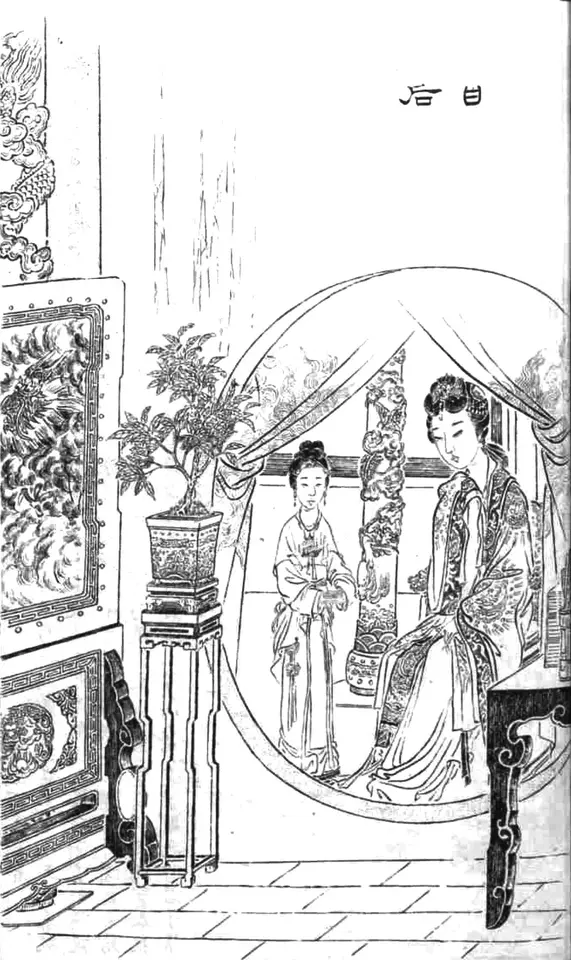
甘夫人
Empress Gan (died c. 209), historically known as Lady Gan, was a native of Pei State (modern Pei County, Jiangsu). She was the beloved consort of Emperor Zhaolie of Shu Han (Liu Bei), the biological mother of Emperor Houzhu (Liu Shan), and the founding empress of the Shu Han state, posthumously honored as Empress Zhaolie. During the late Eastern Han dynasty, when Liu Bei served as Inspector of Yu Province stationed in…
Empress Gan (died c. 209), historically known as Lady Gan, was a native of Pei State (modern Pei County, Jiangsu). She was the beloved consort of Emperor Zhaolie of Shu Han (Liu Bei), the biological mother of Emperor Houzhu (Liu Shan), and the founding empress of the Shu Han state, posthumously honored as Empress Zhaolie. During the late Eastern Han dynasty, when Liu Bei served as Inspector of Yu Province stationed in Xiaopei, he took Lady Gan as a secondary consort. Because Liu Bei had repeatedly lost his previous primary wives during war, Lady Gan, despite her concubine status, managed household affairs and sustained family morale. In 196 and 198, warlord Lu Bu twice captured Liu Bei's bases and seized Lady Gan; throughout both captivities, she maintained unblemished virtue and was safely returned upon peace settlements. In 207, while residing in Xinye, she gave birth to Liu Bei's eldest son, Liu Shan. During the catastrophic Battle of Changban in 208, Cao Cao's elite cavalry routed Liu Bei's forces; while Liu Bei fled south, Lady Gan held the infant Liu Shan amid the chaos, until general Zhao Yun fought through the battlefield to escort both mother and child to safety. Following the pacification of southern Jingzhou, Lady Gan died of illness and was initially interred in Nanjun. Upon founding the Shu Han dynasty, Chancellor Zhuge Liang proposed her posthumous investiture as Consort Huangsi; following Liu Shan's accession in 223, she was formally proclaimed Empress Zhaolie and reburied alongside Liu Bei in the Huiling Mausoleum in Chengdu.
Taken as a secondary consort by Liu Bei in Xiaopei; oversees domestic household administration.
Captured when Lu Bu ambushes Xiapi; returned safely following diplomatic negotiations.
Captured again when Lu Bu overruns Xiaopei; rescued after Cao Cao and Liu Bei execute Lu Bu.
Gives birth to Liu Bei's eldest son and heir, Liu Shan (infant name Adou), at Xinye in Jingzhou.
Caught in Cao Cao's cavalry assault at Changban; rescued alongside infant Liu Shan by general Zhao Yun.
Passes away from exhaustion in southern Jingzhou; initially interred at Nanjun.
Posthumously invested as Consort Huangsi by Liu Bei upon Zhuge Liang's recommendation.
Conferred the posthumous title Empress Zhaolie by Liu Shan; reburied alongside Liu Bei in Huiling.
In 194, during the first year of the Xingping reign, Liu Bei was appointed Inspector of Yu Province upon the recommendation of Tao Qian, establishing his headquarters at Xiaopei (modern Pei County, Jiangsu). During this period, he encountered Lady Gan and took her as his secondary consort.
Throughout this chaotic era, Liu Bei led a precarious existence, wandering across northern China. Several of his previous primary wives had died during military retreats. Although Lady Gan's family lacked illustrious aristocratic lineage, her dignified poise, gentle disposition, and acute practical intelligence earned Liu Bei's deep trust. With Liu Bei continuously engaged in distant campaigns, all internal family affairs, logistical provisions for dependents, and hospitality for visiting commanders were entrusted entirely to Lady Gan. Her orderly management of the household provided peace of mind for soldiers at the front, leading the entire camp to regard her as the de facto principal mistress of the household.
In 196, warlord Yuan Shu invaded southern Xu Province. Liu Bei marched east to confront the invasion along the Huai River, leaving Zhang Fei to guard Xiapi. Following a mutiny within the garrison, warlord Lu Bu launched a treacherous night assault, capturing Xiapi along with Liu Bei's wives and dependents.
Faced with sudden captivity, Lady Gan remained calm, commanding respect and preventing any abuse of the household. Months later, Liu Bei concluded a temporary truce with Lu Bu, who returned Lady Gan intact to Xiaopei. However, peace proved fleeting: in 198, Lu Bu attacked Xiaopei once again. The town was overwhelmed, forcing Liu Bei to flee on horseback, and Lady Gan was captured by Lu Bu a second time. It was not until winter of that year, when Cao Cao and Liu Bei combined forces to flood Xiapi and execute Lu Bu, that Lady Gan was liberated, subsequently accompanying Liu Bei to Xuchang. Throughout years of captivity and displacement, she maintained unwavering loyalty without bitterness, displaying exemplary moral fortitude.
In 201, having broken with Cao Cao, Liu Bei fled south to seek refuge with Liu Biao in Jingzhou, who stationed him at Xinye. In 207, Lady Gan gave birth at Xinye to Liu Bei's long-awaited firstborn son, Liu Shan.
In the autumn of 208, Cao Cao led a massive army south into Jingzhou following Liu Biao's death. Refusing to surrender, Liu Bei retreated southward toward Jiangling, accompanied by over one hundred thousand civilians. Fearing that Liu Bei would seize Jiangling's military arsenals, Cao Cao personally led five thousand elite Tiger and Leopard Cavalry, riding three hundred leagues in twenty-four hours to overtake the column at Changban. Amid the catastrophic rout, Liu Bei fled with only a small cavalry escort, unable to protect his family. Lady Gan held the infant Liu Shan amid blinding dust and enemy charges. At this desperate juncture, General Zhao Yun turned his horse and plunged back into the swirling chaos, searching through slaughter until he found Lady Gan and her child. Holding the infant against his breastplate and brandishing his spear, Zhao Yun cut through multiple rebel encirclements, successfully escorting Lady Gan safely to the Han River crossing to reunite with Liu Bei.
Following the miraculous survival at Changban, Liu Bei allied with Sun Quan of Wu to crush Cao Cao's navy at the Battle of Red Cliffs, subsequently marching south to pacify the four commanderies of southern Jingzhou.
However, years of continuous flight, deprivation, and terror had irreparably shattered Lady Gan's health. Around 209, Lady Gan succumbed to chronic illness in Nanjun, dying in her early thirties. Because Liu Bei had not yet conquered the Sichuan basin, her coffin was temporarily interred in Nanjun. In 221, upon ascending the imperial throne, Liu Bei, deeply mindful of Lady Gan's sacrifices, accepted Chancellor Zhuge Liang's petition, posthumously investing her as Consort Huangsi and dispatching envoys to Jingzhou to escort her coffin into Shu. In 223, Liu Bei died at Baidicheng. In the fifth month of 223, upon ascending the throne, Emperor Liu Shan elevated his birth mother to Empress Zhaolie, interring her alongside Emperor Zhaolie in the Huiling Mausoleum in Chengdu.
Lady Gan's most vital contribution to the founding of Shu Han was her steadfast domestic leadership during Liu Bei's most fragile early campaigns.
Facing repeated dynastic defeats and the loss of earlier spouses, Liu Bei relied upon Lady Gan's calm temperament to maintain household cohesion. During her two captivities by Lu Bu, she preserved the dignity and survival of the Liu household. Qing historian Zhou Shouchang observed that Liu Bei was able to recover from repeated military disasters largely because Lady Gan's unyielding domestic virtue preserved his family foundation, providing the human bedrock for the future Shu Han dynasty.
Lady Gan's defining historical legacy was giving birth to and shielding Liu Shan, the sole direct heir of the Shu Han imperial house.
During the chaotic rout at the Battle of Changban, as hundreds of thousands of refugees and soldiers scattered, Lady Gan clung to the infant Liu Shan. Her steadfast maternal protection kept the child alive until Zhao Yun broke through the enemy lines. Her survival ensured the peaceful continuity of the Shu Han monarchy for forty-three years. Her posthumous elevation to Empress Zhaolie reflected universal recognition of her defining role in securing the imperial lineage.
Zhuge Liang wrote in his memorial: "Consort Huangsi received divine favor, bearing the holy heir to nurture the state. In Jingzhou, she followed the sovereign through wind and rain, assisting in the grand enterprise. Though she departed early, her luminous virtue abides, rightfully meriting co-worship in the imperial temple and serving as mother of the realm."
Chen Shou recorded in Records of the Three Kingdoms: "Liu Bei repeatedly lost his principal wives, frequently appointing Lady Gan to manage domestic affairs. Lady Gan was harmonious in expression and reverently sincere in heart. In the disaster of Changban, mother and son were preserved through Zhao Yun's valor, truly blessed by heaven to sustain the Han."
Chronicles of Huayang recorded: "Lady Gan, consort of the First Sovereign, was a native of Pei. Humane and purely virtuous, she possessed the bearing of a founding queen. Posthumously honored as Empress Zhaolie and buried in Huiling, the realm praised her virtue."
Modern historians view Lady Gan as the quintessence of the loyal and enduring companion of early Three Kingdoms history. In a brutal world of warlord competition, she preserved the fragile domestic foundation of the Shu Han state. The survival at Changban was not merely a tactical miracle, but the historical turning point that secured the royal lineage of Shu Han.
FIGURES ASSOCIATED WITH THIS DYNASTY