Imperial Commission
Appointed by Emperor Cheng of Han to collate all medical texts (fangji) preserved in the secret imperial archives.
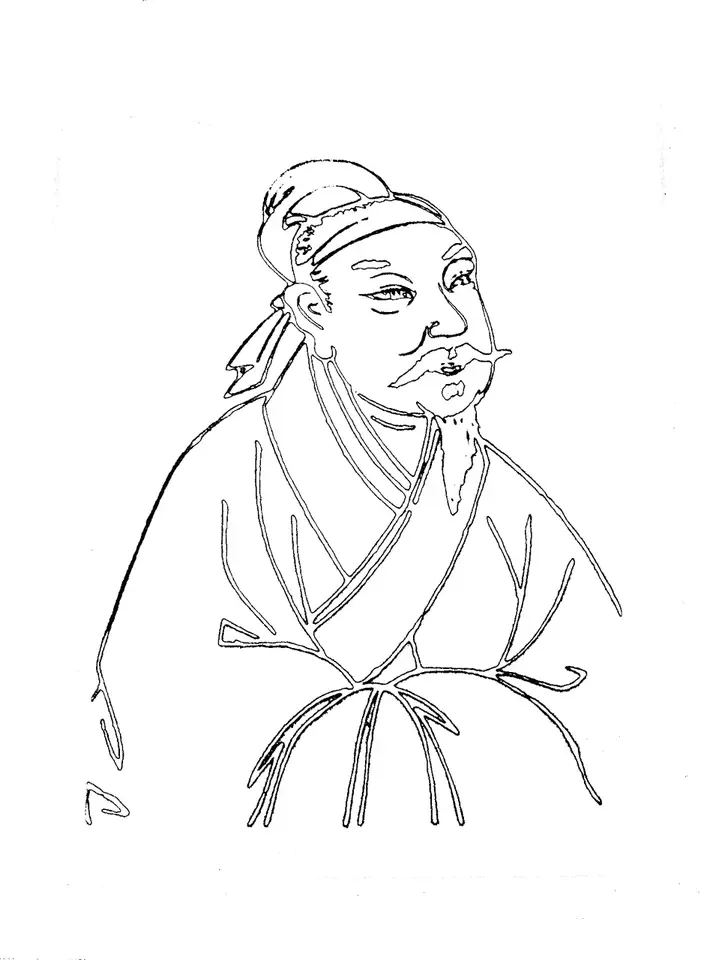
涪翁
Fu Weng, whose original name was Li Zhuguo and courtesy name Wengjun, was a native of Fu County in Guanghan Commandery (modern Mianyang, Sichuan). Serving as an Attendant Physician (shiyi) during the reign of Emperor Cheng of Western Han, he was the pioneering medical scholar who first systematically collated and classified the imperial medical library of ancient China. In 26 BCE (the third year of the Heping era), the Han…
Fu Weng, whose original name was Li Zhuguo and courtesy name Wengjun, was a native of Fu County in Guanghan Commandery (modern Mianyang, Sichuan). Serving as an Attendant Physician (shiyi) during the reign of Emperor Cheng of Western Han, he was the pioneering medical scholar who first systematically collated and classified the imperial medical library of ancient China. In 26 BCE (the third year of the Heping era), the Han court launched a monumental nationwide initiative to collect and edit surviving literary works. While Grand Master of Splendid Happiness Liu Xiang supervised the general collation of classics and philosophical texts, Li Zhuguo was commissioned to independently edit and authenticate all imperial medical texts (fangji). He collated 868 scrolls across 36 distinct medical traditions spanning medical theory (yijing), therapeutic recipes (jingfang), sexual hygiene (fangzhong), and macrobiotic arts (shenxian), establishing the foundational bibliographical framework for the "Treatise on Medical Recipes and Techniques" (Fangji Lve) in the Book of Han. Following the usurpation of Wang Mang and the subsequent political chaos, Li Zhuguo renounced his official career and returned to his homeland in Sichuan, adopting the hermit pseudonym "Fu Weng" (the Old Man of the Fu River). Living as a solitary fisherman along the Fu River, he administered acupuncture to impoverished locals without demanding compensation, curing stubborn illnesses with extraordinary precision. He authored foundational manuals including The Needle Canon (Zhen Jing) and Methods of Pulse Diagnosis (Zhenmai Fa), transmitting the esoteric pulse and acupuncture traditions of Bian Que and Cang Gong to his disciple Cheng Gao, who in turn passed them to Guo Yu, the renowned grand physician of Eastern Han. In 2012, the archaeological discovery of the Tianhui Medical Bamboo Slips in Chengdu physically corroborated the authenticity and transmission of Li Zhuguo's collated medical texts, securing his place as a seminal patriarch in the history of traditional Chinese medicine.
Appointed by Emperor Cheng of Han to collate all medical texts (fangji) preserved in the secret imperial archives.
Completed the monumental collation of 868 scrolls across 36 medical traditions, authoring systematic prefaces.
Withdrew from court life amid Wang Mang's usurpation; settled along the Fu River in Sichuan as the reclusive fisherman "Fu Weng."
Practiced needle therapy among rural villagers along the Fu River; secretly transmitted his pulse lore and The Needle Canon to Cheng Gao.
Disciple Cheng Gao transmitted Fu Weng's medical teachings to Guo Yu, who became Assistant Grand Physician (Taiyi Cheng) under Emperor He of Han.
In his youth, Li Zhuguo immersed himself in ancient philosophical classics and esoteric medical works preserved from the pre-Qin masters Bian Que and Cang Gong (Chunyu Yi). Demonstrating mastery in pulse diagnosis, meridian pathways, and needle therapy, he was recruited into the central imperial court as an Attendant Physician (shiyi) to Emperor Cheng of Han.
In 26 BCE (the third year of the Heping era), recognizing that vast numbers of pre-Qin and early Han texts were severely damaged, fragmented, or corrupt due to the Qin dynasty book burnings and decades of civil war, Emperor Cheng ordered a comprehensive national literary collation program. Grand Master of Splendid Happiness Liu Xiang directed the general project; Infantry Commandant Ren Hong edited military treatises; Grand Astrologer Yin Xian oversaw astronomical and mathematical texts; and Li Zhuguo was entrusted with exclusive responsibility for the nation's medical literature (fangji).
Confronting stacks of disordered bamboo slips, decaying silk rolls, and corrupted transcriptions collected from palace libraries and regional governors, Li Zhuguo brought immense philological rigor and clinical expertise to bear. He painstakingly compared variant texts, corrected erroneous characters, expunged duplicate passages, and systematized scattered fragments.
Through years of dedicated effort, Li Zhuguo collated 36 medical schools comprising 868 scrolls. These included seven lineages of "Medical Canons" (yijing, 216 scrolls)—among them the Inner Canon of the Yellow Emperor, Outer Canon of the Yellow Emperor, Inner Canon of Bian Que, and Outer Canon of Bian Que—and eleven schools of "Classic Formularies" (jingfang, 274 scrolls). For each compiled division, Li composed meticulous editorial summaries (xulu), establishing the first coherent theoretical and therapeutic taxonomy in the history of Chinese medicine.
During the late Western Han period, the imperial court was increasingly destabilized by the growing usurpation of imperial authority by the consort clan of Wang Mang. Disillusioned by court intrigues and adhering to the Daoist ideals of tranquil detachment, Li Zhuguo abandoned his official honors and quietly departed the capital, retreating to his birthplace in Fu County, Guanghan Commandery (modern Mianyang, Sichuan).
Upon returning to Sichuan, Li Zhuguo completely concealed his true identity and imperial credentials. Wearing a coarse straw cloak and a bamboo hat, he spent his days angling along the banks of the Fu River, leading locals to respectfully refer to him as "Fu Weng" (the Old Man of the Fu River) or "Yu Fu" (the Old Fisherman).
Despite his outward guise as an unassuming angler, Fu Weng's compassionate devotion to healing remained steadfast. Whenever he encountered impoverished villagers afflicted with chronic or debilitating illnesses, he came ashore with his acupuncture needles and stone lancets. By carefully feeling pulses and locating specific meridian points, he frequently resolved severe ailments with only one or two needle insertions.
Remarkably, throughout decades of wandering medical practice, Fu Weng never accepted a single copper or gift in payment. When grateful patients insisted on offering compensation, he would merely share a cup of rustic wine or a freshly caught fish before boarding his boat and rowing away into the morning mist.
Fu Weng recognized that medical knowledge belonged to humanity and must not perish with his own demise. While residing in Fu County, a dedicated local physician named Cheng Gao learned of Fu Weng's miraculous skills and sought to become his apprentice.
Cheng Gao demonstrated exceptional humility and sincerity, serving Fu Weng as a humble domestic attendant for several years while enduring rigorous tests of character. Convinced of Cheng Gao's profound integrity, Fu Weng broke with the traditional convention of restricting esoteric medical knowledge to biological kin, initiating Cheng Gao into the secret pulse lore and acupuncture methods of Bian Que.
Upon completing his discipleship, Fu Weng entrusted his hand-copied manuscripts of The Needle Canon (Zhen Jing) and Methods of Pulse Diagnosis (Zhenmai Fa) to Cheng Gao, admonishing him to employ these arts solely for the alleviation of human suffering. Cheng Gao practiced throughout the Sichuan basin for decades, saving countless lives while remaining in virtuous reclusion.
Subsequently, Guo Yu of Luoxian in Guanghan apprenticed under Cheng Gao, inheriting the medical mantle originating from Li Zhuguo (Fu Weng). During the reigns of Emperor Ming and Emperor Zhang in the Eastern Han, Guo Yu gained national renown, rising to Assistant Grand Physician (Taiyi Cheng). His remarkable surgical and acupuncture successes were permanently recorded in the Book of the Later Han (Hou Han Shu), cementing Fu Weng's lineage as a paramount foundation of Chinese acupuncture.
Li Zhuguo's preeminent achievement in Chinese intellectual history was his creation of the first state-sponsored taxonomy and critical collation of medical literature.
Prior to his work during the reign of Emperor Cheng, medical knowledge had been transmitted largely through oral secrecy and fragmented manuscript copies marred by pervasive errors. Leveraging his dual mastery of classical philology and clinical medicine, Li established four definitive categories of medical science: Medical Canons (yijing), investigating human physiology, meridians, and visceral pathology; Classic Formularies (jingfang), detailing herbal properties and pharmaceutical compounding; Sexual Hygiene (fangzhong), focusing on vitality and balance; and Macrobiotics (shenxian), exploring longevity and physical preservation.
This conceptual division between theoretical principles (yijing) and therapeutic recipes (jingfang) structured the dual core of Chinese medical science for subsequent millennia. When Ban Gu compiled the Book of Han, he incorporated Li Zhuguo's bibliographical records intact into the "Treatise on Medical Recipes and Techniques" (Fangji Lve), ensuring the preservation and cataloging of early China's medical canon.
Li Zhuguo's editorial work was not merely an abstract scholarly pursuit, but an active rescue of the living empirical traditions of Bian Que and Western Han physician Cang Gong (Chunyu Yi).
In the imperial archives, Li Zhuguo meticulously gathered and collated the scattered case records (zhenji) and pulse manuals passed down from Cang Gong. In 2012, archaeologists excavating a Western Han tomb at Tianhui Town in Chengdu discovered a magnificent collection of inscribed bamboo slips known as the Tianhui Medical Bamboo Slips, containing eight foundational medical treatises including the Pulse Canon (Maishu) and Formularies for Sixty Diseases (Zhi Liushi Bing Heqi Tangfa).
Comprehensive paleographical and medical-historical analyses confirmed that these bamboo texts directly derived from the official medical collation conducted by Li Zhuguo. The terminology, diagnostic principles, and acupuncture pathways on the slips correspond precisely to the Bian Que-Cang Gong lineage collated by Li and subsequently brought into Sichuan, providing incontrovertible material evidence of his historic contributions.
During his reclusion along the Fu River, Li Zhuguo synthesized royal court pulse theory with practical needle techniques into concise clinical manuals, producing The Needle Canon (Zhen Jing) and Methods of Pulse Diagnosis (Zhenmai Fa).
Fu Weng's therapeutic doctrine placed primary emphasis upon "examining the meridians via the pulses, determining acupoints according to pulse conditions, and supplementing deficiency while draining excess." By palpating the radial pulse at the wrist (cunkou), he could accurately diagnose the origin and severity of internal disease, selecting points with pinpoint accuracy.
Although his original manuscripts were lost in subsequent dynastic wars, their theoretical insights were integrated through his disciples Cheng Gao and Guo Yu into standard medical classics such as the Yellow Emperor's Inner Canon, the Classic of Difficult Issues (Nan Jing), and Huangfu Mi's Systematic Classic of Acupuncture and Moxibustion (Zhenjiu Jiayi Jing), establishing Sichuan as a historic cradle of classical acupuncture.
FIGURES ASSOCIATED WITH THIS DYNASTY