傅肜
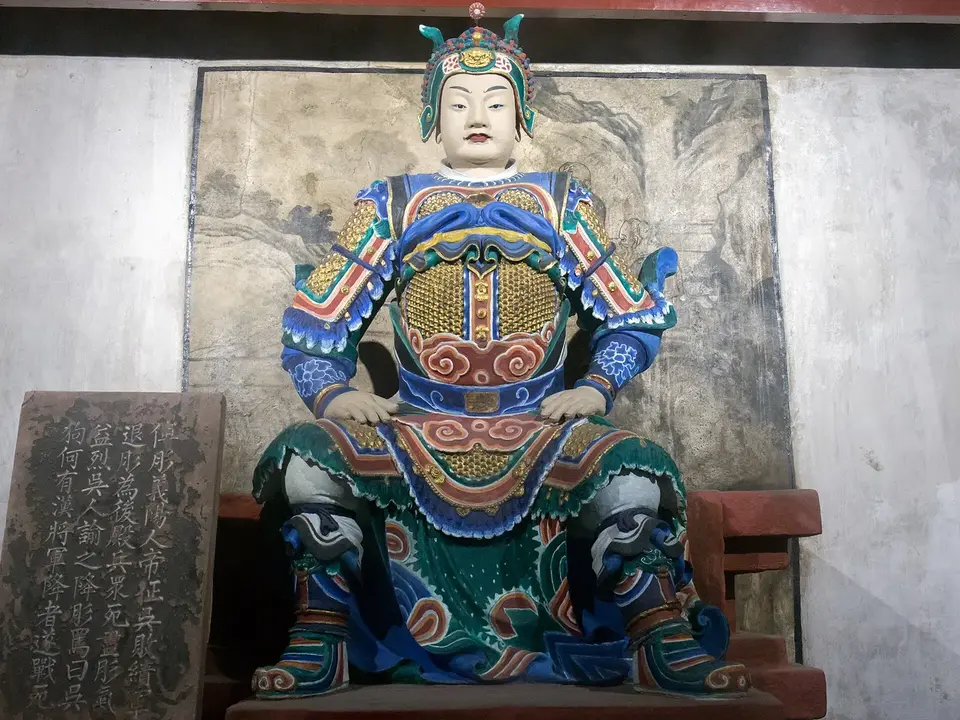
Historic architecture / site (Fu Rong)
Image creditsMorio · CC BY-SA 4.0Image source

Loyal general of Shu Han during the Three Kingdoms period

Fu Rong (傅肜)

傅肜

Fu Rong (傅肜, d. 222) was a native of Yiyang Commandery in Jingzhou (modern Xinyang City, Henan Province). He was an illustrious general and devoted loyalist of Shu Han during the Three Kingdoms period. Joining Liu Bei during his early campaigns in Jingzhou and the pacification of Sichuan, Fu Rong was celebrated for his fierce valor and unwavering fidelity, rising to Protector of the Central Army. In 221, following the loss of…

Era not stated

PROFILE

Fu Rong (傅肜, d. 222) was a native of Yiyang Commandery in Jingzhou (modern Xinyang City, Henan Province). He was an illustrious general and devoted loyalist of Shu Han during the Three Kingdoms period. Joining Liu Bei during his early campaigns in Jingzhou and the pacification of Sichuan, Fu Rong was celebrated for his fierce valor and unwavering fidelity, rising to Protector of the Central Army. In 221, following the loss of Jingzhou and the death of Guan Yu, Liu Bei launched a major eastern expedition against Sun Wu, with Fu Rong serving as commander of the central bodyguard forces. In the summer of 222, during the Battle of Yiling, Eastern Wu commander Lu Xun launched a devastating fire assault that shattered the Shu Han encampments. As Liu Bei was forced to retreat toward Baidicheng, Fu Rong commanded the rearguard. Surrounded by overwhelming Wu forces and with his entire unit killed in action, Fu Rong was urged to surrender. He shouted angrily: "Wu dogs! How could a Han general ever surrender!" He fought fiercely to the death. His sacrifice became a legendary symbol of loyalty, and his son Fu Qian later died defending the Yang'an Pass, cementing their family's enduring fame for double martyrdom.

Native Place
Yiyang Commandery, Jingzhou (荆州义阳郡, modern Xinyang, Henan)
Date of Death
222 (2nd year of Zhangwu)
Highest and Major Offices
Protector of the Central Army (中军护军)
Identity
Loyal general of Shu Han during the Three Kingdoms period

LIFE TIMELINE

Relationship graph

BIOGRAPHY

Chronology

  • 211 (16th year of Jian'an) | Entering Sichuan | Followed Liu Bei from Jingzhou into Sichuan, serving in the central army guard with distinction.
  • 221 (1st year of Zhangwu) | Eastern Expedition | Accompanied Liu Bei on the campaign against Eastern Wu as Protector of the Central Army.
  • 222 (2nd year of Zhangwu) | Martyrdom at Yiling | Commanded the rearguard during the defeat at Yiling; refused surrender with defiant curses and fought to the death.

Biography

Early Allegiance and Command of the Imperial Guard

Fu Rong was born into an established family in Yiyang Commandery, Jingzhou. Renowned from his youth for resolute courage and unbending moral integrity, he joined Liu Bei's banner when Cao Cao invaded Jingzhou. Following the Battle of Red Cliffs, Fu Rong accompanied Liu Bei in securing southern Jingzhou and subsequently marched west to conquer the Shu region, earning promotions through consistent battlefield bravery.

In 221, Liu Bei proclaimed himself emperor in Chengdu, founding the state of Shu Han. Following the surprise seizure of Jingzhou by Eastern Wu and the execution of Guan Yu, Liu Bei mobilized a large punitive expedition. Appreciating Fu Rong's disciplined leadership and unflinching loyalty, Liu Bei appointed him Protector of the Central Army. In this pivotal office, Fu Rong commanded the elite imperial guards and directed headquarters security, acting as one of the emperor's closest military confidants.

The Catastrophe of Yiling and Rearguard Stand

In the second month of 222, Liu Bei led the main Shu Han army from Zigui to Yidao, establishing connected encampments stretching across hundreds of li along the Yangtze River, confronting the Wu forces under Grand Commander Lu Xun.

In the height of summer, the Shu troops shifted their camps into dense forests to avoid the heat, dispersing their defensive lines. Lu Xun seized the opportunity to launch a coordinated fire attack, throwing the Shu encampments into panic and conflagration. Senior Shu commanders including Zhang Nan, Feng Xi, and the tribal king Shamoke were killed. Liu Bei rallied remnant forces on Mount Ma'an, but under relentless Wu assaults, he was compelled to stage a nighttime breakout toward Baidicheng.

Defiance and Glorious Death

During the retreat, Wu cavalry pursued relentlessly. To prevent the capture of the imperial entourage, Fu Rong volunteered to hold the rearguard, deploying his remaining guards across a narrow gorge to shield Liu Bei's retreat.

Wu forces launched repeated waves of heavy assaults. Fu Rong wielded spear and blade, slaying dozens of enemy fighters. After hours of brutal close combat, all of Fu Rong's soldiers fell in battle, leaving him standing alone against the enemy with multiple wounds.

Impressed by his extraordinary bravery, the Wu commander shouted across the lines: "The Han emperor has fled and your army is destroyed! Surrender, and you shall receive a noble title!" Fu Rong glared with fury and roared back: "Wu dogs! How could a Han general ever surrender!" He charged forward into the enemy ranks, slaying several more soldiers before falling in battle. His sacrifice held the Wu vanguard long enough for Liu Bei to reach the safety of Yong'an Palace in Baidicheng.

A Legacy of Double Martyrdom

Fu Rong's son, Fu Qian, inherited his father's resolute courage. Decades later, during the Wei invasion of Shu in 263, Fu Qian served as Senior General of the Right, defending the strategic Yang'an Pass. When his subordinate Jiang Shu defected to the Wei army, Fu Qian refused to surrender, leading his men into a desperate counterattack until he too was killed in battle.

Following the unification of China, Emperor Wu of Jin remarked with admiration: "Shu General Fu Qian died fighting our army without looking back, and his father Fu Rong died in battle for Liu Bei. Righteous devotion is universal across all states!" He issued an imperial edict pardoning Fu Qian's surviving descendants.
Personal Relationships

  • Sovereign: Liu Bei, First Sovereign of Shu Han, whose life Fu Rong preserved through his rearguard sacrifice.
  • Son: Fu Qian, Senior General of the Right of Shu Han, who died defending Yang'an Pass against Wei.
  • Grandsons: Fu Zhu and Fu Mu, pardoned by Emperor Wu of Jin.
  • Comrades-in-Arms: Feng Xi and Zhang Nan, who also fell in battle at Yiling.

Historical Evaluation

  • Yang Xi, In Praise of the Supportive Ministers of the Han Successor: "Loyal was Fu Rong, whose body fell while his resolve stood firm. When Lord Liu suffered defeat amid the barriers of Yiling, Fu Rong gave his life to protect the perilous state; how could the ancient worthies surpass him!"
  • Emperor Wu of Jin (Sima Yan): "Shu General Fu Qian resisted our forces at the mountain fortress and died without regard for his life. His father Fu Rong likewise fell fighting for Liu Bei. Noble virtue is singular across the realm!"
  • Luo Guanzhong, Romance of the Three Kingdoms: "To his dying breath he cursed the Wu dogs; Fu Rong was truly worthy of being called a general of the Han!"

Related Entries

  • Battle of Yiling
  • Liu Bei
  • Fu Qian
  • Lu Xun
  • In Praise of the Supportive Ministers of the Han Successor

FIGURES ASSOCIATED WITH THIS DYNASTY

Bibliography

  • Records of the Three Kingdoms, Volume 45, Book of Shu, Biographies of Deng, Zhang, Zong, and Yang
  • Records of the Three Kingdoms, Volume 32, Book of Shu, Biography of the First Sovereign
  • Comprehensive Mirror in Aid of Governance, Volume 69