Joining the Chongling Uprising
Serving as Tingzhang of Xiangcheng, Fu Jun welcomed Liu Yan and Liu Xiu; Xin authorities murdered his mother, brother, and entire lineage in retaliation.
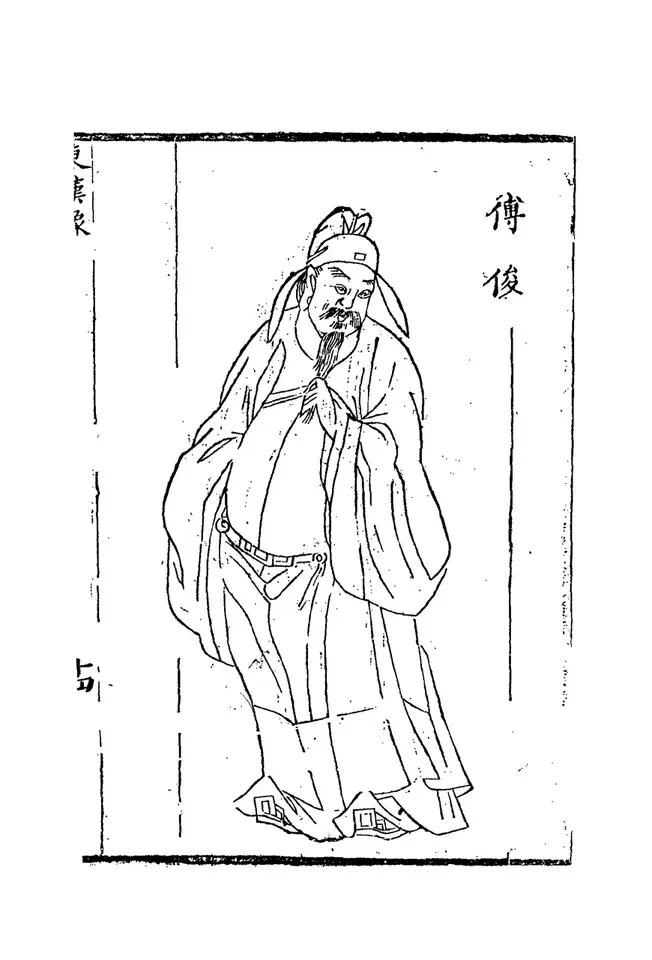
傅俊
Fu Jun (died 31 CE), styled Ziwei, a native of Xiangcheng in Yingchuan Commandery, was a celebrated founding military commander of the Eastern Han dynasty, ranked twenty-first among the eminent "Twenty-Eight Generals of Yuntai." Under Wang Mang's Xin dynasty, Fu Jun served as Chief of the Pavilion (Tingzhang) in Xiangcheng. In 22 CE, when Liu Yan and Liu Xiu launched their uprising in Chongling and marched past Xiangcheng, Fu…
Fu Jun (died 31 CE), styled Ziwei, a native of Xiangcheng in Yingchuan Commandery, was a celebrated founding military commander of the Eastern Han dynasty, ranked twenty-first among the eminent "Twenty-Eight Generals of Yuntai." Under Wang Mang's Xin dynasty, Fu Jun served as Chief of the Pavilion (Tingzhang) in Xiangcheng. In 22 CE, when Liu Yan and Liu Xiu launched their uprising in Chongling and marched past Xiangcheng, Fu Jun joined their army as a military colonel. In brutal retaliation, the Xin authorities slaughtered Fu Jun's mother, younger brother, and entire family. Refusing to yield, Fu Jun served under Liu Xiu, participating in the historic breakout of thirteen horsemen during the Battle of Kunyang and leading vanguard shock units that slew Xin commander Wang Xun, earning promotion to Major General. Later capturing Jing and Mi counties, he was granted special leave by Liu Xiu to bury his slaughtered family. In late 23 CE, upon learning that Liu Xiu had crossed the Yellow River to pacify Hebei, Fu Jun gathered ten retainers and rode over a thousand li to Handan to rejoin him; deeply moved, Liu Xiu entrusted him with the command of the elite Yingchuan shock troops. Fu Jun campaigned across Hebei to destroy Wang Lang and eradicate the Tongma rebels, later serving as General of Accumulated Crossbows (Jinu Jiangjun) to besiege Luoyang and campaign across Nanyang against Dong Xin, Deng Feng, and Qin Feng. Entrusted with independent command across the Yangtze, he pacified all six commanderies of Jiangdong. Passing away in 31 CE, he was granted the posthumous title Marquis Wei.
Serving as Tingzhang of Xiangcheng, Fu Jun welcomed Liu Yan and Liu Xiu; Xin authorities murdered his mother, brother, and entire lineage in retaliation.
Joined Liu Xiu's thirteen-rider breakout team and led the counterattack that killed Xin commander Wang Xun, earning promotion to Major General.
Hearing that Liu Xiu was campaigning in Hebei, Fu Jun rode over a thousand li to Handan with ten retainers; Liu Xiu placed the elite Yingchuan division under his command.
Commanded elite infantry and cavalry in the capture of Handan and the execution of Wang Lang, later defeating the Tongma and Chimei rebels.
Emperor Guangwu ascended the throne, appointing Fu Jun General of Accumulated Crossbows and creating him Marquis of Kunyang to besiege Luoyang.
Campaigned alongside Wu Han and Cen Peng against regional warlords Dong Xin, Deng Feng, and Qin Feng throughout the Han River basin.
Entrusted with an independent expeditionary army across the Yangtze, he conquered and pacified all six commanderies of Jiangdong.
Fu Jun died in Luoyang, receiving the posthumous title Marquis Wei, succeeded by his son Fu Chang.
Fu Jun came from an established family in Xiangcheng County within Yingchuan Commandery. During the twilight of Wang Mang's Xin dynasty, he served as a local Chief of the Pavilion (Tingzhang), responsible for capturing criminals and maintaining public order. Stationed on the frontlines of provincial administration, Fu Jun witnessed firsthand the predatory corruption and draconian decrees of the regime, recognizing that rebellion was imminent.
In the winter of 22 CE, Liu Yan and Liu Xiu raised their righteous banner at Chongling, known as the "Chongling Army." When the insurgent forces campaigned through Xiangcheng, Fu Jun boldly rode out to meet them, bringing his local militia into their ranks. Liu Yan was deeply impressed by Fu Jun's resolve and appointed him a military colonel. However, the Xin county magistrate retaliated with savage brutality, dispatching troops to surround Fu Jun's family estate and executing his mother, younger brother, and scores of relatives. Enduring this catastrophic loss, Fu Jun swore an unbreakable oath of loyalty to the Han cause.
Liu Yan assigned Fu Jun to the direct command of his younger brother, Liu Xiu. In June 23 CE, Wang Mang's grand marshals Wang Xun and Wang Yi surrounded Kunyang with four hundred and twenty thousand soldiers. Liu Xiu selected thirteen elite horsemen to break through the enemy cordon at midnight to summon reinforcements, with Fu Jun riding in the vanguard. When relieving forces assembled, Fu Jun accompanied Liu Xiu leading three thousand shock troops directly into the center of the Xin army. Charging into the enemy command pavilions, Fu Jun's division slew commander Wang Xun, triggering the total collapse of the imperial host. For his supreme valor, Fu Jun was promoted to Major General (Pian Jiangjun).
During subsequent operations around Luoyang, Fu Jun independently commanded a division that stormed the strategic fortress towns of Jing and Mi. In recognition of his battlefield achievements and personal tragedy, Liu Xiu granted Fu Jun compassionate leave to return to Xiangcheng with military honors to inter the remains of his murdered mother and kin.
In the autumn of 23 CE, the Gengshi Emperor dispatched Liu Xiu as Grand Minister of War to pacify the northern commanderies. While observing family mourning in Xiangcheng, Fu Jun learned of Liu Xiu's northern expedition. Recognizing that Liu Xiu's destiny lay in establishing an enduring dynasty, Fu Jun ended his mourning prematurely. Gathering ten loyal retainers, he set out on horseback, riding night and day through blizzards for over a thousand li until he overtook Liu Xiu's headquarters at Handan.
Surprised and profoundly moved by Fu Jun's selfless arrival during a moment of supreme vulnerability, Liu Xiu wept with gratitude. Knowing Fu Jun's tactical competence, Liu Xiu placed the Han army's most formidable shock division—the veteran "Yingchuan Troops"—under his direct command.
Throughout the northern campaigns, Fu Jun shared command tents with Wang Ba and Zang Gong. When Liu Xiu besieged Handan, Fu Jun led the Yingchuan division to scale the fortress ramparts, resulting in the capture and execution of the pretender Wang Lang. Later appointed Chief Commandant of Cavalry and Palace Attendant under general Jia Fu, Fu Jun spearheaded operations across the Hutuo River and Julu, crushing massive insurgent confederations such as the Tongma and Gaohu.
In June 25 CE, Liu Xiu ascended the throne as Emperor Guangwu. Bestowing honors upon his inner circle, the emperor appointed Fu Jun as General of Accumulated Crossbows (Jinu Jiangjun) and created him Marquis of Kunyang, placing him in charge of the empire's premier composite-bow and heavy-artillery forces. During the siege of Luoyang, Fu Jun's crossbow units sealed the eastern gates, coordinating with Wu Han to compel Gengshi commander Zhu Wei to capitulate.
In late 26 CE, when Nanyang warlords Dong Xin and Deng Feng rebelled, Emperor Guangwu ordered Grand Minister of War Wu Han to lead an expeditionary force south, with Fu Jun commanding heavy divisions. Operating around Nieyang and Duxiang, Fu Jun deployed massed crossbow salvos to break rebel counterattacks. In 27 CE, he continued south to besiege Qin Feng at Liqiu, crushing Tian Rong's relief army along the Huangyou River.
Recognizing Fu Jun's independent strategic competence, Emperor Guangwu appointed him Supreme Commander of the Southern Expedition in late 27 CE, directing him to cross the Yangtze River to subdue the rebellious provinces of Jiangdong. Leading his army across the river, Fu Jun enforced rigorous discipline, executing oppressive chieftains while conciliated the civilian populace. In rapid succession, he subdued the six commanderies of Danyang, Wujun, Kuaiji, Yuzhang, Luling, and Lujiang, bringing thousands of li of southern territory under imperial control.
In 31 CE, following years of relentless military service, Fu Jun passed away of illness in Luoyang. Emperor Guangwu mourned his passing deeply, bestowing the posthumous title Marquis Wei, with his son Fu Chang inheriting the Kunyang marquisate. In 60 CE, Emperor Ming commissioned portraits of the founding heroes in the Yuntai Pavilion, ranking Fu Jun twenty-first among the Twenty-Eight Generals.
Fu Jun's heroic breakthrough as one of Liu Xiu's thirteen shock horsemen at Kunyang remains one of the legendary feats of Han military history. By spearheading the charge that killed Wang Xun, he shattered the primary army of the Xin dynasty, ensuring the resurrection of the Han house.
As an independent theater commander, Fu Jun demonstrated exceptional operational capability. His trans-Yangtze expedition pacified six vast southern commanderies through combined arms and civic conciliation, securing the southern half of China under Eastern Han governance without catastrophic attrition.
FIGURES ASSOCIATED WITH THIS DYNASTY