Classical Formation
Born into a scholarly family in eastern Zhejiang; mastered canonical literature and histories from youth.
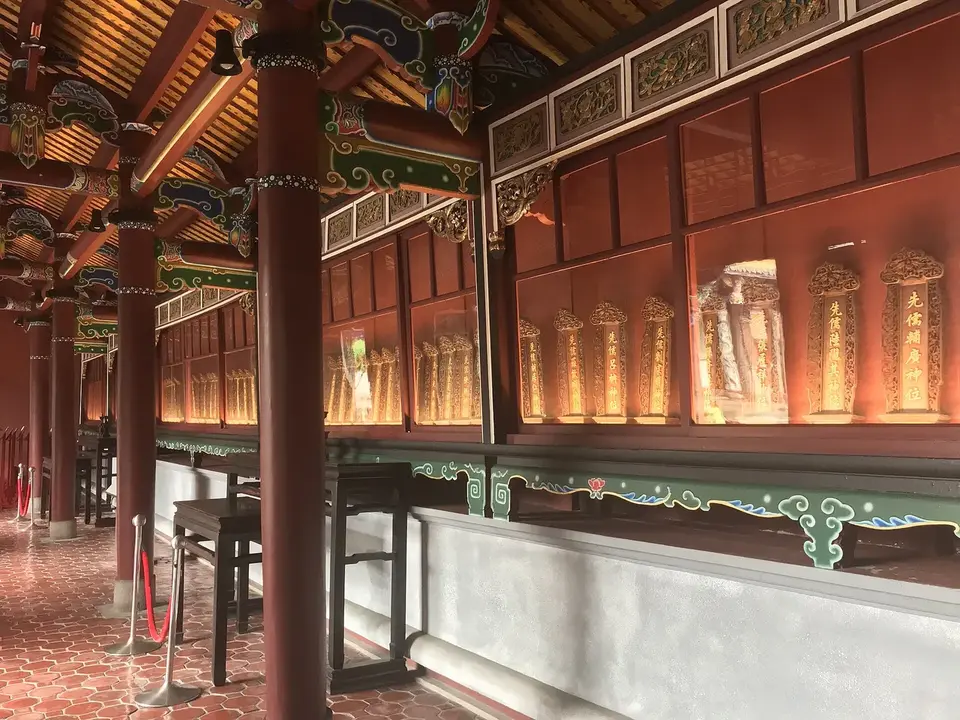
辅广
Fu Guang (辅广), courtesy name Hanqing, literary names Fuyan and Jingxuan, was a native of Yin County in Qingyuan Prefecture (modern Ningbo, Zhejiang). He was a distinguished Neo-Confucian philosopher and canonical exegete of the middle Southern Song dynasty, recognized as one of the most prominent direct disciples and intellectual inheritors of Master Zhu Xi. In his early years, Fu dedicated himself to classical Confucian…
Fu Guang (辅广), courtesy name Hanqing, literary names Fuyan and Jingxuan, was a native of Yin County in Qingyuan Prefecture (modern Ningbo, Zhejiang). He was a distinguished Neo-Confucian philosopher and canonical exegete of the middle Southern Song dynasty, recognized as one of the most prominent direct disciples and intellectual inheritors of Master Zhu Xi. In his early years, Fu dedicated himself to classical Confucian studies. During the Chunxi reign of Emperor Xiaozong, he traveled to the Kaoting Academy in Jianyang, Fujian, to enter Zhu Xi's inner circle. Fu attended Zhu Xi's lectures for over a decade, focusing his inquiries on the Four Books (Great Learning, Doctrine of the Mean, Analects, and Mencius) alongside the Classic of Poetry. Zhu Xi valued Fu's scrupulous scholarship, praising his logical clarity and moral steadfastness, and peers regarded him as one of the most authoritative interpreters of Zhu Xi's exegeses. During the Qingyuan Party Ban initiated by autocratic chancellor Han Tuozhou, which proscribed Cheng-Zhu Neo-Confucianism as "false learning," many scholars recanted or severed ties with Zhu Xi. Fu Guang remained unwavering in loyalty, visiting his master despite political persecution. Following Zhu Xi's death, Fu retired to his native commandery to teach in seclusion, declining all official appointments. Synthesizing decades of lectures and notes, he composed essential commentaries including Collected Annotations on the Four Books and Questions on the Poetry for Young Inquirers, providing a foundational scholarly conduit for the transmission of Zhu Xi's philosophy into the Yuan dynasty.
Born into a scholarly family in eastern Zhejiang; mastered canonical literature and histories from youth.
Traveled to Fujian to study under Zhu Xi, mastering moral self-rectification and the inner meaning of the Four Books.
Served as close assistant to Zhu Xi, discussing and refining the Collected Commentaries on the Four Books.
Proscribed along with Zhu Xi during the anti-Confucian purge, yet steadfastly maintained his student obligations.
Traveled to Kaoting upon Zhu Xi's death, defying government surveillance to conduct the master's funeral rites.
Established an academy in his hometown, teaching and drafting the twenty-six volume Collected Annotations on the Four Books.
Lived to an advanced age as a revered master, posthumously remembered by scholars as Master Jingxuan.
Fu Guang was born into an established scholarly lineage in eastern Zhejiang. Serious and contemplative by nature, he showed a profound devotion to ancient Confucian teachings from boyhood. During his youth, as he traveled across Jiangnan, he became disillusioned by contemporary scholarly trends that pursued either superficial literary flourishes for imperial examinations or quietist Chan Buddhist introspection, lamenting the eclipse of true Confucian statecraft.
During the Chunxi era of Emperor Xiaozong, Master Zhu Xi was lecturing at the Wuyi Retreat and the Kaoting Academy in northern Fujian, drawing scholars from across the realm. Hearing of Zhu's intellectual renown, Fu journeyed on foot to Fujian to seek instruction. Zhu Xi evaluated Fu's character and classical understanding, and observing his moral integrity and intellectual clarity, accepted him as an intimate disciple.
For more than ten years, Fu remained at Kaoting, concentrating on the Four Books and the Classic of Poetry. Among Zhu Xi's followers, Fu was celebrated for his penetrating questions and rigorous philological research. Their dialogues spanned hundreds of exchanges; Zhu Xi frequently commended Fu's analytical precision, noting to other students that Fu possessed deep insight into the structural architecture of classical texts. Extensive records of their discussions are preserved in the Classified Conversations of Master Zhu, serving as indispensable primary documentation for Zhu Xi's mature thought.
In 1195, the powerful imperial in-law Han Tuozhou orchestrated the "Qingyuan Party Ban" to purge political rivals such as Zhao Ruyu. The court branded Cheng-Zhu Neo-Confucianism as "false learning" (weixue), proscribed its transmission, stripped Zhu Xi of his civil titles, and banished him to his village.
Under severe state suppression, terror gripped the scholar-official class. Many former students changed their identities, burned correspondence, and publicly renounced their affiliation with Zhu Xi to avoid arrest. In this perilous environment, Fu Guang remained fearless. Openly declaring his status as Zhu Xi's disciple, he made hazardous journeys along the mountainous paths between Zhejiang and Fujian to visit, comfort, and assist his disgraced teacher.
In March 1200, Zhu Xi died in poverty at Kaoting at the age of seventy-one. The government enforced strict curfews to prevent mourners from gathering. Grief-stricken, Fu Guang joined Huang Gan and a handful of loyal disciples in defying the authorities, traveling to Kaoting to prepare the funeral, don white mourning attire, and bury the philosopher according to ancient ritual.
Following his teacher's funeral, Fu Guang returned to his native district in eastern Zhejiang. He constructed a hermitage, adopting the sobriquet "Fuyan" and later styling himself "Jingxuan." Local magistrates, admiring his moral renown and learning, repeatedly recommended him for civil office, but Fu declined all appointments, determined to pass his life transmitting his master's philosophical legacy as an uncompromised commoner.
Fu opened an academy in his village, where numerous aspiring scholars gathered. In his pedagogy, Fu adhered strictly to Zhu Xi's methodology, emphasizing sincere intention, mental reverence, and the exhaustive investigation of principles within daily ethical duties, cautioning students against empty speculation.
In his spare time, Fu spent decades organizing and elaborating upon Zhu Xi's unfinished classical commentaries. He authored the twenty-six-volume Collected Annotations on the Four Books (Sishu Zuanshu), which harmonized the master's final textual conclusions with lecture transcripts and discipular debates. This work became one of the most authoritative textbooks on the Four Books throughout the Song and Yuan dynasties. Additionally, he authored Questions on the Poetry for Young Inquirers and Collected Summary of the Doctrine of the Mean, which received high praise for their philological rigor and analytical clarity.
In his later years, Fu Guang's moral prestige deepened, and intellectuals throughout the country referred to him respectfully as Master Jingxuan. During the Jiading era, he died peacefully at his home at an advanced age.
Though Fu never held imperial office, his contributions to the history of Chinese philosophy were profound and enduring. In the Qing dynasty monumental compendium Records of Song and Yuan Philosophers, Quan Zuwang dedicated an independent chapter, the Scholarly Records of Jingxuan, to his legacy, ranking Fu alongside Huang Gan and Chen Chun as the three preeminent pillars of Zhu Xi's late school who preserved the philosophical torch through dark political tempests.
Studied under Zhu Xi for more than ten years, mastering the inner principles of the Four Books and leaving hundreds of detailed intellectual dialogues preserved in historical records.
Braved political persecution during the anti-Confucian proscription of 1195, regularly assisting Zhu Xi in exile and defying imperial bans to conduct his funeral in 1200.
Declined all imperial honors and appointments to dedicate his life to teaching, nurturing generations of Neo-Confucian scholars in eastern Zhejiang.
Compiled the monumental twenty-six volume Collected Annotations on the Four Books and Questions on the Poetry for Young Inquirers, establishing standard canonical interpretations that shaped Song-Yuan scholarship.
FIGURES ASSOCIATED WITH THIS DYNASTY