Birth in Enping
Born into a poor farming household in Enping, exhibiting early fascination with kites and mechanical toys.
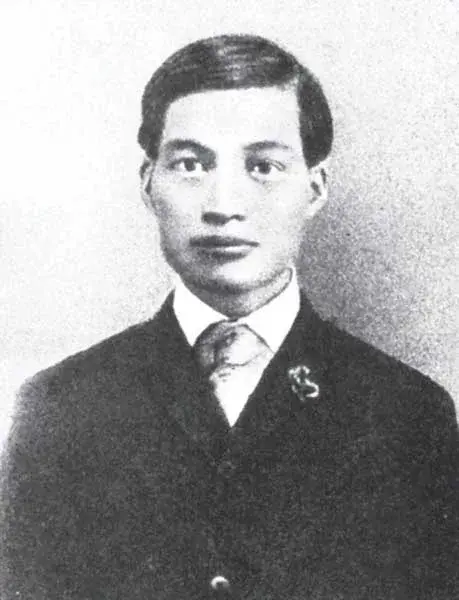
冯如
Feng Ru (冯如, 1884–1912), original name Feng Jiuru and courtesy name Dingsan, was an illustrious aircraft designer, manufacturer, and aviator of modern China from Enping County, Guangdong, universally acclaimed as the "Father of Chinese Aviation." Born into an impoverished farming family, he emigrated to San Francisco at age twelve to seek a livelihood. Working in shipyards and electric power plants while attending night…
Feng Ru (冯如, 1884–1912), original name Feng Jiuru and courtesy name Dingsan, was an illustrious aircraft designer, manufacturer, and aviator of modern China from Enping County, Guangdong, universally acclaimed as the "Father of Chinese Aviation." Born into an impoverished farming family, he emigrated to San Francisco at age twelve to seek a livelihood. Working in shipyards and electric power plants while attending night school, he acquired formidable technical mastery over mechanical design, internal combustion engines, and electrical engineering. Following the Wright brothers' historic flight in 1903, horrified by the foreign imperialist encroachment upon his homeland during the Russo-Japanese War, Feng made a solemn vow to pursue "national salvation through aviation," resolving to manufacture domestic aircraft to defend China's skies. In 1908, with financial backing from patriotic Chinese expatriates, Feng founded an experimental manufacturing workshop in Oakland, California. Overcoming multiple failures and a devastating workshop fire, he mastered aerodynamics, wing camber, and lightweight engine engineering. On September 21, 1909, Feng successfully piloted his self-designed "Feng Ru No. 1" biplane over the Oakland hills, flying at an altitude of four point five meters for over eight hundred meters—the first successful powered flight achieved by a Chinese aviator—earning gold honors from the International Aviation Association. In the spring of 1911, rejecting lucrative American corporate employment, Feng returned to China with his airplanes and machinery to join the 1911 Revolution, appointed Captain of the Guangdong Revolutionary Army Aviation Corps. On August 25, 1912, while conducting an aerial demonstration before tens of thousands of spectators at Yantang in Guangzhou, his aircraft stalled while maneuvering to avoid crowds, resulting in a fatal crash at age twenty-eight. Provisional President Sun Yat-sen ordered state funeral honors corresponding to an army major general, interring his remains at the Huanghuagang Martyrs' Cemetery to commemorate his immortal patriotism.
Born into a poor farming household in Enping, exhibiting early fascination with kites and mechanical toys.
Traveled to San Francisco with his uncle, working in machine shops and shipyards while studying engineering.
Moved to Oakland after the San Francisco earthquake, resolving to build aircraft for national salvation.
Founded the Guangdong Machine Manufacturing Workshop in Oakland backed by Chinese expatriate funds.
Successfully piloted the "Feng Ru No. 1" biplane in Oakland, inaugurating powered Chinese aviation.
Returned to China with his airplanes to support Sun Yat-sen's revolution, appointed Aviation Captain.
Died from injuries sustained during an aerial demonstration in Guangzhou at age twenty-eight; posthumously made Major General.
Feng Ru was born on January 12, 1884, in Xingxiubao Village, Niujiang Town, Enping County, Guangdong. His parents were modest agrarian farmers. From early childhood, Feng displayed an inventive mind, fashioning large soaring kites, miniature waterwheels, and clay mechanical carts that astonished village elders.
In 1895, at age eleven, unable to afford schooling in his impoverished village, Feng accompanied his maternal uncle to San Francisco to seek employment. Arriving in industrializing California, Feng observed the power of Western machinery and realized that China's subjugation stemmed directly from technological backwardness. He resolved to master modern engineering. Working ten-hour shifts as an apprentice in shipyards, railway repair facilities, and electrical power generating stations, he spent his nights studying English, geometry, physics, and mechanical drafting. Over a decade of rigorous self-discipline, Feng mastered iron casting, precision machining, and the fabrication of internal combustion engines, earning recognition among Bay Area machinists as a virtuoso engineer.
In December 1903, the Wright brothers achieved the first controlled, powered human flight at Kitty Hawk. Shortly thereafter, the Russo-Japanese War erupted in 1904, fought entirely on Chinese territory in Liaodong while the decrepit Qing court declared humiliating neutrality. Grieved by the violation of his nation's sovereignty, Feng declared to his friends: "Military aviation will determine future national survival. If China possesses no airplanes, our airspace will be dominated by imperialist powers! I shall dedicate my life to building airplanes for national defense, placing China on an equal footing with the West!"
Following the 1906 San Francisco earthquake, Feng relocated across the bay to Oakland. Supported by expatriate Chinese merchants, including Huang Qi and Zhang Nan, he raised over one thousand silver taels to establish the Guangdong Machine Manufacturing Workshop in a dilapidated wooden shed on East 9th Street.
At that time, aviation engineering was in its infancy and jealously guarded by Western inventors. Working in the sweltering shed day and night without wind tunnel facilities, Feng plotted wing lift curves manually. Unable to afford expensive imported motors, he poured his own aluminum cylinder castings, ground crankshafts by hand, and constructed a custom six-cylinder, forty-horsepower internal combustion engine. In 1908, a catastrophic fire burned his workshop and design blueprints to ashes, but Feng persevered with unyielding grit, reconstructing his equipment from scratch.
On the evening of September 21, 1909, Feng transported his completed biplane to the rolling Piedmont pastures of Oakland. The biplane had a wingspan of seven point sixty-two meters, a length of seven point forty-three meters, and was powered by his proprietary twenty-nine-point-four kilowatt engine.
Before spectators and overseas Chinese compatriots, Feng strapped himself into the open cockpit and ignited the engine. Accelerating down the grassy slope, the aircraft lifted into the evening breeze, climbing to an altitude of four point five meters and maintaining level flight for over eight hundred meters across the meadow before touching down smoothly. This flight marked the first time a Chinese pioneer had successfully designed, manufactured, and piloted a powered aircraft, with the flight distance surpassing the Wright brothers' initial achievement at Kitty Hawk.
The San Francisco Call and Oakland Tribune featured the event on their front pages, hailing Feng as "The Chinese Wright" and the "Pioneer of Eastern Aviation." The International Aviation Association awarded him a prestigious medal of merit. In January 1911, Feng designed a refined biplane, conducting circular flights over Oakland at speeds reaching one hundred and five kilometers per hour and altitudes exceeding one hundred meters, matching the highest contemporary world aviation standards.
Feng's triumphs attracted the attention of American industrialists and military procurement officers, who offered him large fortunes and commercial directorships to manufacture aircraft in the United States. Feng rejected all commercial enticements, stating: "I construct airplanes not for personal wealth, but to rescue my suffering motherland!"
In March 1911, accompanied by three engineering assistants, Feng boarded a steamship returning to China, bringing two self-manufactured airplanes and machine tools. While Qing authorities initially contemplated utilizing his talents, the Wuchang Uprising erupted in October. Feng joined the 1911 Revolution, offering his airplanes to the revolutionary forces. The Guangdong Military Government appointed him Captain of the Guangdong Revolutionary Army Aviation Corps.
On August 25, 1912, seeking to popularize aviation and stimulate public enthusiasm for national industrialization, Feng conducted a grand public flight demonstration at the Yantang military parade grounds in Guangzhou before tens of thousands of cheering citizens. Ascending gracefully to thirty meters and cruising for several kilometers, the flight thrilled the multitude. However, upon descending, observing that enthusiastic crowds had surged onto the landing strip, Feng abruptly pulled back on the control stick to execute an emergency turn. The aircraft lost airspeed and struck a bamboo grove, crashing heavily into the ground.
Critically injured with severe internal bleeding, Feng regained consciousness as rescuers transported him to the hospital. In his final breath, he instructed his grieving assistants: "Do not let my death discourage your determination. This tragedy is an inevitable price on the road of science. If you continue without surrender, China's great aviation destiny shall surely be achieved!" He passed away moments later at the age of twenty-eight.
News of Feng's sacrifice sent shockwaves across the young republic. Provisional President Sun Yat-sen personally decreed that the national government provide pension provisions corresponding to an army major general killed in battle, directing that a state funeral be held at Guangzhou's Huanghuagang Martyrs' Cemetery. Sun inscribed his gravestone: "Tomb of the Martyr Feng Ru," celebrating him as the pioneer who opened the epoch of Chinese aviation.
In his brief yet radiant life, Feng realized the ancient Chinese dream of flight, igniting the torch of modern aviation with his blood. His patriotism, inventive self-reliance, and fearless pursuit of scientific exploration remain an eternal beacon for generations of Chinese aerospace scientists.
FIGURES ASSOCIATED WITH THIS DYNASTY