冯京
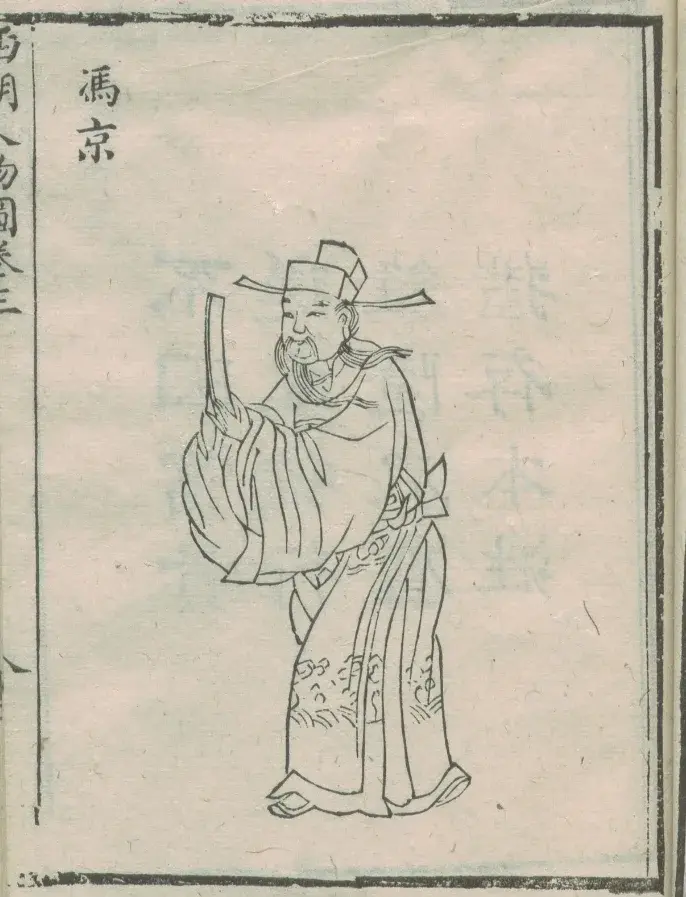
Historical portrait of Feng Jing
Image credits陳樹基著,佚名繪 · Public domainImage source

Historical figure

Feng Jing (冯京)

冯京

Feng Jing (冯京, 1021–1094), courtesy name Dangshi, was a native of Xianning in Jiangxia (present-day Xianning, Hubei), born in Longshui, Yizhou (present-day Yizhou District, Hechi, Guangxi). He was an illustrious statesman, Vice Grand Councilor, and Confucian scholar of the Northern Song dynasty. Exceptionally gifted from childhood and deeply versed in the classics and histories, he passed the imperial examinations in 1049…

Era not stated

PROFILE

Feng Jing (冯京, 1021–1094), courtesy name Dangshi, was a native of Xianning in Jiangxia (present-day Xianning, Hubei), born in Longshui, Yizhou (present-day Yizhou District, Hechi, Guangxi). He was an illustrious statesman, Vice Grand Councilor, and Confucian scholar of the Northern Song dynasty. Exceptionally gifted from childhood and deeply versed in the classics and histories, he passed the imperial examinations in 1049 during the reign of Emperor Renzong, securing first place in the local examinations, the metropolitan examinations, and the palace examination, achieving the exceptionally rare distinction of "Triple First Champion." Following his examination victory, Feng Jing spurned marriage proposals from imperial consort kin Zhang Yaozuo, earning widespread admiration for his incorruptibility. During the reigns of Renzong and Yingzong, he held posts including Vice Prefect of Jingnan, Editor, Auxiliary in the Academy of Scholarly Worthies, Hanlin Academician, and Prefect of Kaifeng, renowned for his incisive legal rulings and restraint of metropolitan elites. In 1070, Emperor Shenzong appointed him Participant in Determining Governmental Affairs (Vice Grand Councilor). During the Xining Reforms, Feng Jing clashed sharply with Chancellor Wang Anshi over the implementation of the Green Sprouts and Market Exchange measures. He repeatedly presented remonstrances directly before the emperor, condemning bureaucratic extortion and forced state loans. In 1075, he was dismissed from central office and assigned to govern Bozhou, Chengdu, and Taiyuan, where his simple and benevolent administration won widespread popular gratitude. Following Emperor Zhezong's accession, Feng Jing was appointed Prefect of Daming and Military Commissioner of Zhangde Army, later recalled to Kaifeng as Imperial Lecturer and Regional Commissioner of Xuanhui South Academy. During the Yuanyou era, he was granted the rank of Minister of Revenue and retired with the exalted title of Junior Preceptor to the Crown Prince. He died in Kaifeng in 1094 at the age of seventy-four; Emperor Zhezong suspended court sessions in his honor, posthumously conferring the rank of Minister of Works and the posthumous name Wenjian. Serving through four successive reigns, Feng Jing was renowned for his lofty integrity, fearless counsel, and moral fortitude, standing as an enduring model of Song scholar-official virtue.

Courtesy Name
Dangshi
Posthumous Title
Wenjian
Native Place
Xianning, Jiangxia (present-day Xianning, Hubei)
Date of Birth
1021 (Fifth year of the Tianxi era, Song)
Date of Death
1094 (First year of the Shaosheng era, Song)
Age at Death
74
Highest and Primary Offices
Participant in Determining Governmental Affairs, Prefect of Daming, Regional Commissioner of Xuanhui South Academy, Military Commissioner of Zhangde Army, Junior Preceptor to the Crown Prince, posthumously Minister of Works
Accurate Identity Orientation
Eminent statesman, scholar, and Triple First examination champion of the Northern Song dynasty; served as Vice Grand Councilor across the reigns of Renzong, Yingzong, Shenzong, and Zhezong

LIFE TIMELINE

Relationship graph

BIOGRAPHY

Chronology

  • 1021 (Fifth year of the Tianxi era, Song) | Birth in Yizhou | Born in Longshui where his father held office, exhibiting early erudition and photographic memory.
  • 1049 (First year of the Huangyou era, Song) | Triple First Champion | Placed first in provincial, metropolitan, and palace examinations, receiving appointment as Assistant Director of the Palace Buildings.
  • 1056 (First year of the Jiayou era, Song) | Scholarly Worthies Academician | Promoted to Auxiliary in the Academy of Scholarly Worthies after outstanding service in Jingnan and central secretariats.
  • 1067 (Fourth year of the Zhiping era, Song) | Prefect of Kaifeng | Appointed Hanlin Academician and Prefect of Kaifeng, curbing corrupt elites and clearing delayed legal backlogs.
  • 1070 (Third year of the Xining era, Song) | Vice Grand Councilor | Appointed Participant in Determining Governmental Affairs, vigorously debating the abuses of new reform measures.
  • 1075 (Eighth year of the Xining era, Song) | Frontier Governance | Dismissed from central office over policy disagreements; subsequently governed Bozhou, Chengdu, and Taiyuan.
  • 1085 (Eighth year of the Yuanfeng era, Song) | Military Commissioner | Recalled upon Zhezong's accession to govern Daming, becoming Military Commissioner of Zhangde Army and Xuanhui Commissioner.
  • 1094 (First year of the Shaosheng era, Song) | Peaceful Passing | Passed away in retirement at age seventy-four; posthumously conferred the exalted title of Minister of Works and the posthumous name Wenjian.

Life and Career

Triple First Scholar and Rejecting the Powerful

Feng Jing's family originally hailed from Xianning in Jiangxia, though he was born in Longshui in southern Yizhou, where his father Feng Shi served as a local magistrate. From an early age, Feng Jing displayed astonishing cognitive prowess and analytical memory, committing classics and histories to memory with ease and composing prose of exceptional grace, gaining early fame throughout the middle Yangtze and Lingnan regions.

In 1049, the twenty-eight-year-old Feng Jing arrived in the capital to participate in the imperial examinations. In the preliminary provincial examination, his essay triumphed over all candidates. In the metropolitan examination conducted by the Ministry of Rites, he again achieved the top rank. Finally, in the palace examination presided over in person by Emperor Renzong at the Chongzheng Hall, his comprehensive policy treatise and imposing bearing secured him the coveted first place. Achieving the championship in all three successive rounds—an honor known as "Triple First"—was an accomplishment shared only with Sun He in the entire Northern Song era, sending shockwaves through the empire's scholarly world.

Following his triumph, powerful figures sought to bind the rising star to their factions. Zhang Yaozuo, the influential uncle of Renzong's favored Consort Zhang and Co-administrator of the Bureau of Military Affairs, eagerly sought Feng Jing as his son-in-law. Zhang prepared sumptuous gifts and summoned Feng Jing, while onlookers urged the young scholar to seize the opportunity to ally with imperial in-laws. However, Feng Jing despised consort influence and refused the offer with cold courtesy. The venerable prime minister Fu Bi, deeply admiring his upright character, offered his own daughter in marriage, initiating a famous union celebrated throughout the capital.

Palace Academies and Governing Kaifeng

After receiving his doctorate, Feng Jing was appointed Assistant Director of the Palace Buildings and Vice Prefect of the Jingnan Military Command. At Jingnan, he assisted the regional governor in reducing levies, rectifying household registers, and adjudicating long-delayed court disputes, earning an excellent administrative reputation. During the Jiayou era, he was recalled to Kaifeng to serve as Editor, Drafter, and Auxiliary in the Academy of Scholarly Worthies.

Following the accession of Emperor Yingzong, Feng Jing was elevated to Hanlin Academician, serving inside the palace drafting imperial edicts and providing political counsel. In 1067, Emperor Shenzong concurrently appointed him Prefect of Kaifeng.

As the imperial capital of Northern Song, Kaifeng was teeming with royal relatives, meritorious nobles, and powerful ministers, making it the most complex administrative post in the realm. Arriving in office, Feng Jing enforced the law strictly without deference to aristocratic pedigree. When arrogant noble scions seized private farmlands or beat civilians, he punished them according to the penal code without leniency. In handling civil litigation, he possessed remarkable discernment, clearing backlogs that had lingered for years and restoring order across the capital. Shenzong personally praised his exceptional executive competence.

Outspoken Minister in the Xining Reforms

In 1069, Emperor Shenzong appointed Wang Anshi to initiate the Xining Reforms, establishing the Finance Planning Commission to enact the Equitable Transport Law, the Green Sprouts Law, the Agricultural Water Conservancy Law, and the Market Exchange Law.

In 1070, seeking to balance administrative factions and strengthen policy deliberation, Shenzong elevated the widely esteemed Feng Jing to Participant in Determining Governmental Affairs (Vice Grand Councilor). Early in the reform discussions, Feng Jing supported pruning redundant offices and rationalizing state finances, but he insisted that reforms must be executed with gradual prudence and respect for agricultural cycles.

However, as the new statutes were forcefully implemented nationwide, local magistrates competed for bureaucratic merit by forcibly imposing Green Sprouts credit on rural households, converting an intended relief loan into an oppressive usurious burden. Furthermore, the newly created Market Exchange bureaus intervened in retail commerce and cornered commodity pricing, sparking widespread resentment among merchants and artisans.

Confronting these abuses, Feng Jing aligned with elder statesmen Fu Bi, Han Qi, and Sima Guang to demand policy corrections. During court conferences in the Chongzheng and Wende halls, Feng Jing remonstrated before Shenzong: "The court enacts reforms with the sincere intent of enriching the state and comforting the people; yet subordinate clerks seek petty gains by forcibly thrusting loans upon impoverished peasants, extracting exorbitant interest. This is nothing less than the state practicing usury! Furthermore, the Market Exchange bureaus squabble with small peddlers over pennies, degrading the court's dignity."

Wang Anshi was unyielding and rejected all criticism, leading to fierce verbal clashes between the two statesmen in the imperial presence. Though Feng Jing could not arrest the momentum of the reform faction, his unbending integrity earned Emperor Shenzong's silent respect.

Regional Commands and Honorable Twilight

In 1075, amid mounting friction within the reform coalition and Wang Anshi's temporary dismissal, Feng Jing was relieved of his vice-chancellorship and appointed Prefect of Bozhou.

Departing central government, he consecutively governed the major frontier centers of Chengdu and Taiyuan. In Chengdu, he abolished unreasonable tolls across Shu mountain roads, restored public academies, and maintained peace with local indigenous chieftains, bringing years of tranquility to the southwest. In Taiyuan, he reinforced strategic border garrisons, verified grain supplies, and forged an impregnable defensive line against the Western Xia and Liao empires. In every assignment, he emphasized practical welfare and eschewed ostentation, winning the deep affection of frontier garrisons and commoners alike.

In 1085, Emperor Shenzong passed away and the young Emperor Zhezong ascended the throne, with Grand Empress Dowager Gao assuming regency. The court recalled the veteran conservative ministers. Feng Jing was appointed Prefect of Daming and Military Commissioner of Zhangde Army, soon returning to Kaifeng as Imperial Lecturer, Regional Commissioner of Xuanhui South Academy, and nominal Minister of Revenue. In his later years, Feng Jing acted with gentle humility, never seeking retribution against former political rivals. He subsequently petitioned for full retirement with the high rank of Junior Preceptor to the Crown Prince.

In 1094, Feng Jing passed away peacefully at his private residence in Kaifeng at the age of seventy-four. Emperor Zhezong mourned his death, suspending court audiences for a day, posthumously granting him the office of Minister of Works and bestowing the posthumous name Wenjian. Serving under four successive Song emperors, Feng Jing was celebrated not only for his historic Triple First examination triumph, but also for his fearless rectitude in court and his benevolent governance in the provinces.
Key Achievements

Triple First in Imperial Examinations and Refusing Factional Ties

Achieved first place across provincial, metropolitan, and palace examinations in 1049, a rare feat in imperial history. Firmly rejected consort relative Zhang Yaozuo's marriage proposal, earning universal praise for moral independence.

Impartial Governance and Judicial Cleanliness at Kaifeng

Governed Kaifeng as prefect with fearless impartiality, punishing unruly noble youths, rapidly resolving civil litigation backlogs, and restoring public order to the imperial capital.

Fierce Court Arguments against Reform Abuses as Vice Grand Councilor

Appointed Participant in Determining Governmental Affairs in 1070; persistently confronted Wang Anshi before Emperor Shenzong, exposing the predatory usury of Green Sprouts loans and market monopolies.

Peaceful Frontier Governance and Four Dynasties of Devoted Service

Administered Chengdu and Taiyuan with practical benevolence, fortifying frontier defenses and relieving tax burdens. Honored with top ranks under four emperors, passing away with the exalted name of Wenjian.

Personal Relationships

  • Father-in-law and Mentor: Fu Bi (Distinguished Northern Song chancellor, who admired Feng Jing's character and married his eldest and second daughters to him).
  • Imperial Sovereign: Zhao Xu (Emperor Shenzong of Song, who appointed Feng Jing Vice Grand Councilor and valued his candid counsel).
  • Political Counterpart: Wang Anshi (Chief architect of the Xining Reforms, who engaged in fiery court debates with Feng Jing over economic statutes).
  • Like-minded Colleague: Sima Guang (Chancellor and historian, who shared Feng Jing's opposition to bureaucratic abuses under the new laws).
  • Spurned Consort In-law: Zhang Yaozuo (Uncle of Empress Wencheng, whose marriage offer Feng Jing firmly turned down).

Historical Appraisals

  • Tuotuo in History of Song: "Feng Jing achieved the Triple First honor; possessed of extraordinary caliber from youth, his fame shook the four directions. When seated in the executive council, he spoke boldly when confronted with state affairs, debating the merits and perils of the new laws with Wang Anshi without compromise. He was truly a noble pillar of the dynastic altars!"
  • Su Shi in Dongpo Quanji: "His talent was like pure jade, standing singular and refined. Dominating the examination halls, he held his head high in the imperial court, serving through four reigns with unwavering integrity from beginning to end."
  • Zhu Xi in Records of the Words and Deeds of Famous Song Ministers: "Lord Feng Wenjian possessed immaculate virtue and broad capacity, reigning as the crown of his generation. Rejecting the Zhang family's marriage offer and denouncing the evils of the Green Sprouts loans, his magnificent principles shone so brightly that nothing could obscure them."

Related Entries

  • [[Fu Bi]]
  • [[Wang Anshi]]
  • [[Emperor Shenzong of Song]]
  • [[Sima Guang]]
  • [[Xining Reforms]]
  • [[History of Song: Biography of Feng Jing]]

FIGURES ASSOCIATED WITH THIS DYNASTY

Bibliography

  • History of Song, Volume 317, "Biographies 76: Biography of Feng Jing"
  • Long Draft of the Comprehensive Mirror for Aid in Government, Continued, Volume 211, "Third Year of Xining"
  • Long Draft of the Comprehensive Mirror for Aid in Government, Continued, Volume 261, "Eighth Year of Xining"
  • Records of the Words and Deeds of Famous Song Ministers, Supplementary Collection, Volume 6, "Lord Feng Wenjian"
  • Records of Things Seen and Heard by Shao, Volume 7, by Shao Bowen
  • Brief History of the Eastern Capital (Dongdu Shilve), Volume 76, "Biography of Feng Jing"