Birth in Nanhai
Born on April 4 into a scholar family in Nanhai; his father died immediately after his birth.
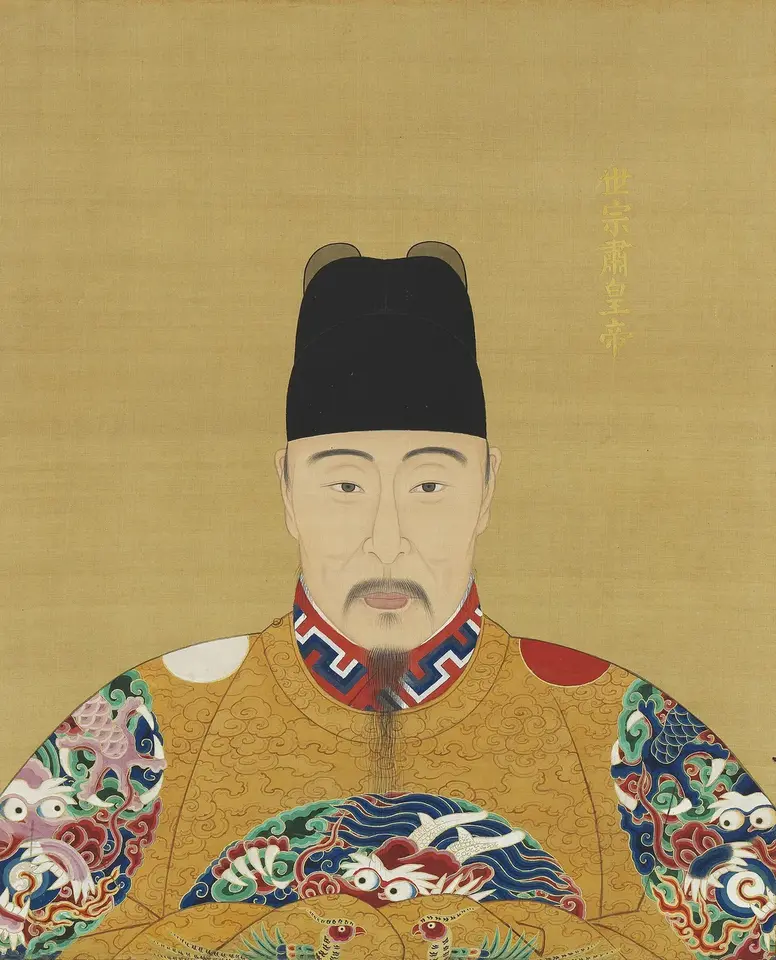
方献夫
Fang Xianfu (方献夫, 1485–1544), courtesy name Shushi (叔事), pseudonym Xiqiao (西樵), posthumously titled Wenmin (文敏), was an eminent statesman, Second Grand Secretary, and prominent philosopher of the mid-Ming Dynasty, originating from Nanhai, Guangzhou Prefecture, Guangdong. Passing the metropolitan examination in 1505, Fang entered the Hanlin Academy as a Bachelor. Serving in the Ministry of Rites and the Ministry of Personnel…
Fang Xianfu (方献夫, 1485–1544), courtesy name Shushi (叔事), pseudonym Xiqiao (西樵), posthumously titled Wenmin (文敏), was an eminent statesman, Second Grand Secretary, and prominent philosopher of the mid-Ming Dynasty, originating from Nanhai, Guangzhou Prefecture, Guangdong. Passing the metropolitan examination in 1505, Fang entered the Hanlin Academy as a Bachelor. Serving in the Ministry of Rites and the Ministry of Personnel during the Zhengde reign, he met Wang Yangming, becoming one of his earliest and most devoted disciples. In 1512, citing illness, Fang retired to Mount Xiqiao in Guangdong, where he spent a decade in intense philosophical contemplation and teaching. Following the accession of Emperor Jiajing in 1521, the imperial court was convulsed by the Great Ritual Controversy (Daliyi). In 1524, Fang submitted his influential two-part memorial, Treatise on the Great Ritual, arguing with extensive textual citations that the young emperor possessed the sacred moral obligation to honor his biological father, Prince Xian of Xing, as "Imperial Father" rather than accepting adoptive sonship to Emperor Xiaozong. This doctrine aligned with Jiajing's personal desires, elevating Fang alongside Zhang Cong and Gui E as the primary intellectual leaders of the imperial ritual faction. Elevated to Reader-in-Waiting and subsequently Minister of Rites and Minister of Personnel, Fang entered the Grand Secretariat in 1532, rising to Junior Guardian and Grand Secretary of the Huagai Hall. Throughout his cabinet service, he reformed civil appointments, strengthened examinations, and mediated between court factions. Following policy disagreements with Zhang Cong, Fang resigned in 1534 to resume teaching at Mount Xiqiao. Passing away in 1544 at age sixty, he was posthumously granted the title of Grand Preceptor with the posthumous name Wenmin.
Born on April 4 into a scholar family in Nanhai; his father died immediately after his birth.
Passed the imperial metropolitan examination; selected as Hanlin Bachelor; observed mourning for his mother.
Served as Vice Director in the Ministry of Personnel; became a committed disciple of Wang Yangming's philosophy of mind.
Resigned citing ill health; established the Shiquan Academy on Mount Xiqiao, studying and lecturing for ten years.
Presented his two-part Treatise on the Great Ritual, validating Emperor Jiajing's elevation of his biological father; appointed Reader-in-Waiting.
Elevated to Minister of Rites, overseeing major revisions to dynastic ancestral rites and temple regulations.
Transferred to head the Ministry of Personnel, enforcing strict merit-based civil appointments.
Appointed Grand Secretary of the Wuying Hall, advancing to Junior Guardian and Grand Secretary of the Huagai Hall as Second Grand Secretary.
Resigned from the Grand Secretariat to avoid factional strife; returned to Mount Xiqiao to write and lecture.
Passed away at his Mount Xiqiao estate on October 10 at age sixty; posthumously honored as Grand Preceptor and titled Wenmin.
Fang Xianfu was born on April 4, 1485, in Danzao, Nanhai County, Guangdong. His father passed away immediately following his birth, leaving his mother Lady Huang to raise him under austere circumstances. From childhood, Fang was exceptionally devoted to classical learning, excelling in historical interpretation and philosophical analysis. In 1504, he succeeded in the Guangdong provincial examinations, and in the following year, he earned the jinshi degree in the metropolitan examinations of 1505, being selected as a Bachelor in the Hanlin Academy. Upon preparing to return home to care for his aging mother, he received word of her passing and spent the customary three-year mourning period at home.
In 1509, during the early Zhengde reign, Fang was appointed Secretary in the Ministry of Rites, transferring the following year to the Ministry of Personnel as Vice Director. While in Beijing, he engaged in deep philosophical discussions with Ministry Secretary Wang Yangming. Deeply moved by Wang's doctrine of the Unity of Knowledge and Action (zhixing heyi), Fang formally requested discipleship. In 1512, dissatisfied with bureaucratic intrigue and recurrent illness, Fang resigned his post and returned to Mount Xiqiao in Guangdong. There he established the Shiquan Academy, lecturing to hundreds of disciples and studying classical metaphysics for a full decade.
In 1521, Emperor Zhengde died without heir, and his cousin, the young Prince of Xing, ascended the throne as Emperor Jiajing. Cabinet Grand Secretary Yang Tinghe and senior ministers insisted that imperial legitimacy required Jiajing to be formally adopted by Emperor Xiaozong, relegating his biological parents to uncle and aunt.
In 1524, Gui E discovered an unsubmitted ritual draft composed earlier by Fang Xianfu and presented it to the throne alongside memorials from Xi Shu. Emperor Jiajing was delighted and distributed the treatises to court ministers for debate. Outraged by what they considered unprincipled sycophancy, mainstream censors demanded Fang's dismissal. Undeterred, Fang submitted his comprehensive two-part Treatise on the Great Ritual on May 28, 1524. Drawing upon ancient classical rites from the Rites of Zhou and Han dynasty precedents, Fang argued that filial piety was innate to universal moral law: an emperor could never sever biological ties to his true parents, and Prince Xian of Xing should rightfully be honored as "Imperial Father." The treatise provided Emperor Jiajing with rigorous intellectual justification to overcome bureaucratic resistance. In July 1524, the emperor promoted Fang to Hanlin Reader-in-Waiting and Junior Supervisor of the Household.
In 1527, Fang was elevated to Minister of Rites, directing the comprehensive reform of ancestral temples, seasonal sacrifices, and court ceremonies in accordance with the new ritual dispensations. In 1531, he was transferred to head the Ministry of Personnel. Facing rampant bribery in provincial recommendations, Fang instituted strict performance reviews, eliminated unqualified retainers, and standardized regional civil examinations.
In 1532, Emperor Jiajing appointed Fang Grand Secretary of the Wuying Hall, soon elevating him to Junior Guardian and Grand Secretary of the Huagai Hall, positioning him as Second Grand Secretary in the Grand Secretariat alongside Senior Grand Secretary Zhang Cong. Fang utilized his executive power to reform academic standards, promote fiscal economy, and check bureaucratic abuses. However, personal frictions soon emerged between Fang and the domineering Zhang Cong. Reluctant to become entangled in bitter cabinet rivalries, Fang repeatedly requested retirement. In 1534, Emperor Jiajing reluctantly granted his resignation, bestowing upon him generous travel stipends and imperial commendations.
Returning to Mount Xiqiao, Fang spent his remaining decade entirely devoted to scholarly writing and philosophical education. Scholars from across Lingnan flocked to Mount Xiqiao to study under his direction. He emphasized internal moral cultivation and practical civic responsibility, making Mount Xiqiao a premier intellectual center of southern China.
Fang Xianfu passed away quietly at his home on October 10, 1544, at the age of sixty. Upon hearing the news, Emperor Jiajing expressed profound grief, declaring that Fang had rendered indispensable service in clarifying state ritual and sustaining cabinet governance. The emperor issued an imperial decree posthumously promoting Fang to Grand Preceptor and conferring upon him the esteemed posthumous name "Wenmin."
Fang Xianfu combined profound philosophical introspection with strategic ministerial capability. While controversial among contemporaries for his role in the Great Ritual Controversy, his personal asceticism, scholarly integrity, and administrative dignity earned him an enduring reputation as one of the accomplished statesmen of the Jiajing era.
"Fang Xianfu immersed himself in classical philosophy and possessed the capability to govern state and society. Entering the Grand Secretariat, he acted with measure and dignity; renouncing worldly honors, he taught at Mount Xiqiao for over a decade until his death. The posthumous title of Wenmin was truly well-deserved." — History of Ming (Ming Shi), Scroll 196, "Biographies"
"Master Xiqiao, as a distinguished disciple of Wang Yangming, boldly presented the Great Ritual memorials. Though contemporary critics censured him for accommodating the throne, his prose was classical and rich, his temperament calm and modest. Retiring gracefully among mountain streams in his later years, he preserved the unblemished character of a true gentleman." — Huang Zongxi, Record of Ming Scholars
FIGURES ASSOCIATED WITH THIS DYNASTY