Coastal Birth
Born into a salt-trading family in Huangyan; developed exceptional naval combat skills from early youth.
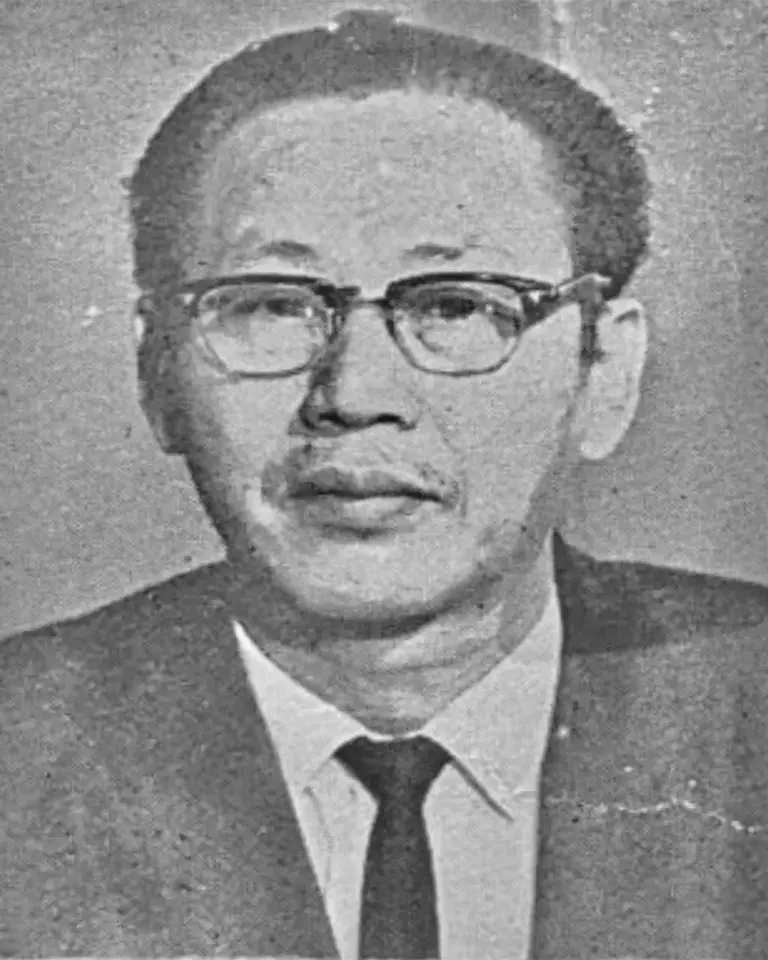
方国珍
Fang Guozhen (方国珍, 1319–1374), given name Zhen, was a native of Huangyan in Taizhou (modern Taizhou, Zhejiang). He was a prominent rebel leader and regional hegemon who established an autonomous naval maritime regime in eastern Zhejiang during the turbulent collapse of the Mongol Yuan dynasty. Hailing from a family of coastal salt traders, Fang was renowned for his imposing stature, physical strength, and mastery of coastal…
Fang Guozhen (方国珍, 1319–1374), given name Zhen, was a native of Huangyan in Taizhou (modern Taizhou, Zhejiang). He was a prominent rebel leader and regional hegemon who established an autonomous naval maritime regime in eastern Zhejiang during the turbulent collapse of the Mongol Yuan dynasty. Hailing from a family of coastal salt traders, Fang was renowned for his imposing stature, physical strength, and mastery of coastal navigation. In 1348, after corrupt imperial officials falsely implicated his clan in maritime piracy, Fang and his brothers slew the local inspectors and led armed seamen out to sea. Cruising the Zhoushan archipelago and coastal estuaries, Fang repeatedly routed Yuan imperial naval squadrons and plundered maritime grain transports destined for the northern capital of Dadu, inaugurating the widespread southern rebellions three years prior to the Red Turban uprising. For the subsequent two decades, Fang established his headquarters at Qingyuan (modern Ningbo), dominating the three affluent coastal commanderies of Wenzhou, Taizhou, and Qingyuan with a fleet of thousands of warships and nearly one hundred thousand troops. Exhibiting a cautious regional strategy, he avoided continental ambitions, maneuvering diplomatically between the Yuan court, Zhu Yuanzhang, and Suzhou warlord Zhang Shicheng through shifting allegiances to safeguard his coastal principality. In late 1367, confronting a coordinated land and naval offensive led by Ming generals Tang He and Liao Yongzhong, Fang surrendered his territory. Zhu Yuanzhang treated him with leniency, granting him the title of Left Vice Minister of the Guangxi Branch Secretariat and an imperial residence in Nanjing with full stipends without requiring administrative service. He died peacefully in Nanjing in 1374 and was posthumously honored as General of Declared Bravery.
Born into a salt-trading family in Huangyan; developed exceptional naval combat skills from early youth.
Slew corrupt local officials to launch an armed naval uprising, cutting Yuan sea-transport grain routes.
Decisively defeated the Yuan expeditionary fleet and captured Dorjibal, forcing the Yuan court to grant him imperial titles.
Captured Qingyuan, Wenzhou, and Taizhou, consolidating his maritime appanage as Duke of Qu.
Offered tribute and hostage sons to Zhu Yuanzhang while maintaining secret channels with Dadu and Zhang Shicheng.
Encircled at sea by Ming generals Tang He and Liao Yongzhong; surrendered all three commanderies and his naval fleet.
Arrived at Nanjing to pay homage to the Hongwu Emperor, appointed Left Vice Minister of Guangxi with full stipends.
Passed away in his Nanjing mansion at age fifty-six; posthumously honored as General of Declared Bravery.
Fang Guozhen was born in 1319 in coastal Huangyan. The inhabitants of the rugged Taizhou coast had relied on salt evaporation and maritime commerce for generations. The Fang lineage engaged in illicit private salt distribution, commanding immense respect among coastal sailors, fishermen, and dockworkers. Fang was over seven feet tall, possessed remarkable strength, and could steer heavy junks through violent oceanic storms.
In 1348, local maritime pirates raided the coast. Corrupt regional magistrates, unable to apprehend the perpetrators, accepted bribes from Fang's commercial rivals and framed the Fang brothers for abetting piracy. Facing impending arrest and execution, Fang Guozhen and his brothers drew their swords, slew the inspecting magistrates, and mobilized several hundred destitute salt workers, seizing imperial vessels to escape into the open ocean.
Establishing bases among the offshore islands of Zhoushan and the Taizhou archipelago, Fang intercepted imperial grain convoys transiting from the Yangtze delta to Dadu. Because the northern capital depended on millions of piculs of southern maritime grain to sustain its population, Fang's blockades threatened the imperial court. Fang distributed captured grain to impoverished coastal settlements, expanding his rebel navy to tens of thousands of skilled seamen. His 1348 revolt erupted three years before the central Red Turban rebellion, sounding the death knell for Yuan authority in southern China.
In response to the disruption of the grain supply, the Yuan court dispatched Grand Councilor Dorjibal and naval generalissimo Borotemur with a massive imperial fleet to suppress the revolt. Fang implemented an ambush off the Jiushan islands near Huangyan. Feigning retreat into shallow inlets during low tide, he lured the heavy imperial junks onto sandbanks before launching fireships. The imperial fleet was destroyed, and Dorjibal was taken prisoner.
Terrified by this naval defeat, the Yuan government adopted a policy of appeasement, pardoning Fang and granting him imperial military commissions. Exploiting Yuan weakness, Fang repeatedly accepted pardons only to rebel whenever the court attempted to curtail his autonomy.
In 1356, Fang launched an amphibious offensive, capturing the regional commercial hub of Qingyuan (modern Ningbo) alongside Wenzhou and Taizhou. He fortified Qingyuan as his capital, controlling the most prosperous coastal plain in eastern Zhejiang. Recognizing his de facto autonomy, the Yuan court showered him with high honors, naming him Manager of Affairs of the Jiangzhe Branch Secretariat and Duke of Qu. In exchange, Fang agreed to escort twelve thousand piculs of maritime tribute grain annually to Dadu, maintaining the fiction of imperial vassalage while ruling as an independent coastal monarch.
Unlike his ambitious contemporaries Zhu Yuanzhang and Chen Youliang, who fought for imperial dominion over China, Fang was fundamentally a cautious regionalist. His supreme strategic objective was the preservation of his coastal domain and commercial privileges.
In 1359, Zhu Yuanzhang captured Jinhua and Chuzhou, bringing his armies directly to the borders of eastern Zhejiang. Recognizing Zhu's formidable military strength, Fang dispatched envoys to Jinling offering formal submission, presenting hundred weights of gold and silver alongside naval craft, and sending his second son as a diplomatic hostage. Zhu reciprocated by appointing him chief administrator of Fujian and bestowing a golden tally.
However, Fang was reluctant to tie his fate to any single contender. Fearing Zhu's centralizing ambitions, he secretly exchanged cordial embassies with Zhang Shicheng in Suzhou while continuing to dispatch tribute grain to the Yuan emperor in Dadu. When the decisive Battle of Lake Poyang erupted between Zhu Yuanzhang and Chen Youliang in 1363, Fang remained neutral, observing the clash from his coastal fortress to see which power would prevail.
In late 1367, having eliminated both Chen Youliang and Zhang Shicheng, Zhu Yuanzhang resolved to incorporate eastern Zhejiang into his nascent empire. Disapproving of Fang's opportunism, Zhu dispatched Generalissimo Tang He by land and Admiral Liao Yongzhong by sea, executing a pincer offensive against eastern Zhejiang.
Ming forces rapidly captured Wenzhou and Taizhou, driving Fang's garrisons back toward Qingyuan. Outmaneuvered on land, Fang evacuated his household and treasury onto several dozen seagoing junks and fled into the outer waters of the East China Sea.
Liao Yongzhong's naval fleet pursued him relentlessly through the Zhoushan archipelago, cutting off his escape routes. Realizing that continued resistance was impossible, Fang sent his brother Fang Guomin to present formal terms of surrender. In December 1367, Fang formally yielded his three commanderies, four hundred war vessels, and tens of thousands of troops to Ming authority, completing the pacification of Zhejiang.
In early 1368, Zhu Yuanzhang ascended the throne in Nanjing as the Hongwu Emperor, founding the Ming dynasty. Fang was escorted to the imperial palace to present his submission.
Recognizing that Fang was the first regional leader to rise against the corrupt Yuan, and that his administration had preserved civil order and patronized Confucian scholars—including Song Lian and Wang Yi—Zhu Yuanzhang treated him with generosity. The emperor appointed him Left Vice Minister of the Guangxi Branch Secretariat, granted him an estate in Nanjing, and decreed that he would receive full ministerial stipends without being burdened by administrative responsibilities.
For the remainder of his life, Fang lived quietly in the capital, avoiding all political intrigue and passing his days composing poetry and entertaining friends. In May 1374, Fang died of illness in Nanjing at the age of fifty-six. The Hongwu Emperor suspended court audiences for one day in his honor, provided an imperial funeral, and posthumously conferred upon him the rank of General of Declared Bravery.
Launched an armed maritime uprising in 1348, preceding the Red Turban rebellion by three years and severing vital naval grain routes to Dadu.
Ruled the three affluent commanderies of Qingyuan, Wenzhou, and Taizhou for nearly two decades, establishing an autonomous naval power base.
Maintained regional stability by adroitly maneuvering among the Yuan court, Zhang Shicheng, and Zhu Yuanzhang to shield his population from devastation.
Surrendered his territory, fleet, and forces to Ming commanders Tang He and Liao Yongzhong in 1367, facilitating a peaceful transition of power in eastern Zhejiang.
Awarded ministerial rank and comfortable retirement in Nanjing by the Hongwu Emperor, dying of natural causes as a rare surviving late Yuan warlord.
FIGURES ASSOCIATED WITH THIS DYNASTY