Birth in Liaodong
Born in Wenguantun, Shenyang Central Guard in Liaodong, displaying precocious intellect and serene temperament.
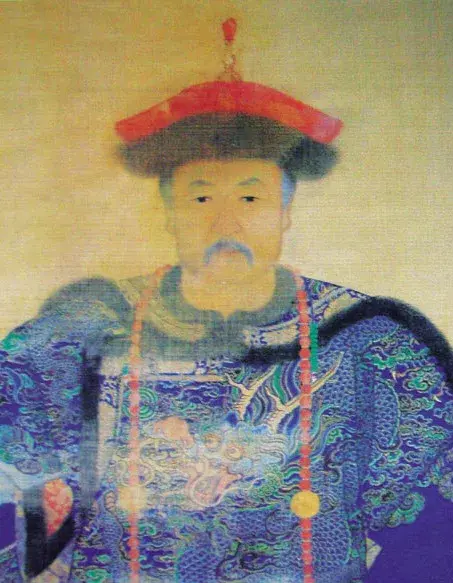
范文程
Fan Wencheng (范文程, 1597–1666), courtesy name Xiandou (宪斗), art name Huiyue (辉岳), posthumous name Wensu (文肃), was a native of Shenyang Central Guard in Liaodong (modern Shenyang, Liaoning Province), with ancestral roots in Leping, Jiangxi, and a seventeenth-generation descendant of the renowned Northern Song chancellor Fan Zhongyan. Fan Wencheng was an eminent statesman, strategist, and founding architect of the early Qing…
Fan Wencheng (范文程, 1597–1666), courtesy name Xiandou (宪斗), art name Huiyue (辉岳), posthumous name Wensu (文肃), was a native of Shenyang Central Guard in Liaodong (modern Shenyang, Liaoning Province), with ancestral roots in Leping, Jiangxi, and a seventeenth-generation descendant of the renowned Northern Song chancellor Fan Zhongyan. Fan Wencheng was an eminent statesman, strategist, and founding architect of the early Qing Dynasty, who served four successive imperial monarchs: Nurhaci, Hong Taiji, Emperor Shunzhi (Fulin), and Emperor Kangxi (Xuanye), widely venerated as the foremost civilian minister of the dynastic foundation. In his youth, Fan obtained the status of government student (shengyuan) under the Ming Dynasty in Shenyang. In 1618, he pledged allegiance to Nurhaci following the capture of Fushun. Under Hong Taiji, he entered the Literary Institute, earning intimate imperial trust while playing a pivotal role in formulating military strategies against the Ming Dynasty, subduing Mongol tribes, pacifying Joseon Korea, and founding the Three Inner Courts. Amid the dynastic transition of 1644, upon Li Zicheng capturing Beijing, Fan accurately evaluated the imperial crisis and urgently advised Prince Regent Dorgon to march through Shanhaiguan to claim the Mandate of Heaven, coining the landmark pacification doctrine: "officials who submit shall retain their offices; commoners who submit shall keep their livelihoods." Following the establishment of the capital in Beijing, Fan laboured incessantly day and night, presiding over the codification of administrative rituals and governmental apparatus, abolishing the onerous late-Ming military surcharges, stabilizing land taxes to Wanli tax quotas, re-establishing the imperial civil service examinations, and reconciling the Han gentry with Manchu leadership. Passing away in 1666 at the age of seventy, he was posthumously honored with the title Wensu, and Emperor Kangxi later personally inscribed the imperial commendation "Lofty Integrity of the Prime Minister" to celebrate his peerless founding contributions.
Born in Wenguantun, Shenyang Central Guard in Liaodong, displaying precocious intellect and serene temperament.
Earned the government student degree in Shenyang Central Guard, mastering Confucian classics and historical treatises.
Captured upon the fall of Fushun to the Later Jin; entered the service of Nurhaci and accompanied campaigns in Liaoyang and Guangning.
Joined the newly founded Literary Institute under Hong Taiji; distinguished himself in battle at Da'ankou and received the hereditary post of major.
Rode alone to the western redoubt during the Siege of Dalinghe, persuading the Ming garrison to surrender.
Appointed Grand Academician of the Palace Secretariat upon the reorganization into the Three Inner Courts, promoted to second-class jala janggin.
Intervened to mediate severe disputes between Hong Taiji and Prince Dorgon during the Siege of Jinzhou, averting capital executions.
Urged Dorgon to swiftly launch the expedition to conquer China; directed administrative transition outside the Meridian Gate.
Restored to high office following Shunzhi's assumption of personal rule; promoted to Grand Academician of the Institute of Macro-Literature and first-class viscount.
Elevated to Junior Guardian and Grand Preceptor; repeatedly submitted memorials requesting retirement due to advanced age and ailments.
Passed away at age seventy in the eighth month; awarded the posthumous title Wensu and buried at Mount Hongluo in Huairou.
Fan Wencheng traced his ancestral heritage to Leping in Jiangxi Province, being a seventeenth-generation descendant of Fan Zhongyan, the celebrated prime minister of the Northern Song Dynasty. During the early Ming Dynasty, Fan Yue, a seventh-generation ancestor serving as vice magistrate of Yunmeng County, was exiled to the frontier garrison of Shenyang Central Guard in Liaodong, where the lineage took permanent root. His great-grandfather Fan Cong rose to Minister of War during the Jiajing reign, his grandfather Fan Shen served as Assistant Commander of Shenyang Guard, and his father Fan Nan dedicated himself to classical scholarship and paternal instruction.
From early childhood, Fan demonstrated exceptional erudition, memory, and calm determination. At age eighteen, both he and his elder brother Fan Wencai passed the imperial local examinations to become government students of Shenyang County. In the spring of 1618, the Later Jin ruler Nurhaci launched an assault against the Ming frontier, storming the fortress of Fushun. Among the captive population, Fan and his brother were initially assigned as bondservants under the Bordered Red Banner of the Manchu military system.
Learning that the brothers were lineal descendants of Fan Zhongyan, Nurhaci summoned them for an audience. Nurhaci was profoundly impressed by Fan Wencheng's articulate exposition of frontier statecraft, military affairs, and historical administration. Consequently, Nurhaci released them from menial bondage and enrolled Fan into his travelling headquarters as a strategic consultant. In 1622, during campaigns against Xiping Fort and Guangning, Fan accompanied the expeditionary columns, contributing tactical counsel that solidified his standing within the emergent Later Jin hierarchy.
Following the ascension of Hong Taiji in 1626, the Later Jin administration recognized the urgent necessity of incorporating civil administrative norms to counterbalance nomadic warrior traditions. In 1629, Hong Taiji established the Literary Institute to enlist scholars well versed in Chinese letters, selecting Fan Wencheng and Ning Wanwo among its inaugural members. Although holding civilian academic credentials without formal military rank, Fan was physically imposing, courageous, and eloquent, earning great respect among the Manchu nobility.
In the winter of 1629, Hong Taiji led a large force across the Great Wall via Xifengkou, penetrating the Ming heartland and advancing upon Beijing. Fan accompanied the campaign and personally undertook diplomatic missions, securing the peaceful submission of five fortress towns including Panjiakou, Malanyu, and Da'ankou. When Ming counter-offensive forces besieged Da'ankou, Fan donned heavy armour, rallied firearms detachments, and repelled enemy assaults. Following the victory, Hong Taiji placed him alongside military commanders to garrison Zunhua with eight hundred troops, awarding him the hereditary military title of major.
During the prolonged Siege of Dalinghe in 1631, Ming defenders resisted stubbornly from fortified towers on the western hills. On the tenth day of the eighth month, Fan rode alone to the base of the fortified redoubt under arrows and rocks, persuasively outlining the hopelessness of continued resistance and the guarantee of fair treatment under Later Jin rule. Moved by his sincerity, the garrison surrendered with over seventy soldiers and extensive livestock, all of which Hong Taiji bestowed upon Fan as reward. Later, during the 1632 campaign against Ligdan Khan of the Chahar Mongols, Fan submitted memorials advising Hong Taiji to prioritize seizing Shanhaiguan rather than overextending into Datong, showcasing his astute geopolitical foresight. In 1633, when Ming commanders Kong Youde and Geng Zhongming defected by sea with modern artillery detachments, Fan was dispatched to negotiate their submission and oversee their relocation to Dongjing, successfully integrating cutting-edge firearms into the Qing military arsenal.
In 1636, Hong Taiji proclaimed the foundation of the Great Qing Dynasty in Mukden, reorganizing the Literary Institute into the Three Inner Courts: the Palace National History Academy, the Palace Secretariat, and the Palace Institute of Macro-Literature. In recognition of his strategic contributions, Fan was appointed Grand Academician of the Palace Secretariat and promoted to second-class jala janggin. He supervised imperial rescripts, diplomatic correspondence with neighboring realms, communications with tributary states, and sacrificial addresses to Confucian temples, serving as the de facto premier civilian drafter of dynastic legislation.
During the consolidation of imperial institutions, Fan actively advocated for abolishing collective family culpability laws inherited from tribal traditions. He drafted plans for the establishment of the Six Ministries and the Censorate, introducing bureaucratic gradations and appointing qualified Han officials such as Deng Changchun and Su Hongzu to administrative positions. Hong Taiji relied heavily on his political judgment, routinely inviting him for private discussions on high policy and addressing him respectfully by title.
During the crucial Siege of Jinzhou in 1641, Prince Regent Dorgon and other royal commanders stationed their forces too far from the battle lines and permitted troops to return home on leave, allowing Ming relief columns to smuggle grain into the fortress. Hong Taiji flew into a fury, sending high commissioners and Grand Academician Fan Wencheng to interrogate the field commanders. Facing severe imperial reprimands, Dorgon, Prince Haoge, and other royal princes confessed their failures and submitted petitions requesting capital punishment.
Returning to Mukden, Fan perceived that executing or degrading the core princely command would shatter the morale of the eight banners at a critical juncture. He forcefully petitioned Hong Taiji to exercise imperial leniency in consideration of their past battle achievements, persuading the monarch to substitute fines and temporary demotions for death penalties. This intervention maintained command integrity, culminating in the complete surrender of Jinzhou and the capture of Ming Supreme Commander Hong Chengchou.
In 1642, following the fall of Songshan, Hong Chengchou was brought to Mukden and initiated a strict hunger strike, resolutely refusing all overtures. Hong Taiji dispatched Fan to assess the prisoner's resolve. During their conversation, Fan observed that when a particle of dust fell from the rafters onto Hong's robe, Hong instinctively brushed it off. Returning to court, Fan remarked to the emperor that a man who displayed such punctilious care for his clothing would certainly not throw away his life lightly. Hong Taiji immediately paid a personal visit and placed his own imperial sable coat over Hong Chengchou, securing his lasting allegiance to the Qing Dynasty.
In 1643, Hong Taiji died suddenly in Mukden without naming a successor, sparking intense succession disputes between Prince Dorgon and Prince Haoge. Fan and other senior civilian officials preserved absolute institutional neutrality, facilitating a negotiated compromise that elevated Hong Taiji's ninth son, Fulin (Emperor Shunzhi), to the throne under the joint regency of Prince Jirgalang and Prince Dorgon, successfully preserving dynastic stability.
In the fourth month of 1644, peasant rebel forces led by Li Zicheng captured Beijing, and the Chongzhen Emperor committed suicide on Coal Hill. On the fourth day of that month, Fan submitted a monumental memorial from Mukden to Prince Regent Dorgon, declaring that the demise of the Ming Dynasty presented a once-in-a-millennium opportunity for the Qing to claim all under Heaven. He urged Dorgon to march south immediately, emphasizing that success hinged upon strictly forbidding pillaging, presenting the Qing army as righteous avengers of the deceased Ming monarch, and winning the hearts of the Chinese gentry and peasantry.
Persuaded by Fan's visionary counsel, Dorgon mobilized over one hundred thousand troops and marched through the Great Wall within five days. When Ming General Wu Sangui sent urgent appeals from Shanhaiguan requesting military intervention against Li Zicheng, Dorgon hesitated to proceed, fearing a prolonged confrontation with rebel forces that had overwhelmed the Ming capital. Dorgon dispatched express couriers to summon Fan, who was then recuperating from illness at hot springs in Gaizhou. Fan arrived and convincingly argued that Wu Sangui was cornered and that the peasant armies were disorganized and looting, guaranteeing a decisive Qing victory if imperial forces moved with lightning speed.
Following the smashing victory at Shanhaiguan, Qing armies pursued rebel forces toward Beijing. To quell widespread panic among the fleeing populace, Fan, though weakened by illness, drafted an imperial proclamation bearing his own official name and title: "Our righteous army comes to avenge your sovereign and father, not to harm the common people. Those who submit shall retain their offices; those who return to their fields shall preserve their livelihoods." This proclamation pacified the northern counties, enabling Qing forces to advance without local resistance.
On the second day of the fifth month, Dorgon entered the Forbidden City. Facing chaos and mutual denunciations among Beijing residents, Fan established his administrative quarters outside the right side of the Meridian Gate, working untiringly day and night to issue directives, distribute food supplies, and restore civic order. He persuaded Dorgon to prohibit arbitrary accusations under the guise of hunting down rebels, and initiated three days of imperial mourning for the Chongzhen Emperor and Empress Zhou, burying them with full imperial rites. These measures swiftly disarmed the hostility of the Han scholar-gentry class.
During the early Shunzhi reign, supreme authority was monopolized by Prince Regent Dorgon, whose titles escalated from Imperial Uncle Prince Regent to Imperial Father Prince Regent. Fan remained dedicated to standard Confucian governance and administrative propriety, resisting subservience to princely factions. In 1644, Prince Dodo had attempted to seize Fan's wife, which resulted in a royal fine against Dodo but sowed persistent resentment against Fan within the regency circle.
As Manchu academicians like Ganglin and Qichongge aligned themselves subserviently with Dorgon, Fan recognized the perilous court environment and chose to retreat from active participation by pleading chronic illness. Although still holding the supreme rank among academicians, he was systematically excluded from inner deliberations as Dorgon consolidated personal dominance.
In late 1650, Dorgon died during a hunting expedition in Karasum, and Emperor Shunzhi assumed direct personal control in 1651, launching an extensive purge of the late regent's faction. Ganglin and Qichongge were executed for altering the Imperial Records of Emperor Taizu to erase Empress Abahai's forced martyrdom. Because Fan had nominally supervised the project, judicial officials recommended his dismissal and confiscation of property.
Emperor Shunzhi personally intervened, issuing an imperial rescript clearing Fan of treasonous guilt: "Fan Wencheng served Emperor Taizong with unwavering fidelity. When he observed the regent's improper ambitions, he withdrew to his residence pleading illness, which is recognized by all. He was deliberately marginalized because he refused to flatter Dorgon." Shunzhi ordered his immediate reinstatement, trusting him implicitly as his foremost political advisor.
In 1652, Emperor Shunzhi granted Fan the hereditary title of first-class viscount (asihan-i-hafan) and appointed him Minister of State Deliberations, concurrently designating him chief compiler of the Veritable Records of Emperor Taizong. The young emperor frequently summoned Fan to his private chambers to deliberate on major imperial policies.
In 1652, Fan uncovered corruption in the imperial examinations, indicting the first-place candidate Cheng Keze for subverting classical orthodoxy, prompting the emperor to nullify the award and discipline the presiding examiners. In 1653, Fan successfully sponsored legislation restoring the system of ministerial recommendation with mutual accountability, holding high officials legally responsible for the competence and integrity of subordinates they recommended.
In the eighth month of 1653, Fan was awarded the honor of Junior Guardian and Tutor to the Crown Prince, followed shortly by elevation to Grand Preceptor and Grand Tutor to the Crown Prince, reaching the zenith of civilian ministerial rank. Cognizant of the perils of lingering in power, Fan repeatedly submitted retirement memorials citing eye ailments and advancing age. Emperor Shunzhi declined his requests with affectionate praise, keeping him at court to oversee central administration.
In 1657, longing for his retired counselor's presence, Emperor Shunzhi dispatched court painters to Fan's private residence to paint his portrait, which the emperor placed in the palace to view frequently. In his final years of counsel, Fan persistently advised against granting excessive power to court eunuchs, preventing the resurgence of late-Ming administrative abuses.
Following Emperor Shunzhi's death in 1661, his eight-year-old son Xuanye succeeded as Emperor Kangxi under the collective regency of four ministers: Sony, Suksaha, Ebilun, and Oboi. Living peacefully in retirement, Fan retained immense moral authority, and the regents repeatedly dispatched imperial secretaries to consult him on complex border conflicts and dynastic policies.
In 1663, Fan was commissioned to journey to Mukden to perform ancestral sacrifices at Hong Taiji's Zhaoling Mausoleum. Overcome with grief and gratitude for his late master, Fan prostrated himself before the sacrificial hall and wept so bitterly that he collapsed unconscious, unable to rise without assistance, an act of unyielding loyalty that moved the assembled Manchu and Han veterans to tears.
On the twenty-sixth day of the eighth month in 1666, Fan passed away peacefully at his home at the age of seventy. Emperor Kangxi was deeply grieved, personally composing an imperial funeral address and dispatching Huang Ji, Vice Minister of Rites, to oversee the funeral ceremonies. He was buried on the southern slopes of Mount Hongluo in Huairou and granted the posthumous title Wensu. In 1703, during an inspection tour to the south, Emperor Kangxi stopped near his tomb and personally inscribed the imperial plaque "Lofty Integrity of the Prime Minister," enshrining his eternal legacy in Qing history.
Fan was the principal architect of the Qing Dynasty's institutional transformation from a tribal military confederation into a structured central bureaucratic empire. Recognizing that tribal governance could not govern the agricultural heartland, he pioneered the conversion of the Literary Institute into the Three Inner Courts, creating a centralized secretarial apparatus under grand academicians.
He drafted the operational structures for the Six Ministries and the Censorate, creating a dual Manchu-Han personnel system that accommodated conqueror leadership while utilizing Han bureaucratic expertise. To recruit talented scholars after years of warfare, Fan established local academy examinations in Mukden as early as 1629 and 1634. Upon the conquest of Beijing, he convinced the throne to inaugurate imperial provincial examinations in 1645 and metropolitan examinations in 1646, integrating the traditional Chinese scholar-gentry into the administrative apparatus of the new dynasty.
The catastrophic collapse of the Ming Dynasty was accelerated by crushing fiscal levies imposed during the Chongzhen reign, including the Liaodong surcharge, bandit-suppression surcharge, and border-training surcharge. Following the capture of Beijing, despite severe wartime deficits and destroyed tax registries, Fan adamantly resisted efforts by tax clerks to impose late-Ming levies.
He insisted that the central government adopt the tax quotas established in the Wanli Accounting Records of Emperor Shenzong as the unalterable national assessment ceiling, famously arguing: "Even these quotas risk impoverishing our people; how could we dare demand more?" In the seventh month of 1644, Prince Regent Dorgon adopted Fan's policy and formally proclaimed the abolition of all three military surcharges across the empire. This historic tax reduction allowed agricultural recovery across northern China and laid the fiscal foundation for the Qing policy of never raising land tax quotas.
Confronted with severe ethnic and social hostility following the conquest of northern China, Fan utilized his status as a Confucian scholar to heal the fractures between conquerors and the conquered. He persuaded the Qing leadership to enforce strict military discipline prohibiting looting and wanton destruction, articulating the principle: "Those who submit shall retain their offices; those who return to farming shall keep their lands."
He promoted state sponsorship of orthodox Confucianism, restoring imperial sacrifices at the Temple of Confucius and repairing ancient imperial tombs. Following the southern campaigns in 1645, Fan successfully urged the imperial court to summon retired Ming officials and hold examinations throughout Jiangnan, transforming initial anti-Qing resistance among the southern literati into political participation within the imperial order.
Throughout nearly half a century of ministerial service, Fan acted as an indispensable bridge reconciling the political interests of the Manchu nobility with those of Han scholar-officials. He consistently opposed chauvinistic policies that discriminated against Han administrators, proposing that appointments across all boards be determined by merit and moral integrity rather than ethnic origin or family lineage.
In strategic military campaigns across north, central, and southwestern China, he continually advised monarchs to exercise strategic patience, avoid indiscriminate slaughter, and win over enemy garrisons through political accommodation. His statesmanlike vision and moderating influence smoothed the transition of power, enabling the Qing Dynasty to consolidate its rule over a unified multi-ethnic empire.
FIGURES ASSOCIATED WITH THIS DYNASTY