Birth in the Northern Frontier
Born into a prominent Qihu tribal chieftain family in North Xiurong, entering palace guard service in his youth.
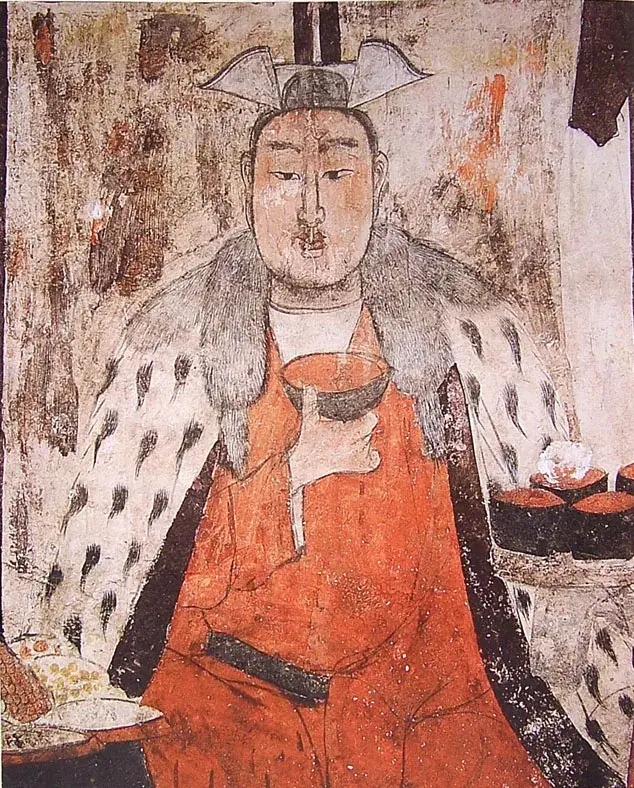
尔朱世隆
Erzhu Shilong (尔朱世隆) (500–532), courtesy name Rongde, was a member of the Qihu tribal aristocracy from North Xiurong (modern Shuozhou and Xinzhou, Shanxi Province) and a younger cousin of the paramount warlord Erzhu Rong. Beginning his official career in the imperial palace guard, he served across the reigns of Emperor Xiaoming, Emperor Xiaozhuang, the Prince of Changguang, and Emperor Jiemin. He was deeply entangled in every…
Erzhu Shilong (尔朱世隆) (500–532), courtesy name Rongde, was a member of the Qihu tribal aristocracy from North Xiurong (modern Shuozhou and Xinzhou, Shanxi Province) and a younger cousin of the paramount warlord Erzhu Rong. Beginning his official career in the imperial palace guard, he served across the reigns of Emperor Xiaoming, Emperor Xiaozhuang, the Prince of Changguang, and Emperor Jiemin. He was deeply entangled in every phase of the Erzhu clan's ascent from northern frontier chieftains to ruthless arbiters of the Northern Wei central government. Following the Heyin Massacre of 528, Erzhu Shilong utilized clan power to rise rapidly through court ranks, occupying premier ministerial positions such as Attendant Gentleman of the Yellow Gate, Palace Attendant, General of the Army, and Left Vice Director of the Masters of Writing. In controlling bureaucratic appointments, he enforced the rigid and corrupt Seniority Rule (Tingniange), which blocked talented scholars and entrenched bureaucratic venality. In 529, when the Southern Liang commander Chen Qingzhi escorted Yuan Hao north, Erzhu Shilong commanded ten thousand cavalry at the strategic stronghold of Hulao. Terrified by the enemy advance, he fled without offering battle, causing the fall of Luoyang and the capture and execution of two of his younger brothers. After Emperor Xiaozhuang assassinated Erzhu Rong in 530, Erzhu Shilong retreated northward, stormed Beizhongcheng, sacked Jianzhou with immense civilian slaughter, and joined forces with Erzhu Zhao to elevate Yuan Ye as a rival sovereign. Fearing political interference, he subsequently arranged the assassination of Yuan Ye's mother Lady Wei in broad daylight, deposed Yuan Ye, and elevated Emperor Jiemin. He also orchestrated the judicial extermination of the eminent Yang clan of Hongnong and coerced court historians to tamper with dynastic archives. In 532, following the crushing defeat of the Erzhu coalition at the Battle of Hanling against Gao Huan, general Husi Chun staged a coup in Luoyang. Erzhu Shilong was seized outside the Changhe Gate and executed, with his severed head displayed in the marketplace and delivered to Gao Huan.
Born into a prominent Qihu tribal chieftain family in North Xiurong, entering palace guard service in his youth.
Dispatched by Empress Dowager Hu to dissuade Erzhu Rong from marching on Luoyang; returned to the capital and later fled to join Rong's invasion force.
Elevated to Attendant Gentleman of the Yellow Gate, Palace Attendant, and Right Vice Director of the Masters of Writing following the Heyin Massacre.
Commanded ten thousand cavalry at Hulao Pass but fled in panic upon Chen Qingzhi's approach, precipitating the fall of Luoyang and the slaughter of his brothers.
Promoted to Left Vice Director and granted control over civil appointments, introducing the corrupt Tingniange system.
Following Erzhu Rong's execution by Emperor Xiaozhuang, deceived by Heduo Sheng into fleeing Luoyang overnight and seizing the northern bridge fortress at Heqiao.
After imperial troops burned the pontoon bridge across the Yellow River, retreated north, besieged non-compliant Jianzhou, and butchered tens of thousands of inhabitants.
Reunited with Erzhu Zhao at Changzi, enthroned Yuan Ye, and assumed the titles Prince of Leping, Grand Tutor, and Prefect of the Masters of Writing.
Sent disguised soldiers to assassinate Empress Dowager Wei, replaced Yuan Ye with Emperor Jiemin, and systematically extirpated the prestigious Hongnong Yang clan.
Substituted the ancient Duke of Zhou temple to worship Erzhu Rong, and installed sycophantic historians who caused the permanent loss of two decades of imperial records.
Following the total collapse of the Erzhu coalition at Hanling, captured during Husi Chun's Luoyang coup and beheaded outside Changhe Gate.
Erzhu Shilong was born into the hereditary leadership of the Qihu tribal federation in North Xiurong, descending from the chieftain Erzhu Yujian and standing as a younger cousin to the warlord Erzhu Rong. His elder brothers included Erzhu Zhongyuan and Erzhu Yanbo. Leveraging his clan's military standing, Erzhu Shilong entered imperial service at Luoyang during the reign of Emperor Xiaoming, serving successively as General of the Direct Quarters, Attendant in Ordinary, General of the Direct Chambers, and General of the Front. These sensitive posts within the palace guard provided him with intimate knowledge of inner court intrigue and bureaucratic protocol.
In 528, as Erzhu Rong assembled formidable cavalry forces in Jinyang and repeatedly petitioned to enter the capital under the guise of an imperial audience, Empress Dowager Hu viewed his intentions with extreme dread. Determined to keep the warlord at bay, the empress dowager instructed Erzhu Shilong to travel to Jinyang and persuade his cousin to halt his advance. Upon arriving in Jinyang, Erzhu Rong sought to detain Shilong as a trusted deputy. Shilong astutely advised that staying in Jinyang would validate the court's suspicions, cause the central government to fortify mountain passes, and spoil future maneuvers. Persuaded by this logic, Rong permitted him to return to Luoyang as an intelligence operative. Shortly thereafter, on March 31, 528, Empress Dowager Hu and her confidants poisoned the nineteen-year-old Emperor Xiaoming and installed an infant figurehead.
The poisoning of the sovereign gave Erzhu Rong the moral justification he required. Proclaiming his intention to avenge Emperor Xiaoming, Rong launched a rapid march on Luoyang. Erzhu Shilong slipped out of the chaotic capital under cover of darkness, crossed the Yellow River, and joined Rong's forward encampment.
On May 17, 528, Erzhu Rong reached the northern banks of the Yellow River. He ordered Empress Dowager Hu and the infant sovereign drowned in the waters, while simultaneously assembling over two thousand princes, chancellors, and court ministers at Heyin under the pretext of an imperial covenant, before unleashing cavalry to slaughter them wholesale. Following this massacre, Rong installed Emperor Xiaozhuang and assumed dictatorial control over the northern empire. As a primary beneficiary of the massacre, Erzhu Shilong was elevated to Attendant Gentleman of the Yellow Gate, Palace Attendant, General of the Army, Left Guard General, and Right Vice Director of the Masters of Writing, receiving the noble title Founding Duke of Leping Commandery.
The terror inspired by Heyin triggered mass defections across regional commands. Regional inspectors Yuan Yuanda, Yuan Shijun, and Li Zhi surrendered three vital border provinces to Southern Liang, while prominent imperial princes including Yuan Yue and Yuan Hao fled south. The vacuum left by murdered ministers enabled Erzhu Shilong to plant familial retainers throughout the central bureaus, effectively monopolizing administrative edicts.
After arriving at the Southern Liang court in Jiankang, Prince of Beihai Yuan Hao persuaded Emperor Wu of Liang to furnish an army to restore him as northern emperor. In May 529, Liang general Chen Qingzhi launched his northern expedition with seven thousand elite troops, sweeping through Liang and Kaocheng. Northern Wei grand commanders Yuan Tianmu and Erzhu Zhao advanced south with tens of thousands of elite cavalry, but were decisively shattered by Chen Qingzhi outside Xingyang.
Prior to the battle, Yuan Tianmu had entrusted Erzhu Shilong with ten thousand heavy cavalry to defend Hulao Pass, the impregnable eastern gate to Luoyang. However, Shilong lacked military fortitude. Learning of the total collapse at Xingyang and the rapid approach of Chen Qingzhi's vanguard, Shilong was overcome by terror. Without releasing a single arrow, he abandoned Hulao Pass and fled westward through the night. His precipitous flight left the imperial capital entirely exposed, enabling Yuan Hao to occupy Luoyang unopposed and forcing Emperor Xiaozhuang to flee north across the Yellow River. In his frantic evacuation, Shilong neglected to alert his younger brothers Erzhu Shicheng and Erzhu Xi, who were captured in Xingyang and hacked to death by order of Yuan Hao.
In August 529, Erzhu Rong and Emperor Xiaozhuang mobilized forces in Shanxi and counterattacked, with Yang Kan and Erzhu Zhao staging a nocturnal river crossing that destroyed Yuan Hao's regime and restored Emperor Xiaozhuang. Rather than facing court-martial for abandoning Hulao Pass and causing the fall of the capital, Erzhu Shilong was shielded by clan nepotism and promoted to Senior General of Agile Cavalry and Left Vice Director of the Masters of Writing, with supreme oversight of personnel appointments.
Directing civil appointments, Shilong instituted the rigid and regressive Seniority Rule (Tingniange). Under this mechanic, promotions were governed strictly by the number of elapsed years since a candidate's previous official dismissal, disregarding ethical character, administrative competence, and proven achievement. This system slammed the door on talented scholars, allowing unqualified sycophants and illiterate tribal warriors to monopolize high office through seniority and heavy bribery. The traditional civil examination culture collapsed into rampant corruption, alienating the scholar-gentry across northern China.
Although Erzhu Rong resided in Jinyang, he manipulated court politics through familial agents in Luoyang and forced Emperor Xiaozhuang to take his daughter as empress. Having lost two elder brothers and numerous cousins in the Heyin Massacre, Xiaozhuang harbored profound bitterness toward the Erzhu clan. The young empress behaved with overbearing arrogance, abusing palace concubines and boasting that her father could dethrone the emperor at will.
The empress acted as an imperial spy, transmitting sensitive court intelligence to Erzhu Shilong in the Department of State Affairs. Emboldened by clan supremacy, Shilong openly boasted in private that if his elder brother took the throne, he would claim a princely title. In the autumn of 530, as rumors spread that Erzhu Rong intended to usurp the throne, Rong marched toward Luoyang with five thousand cavalry, causing widespread panic that drove scholars like Xing Shao into hiding. Suspecting that Emperor Xiaozhuang might retaliate, Shilong forged an anonymous letter claiming that the emperor and senior courtiers plotted Rong's assassination, pasting it upon his own gate before presenting it to Rong. However, the arrogant warlord tore the paper to shreds, spat on the ground, and mocked Shilong for cowardice, dismissing any possibility of resistance.
On November 1, 530, Emperor Xiaozhuang ambushed Erzhu Rong in the Mingguang Hall under the pretext of celebrating the birth of an imperial prince, personally striking down Rong with a sword while guards butchered Yuan Tianmu and Rong's heir Erzhu Bodhi. The citizens of Luoyang rejoiced openly in the streets. Terrified by the sudden strike, the surviving Erzhu partisans gathered at Rong's private residence. Commander Tian Yi urged Shilong to launch an immediate assault against the lightly defended palace. However, general Heduo Sheng, secretly plotting to preserve himself, deceitfully convinced Shilong that the emperor had set an ambush. Believing this ruse, Shilong abandoned the offensive and fled Luoyang through the Ximing Gate that night.
Emperor Xiaozhuang promptly ordered generals Xi Yi and Cui Yuan to occupy the northern fortress of Beizhongcheng to guard against a counterattack. Reaching Heyin in extreme panic, Shilong initially contemplated fleeing directly to his ancestral home in North Xiurong. His staff officer Sima Ziru sternly argued that retreating to the frontier would permanently destroy the clan's prestige and ruin any prospect of recovery. Swayed by this counsel, Shilong turned back and assaulted Beizhongcheng on November 2, capturing the bastion and slaying Xi Yi.
On November 6, Emperor Xiaozhuang appeared on the Daxia Gate to inspect defenses and dispatched envoys offering full amnesties to the Erzhu troops. Flushed with his victory at Beizhongcheng, Shilong rejected the overtures, vowing to avenge Erzhu Rong. The emperor then emptied the imperial treasury to recruit over ten thousand civilian volunteers. On the night of November 18, Auxiliary General Li Miao executed a daring fire attack, navigating small boats laden with combustible fuel and oil downstream under cover of darkness to ignite the pontoon bridges across the Yellow River.
As towering flames consumed the bridges, Shilong's cavalry panicked, fearing their retreat route would be severed. Thousands rushed onto the burning structures, causing the damaged pontoons to fracture and plunge thousands of mounted soldiers into the freezing torrents. Though Li Miao perished after fighting to exhaustion, the destruction of the river crossing shattered Shilong's nerve, forcing him to abandon his equipment and withdraw northward into the Shanxi hills.
Retreating through Jianzhou (modern Gaoping, Shanxi), Shilong sought entry to replenish supplies. Regional Inspector Lu Xizhi closed the gates and mounted a stubborn defense on behalf of the throne. Infuriated by this resistance, Shilong ordered a relentless siege. Upon breaching the walls, he unleashed his troops to slaughter the garrison and civilian population wholesale, murdering tens of thousands of innocent inhabitants and reducing the administrative center to ashes. The contemporary literatus Wen Zisheng recorded that the cries of suffering from the Jianzhou massacre pierced the high heavens and wounded fundamental human conscience.
Moving on to Gaodu, Shilong linked up with Erzhu Zhao's northern cavalry at Changzi. In open rebellion against Luoyang, they proclaimed Yuan Ye, Prince of Changguang, as rival emperor under the reign title Jianming. The puppet court distributed grand honors: Shilong claimed the titles Prince of Leping, Grand Tutor, Prefect of the Masters of Writing, and Shepherd of Sizhou, while Erzhu Zhao became Prince of Yingchuan and Grand General. In December 530, Erzhu Zhao stormed across the frozen Yellow River, captured Luoyang, and dragged Emperor Xiaozhuang to Jinyang, where he strangled him in Yongning Temple. Arrogant from his military triumph, Zhao publicly drew his sword and berated Shilong for failing to protect Erzhu Rong. Shilong bowed in humble apology to preserve his life, but harbored bitter animosity toward his nephew.
After sacking the capital treasury, Erzhu Zhao returned to Jinyang, leaving Shilong and Erzhu Dulu to control central administration in Luoyang. Fearing that Emperor Yuan Ye's mother, Lady Wei, might interfere with his authority, Shilong dispatched cavalry disguised as bandits to attack her imperial carriage on a bustling Luoyang street, murdering the empress dowager in broad daylight. He then cynically posted official rewards offering bounties for the perpetrators, an act that disgusted both court and populace.
In March 531, seeking to diminish Erzhu Zhao's regional dominance, Shilong conspired with Erzhu Yanbo, Erzhu Zhongyuan, Erzhu Tianguang, and Erzhu Dulu to dethrone Yuan Ye without consulting Zhao, replacing him with Yuan Gong, Prince of Guangling (known posthumously as Emperor Jiemin). Erzhu Zhao was enraged by this unilateral maneuver and threatened war, only relenting after extensive mediation by Yanbo.
Emperor Jiemin had spent eight years feigning muteness at Longhua Temple to escape political persecution under Yuan Cha. Shilong assumed the new sovereign would be a pliant puppet, but Jiemin proved remarkably defiant upon ascension. When Shilong instructed the literatus Xing Shao to draft an imperial edict defaming Emperor Xiaozhuang and vindicating Erzhu Rong, Jiemin publicly refused, declaring that Xiaozhuang had acted justly in slaying a treacherous rebel and mocking Rong for stealing credit from his subordinates. Terrified by the emperor's outspoken moral authority, Shilong avoided personal court audiences from that day forward.
To project dynastic prestige, Shilong posthumously elevated Erzhu Rong as Chancellor of State and Prince of Jin. Claiming that Rong's achievements matched those of the Duke of Zhou, he confiscated the ancient Duke of Zhou temple on Mount Shouyang and repurposed it as an ancestral shrine for Erzhu Rong. Shortly after completion, the shrine was struck by a mysterious fire that reduced it to ashes, and three days later a torrential storm shattered its sole surviving stone pillar with lightning. Commentator Hu Sanxing later observed that this reflected heaven's revulsion toward the Erzhu clan rather than ancestral jealousy. Shilong also forced Rong's tablet into the imperial temple of Emperor Xiaowen, overriding the courageous ritual protests of court officer Liu Jiming.
In his personal conduct, Shilong exhibited unrestrained lawlessness. Infatuated with the beauty of Princess Shouyang, an imperial daughter of the Northern Wei house, he attempted to violate her. The princess cursed him fiercely as a barbarian cur unworthy of defiling an imperial daughter, whereupon Shilong murdered her inside his mansion, provoking profound horror across the imperial clan. Furthermore, Shilong appointed obsequious figures Shan Wei and Qi Jun to supervise the compilation of imperial records. Under their chaotic tenure, court annals were manipulated to obscure Erzhu atrocities, and crucial archival documentation spanning more than two decades from Emperor Xuanwu to Emperor Xiaozhuang was destroyed, resulting in an irreparable loss for dynastic historiography. When the astronomer Shenghua correctly interpreted a solar eclipse as an omen of ministerial misrule, Shilong promptly had him imprisoned by the judiciary.
In August 531, Shilong resolved to purge the prestigious aristocratic lineages whose moral authority threatened his rule, fabricating treason charges against the Hongnong Yang lineage. The Yang family had maintained exemplary Confucian decorum across generations, with patriarchs Yang Bo, Yang Chun, and Yang Jin holding supreme ministerial and regional posts. Overriding the strenuous objections of Emperor Jiemin, Shilong and Erzhu Tianguang dispatched troops to surround the Yang estates, butchering hundreds of relatives regardless of age. When soldiers seized nine-year-old Yang Xuanjiu, the boy clung to their arms pleading to be executed before his uncles; the soldiers severed his limbs before stabbing him to death.
Concurrently, Erzhu Zhongyuan dispatched assassins to Guang Prefecture to strangle Regional Inspector Yang Yi, an incorruptible administrator who had saved tens of thousands during famine and was universally beloved by local residents. Surviving kin Yang Xiaoyong infiltrated Luoyang to organize a counter-coup in coordination with Gao Huan, but was betrayed and tortured to death by Shilong. The wholesale slaughter of this venerable clan convinced the northern scholar-gentry that the Erzhu regime was beyond redemption.
In July 531, Regional Inspector Gao Huan raised the banner of righteous rebellion at Xindu, issuing a devastating manifesto indicting the Erzhu family for regicide, mass murder, and extortion. Shilong concealed the document from the court. In the autumn, an Erzhu coalition of one hundred thousand troops advanced toward Guang'a. Gao Huan sowed distrust among the Erzhu commanders through circulating rumors. Erzhu Zhao drew his whip and threatened Heduo Sheng and Husi Chun during military councils, causing the allied factions to disband in mutual suspicion and allowing Gao Huan to score an effortless victory.
In the spring of 532, as Gao Huan captured the strategic center of Ye, Shilong urged Husi Chun to patch together a final coalition. Erzhu Tianguang marched from Guanzhong, Erzhu Zhao from Jinyang, Erzhu Dulu from Luoyang, and Erzhu Zhongyuan from Huatai, assembling a combined force of two hundred thousand troops outside Ye. However, in Chang'an, general Heduo Yue acted on Yuwen Tai's counsel to capture the city and sever Tianguang's rear retreat route. On May 18, 532, Gao Huan deployed fewer than thirty thousand troops and two thousand horses in a circular defensive array on Hanling Mountain, tethering cattle and donkeys to block his own retreat and inspire suicidal courage.
During the engagement, the Erzhu alliance dissolved into internal sabotage. Jealous of Zhao's potential glory, Erzhu Dulu refused to commit his divisions, while Heduo Sheng defected to Gao Huan on the field. Gao Huan's cavalry smashed through the fragmented enemy lines, completely routing the two hundred thousand coalition troops. Erzhu Zhao fled alone to Shanxi, while Tianguang and Dulu retreated in disgrace toward Luoyang.
News of the catastrophe at Hanling plunged Luoyang into pandemonium. Aware that the Erzhu hegemony had disintegrated, Palace Attendant Husi Chun resolved to purge the warlord clan to save himself, aligning with veteran commanders Changsun Zhi and Jia Zhi to stage a palace coup. Guard regiments secured the city gates and launched simultaneous raids against Erzhu quarters.
Caught completely off guard in the Department of State Affairs, Erzhu Shilong was bound in ropes before he could assemble a defensive retinue. Husi Chun dragged Shilong and his elder brother Erzhu Yanbo outside the Changhe Gate of the imperial palace. Before an assembly of officials and citizens, Husi Chun read aloud an indictment detailing Shilong's crimes of regicide, civil corruption, the slaughter of the Yang clan, and the butchery of Jianzhou, before summarily decapitating both brothers. Erzhu Dulu and Erzhu Tianguang were captured shortly thereafter and forwarded to Ye for execution. Erzhu Shilong's severed head was secured in a wooden casket, dispatched to Gao Huan's forward encampment, and suspended in the marketplace, bringing a violent end to the Erzhu clan's tyrannical reign over the central plains.
Following the Heyin Massacre, Erzhu Shilong gained control over the Department of State Affairs and the Board of Civil Office, systematically implementing the rigid Seniority Rule (Tingniange). This policy abandoned the Han and Wei traditions of evaluating moral integrity and practical governance, substituting the passive duration of unemployment as the sole criterion for official promotions. The enforcement of Tingniange entrenched incompetence, fostered widespread bribery, and blocked high-minded scholars from administrative channels, accelerating the institutional decay of the late Northern Wei state.
Simultaneously, Shilong used this mechanism to pack central and regional posts with illiterate Qihu tribal warriors, displacing educated civil servants and destroying bureaucratic cohesion. Prominent aristocratic candidates from Shandong families such as the Cui, Lu, Zheng, and Wang lineages found themselves frozen out of office for decades, while illiterate Erzhu sycophants were elevated to regional inspectorships. This structural disruption alienated the civil elite and created deep societal momentum that favored Gao Huan's subsequent uprising.
In 529, when Southern Liang general Chen Qingzhi launched his northern expedition, Erzhu Shilong commanded ten thousand veteran cavalry at the naturally fortified gateway of Hulao Pass. Paralyzed by cowardice, he abandoned the pass without engaging the enemy, leaving the imperial capital defenseless and forcing Emperor Xiaozhuang into humiliating exile. In his desperate flight, he failed to alert his younger brothers Erzhu Shicheng and Erzhu Xi at nearby Xingyang, abandoning them to be captured and executed by Yuan Hao, illustrating his total deficiency in military leadership and familial loyalty.
The loss of Hulao demonstrated that despite holding supreme military rank and numerical advantages, Erzhu Shilong possessed neither the courage nor tactical capacity to conduct field operations. His surrender of the empire's primary strategic bastion directly caused the collapse of central authority in Luoyang, exposing the parasitic and predatory nature of the Erzhu military leadership.
During his northward retreat following Emperor Xiaozhuang's assassination of Erzhu Rong in 530, Erzhu Shilong was denied entry by Regional Inspector Lu Xizhi at Jianzhou. Out of wounded arrogance, Shilong besieged and captured the city, ordering a comprehensive slaughter of the civilian population. According to official geographic treatises, Jianzhou contained tens of thousands of registered inhabitants, virtually all of whom were put to the sword. Contemporary accounts documented this atrocity as causing immense popular grief that reached the heavens, permanently destroying any lingering popular sympathy for the Erzhu cause.
The wanton destruction of Jianzhou went far beyond tactical necessity, reflecting an undisciplined barbarity that alienated northern regional populations. By butchering innocent subjects in an interior province, Shilong confirmed that the Erzhu clan operated not as legitimate dynastic stewards, but as predatory conquerors whose removal was essential for societal survival.
Throughout the Yong'an and Putai eras, Erzhu Shilong treated imperial sovereignty as private property, arranging the brazen street murder of Empress Dowager Wei and the arbitrary dethronement of Yuan Ye in favor of Emperor Jiemin. To cement his tyrannical control, he orchestrated the total extirpation of the Hongnong Yang lineage, slaying hundreds of venerable statesmen and innocent children such as nine-year-old Yang Xuanjiu, while murdering the righteous provincial governor Yang Yi in Guang Prefecture. This violent purge permanently severed relations between the central militarists and the northern Confucian elite.
The destruction of the Yang family sent shockwaves through aristocratic society, demonstrating that ancestral status and moral rectitude offered zero protection against military despotism. Rather than cowing the literati into submission, Shilong's bloodbath unified the regional elites behind alternative leaders, accelerating the total downfall of the Erzhu coalition at Hanling.
In controlling administrative affairs, Erzhu Shilong systematically intervened in state historiography to expunge records of his clan's misdeeds. He sidelined upright scribes in favor of sycophants Shan Wei and Qi Jun, who distorted court diaries and allowed historical archives covering more than two decades from Emperor Xuanwu to Emperor Xiaozhuang to disintegrate. This intellectual vandalism severely impaired subsequent generations' understanding of Northern Wei institutions.
Furthermore, Shilong suppressed intellectual and scientific dissent, imprisoning the astrologer Shenghua for objectively forecasting political instability through celestial observations. His appropriation and subsequent destruction of the Duke of Zhou temple symbolized his complete contempt for cultural tradition, cementing his historical reputation as an agent of profound cultural and institutional catastrophe.
FIGURES ASSOCIATED WITH THIS DYNASTY