Born in Yuyao
Born into a scholarly family in Yuyao County, Shaoxing Prefecture, Zhejiang.
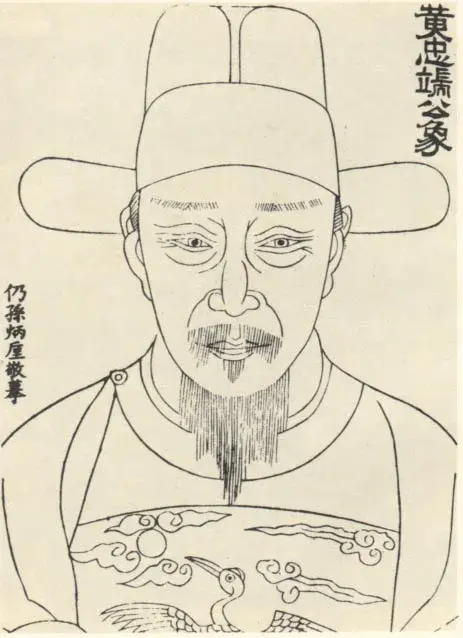
黄尊素
Huang Zunsu (黄尊素, 1584–1626), courtesy name Zhenchang and art name Bai'an, was a native of Yuyao County in Shaoxing Prefecture, Zhejiang, a core leader of the late Ming Donglin movement, one of the "Later Seven Gentlemen of Donglin," and the father of the renowned philosopher and historian Huang Zongxi. After passing the metropolitan examination as a Palace Graduate in 1616, he served as Prefectural Judge of Ningguo…
Huang Zunsu (黄尊素, 1584–1626), courtesy name Zhenchang and art name Bai'an, was a native of Yuyao County in Shaoxing Prefecture, Zhejiang, a core leader of the late Ming Donglin movement, one of the "Later Seven Gentlemen of Donglin," and the father of the renowned philosopher and historian Huang Zongxi. After passing the metropolitan examination as a Palace Graduate in 1616, he served as Prefectural Judge of Ningguo Prefecture, where he gained renown for incorruptible and impartial administration of justice. Promoted in 1622 to Investigating Censor of the Shandong Circuit, he submitted numerous memorials on frontier defense and actively supported upright Donglin statesmen such as Zhao Nanxing, Gao Panlong, Yang Lian, and Zuo Guangdou, earning recognition as the "strategist" of the Donglin faction for his foresight. In 1624, after Yang Lian impeached the eunuch dictator Wei Zhongxian for twenty-four great crimes, Huang Zunsu submitted memorials condemning the joint abuses of Wei Zhongxian and the imperial wet nurse Madame Ke, while advising his Donglin colleagues to exercise strategic caution. That winter, after protesting the beating to death of Wan Jing and defending the appointment of the Governor of Shanxi, he was stripped of his official status by a forged edict of Wei Zhongxian. In 1626, framed in a blank-seal memorial submitted by the Suzhou Weaving Commissioner eunuch Li Shi, Huang Zunsu surrendered himself to avoid implicating his fellow townspeople, was imprisoned in the Northern Imperial Prison in Beijing, and was tortured to death by Xu Xianchun on the first day of the intercalary sixth month at the age of forty-three. Rehabilitated at the beginning of the Chongzhen reign, he was posthumously promoted to Minister of the Court of the Imperial Stud and granted the posthumous name Zhongduan under the Southern Ming Hongguang court.
Born into a scholarly family in Yuyao County, Shaoxing Prefecture, Zhejiang.
His eldest son Huang Zongxi was born; Huang Zunsu personally guided his sons in classical scholarship and statecraft.
Passed the metropolitan examination as a Palace Graduate and was appointed Prefectural Judge of Ningguo Prefecture, redressing judicial grievances.
Selected as Investigating Censor of the Shandong Circuit in Beijing, submitting memorials on Liaodong defense and court appointments.
Supported Yang Lian's impeachment of Wei Zhongxian and protested the fatal beating of Wan Jing, resulting in his removal from the official register in the tenth month.
Framed by eunuch Li Shi, surrendered to authorities, and died under torture in the Northern Imperial Prison on the first day of the intercalary sixth month at age forty-three.
Rehabilitated by the Chongzhen Emperor and posthumously promoted to Minister of the Court of the Imperial Stud, later receiving the posthumous name Zhongduan.
Huang Zunsu was born in 1584 in Huangzhupu, Yuyao County, Shaoxing Prefecture, Zhejiang. Gifted from childhood, he mastered the Confucian classics and dynastic histories while paying close attention to state institutions and administrative affairs. His eldest son Huang Zongxi was born in 1610; Huang Zunsu entered the Shaoxing Prefectural School in 1611, passed the Zhejiang provincial examination in 1612, and earned his Palace Graduate degree in 1616, receiving appointment as Prefectural Judge of Ningguo Prefecture (modern Xuancheng, Anhui).
As Prefectural Judge of Ningguo, Huang Zunsu oversaw criminal and civil litigation across the prefecture with strict impartiality, refusing all private entreaties from local magnates. Addressing lingering abuses from the late Wanli mining and commercial tax commissioners, he cleared backlogged dockets, overturned wrongful convictions of commoners, and promoted classical education in Xuancheng and Jingxian, earning a reputation as the foremost incorruptible official in the Jiangnan region.
In 1622, Huang Zunsu was summoned to Beijing and promoted to Investigating Censor of the Shandong Circuit. Following the fall of Guangning in Liaodong, panic gripped the capital as court factions clashed over the culpability of Supreme Commander Xiong Tingbi and Governor Wang Huazhen. Huang submitted a memorial arguing that while frontier accountability must be upheld, the court's urgent priority was to appoint capable commanders to fortify Shanhaiguan rather than allowing partisan vendettas to undermine border defenses.
At court, Grand Secretaries Ye Xianggao and Han Kuang presided over the cabinet while Minister of Personnel Zhao Nanxing, Censor-in-Chief Gao Panlong, Yang Lian, Zuo Guangdou, and Wei Dazhong sought to purge corrupt officials and eunuch partisans. Sharing their reformist ideals, Huang Zunsu stood out for his strategic foresight. He repeatedly cautioned Zhao Nanxing and Wei Dazhong that in struggling against petty men, upright officials must not drive their opponents into desperate corners lest those factions ally with palace eunuchs to destroy the court from within. Contemporaries consequently praised him as the "strategist" (zhinang) of the Donglin movement.
In the second month of 1624, an earthquake struck Beijing, shaking the Palace of Heavenly Purity. Seizing the occasion of the portent, Huang Zunsu submitted a direct memorial warning against three grave dangers: the continued presence of the emperor's wet nurse Madame Ke inside the inner palace, Wei Zhongxian's armed military drills by palace eunuchs, and the frequent issuance of direct palace edicts bypassing the Grand Secretariat. Enraged, Wei Zhongxian sought to punish him severely, though Chief Grand Secretary Ye Xianggao intervened to limit the penalty to a one-year forfeiture of salary.
In the sixth month of 1624, Left Vice Censor-in-Chief Yang Lian impeached Wei Zhongxian for twenty-four great crimes. When Ministry of Works Bureau Director Wan Jing submitted a follow-up memorial and was beaten to death by palace eunuchs at court, Huang Zunsu submitted an indignant protest warning that executing remonstrating officials by court bastinado was an omen of dynastic ruin. Soon afterward, when eunuch-faction censor Chen Jiuchou attacked Minister of Personnel Zhao Nanxing over the nomination of Xie Yingxiang as Governor of Shanxi, Huang Zunsu defended Zhao Nanxing and exposed Chen's collusion with the inner court. In the tenth month of 1624, Wei Zhongxian issued a forged edict stripping Huang Zunsu of his official status, forcing his return to Yuyao.
After returning home, Huang Zunsu devoted himself to writing, but Wei Zhongxian's clique continued its purge. In 1625, the "Six Gentlemen of Donglin"—including Yang Lian, Zuo Guangdou, and Wei Dazhong—were tortured to death in prison. In the spring of 1626, Wei Zhongxian's henchmen used a blank-seal memorial from Suzhou Weaving Commissioner Li Shi to fabricate corruption charges against Gao Panlong, Zhou Shunchang, Zhou Qiyuan, Miao Changqi, Li Yingsheng, Zhou Zongjian, and Huang Zunsu—known collectively as the "Later Seven Gentlemen of Donglin"—and dispatched Embroidered Uniform Guard officers south to arrest them.
When the guards arrived in Suzhou to arrest Zhou Shunchang, a popular uprising broke out, and the officers sent to arrest Huang Zunsu lost their warrant when townspeople intervened. Learning of the warrant and fearing that resistance would bring slaughter upon his fellow villagers in Yuyao, Huang Zunsu voluntarily put on prisoner's clothes and traveled to Hangzhou to surrender himself. Before departing, he summoned his seventeen-year-old son Huang Zongxi, instructing him to study under the philosopher Liu Zongzhou and master Ming institutional history.
Escorted to Beijing and confined in the Northern Imperial Prison, Huang Zunsu was subjected to brutal torture by the judge Xu Xianchun every five days under a fabricated restitution demand of 2,800 taels of silver. On the first day of the intercalary sixth month of 1626, informed by jailers that Wei Zhongxian had ordered his execution that night, Huang calmly bowed toward the palace, composed a final farewell poem expressing his undying loyalty, and was murdered in his cell at the age of forty-three. When the Chongzhen Emperor rehabilitated the victims in 1628, Huang Zongxi traveled to Beijing with an iron awl hidden in his sleeve to confront and stab Xu Xianchun during the trial; the court posthumously promoted Huang Zunsu to Minister of the Court of the Imperial Stud, and the Southern Ming court conferred upon him the posthumous name Zhongduan.
Between 1623 and 1624, as tensions escalated between Donglin reformers and remnants of the Qi, Chu, and Zhe factions over personnel evaluations, Huang Zunsu recognized that Wei Zhongxian was waiting to exploit divisions among outer-court officials. He urged Chief Supervising Secretary Wei Dazhong and his colleagues to distinguish between principal culprits and ordinary officials so as to unite the outer court against palace eunuchs. When Grand Secretary Wei Guangwei grew resentful over Donglin slights and began leaning toward his namesake Wei Zhongxian, Huang warned his peers not to drive the son of the upright minister Wei Yunzhen into the arms of the eunuch clique—a warning vindicated when Wei Guangwei's alliance with Wei Zhongxian proved fatal to the Donglin leadership.
Following the Beijing earthquake in the spring of 1624, Huang Zunsu submitted a lengthy memorial condemning the continued presence of Madame Ke in the palace, Wei Zhongxian's armed eunuch drills, and the abuse of direct palace edicts bypassing the Grand Secretariat. When the eunuch-aligned censor Fu Kui impeached Central Secretariat Drafter Wang Wenyan as a pretext to implicate Yang Lian and Zuo Guangdou, Huang Zunsu immediately perceived the plot and worked with Grand Secretaries Ye Xianggao and Han Kuang to contain the judicial investigation and forestall a wider purge during the spring and summer of 1624.
Throughout his career in Ningguo and Beijing, Huang Zunsu combined Neo-Confucian moral cultivation with practical statecraft and historical scholarship. Before surrendering to the imperial guards in 1626, knowing he would not return alive, he entrusted his library and manuscripts to his eldest son Huang Zongxi, commanding him to study under the philosopher Liu Zongzhou and to master Ming institutional history and the Veritable Records. His martyr's integrity and scholarly charge directly shaped Huang Zongxi's intellectual trajectory and laid the family foundation for the Eastern Zhejiang School of historiography.
FIGURES ASSOCIATED WITH THIS DYNASTY