Military Campaigns Against Liao
Accompanied Emperor Taizu on active campaign in Liaodong, distinguishing himself through battlefield courage.
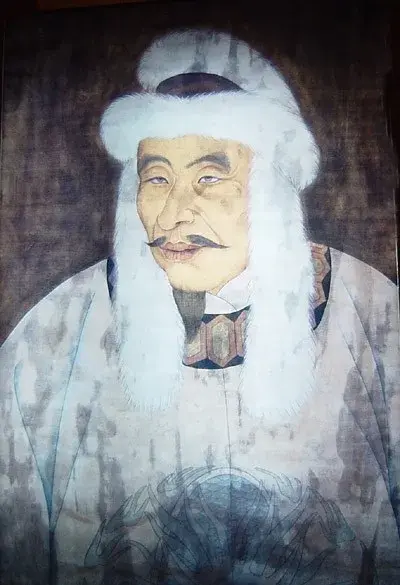
完颜宗敏
Wanyan Zongmin (完颜宗敏, d. 1150), known by his Jurchen native name Alubu, was an imperial prince, frontline military commander, and supreme guard commander of the Jurchen Jin dynasty. As a younger son of Jin founding Emperor Taizu (Wanyan Aguda), he fought valiantly throughout the campaigns that extinguished the Liao dynasty, earning renown for martial prowess, horsemanship, and strategic resolve. During the early reign of…
Wanyan Zongmin (完颜宗敏, d. 1150), known by his Jurchen native name Alubu, was an imperial prince, frontline military commander, and supreme guard commander of the Jurchen Jin dynasty. As a younger son of Jin founding Emperor Taizu (Wanyan Aguda), he fought valiantly throughout the campaigns that extinguished the Liao dynasty, earning renown for martial prowess, horsemanship, and strategic resolve. During the early reign of Emperor Xizong, Zongmin served as Senior General of the Left Guard before being dispatched as Capital Viceroy of the Central Capital (Dating Prefecture), subsequently co-directing the Imperial Clan Court as Prince of Xing. Recalled to the central administration, he served as Vice Commissioner of the Bureau of Military Affairs, Chief Palace Inspector, and was ennobled as Prince of Cao State, commanding the innermost imperial bodyguard detachments and enjoying towering moral and lineage authority within the Jurchen aristocracy. In Emperor Xizong's late reign, as the monarch descended into drunken paranoia and executed senior ministers, Zongmin expressed deep patriotic concern to Prince of Hailing Wanyan Liang. Harboring treasonous ambitions to seize the throne, Wanyan Liang regarded Zongmin's status as Taizu's surviving son and his commanding prestige over the imperial guards as the foremost obstacle to his planned usurpation. On the night of January 9, 1150, immediately after murdering Emperor Xizong in his bedchamber, Wanyan Liang summoned Zongmin into the palace and had him brutally assassinated by partisan Pusan Hutu. Following Emperor Shizong's accession in 1261, Zongmin was fully exonerated and posthumously honored with the rank of Grand Preceptor and the title Prince Gongxian.
Accompanied Emperor Taizu on active campaign in Liaodong, distinguishing himself through battlefield courage.
Appointed Senior General of the Left Guard, organizing metropolitan imperial defense forces.
Stationed as Capital Viceroy of Central Capital (Dating Prefecture); named Co-Director of the Imperial Clan Court and Prince of Xing.
Recalled to the capital as Vice Commissioner of Military Affairs and Chief Palace Inspector; elevated to Prince of Cao State.
Anxiously expressed concern to Wanyan Liang regarding Emperor Xizong's erratic executions, drawing Liang's suspicion.
Following Xizong's murder, lured into the palace and slain by Wanyan Liang's conspirators in the throne hall.
Posthumously created Grand Preceptor by Wanyan Liang to quell widespread indignation among the Jurchen elite.
Emperor Shizong fully restored his official titles and princely status, conferring the posthumous title Prince Gongxian.
Wanyan Zongmin was a younger son of Wanyan Aguda, the founding Emperor Taizu of the Jin dynasty, bearing the Jurchen native name Alubu. Naturally resolute, endowed with physical strength, and skilled in archery and equestrian combat, he took part in Emperor Taizu's sweeping campaigns across northern China that culminated in the fall of the Liao dynasty.
At the beginning of the Tianjuan era under Emperor Xizong, Zongmin was commissioned as Senior General of the Left Guard, assuming responsibility for palace sentries and metropolitan garrisons. In 1141, the court appointed him Capital Viceroy of the Central Capital at Dating Prefecture, entrusting him with northern civil and frontier defense. Shortly thereafter, he was appointed Co-Director of the Imperial Clan Court to govern imperial lineage records and ennobled as Prince of Xing.
Subsequently recalled to the central court, Zongmin was named Vice Commissioner of the Bureau of Military Affairs and advanced to Chief Palace Inspector, while being elevated to Prince of Cao State. In this capacity, Zongmin exercised direct authority over the innermost bodyguard corps and imperial perimeter gates, commanding immense deference across the Jurchen royal house.
During Emperor Xizong's late reign, domestic grief following the untimely death of his crown prince combined with heavy alcohol abuse led the emperor into severe cruelty. Xizong executed high-ranking founding generals, chancellors, and close imperial relatives without trial, plunging the court into terror.
Deeply troubled by this crisis, Zongmin sought out Wanyan Liang, then serving as Right Grand Councilor, and remarked in private: "His Majesty takes pleasure in slaughtering his ministers, while the affairs of state hang in the balance; how can the dynastic house endure such peril?"
Zongmin's observation was voiced entirely out of concern for the imperial family, with no attendants present. However, the treacherous Wanyan Liang immediately seized upon this utterance, seeking to frame Zongmin for treasonous denunciation of the sovereign. Finding no corroborating witnesses to make the accusation stick, Liang bided his time, recognizing that Zongmin's royal lineage and direct command over the palace guards represented the single greatest obstacle to his own planned coup.
On the night of January 9, 1150, Wanyan Liang, in league with palace bodyguards Da Xingguo, Chancellor Wanyan Bingde, and general Tushan Alichuhu, broke into Emperor Xizong's private chamber and assassinated the sleeping monarch.
Following the regicide, Wanyan Liang issued false imperial commands to summon senior princes. To lure Zongmin into the palace without exciting suspicion, Liang dispatched Prince of Ge Wanyan Xiu (the future Emperor Shizong, Zongmin's nephew) to summon his uncle. Apprehensive at a midnight summons, Zongmin hesitated. Unaware that Emperor Xizong was already dead, Wanyan Xiu urged: "If my uncle does not proceed tonight, how will you face the new authorities at dawn?"
Reassured, Zongmin entered the palace. The moment he stepped into the throne hall, Wanyan Liang signaled his retainers to execute him. Hesitating briefly, Liang consulted his inner circle. Conspirator Tangkuo Wudai urged: "Zongmin is the biological son of Emperor Taizu! If we do not slay him tonight, the assembled ministers and soldiers will rebel tomorrow; we must exterminate him without delay!"
Wanyan Liang gave the signal, and assassin Pusan Hutu lunged forward with a broadsword. Unarmed and caught by surprise, Zongmin fought desperately with bare hands to evade the blows, but was slashed repeatedly and succumbed in a pool of blood upon the hall steps.
Witnessing the brutal slaughter, Prince of Ge Wanyan Xiu cried out in grief: "What crime did the Prince of Cao commit to merit death?!" Tangkuo Wudai replied sneeringly: "We have accomplished the heaven-approved deed of slaying the Son of Heaven; this prince is but a petty flea, unworthy of mention!"
Following his usurpation, Wanyan Liang sought to appease the outraged Jurchen nobility by conferring upon Zongmin the posthumous rank of Grand Preceptor in 1151.
In 1161, Wanyan Xiu assumed the imperial throne as Emperor Shizong. Shizong eradicated Wanyan Liang's faction and issued a decree fully exonerating his heroic uncle Wanyan Zongmin, restoring his princely honors, awarding him the posthumous title Prince Gongxian, and enshrining his spirit tablet alongside Emperor Taizu.
Fought alongside Emperor Taizu during the conquests of the Liao dynasty, distinguishing himself as a courageous and loyal prince of the founding generation.
Administered the Central Capital at Dating Prefecture and directed the Imperial Clan Court, culminating in his command of the imperial bodyguards as Chief Palace Inspector.
Maintained unswerving loyalty to the dynastic house during Emperor Xizong's reign, refusing to participate in factional conspiracies and dying bravely at the hands of usurpers.
FIGURES ASSOCIATED WITH THIS DYNASTY