Marriage into Qin
Born into the royal Mi clan of Chu; entered Qin to marry Lord Anguo Ying Zhu, becoming his favorite consort.
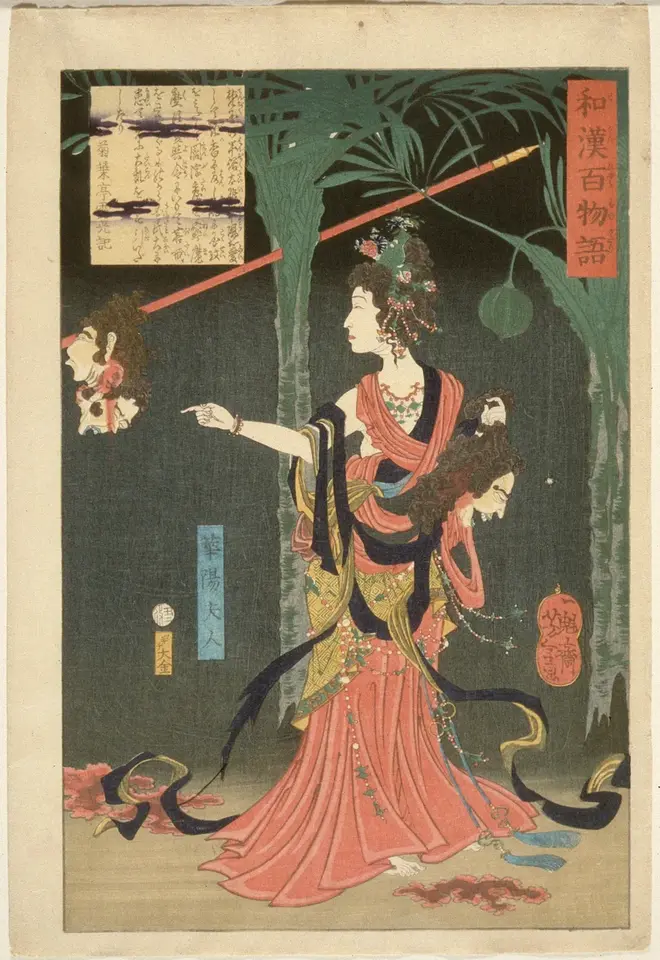
华阳夫人
Lady Huayang (华阳夫人, ?–230 BCE), surnamed Mi of the royal Xiong lineage of Chu, was an eminent political figure of the late Warring States period, the Queen consort of King Xiaowen of Qin (Lord Anguo), the adoptive mother of King Zhuangxiang (Zichu), and the paternal grandmother of Qin Shi Huang (Ying Zheng). Born into an aristocratic branch of the Chu royal house, she was a grand-niece of Queen Dowager Xuan and the…
Lady Huayang (华阳夫人, ?–230 BCE), surnamed Mi of the royal Xiong lineage of Chu, was an eminent political figure of the late Warring States period, the Queen consort of King Xiaowen of Qin (Lord Anguo), the adoptive mother of King Zhuangxiang (Zichu), and the paternal grandmother of Qin Shi Huang (Ying Zheng). Born into an aristocratic branch of the Chu royal house, she was a grand-niece of Queen Dowager Xuan and the granddaughter of Lord Huayang Mi Rong. During the late reign of King Zhaoxiang of Qin, when his second son Lord Anguo was named crown prince, Lady Huayang enjoyed his supreme affection and was elevated to principal consort; however, she bore no sons. When the merchant Lü Buwei met the impoverished Qin prince Yiren residing as an abandoned hostage in Handan, Zhao, he recognized the prince as a rare commodity worth hoarding. Journeying to Xianyang with lavish treasures, Lü Buwei approached Lady Huayang's elder sister, warning that those who serve through beauty find affection waning as beauty fades, and urging the childless consort to secure an adopted heir to guarantee lifelong security. Lady Huayang discerned the volatile nature of court succession, skillfully persuading Lord Anguo to adopt Yiren as his legitimate heir, carving a jade tally to ratify the pact and renaming the prince Zichu (Son of Chu) to bind him to the Chu faction. In 251 BCE, Lord Anguo ascended the throne as King Xiaowen; Lady Huayang was installed as Queen, Zichu became crown prince, and the state of Zhao escorted Zichu's wife Lady Zhao and young son Ying Zheng back to Qin. When King Xiaowen died abruptly after completing the mourning rites, Zichu ascended as King Zhuangxiang, honoring her as Queen Dowager Huayang. Surviving through the reigns of Zhaoxiang, Xiaowen, Zhuangxiang, and Qin Shi Huang, Queen Dowager Huayang led the influential Chu consort faction at court, exerting a stabilizing influence over palace politics. She passed away in 230 BCE and was interred alongside King Xiaowen in the Shouling Mausoleum.
Born into the royal Mi clan of Chu; entered Qin to marry Lord Anguo Ying Zhu, becoming his favorite consort.
Following Crown Prince Dao's death, Lord Anguo became crown prince; Lady Huayang was installed as primary consort but bore no children.
Heeded Lü Buwei's advice to adopt Prince Yiren as her legitimate heir, renaming him Zichu and sealing the covenant with a carved jade tally.
King Zhaoxiang passed away; Lord Anguo became King Xiaowen and Lady Huayang was crowned Queen of Qin, with Zichu installed as crown prince.
King Xiaowen died after a brief reign; Zichu ascended as King Zhuangxiang, honoring her with the title Queen Dowager Huayang.
King Zhuangxiang died; thirteen-year-old Ying Zheng mounted the throne, with Queen Dowager Huayang leading the Chu faction as royal grandmother.
Passed away peacefully in Xianyang; interred alongside King Xiaowen in the Shouling Mausoleum under imperial rites.
Lady Huayang belonged to the royal Mi clan and Xiong lineage of the State of Chu. Following the reign of Queen Dowager Xuan (Consort Mi) during King Huiwen and King Zhaoxiang's eras, an entrenched Chu consort faction had established deep roots within the Qin royal administration. Lady Huayang's grandfather, Lord Huayang Mi Rong, was the uterine younger brother of Queen Dowager Xuan, having governed Qin as a senior councilor with a fief at Huayang. Inheriting this political legacy, Lady Huayang was trained from youth in court protocol and interstate diplomacy. Royal marriages between Qin and Chu served as diplomatic alliances and instruments for maintaining internal court stability.
In 267 BCE, Crown Prince Dao of Qin died while residing as a hostage in Wei. Two years later (265 BCE), King Zhaoxiang designated his second son, Lord Anguo Ying Zhu, as heir apparent. Among Lord Anguo's numerous consorts, Lady Huayang was celebrated for her beauty, intelligence, and grace, winning his deep affection. Upon being named crown prince, Lord Anguo established her as his principal consort. However, despite over twenty sons born to other concubines, Lady Huayang bore no children. In the patriarchal royal system of the Warring States, a consort without male offspring faced vulnerability once her youth faded and a rival concubine's son inherited the throne.
While Lady Huayang worried over her childless status, the wealthy merchant Lü Buwei in Handan, Zhao, recognized an opportunity. Lord Anguo's concubine-born son, Prince Yiren (later King Zhuangxiang), was residing as an unheralded hostage in Zhao because his biological mother, Lady Xia, had lost favor. Following the Battle of Changping, relations between Qin and Zhao were hostile; the Zhao court treated Yiren with neglect, leaving him impoverished. Identifying the prince as a rare commodity worth hoarding, Lü Buwei devised a long-term strategy to place him on the throne.
Lü Buwei invested one thousand pieces of gold, giving five hundred to Yiren to entertain guests and build a political following in Handan, while using the remaining five hundred to purchase rare jades and curiosities to take to Xianyang. Knowing that direct contact with the inner palace was forbidden, Lü Buwei approached Lady Huayang's elder sister. Presenting the gifts, Lü praised Yiren's filial character, stating that the prince considered Lady Huayang his guiding light and wept daily longing for the crown prince and her. Lady Huayang was pleased by these reports.
Her sister seized the moment to counsel her with political advice: "Those who serve another through beauty find that when beauty fades, love diminishes. Though you currently enjoy the prince's love, you have no sons. When your looks decline, who will protect you? Why not use your present favor to select a filial prince from among his sons to adopt as your heir? While the prince lives, you share his power; when he passes and your adopted son ascends, you will reign as Queen Dowager. Prince Yiren is talented, and his mother Lady Xia has no influence. If you raise him up, he will be bound to you in lifelong gratitude." Lady Huayang embraced this counsel, recognizing that adopting a neglected prince was the surest way to preserve her position and the hegemony of the Chu faction.
Lady Huayang executed her plan with political finesse. During intimate conversations with Lord Anguo, she spoke of Yiren's virtues, describing how the prince praised his father's achievements before foreign embassies and expressed devotion to his parents. Once Lord Anguo was moved with sympathy, Lady Huayang wept, lamenting that despite the prince's kindness, her lack of children left her terrified of facing an abandoned old age, and imploring him to name Yiren his legitimate heir so that she might have someone to depend upon.
Enamored of Lady Huayang and impressed by Yiren's growing reputation, Lord Anguo agreed. To prevent other concubines from contesting the succession, Lord Anguo ordered royal artisans to carve a solemn pact upon a jade tally, splitting the tally in two and giving one half to Lady Huayang as binding evidence of Yiren's adoption. Lord Anguo and Lady Huayang then dispatched messengers with gold treasures to Zhao, retaining Lü Buwei as Yiren's personal tutor. Under Lady Huayang's direction, Yiren adopted the name Zichu (Son of Chu), donning Chu-style garments and adopting Chu speech to demonstrate his commitment to his adoptive mother and the Chu nobility in Xianyang.
In 251 BCE, King Zhaoxiang died after a reign of fifty-six years. Lord Anguo ascended the throne as King Xiaowen, formally installing Lady Huayang as Queen of Qin and designating Zichu as crown prince. Recognizing that Qin's succession was settled, the Zhao court escorted Zichu's wife Lady Zhao and their eight-year-old son Ying Zheng back to Xianyang with diplomatic honors.
However, King Xiaowen died unexpectedly only three days after completing the ancestral mourning rituals, concluding one of the shortest reigns in Qin history. Crown Prince Zichu mounted the throne as King Zhuangxiang. In gratitude for her patronage, King Zhuangxiang elevated her to Queen Dowager Huayang and appointed Lü Buwei as chancellor, ennobling him as the Marquis of Wenxin. King Zhuangxiang died after three years in 247 BCE, leaving thirteen-year-old Ying Zheng to succeed as King of Qin. Queen Dowager Huayang became the grand queen dowager. Prior to King Zheng's personal rule, the court maintained a balance among the Chu faction under Queen Dowager Huayang, the faction of Queen Dowager Zhao and Lao Ai, and the Han faction represented by Queen Dowager Xia. Surviving through four successive reigns, Queen Dowager Huayang remained an anchor of aristocratic power.
In 230 BCE, as Qin launched its campaigns to unify China, Queen Dowager Huayang passed away in Xianyang. King Zheng conducted funerary rites, interring her alongside King Xiaowen in the Shouling Mausoleum. Starting as a childless foreign consort, Lady Huayang had utilized political foresight to protect her faction and alter the course of imperial succession.
Lady Huayang's celebrated achievement was her clear-eyed acceptance of the maxim that those who serve through beauty find that when beauty fades, love diminishes. Recognizing the precarity of childless royal favor, she looked beyond blood ties to adopt an abandoned prince languishing in foreign captivity.
This maneuver secured her status as Queen Dowager and insulated her from dynastic purges that accompanied successions. The episode was recorded in the Records of the Grand Historian and the Stratagems of the Warring States as an exemplary instance of royal strategy, providing historical context for the maxims of serving through beauty and hoarding rare commodities.
Lady Huayang's political success rested on her insistence on formal institutionalization. Recognizing that verbal promises were fragile in palace intrigues, she secured an official covenant through the carving of a jade tally.
By committing the crown prince to a legal pledge carved in jade, Lady Huayang precluded future challenges from rival consorts. Furthermore, by having Yiren adopt the name Zichu, she bound the future monarch's legitimacy to the Chu consort network, maintaining the influence of her lineage within the Qin state.
Lady Huayang's decisions exerted an influence on the unification of China. By designating Zichu as the legitimate heir to Qin, she ensured that the Qin state expended diplomatic and military resources to protect Zichu and his family in Zhao.
Following the slaughter at Changping, hostile Zhao authorities would have executed the hostage prince and his son Ying Zheng had Zichu remained an unheralded royal bastard. Lady Huayang's adoption transformed Ying Zheng into the legitimate heir of Qin, securing his safe repatriation to Xianyang and paving his way to become the First Emperor of China.
FIGURES ASSOCIATED WITH THIS DYNASTY