Life Story
Early Vagrancy and Audience with the Emperor
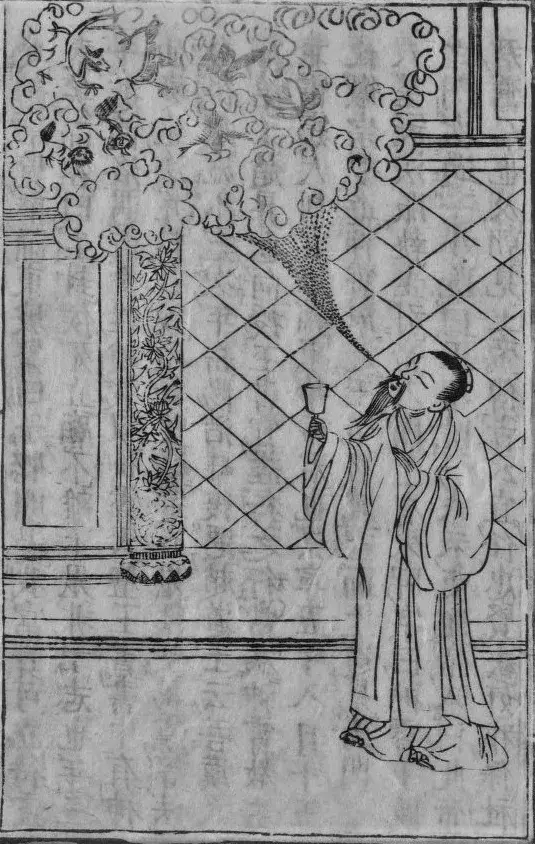
Lin Lingsu was born in 1076 in Yongjia County, Wenzhou. Born into impoverished circumstances, he initially entered a Buddhist monastery as a child novice. Possessing an undisciplined and arrogant character, he frequently faced severe scolding and corporal punishment from the monastery monks. Embittered by this treatment, he left the monastery and wandered through the Huai and Si river valleys, begging for food among Buddhist establishments, an ordeal that fueled his intense and lasting resentment toward Buddhism. Turning away from the Buddhist clergy, Lin apprenticed himself to itinerant Daoist priests. He claimed to have encountered a mysterious Daoist named Zhao in the western Luoyang region, who allegedly transmitted to him the esoteric Jade Scripture of the Shenxiao Celestial Altar alongside secrets of Five Thunder magic. Using these spells to perform exorcisms and rainmaking ceremonies, he gained a localized reputation in Jiangnan.
During the late Zhenghe era, the imperial court favorites Wang Laozhi and Wang Zixi lost imperial favor and died. Desperate to encounter immortal masters, Emperor Huizong commanded Grand Councilor Cai Jing and Daoist Registrar Xu Zhichang to search the realm for gifted thaumaturges. Xu Zhichang, well aware of Lin Lingsu's glib eloquence, arranged for him to be granted an imperial audience. When Emperor Huizong questioned his magical competencies, Lin boldly proclaimed that he understood the celestial palaces above, human affairs in the middle, and the underworld below. Presenting an elaborate mythological framework of the highest heaven, Lin won Huizong's immediate credulity, receiving lavish material awards and the title Master Tongzhen Daling ("Master of Penetrating Truth and Attaining Divinity").
Establishing the Shenxiao Order and Court Supremacy
Capitalizing on Huizong's vanity, Lin Lingsu crafted an all-encompassing political-religious mythology designed to legitimize absolute monarchical divine right. He declared that among the Nine Heavens, the Shenxiao ("Divine Empyrean") was supreme, ruled by the Jade Purity King, the eldest son of the Supreme Lord of Heaven, entitled the Great Emperor of Longevity. Lin asserted that Emperor Huizong himself was the mortal incarnation of this supreme heavenly sovereign, descended to rule China, while Lin was none other than Chu Hui, an immortal counselor of the Shenxiao Bureau tasked with assisting imperial governance. To consolidate his standing among the ruling elite, Lin flattered court magnates by declaring Cai Jing to be the Celestial Immortal Elder of the Left, Wang Fu to be a Celestial Scribe of Literary Brilliance, and eunuch commander Tong Guan to be a celestial dignitary, while styling Huizong's beloved Consort Liu as the Jade Immortal Consort of Nine Floras.
Enchanted by this mystical elevation, Emperor Huizong formally styled himself the "Sovereign Emperor and Daoist Patriarch." Lin persuaded the crown to commit enormous imperial revenues toward the construction of the Shangqing Baolu Palace adjoining the Forbidden City and decreed that every prefecture throughout the empire build a dedicated Shenxiao Wanshou Palace. Lin received rapid promotions to Attendant of the Chonghe Hall, Grand Master of the Palace, and Military Commissioner of Yingdao Army. When traveling through Kaifeng, Lin moved with imperial pomp, escorted by two myriad Daoist disciples clad in luxurious silks, leading the populace to mockingly label his entourage the "Daoist State Council."
Anti-Buddhist Persecution and Political Purges
Armed with unchecked imperial backing, Lin Lingsu unleashed ruthless vengeance upon old rivals. In the first lunar month of 1119, he persuaded Emperor Huizong to execute an empire-wide edict subordinating Buddhism under Daoist control. Under imperial decree, the Buddha was degraded to the title "Golden Immortal of Great Enlightenment," bodhisattvas were renamed "Great Masters," and arhats were designated "Venerables." Monks and nuns were stripped of their clerical identities, commanded to grow their hair, don Daoist caps and gowns, hold court tablets, and answer to the title "Moral Scholars" (deshi). Buddhist monastic estates and temples were systematically expropriated and converted into Daoist shrines, causing profound shock throughout Chinese society.
Simultaneously, Lin manipulated imperial power to crush political opponents. When the renowned frontier official Zong Ze strictly punished Gao Yanzhao—a corrupt Daoist protégé of Lin who terrorized local populations—Lin brought false charges against Zong Ze for disrespecting Daoist state policies, causing Zong Ze's immediate demotion. Within the Daoist establishment, when the court priest Wang Yuncheng rivaled Lin's influence, Lin secretly had him poisoned to death. Lin's overbearing conduct even led him to demand the right of way over imperial princes in the streets of the capital.
Desecration, Fall, and Death
In May 1119, torrential downpours triggered catastrophic flooding in the capital, inundating the Bian River and threatening to breach the ramparts of Kaifeng. In panic, Emperor Huizong dispatched Lin Lingsu and his disciples to mount the city walls to conduct rituals to subdue the aquatic dragon spirits. As Lin chanted spells atop the battlements without the slightest effect, thousands of exhausted corvée laborers and soldiers, furious at his parasitic fraud, attacked Lin and his entourage with clubs and stones, forcing him to flee for his life. For the first time, Emperor Huizong realized the depth of popular hatred directed against the Daoist favorite.
Shortly thereafter, Lin's carriage encountered the ceremonial cortege of Crown Prince Zhao Huan (the future Emperor Qinzong). Lin arrogantly refused to yield the road, triggering a hostile roadside confrontation. The outraged Crown Prince lodged an impassioned complaint with the throne, denouncing Lin's treasonous insolence toward the heir apparent. Disillusioned and alarmed, Emperor Huizong stripped Lin of his clerical titles, reduced him to the nominal rank of Grand Master of the Supreme Void, and banished him to his native Wenzhou under surveillance. In Wenzhou, Vice Prefect Jiang Duanben reported that Lin had erected a private mansion replicating forbidden imperial palace architecture. In 1120, imperial guards were dispatched to exile him to Chuzhou. Overcome with dread and illness during the journey, Lin died at an inn at the age of forty-four.
Major Achievements
Founding the Shenxiao Daoist Sect and Codifying Rituals
Lin Lingsu holds an enduring place in the history of Chinese Daoism as the primary historic founder of the Shenxiao Sect. Synthesizing ancient Celestial Master talismans, Shangqing visualizations, and regional thunder rites that had proliferated since the Tang and Five Dynasties, he structured a cohesive celestial theology centered upon the supremacy of the Shenxiao Empyrean.
He composed and codified essential canonical texts, most notably the Jade Scripture of the Shenxiao Altar, which systematized the Five Thunder arts into a comprehensive liturgical and cosmological framework. This tradition merged internal alchemy (neidan) with talismanic weather control, demon exorcism, and divine justice. Propelled by state patronage under Emperor Huizong, the Shenxiao movement spread into every province, deeply shaping Song, Yuan, and Ming religious liturgies and permanently enriching the repertoire of ritual Daoism.
Legitimizing Theocratic Imperial Absolutism
Lin Lingsu mastered the psychological manipulation of imperial ideology by cloaking Emperor Huizong's erratic autocracy in transcendent religious sanctity. By styling the emperor as the Great Emperor of Longevity descended to restore cosmic order, Lin provided the crown with an unprecedented theocratic mandate that placed the monarch above conventional Confucian ethical constraints.
Under his guidance, the Northern Song state established an official Daoist bureaucratic academy (Daoxue), created civil-equivalent bureaucratic grades for clergy ranging from Hall Attendants to Grand Masters, and integrated religious ritual into state ceremonies. This absolute fusion of imperial and religious authority drained immense treasury resources on esoteric architectural monuments and distracted the imperial administration from severe socioeconomic distress and impending northern invasions by the Jurchen Jin, directly contributing to the cataclysmic collapse of the Northern Song during the Jingkang Incident.
Instigating the Xuanhe Anti-Buddhist Movement
The Xuanhe Decree of 1119, orchestrated entirely by Lin Lingsu, represented one of the most drastic state interventions into institutional Buddhism in imperial Chinese history. Driven by personal vengeance from his youth, Lin sought nothing less than the bureaucratic erasure of Buddhist identity in China.
By royal decree, all Buddhist temples were re-consecrated as Daoist abbeys, Buddhist iconography was forcibly altered to fit Daoist theological hierarchies, and monks were forced under threat of punishment to conform to Daoist hairstyles and attire. Although fierce opposition from scholar-officials such as Zong Ze and pervasive civil disobedience forced Emperor Huizong to rescind the edict just over a year later, Lin's campaign caused immense cultural upheaval, alienated large segments of the populace from the throne, and highlighted the destructive extremes of court-sponsored religious zealotry.