Early Life
Born into a prominent Manchu Plain Red Banner family in Gaiping, Fengtian; studied classical Confucian scholarship and dynastic statutes.
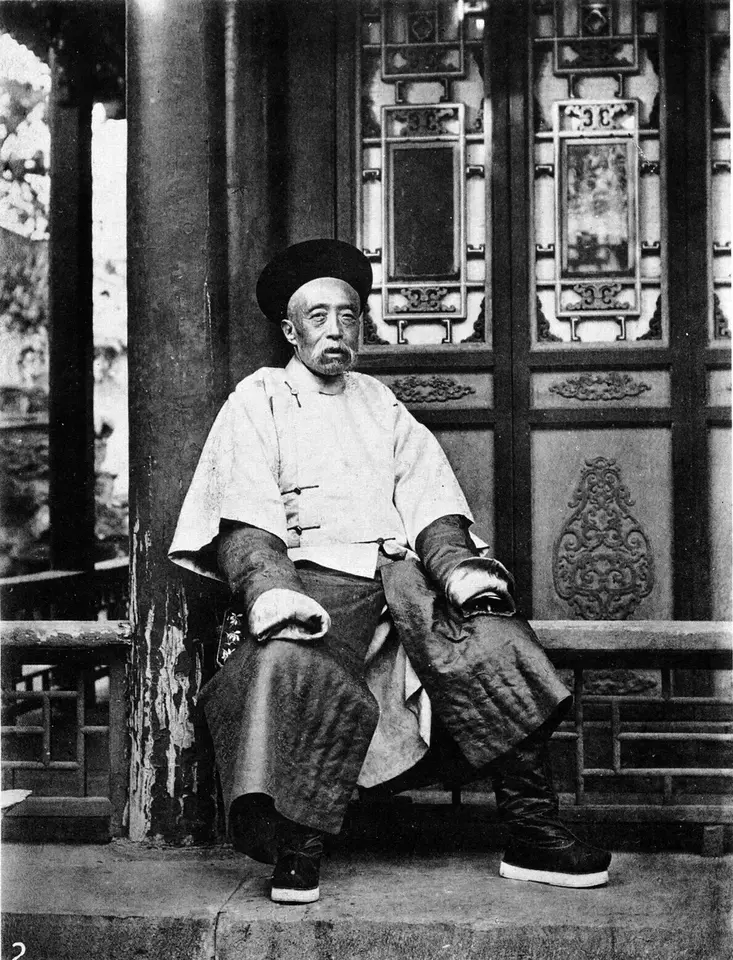
文祥
Wen Xiang (文祥, 1818–1876), courtesy name Bochuan and art name Zishan, belonging to the Gūwalgiya clan of the Manchu Plain Red Banner, was a preeminent statesman, reformer, and chancellor of the late Qing dynasty. He was one of the central architects of the Self-Strengthening Movement and a foundational pillar of the Tongzhi Restoration. Originating from a distinguished Manchu family in Gaiping, he earned his metropolitan…
Wen Xiang (文祥, 1818–1876), courtesy name Bochuan and art name Zishan, belonging to the Gūwalgiya clan of the Manchu Plain Red Banner, was a preeminent statesman, reformer, and chancellor of the late Qing dynasty. He was one of the central architects of the Self-Strengthening Movement and a foundational pillar of the Tongzhi Restoration. Originating from a distinguished Manchu family in Gaiping, he earned his metropolitan civil service degree (jinshi) in 1845 and entered government as an assistant director in the Ministry of Works. Appointed to the Grand Council in 1858, he was formally elevated to Grand Councilor the following year, participating directly in high-level imperial policy. During the Second Opium War in 1860, as the Anglo-French expeditionary forces advanced upon Beijing and the Xianfeng Emperor fled to Rehe, Wen Xiang remained in the capital alongside Prince Gong (Yixin) to handle post-crisis negotiations. Facing immense danger, he maintained civil order, negotiated with the western powers, and helped conclude the Convention of Peking. Recognizing the need for institutional modernizations, Wen Xiang was the principal advocate for the establishment of the Zongli Yamen (Office for the General Management of Affairs Concerning Foreign Nations) in 1861, inaugurating modern Chinese foreign diplomacy. Later that year, he supported Prince Gong and the two Empress Dowagers in executing the Xinyou Coup to overthrow the conservative regency of Sushun. Throughout the Tongzhi era, Wen Xiang served as the central executive linchpin of the court, founding the Tongwen Guan for foreign languages and modern sciences, organizing the western-drilled Shenjiying garrison, and staunchly backing Zuo Zongtang's western campaign to recover Xinjiang. Following his death in 1876 at the age of fifty-nine, he was granted the posthumous name Wenzhong, posthumously elevated to Grand Guardian, and enshrined in the Temple of Eminent Statesmen.
Born into a prominent Manchu Plain Red Banner family in Gaiping, Fengtian; studied classical Confucian scholarship and dynastic statutes.
Passed the metropolitan civil examinations (jinshi); appointed Assistant Director in the Ministry of Works.
Summoned to serve as probationary Grand Councilor; formally confirmed as Grand Councilor the following year.
Remained in Beijing with Prince Gong as Anglo-French troops approached; coordinated negotiations and concluded the Convention of Peking.
Memorialized for the creation of the Zongli Yamen; assisted Prince Gong in executing the Xinyou Coup to depose the eight regent ministers.
Established the Peking Tongwen Guan for linguistic and scientific training; appointed Commander of the newly organized Shenjiying.
Promoted to Minister of Personnel and Associate Grand Secretary; sponsored modern regional industrial and naval projects led by Zeng Guofan and Li Hongzhang.
Elevated to Grand Secretary of the Wuying Palace; forcefully advocated inland defense (sefang), securing state funds for Zuo Zongtang's recovery of Xinjiang.
Passed away from overwork at his Beijing residence at age fifty-nine; awarded posthumous name Wenzhong and ennobled as Grand Guardian.
Wen Xiang was born into the Gūwalgiya clan of the Manchu Plain Red Banner in Gaiping, Fengtian (modern Gaizhou, Liaoning). Unlike many contemporaries in the banner nobility who focused strictly on equestrian archery, Wen Xiang devoted his youth to classical Confucian philosophy and administrative law. His literary compositions were praised for their precision and philosophical depth. In 1845, he passed the imperial metropolitan examinations, receiving the degree of jinshi. He was assigned to the Ministry of Works as a primary secretary, subsequently earning promotion to assistant director and department director. During his tenure in the ministry, he gained a reputation for personal incorruptibility, carefully scrutinizing construction funds and eliminating fraudulent appropriations.
Throughout the 1850s, as the Qing Empire was engulfed by the Taiping Rebellion and domestic turmoil, Wen Xiang's pragmatic administrative skills brought him to the attention of senior ministers. He served successively as Sub-Chancellor of the Grand Secretariat and Junior Vice Minister of Rites. In December 1858, the Xianfeng Emperor summoned Wen Xiang for a personal audience, appointing him as a probationary Grand Councilor. The following year, Wen Xiang was formally promoted to Grand Councilor, entering the inner sanctum of imperial statecraft where he began his long and influential collaboration with Prince Gong.
In August 1860, Anglo-French allied armies defeated Qing forces at the Battle of Baliqiao and advanced directly toward Beijing. In a state of profound panic, the Xianfeng Emperor abandoned the capital and fled north to the Rehe Mountain Resort in Chengde, accompanied by the majority of high-ranking court grandees. Beijing was plunged into widespread chaos and near collapse. Refusing to flee, Wen Xiang stepped forward to share supreme administrative responsibility, remaining in the besieged city alongside Prince Gong and Grand Secretary Gui Liang as plenipotentiary peace envoys. Even as imperial palaces including the Old Summer Palace were burned by foreign troops, Wen Xiang moved fearlessly between military posts and foreign encampments, conducting arduous diplomatic discussions to protect the city's population and royal shrines. In October 1860, he assisted Prince Gong in concluding the Convention of Peking with Britain and France, securing the evacuation of invading forces and bringing temporary stability to the capital.
The catastrophic crisis of 1860 persuaded Wen Xiang that the dynasty's military antiquation and self-imposed isolation were fatal vulnerabilities. In late 1860, Wen Xiang collaborated closely with Prince Gong to submit the celebrated Memorial on a Comprehensive Plan for Foreign Affairs. Breaking through centuries of tributary ideology, the memorial advocated adopting modern western technological knowledge to achieve wealth and military strength. Crucially, it called for the establishment of a dedicated imperial institution to handle foreign relations, maritime commerce, and modernization programs. Early in 1861, the Qing court sanctioned the creation of the Zongli Yamen, appointing Wen Xiang as one of its foundational ministers. This milestone marked the formal inauguration of the Self-Strengthening Movement and the birth of modern Chinese diplomacy.
In July 1861, the Xianfeng Emperor died at Rehe, leaving his child heir Zaichun (the Tongzhi Emperor) on the throne under a regency council headed by Sushun, Zaiyuan, and Duanhua. The eight regent ministers acted autocratically, sidelining both Empress Dowager Ci'an and Empress Dowager Cixi, while isolating Prince Gong and Wen Xiang in Beijing. Realizing that the reactionary regency would stifle administrative modernization, Wen Xiang actively organized support among metropolitan banner commanders and imperial ministers during Prince Gong's mission to Rehe.
When the imperial funeral cortege returned to Beijing in October 1861, Wen Xiang coordinated with Prince Gong and the two Empress Dowagers to launch the Xinyou Coup. Moving with decisive speed, they promulgated imperial edicts that arrested Sushun and stripped the regents of power. Sushun was publicly executed, and the two empress dowagers established their coregency behind the curtain (chuilian tingzheng). Prince Gong was designated Prince Counselor, while Wen Xiang directed the Grand Council and Zongli Yamen, establishing a unified central leadership capable of advancing military reforms and overcoming internal rebellions.
During the Tongzhi era, Wen Xiang concurrently served as Grand Councilor, Minister of the Zongli Yamen, and Minister of Revenue, Works, and Personnel, serving as the central executive engine of the imperial government. In 1862, recognizing that traditional imperial scholars lacked foreign linguistic competencies and scientific knowledge, Wen Xiang overcame fierce conservative opposition to establish the Tongwen Guan in Beijing. The school hired western instructors to teach English, French, Russian, mathematics, and astronomy, pioneering modern state-sponsored language and scientific education in China.
To secure Beijing's defenses, Wen Xiang initiated the creation of the Shenjiying (Peking Field Force). Selecting tens of thousands of elite banner soldiers, he equipped them with modern western firearms and artillery, instituting westernized drill tactics and medical units under his personal supervision as commander. Simultaneously, Wen Xiang utilized his central influence to shelter and support provincial leaders such as Zeng Guofan, Li Hongzhang, and Zuo Zongtang. He authorized state funding for early modern industrial and military enterprises, including the Jiangnan Arsenal and Fuzhou Navy Yard, facilitating the suppression of the Taiping and Nian rebellions.
In 1874, the Qing Empire faced dual strategic perils: Japanese troops invaded southern Taiwan, while Russian imperial forces occupied Ili in Xinjiang following the rebellion led by Yakub Beg. A heated strategic debate erupted at court between maritime defense (haifang) and inland defense (sefang). Li Hongzhang, Viceroy of Zhili, argued that the empire lacked resources for two simultaneous fronts and urged the cessation of western military expeditions to focus exclusively on coastal fortifications. In contrast, Zuo Zongtang insisted that relinquishing Xinjiang would leave Shaanxi and Gansu vulnerable, directly threatening Beijing itself. As Grand Secretary of the Wuying Palace, Wen Xiang demonstrated profound geopolitical foresight. He strongly supported Zuo Zongtang, convincing the empress dowagers and imperial princes that inland defense was vital to the empire's territorial integrity. Wen Xiang secured millions of taels from maritime customs duties and central funds, ensuring the logistical success of Zuo Zongtang's historic campaign that recovered Xinjiang.
Decades of relentless administrative burdens severely compromised Wen Xiang's physical health, leading to chronic respiratory illness and heart failure. Despite his debilitating condition, he continued to manage daily state business into the early reign of the Guangxu Emperor. On July 5, 1876, Wen Xiang passed away at his Beijing residence at the age of fifty-nine. The imperial court suspended official business in mourning, conferring upon him the posthumous title of Grand Guardian, the prestigious posthumous name Wenzhong (Cultured and Loyal), and enshrining his tablet in the Temple of Eminent Statesmen.
In 1860–1861, Wen Xiang remained in besieged Beijing during the Second Opium War, negotiating the peace settlement that preserved the capital. Recognizing the structural inadequacies of traditional foreign administration, he pioneered the establishment of the Zongli Yamen, laying the structural groundwork for modern Chinese diplomacy and institutional reform.
During the political succession crisis of 1861, Wen Xiang partnered with Prince Gong and the two Empress Dowagers to orchestrate the Xinyou Coup. By neutralizing the autocratic regency of Sushun, he stabilized central power and created the political preconditions for the Tongzhi Restoration.
Wen Xiang founded the Tongwen Guan to foster modern diplomatic and scientific expertise, and reorganized the metropolitan garrisons into the modernized Shenjiying. In the grand policy debates of 1874, his resolute support for inland defense secured imperial funding for Zuo Zongtang's western campaign, directly leading to the recovery and retention of Xinjiang.
FIGURES ASSOCIATED WITH THIS DYNASTY