Early Life
Born into a prominent scholarly gentry family in Wucheng, Zhejiang; showed early precocity in Confucian classical studies.
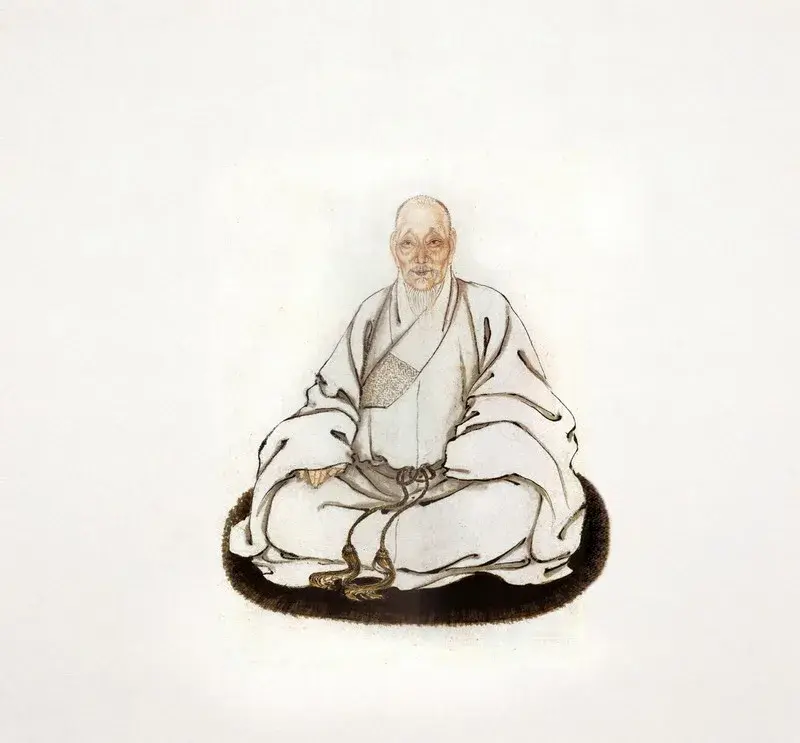
温体仁
Wen Tiren (温体仁, 1573–1639), courtesy name Changqing and art name Yuanqiao, native of Wucheng, Zhejiang (modern Nanxun, Huzhou), was a preeminent Senior Grand Secretary and dominant court statesman during the final decades of the Ming dynasty. Born into an established gentry clan in Huzhou, he obtained his metropolitan civil service degree (jinshi) in 1598, entering the Hanlin Academy as a bachelor before appointment as…
Wen Tiren (温体仁, 1573–1639), courtesy name Changqing and art name Yuanqiao, native of Wucheng, Zhejiang (modern Nanxun, Huzhou), was a preeminent Senior Grand Secretary and dominant court statesman during the final decades of the Ming dynasty. Born into an established gentry clan in Huzhou, he obtained his metropolitan civil service degree (jinshi) in 1598, entering the Hanlin Academy as a bachelor before appointment as compiler. Amid the vicious factional warfare between the Donglin and anti-Donglin parties during the Wanli and Tianqi eras, Wen Tiren deliberately avoided factional conflicts by seeking low-profile appointments in the southern capital of Nanjing, cultivating a thirty-year reputation for aloof rectitude and factional neutrality. Following the accession of the Chongzhen Emperor, Wen Tiren was appointed Minister of Rites in 1628. During the collective imperial nomination (meibu) for cabinet grand secretaries in late 1628, when Donglin leader Qian Qianyi emerged as the leading nominee while Wen was omitted, Wen submitted a blistering memorial denouncing Qian's examination malpractices. Claiming he was isolated without a faction, Wen secured the emperor's absolute trust. Entering the Grand Secretariat in 1630, Wen collaborated with Zhou Yanru to neutralize Donglin influence before adroitly engineering Zhou's dismissal in 1633 to become Senior Grand Secretary. Dominating the cabinet for eight years—the longest tenure of any chancellor in the Chongzhen reign—Wen pandered to the emperor's suspicious and punitive nature by enforcing strict bureaucratic discipline and fiscal surcharges, while purging upright censors. Lacking strategic vision to contain domestic peasant rebellions or resist the Qing invasion, Wen oversaw the deepening destabilization of the realm. Dismissed in 1637 after fabricating treason charges against Qian Qianyi, he died in retirement in 1639 at age sixty-seven and was later included in the "Biographies of Treasonous Ministers" in the History of Ming.
Born into a prominent scholarly gentry family in Wucheng, Zhejiang; showed early precocity in Confucian classical studies.
Earned the metropolitan jinshi degree; entered the Hanlin Academy as a compiler, commencing a thirty-year career of calculated reserve.
Appointed Junior Supervisor of Household in Nanjing; deliberately distanced himself from escalating factional conflicts in Beijing.
Reinstated as Nanjing Minister of Rites following the purge of the Wei Zhongxian eunuch faction; transferred to Beijing the following year.
Submitted a sensational memorial denouncing Qian Qianyi; presented himself as a factionless loyalist to win the emperor's trust.
Formally elevated to Grand Secretary of the Dongge and Wenyuan Hall; covertly built a network of partisans.
Maneuvered Senior Grand Secretary Zhou Yanru out of office; assumed the supreme post of Chief Grand Secretary and Minister of Personnel.
Enforced harsh punitive administration, suppressed remonstrating censors, and imposed heavy fiscal surtaxes.
Sordid plot to frame Qian Qianyi for treason was exposed; dismissed from office, stripped of all ranks, and expelled from Beijing.
Died at his private estate in Wucheng at age sixty-seven; subsequently categorized in the History of Ming among treacherous officials.
Wen Tiren's lineage originated in Shanxi. At the transition from Yuan to Ming, his ancestor Wen Xiangqing accompanied the founding general Geng Bingwen in defending Changxing, serving as Minister of War during the Hongwu era and permanently establishing the family in Zhejiang. By the generation of Wen Liang, the family moved to Yuxi in Wucheng County (modern Jili Village, Nanxun, Huzhou), flourishing as prominent landed gentry. Wen Tiren's grand-uncle Wen Yinglu had secured third place (tanhua) in the imperial examinations of 1553, establishing high social standing. Wen Tiren demonstrated early intellectual aptitude, becoming a licentiate at sixteen and gaining administrative experience by serving for three years as private secretary to Zhang Zhaorui, Vice Commissioner of the Jinqu Circuit.
In 1597, Wen Tiren passed the Zhejiang provincial civil examinations; the following year, in 1598, he earned the metropolitan jinshi degree, being selected as a bachelor in the Hanlin Academy and later appointed compiler. In 1612, he was promoted to Director of Studies at the Nanjing Guozijian, advancing to Left Admonisher in the Left Spring Brevis. In 1615, his father Wen Zizuo visited the capital, perceiving with alarm the escalating factional struggles between the Donglin partisans and their provincial rivals. Following his father's cautious advice to avoid metropolitan hazards, Wen Tiren successfully petitioned for transfer to the southern auxiliary capital, receiving appointment as Junior Supervisor of the Household in charge of the Nanjing Hanlin Academy. In Nanjing, Wen maintained total domestic isolation, refusing visitors even when traveling to Beijing for ceremonial court audiences, thereby constructing an impeccable reputation for incorruptibility, political aloofness, and factional neutrality.
In 1622, Wen Tiren was recalled as Right Vice Minister of Rites and Reader in the Hanlin Academy, serving as associate compiler for the Veritable Records of Shenzong and daily lecturer for the young Tianqi Emperor. In late 1624, he retired to observe mourning following his father's death, fortuitously escaping the violent purges orchestrated by eunuch dictator Wei Zhongxian against the Donglin literati. Following the enthronement of the Chongzhen Emperor and the dismantling of the eunuch clique, Wen was reinstated as Nanjing Minister of Rites in 1627. In early 1628, he was summoned to Beijing as an imperial lecturer, assuming the office of Minister of Rites in November 1628. His deferential demeanour, immaculate protocol, and restrained gravity during classical lectures made a profoundly positive impression on the suspicious young monarch.
In November 1628, Grand Secretary Liu Hongxun was cashiered, prompting the Chongzhen Emperor to order a collective ministerial assembly to nominate replacement candidates for the cabinet. Minister of Personnel Wang Yongguang initially favored Wen Tiren, but Bureau Director Geng Zhiwei adamantly rejected his nomination, considering him excessively secretive and calculating. The resulting nomination list was dominated by Donglin stalwarts, with Vice Minister of Rites Qian Qianyi occupying the foremost position. Deeply incensed by his exclusion, Wen Tiren noticed that Vice Minister Zhou Yanru—who had recently found imperial favor during private audiences—was likewise omitted. He calculated that the emperor would naturally suspect the Donglin of monopolizing court nominations.
Wen Tiren forged a tactical alliance with Zhou Yanru, disseminating rumors that the Donglin faction had manipulated the collective recommendation. Bypassing the Ministry of Personnel, Wen submitted a sensational memorial to the throne entitled Direct Denunciation of the World-Class Deceiver, resurrecting the Qian Qianqiu examination scandal of 1621 to accuse Qian Qianyi of accepting bribes and packaging factions to deceive the throne. The infuriated emperor summoned high officials to the Wenhua Hall on November 6 to confront the rivals. During the audience, Wen maintained an unyielding stance, declaring: "Your servant stands utterly isolated, while the entire court consists of Qianyi's partisans." Unable to defend his record, Qian Qianyi was forced to kneel and confess fault. Convinced that factional cartels were subverting his authority, the Chongzhen Emperor praised Wen Tiren for exposing treason and cashiered Qian Qianyi, marking Wen as an incorruptible and solitary pillar of loyalty.
Following Qian Qianyi's fall, Donglin censors launched fierce counter-offensives. In December 1628, Censor Mao Jiuhua submitted a detailed indictment accusing Wen of obsequious flatteries toward Wei Zhongxian, citing verses Wen allegedly composed praising the eunuch's living shrine at West Lake, and claiming Wen had bribed eunuch henchman Cui Chengxiu to dismiss timber-confiscation lawsuits. Simultaneously, Censor Ren Zanhua accused Wen of maintaining an illicit relationship with a courtesan, shielding her pirate-affiliated father, and murdering witnesses in prison.
Facing these mortal perils, Wen offered his resignation while appealing to the emperor that he was being victimized precisely because he stood alone against a vengeful Donglin cabal. In January 1629, the Chongzhen Emperor presided over an emergency confrontation in the Wenhua Hall between Wen and his accusers. Scrutinizing the evidence, the emperor concluded that Mao Jiuhua's poetic scrolls were forgeries and severely reprimanded Ren Zanhua for peddling salacious gossip, demoting him to a provincial post. This dramatic triumph solidified the emperor's conviction that attacks on Wen Tiren were mere proofs of factional persecution. The more censors assaulted Wen, the more fiercely the monarch shielded him, permanently alienating the throne from the Donglin scholar-officials.
In June 1630, supported by Zhou Yanru and favored by imperial decree, Wen Tiren was formally invested as Grand Secretary of the Dongge, subsequently advancing to Grand Secretary of the Wenyuan Hall, Wuying Palace, and Jianji Palace. While serving as second-ranking minister, Wen maintained an outward show of cordiality with Senior Grand Secretary Zhou Yanru, while covertly maneuvering to seize the chief ministry.
Following the Jisi Incident and the arrest of Yuan Chonghuan, high ministers fell from grace. When Minister of War Wang Qia died in prison and Vice Minister Qian Longxi was condemned, Zhou Yanru visited Qian in prison, boastfully claiming credit for sparing his life. When Wen Tiren visited Qian shortly afterward, he listened coldly before observing: "The sovereign was never particularly enraged to begin with," puncturing Zhou's patronizing facade. Exploiting Zhou's absence to conduct civil examinations, Wen backed memorials attacking Zhou's protégés in the Ministry of Personnel, compelling Minister Wang Yongguang to resign and installing his own kinsman Min Hongxue. Wen gradually assembled an undercover network of loyal censors—including Shi Rao, Gao Jie, Tang Shiji, and Zhang Jie—to undermine Zhou's standing. In early 1633, when imperial eunuch Wang Kun attacked Zhou Yanru, Wen deliberately withheld support while quietly leaking Zhou's derogatory comments regarding the emperor. In June 1633, Zhou was forced to retire, and Wen Tiren secured appointment as Senior Grand Secretary.
Ascending to the paramount post of Senior Grand Secretary, Wen Tiren directed the cabinet for four years. Thoroughly understanding the Chongzhen Emperor's suspicious and vindictive temperament, Wen practiced absolute servility, never challenging imperial decrees. Recognizing the monarch's obsession with administrative minutiae, Wen demonstrated extraordinary acumen in interpreting enigmatic rejections. When memorials from Vice Minister Chen Zizhuang were repeatedly rejected by the palace without explanation, Wen discerned that Chen had simply omitted the submission date. When General Cao Bianjiao's memorial was returned with imperial dots marked beside conflicting dates, Wen immediately deduced that Cao was fighting on the distant front and that metropolitan associates had prematurely forged the submission, prompting imperial commendation for his insight.
To avoid imperial suspicions of court patronage, Wen dismantled the traditional procedure whereby cabinet ministers recommended exact amounts for fines or rewards, insisting that the sovereign himself write every figure into the decrees, thereby claiming that he neither solicited gratitude nor harbored grudges. Supported by cabinet accomplices Wang Yingxiong and Wu Zongda, Wen ran an administration widely lampooned by the public in popular ditties that mocked the cabinet ministers as sycophants. When domestic rebellions led by Li Zicheng and Zhang Xianzhong swept across north China, Wen offered no strategic solutions, merely authorizing heavy land surtaxes such as the Liaodong and pacification surcharges that drove the rural peasantry to desperation. Upright ministers such as Ni Yuanlu, Wen Zhenmeng, and Huang Daozhou were ruthlessly persecuted for opposing his policies.
While systematically purging rivals, Wen Tiren skillfully adopted hypocritical poses of magnanimity to preserve his public standing. When Censor Wu Zhiyu attacked the cabinet ministers, infuriating the emperor, Wen submitted a confidential memorial pleading for clemency, characterizing the censor's criticisms as "stones from other mountains" that demonstrated imperial breadth. In 1636, when Censor Zhan Erxuan denounced excessive military surcharges and faced physical arrest in the palace, Wen knelt before the throne to argue that tolerating remonstrance magnified imperial benevolence. Through these calculated displays, Wen maintained the illusion of being an impartial statesman.
In 1637, determined to eradicate remaining Donglin opposition, Wen instructed his agents in Changshu to bribe Qian Qianyi's runaway servant Gu Dacheng to concoct fabricated charges that Qian was manufacturing weapons and plotting sedition. The emperor initially ordered secret arrests, but Palace Eunuch Cao Huachun and upright investigators uncovered the conspiracy, revealing that the entire conspiracy was a malicious fabrication orchestrated by Wen Tiren. Outraged that his senior minister had utilized imperial justice to settle personal scores, the Chongzhen Emperor dismissed Wen Tiren from office in May 1637, stripping him of all ranks and banishing him to his native county.
Returning to Wucheng in total disgrace, Wen Tiren lived under reclusive domestic confinement while the metropolitan scholar-elite celebrated his fall. In 1639, he passed away at his estate at age sixty-seven. While briefly rehabilitated under the southern Hongguang regime due to anti-Donglin sympathies, Qing historians recognized his culpability in the fall of the Ming, officially enshrining his biography in the "Treasonous Ministers" section of the History of Ming.
In 1628, Wen Tiren exploited the Chongzhen Emperor's profound paranoia regarding factional cliques by submitting his celebrated Direct Denunciation of the World-Class Deceiver. Confronting Donglin leader Qian Qianyi in a dramatic imperial audience, Wen secured Qian's expulsion from court, shattering the Donglin party's administrative monopoly and establishing his image as an independent royal loyalist.
Between 1630 and 1633, Wen Tiren steadily advanced his factional leverage within the Grand Secretariat. By neutralizing Zhou Yanru's provincial patronage and orchestrating palace leaks, he engineered Zhou's dismissal and assumed the post of Senior Grand Secretary, maintaining absolute administrative dominance for four consecutive years.
As chief minister, Wen Tiren accommodated the emperor's harsh rule, replacing strategic statecraft with punitive administrative scrutiny. His advocacy of ruinous fiscal surcharges deepened rural ruin and accelerated the social collapse that ultimately doomed the Ming dynasty.
In 1637, Wen's attempt to permanently destroy his political enemies through fabricated treason allegations backfired when imperial investigations exposed the plot. His subsequent disgrace and expulsion terminated eight years of authoritarian dominance, illustrating the perils of factional intrigue in the late Ming court.
FIGURES ASSOCIATED WITH THIS DYNASTY