Birth in Fuzhou
Born into a cultured gentry lineage in Houguan; displayed intellectual precocity from early childhood.
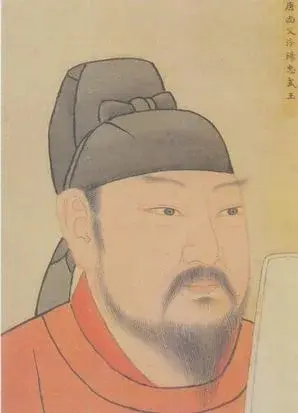
刘步蟾
Liu Buchan (刘步蟾, 1852–February 10, 1895), courtesy name Zixiang, native of Houguan, Fujian, was an illustrious naval commander, naval architect of modern maritime regulations, and heroic captain of the ironclad battleship Dingyuan during the late Qing dynasty. Demonstrating academic brilliance from youth, he enrolled in the inaugural navigation class of the Foochow Arsenal School in 1867, graduating at the top of his class.…
Liu Buchan (刘步蟾, 1852–February 10, 1895), courtesy name Zixiang, native of Houguan, Fujian, was an illustrious naval commander, naval architect of modern maritime regulations, and heroic captain of the ironclad battleship Dingyuan during the late Qing dynasty. Demonstrating academic brilliance from youth, he enrolled in the inaugural navigation class of the Foochow Arsenal School in 1867, graduating at the top of his class. In 1877, he was selected among China's first cohort of naval officers sent to Great Britain, studying modern naval tactics and steam engineering at the Royal Naval College, Greenwich, and serving as apprentice first mate aboard HMS Minotaur, flagship of the British Channel Squadron. Upon his return, Liu won the deep patronage of Viceroy Li Hongzhang. In 1885, following the Sino-French War, he travelled to the Vulcan Shipyards in Stettin, Germany, to take delivery of China's flagship ironclad battleship, Dingyuan, navigating the vessel across the oceans back to Dagu. Liu drafted the foundational Regulations of the Beiyang Navy, establishing modern disciplinary, operational, and tactical standards. Upon the formal inauguration of the Beiyang Fleet in 1888, Liu was appointed Right Wing Brigade Commander and captain of Dingyuan. During the Battle of the Yalu River in September 1894, when Admiral Ding Ruchang was incapacitated in the opening minutes, Liu assumed tactical command of the fleet, fighting Dingyuan through devastating fires and heavy enemy bombardments to repulse the Japanese Combined Fleet. In February 1895, during the Siege of Weihaiwei, after Dingyuan was stranded by a night torpedo raid, Liu converted the stricken warship into a floating battery before scuttling her to prevent capture. That midnight, upholding his vow never to survive his ship, Liu committed suicide by swallowing opium on Liugong Island at the age of forty-four. The Guangxi Emperor posthumously promoted him to Admiral with the posthumous title Zhongwu.
Born into a cultured gentry lineage in Houguan; displayed intellectual precocity from early childhood.
Enrolled in the inaugural navigation class of the Foochow Arsenal School, consistently ranking first.
Completed ocean trials aboard the Jianwei; earned top honors in joint provincial naval examinations.
Dispatched to Great Britain and France to observe modern warship construction and naval armaments.
Enrolled at the Royal Naval College, Greenwich; completed sea service aboard HMS Minotaur.
Took delivery of the ironclad Dingyuan in Germany, navigating the flagship across the globe to China.
Appointed Right Wing Brigade Commander of the newly founded Beiyang Fleet and captain of Dingyuan.
Commanded Dingyuan during the fleet visit to Yokohama, maintaining vigilant harbor readiness.
Assumed tactical fleet command when Admiral Ding was wounded; fought Dingyuan through heavy fires.
Scuttled the crippled Dingyuan to prevent capture; committed suicide on Liugong Island at age forty-four.
Liu Buchan was born in 1852 in Houguan County, Fuzhou, Fujian Province. Coming from an affluent intellectual clan, he received a classical education, earning acclaim for his incisive mind and daring temperament. Contemporary naval chronicles described him as possessing exceptional intellectual depth and an aristocratic pride that commanded respect.
In 1866, imperial commissioners Zuo Zongtang and Shen Baozhen established the Foochow Arsenal and its modern Naval Academy at Pagoda Anchorage, inaugurating modern naval education in China. In 1867, the fifteen-year-old Liu passed the entrance examinations for the first navigation class. Throughout five years of intensive training in mathematics, astronomy, steam engineering, and ballistics, Liu distinguished himself as the outstanding student of the academy, repeatedly placing first in examinations. In 1871, he embarked on long-distance ocean navigation trials aboard the training ship Jianwei, charting courses through the Bohai Sea, Liaodong Gulf, and the South China Sea. In 1872, during grand joint examinations conducted by imperial commissioners, Liu again scored the highest marks in the empire, earning formal commission as a naval officer. In 1874, following Japanese incursions into southern Taiwan during the Mudan Incident, Liu surveyed treacherous coastal inlets and prepared vital hydrographic charts, which led to his promotion to captain of the Jianwei.
In 1875, Liu participated in an imperial inspection of European naval shipyards. In 1877, he was selected for the historic first cohort of Chinese naval officers sent to Europe. Enrolling at the Royal Naval College in Greenwich, London, Liu mastered advanced naval architecture, torpedo warfare, and fleet tactics. He was assigned to the British Channel Squadron, serving as apprentice first mate aboard HMS Minotaur, the armored iron frigate flagship of the fleet. Experiencing rigorous fleet maneuvers in the Atlantic and North Sea, Liu earned an honorary diploma from the British Admiralty.
Returning to China in 1879, Liu was summoned to Tianjin by Viceroy Li Hongzhang, who praised him as an indispensable architect for the national navy and appointed him captain of the gunboat Zhenbei. Liu forcefully argued that China required first-class armored battleships capable of dominating regional waters. Persuaded by Liu's tactical analysis, Li Hongzhang contracted the Vulcan Shipyards in Stettin, Germany, to build the seven-thousand-ton ironclads Dingyuan and Zhenyuan.
In 1885, following the conclusion of the Sino-French War, Liu led Chinese crews to Stettin to take formal delivery of Dingyuan. Navigating the massive warship across the Mediterranean, the Indian Ocean, and the South China Sea, he brought Dingyuan safely into Dagu, receiving appointment as captain and promotion to colonel with the imperial title Qiangyong Baturu. Over the next three years, Liu served as Li Hongzhang's chief technical adviser, drafting the Regulations of the Beiyang Navy. Liu translated Royal Navy command structures and operational codes into Qing legal forms, institutionalizing regular gunnery drills, promotion tiers, and flag signals. In December 1888, when the Beiyang Fleet was formally inaugurated at Liugong Island, Liu was officially commissioned as Right Wing Brigade Commander and captain of Dingyuan.
Although the Beiyang Fleet was initially recognized as the foremost naval power in East Asia, the imperial court ceased naval allocations after 1888, diverting naval revenues into imperial garden renovations while Japan embarked on rapid naval expansion. In 1890, Liu warned Li Hongzhang: "Our naval defense is like rowing against the current; Japan advances annually while we regress. We must immediately purchase modern high-speed cruisers and quick-firing guns." Political inertia prevented the adoption of his proposals. In the summer of 1891, Liu commanded Dingyuan during the fleet visit to Yokohama and Tokyo. Sensing growing Japanese hostility, Liu remained vigilant aboard ship, refusing invitations to shore banquets to preserve vessel security.
On September 17, 1894, the First Sino-Japanese War escalated with the Battle of the Yalu River. While escorting troop transports returning from the Korean border, the Beiyang Fleet encountered the Japanese Combined Fleet off Dagushan. Minutes into the engagement, the firing of Dingyuan's forward 305mm heavy guns collapsed the bridge, severely wounding Admiral Ding Ruchang and severing signal communications. Stepping instantly into the breach, Liu Buchan assumed operational fleet command. Under his calm direction, Dingyuan and Zhenyuan held the center of the wedge formation, drawing the concentrated fire of the Japanese fleet while pummeling the enemy with heavy shells. Although Dingyuan was struck over a hundred times and caught fire repeatedly, Liu remained on the exposed hurricane deck directing damage-control crews. His gunners critically crippled the Japanese flagship Matsushima and the armed transport Saikyo Maru, forcing Admiral Ito Sukeyuki to withdraw at dusk. Following the fleet's retreat to Port Arthur, the throne praised Liu's tactical leadership, appointing him Acting Admiral of the fleet.
In late 1894, following the fall of Port Arthur, the Beiyang Fleet retreated to its fortified island base of Liugong Island in Weihaiwei, bound by imperial orders to preserve the remaining ships. In January 1895, the Japanese army landed at Rongcheng, storming the mainland coastal batteries from the rear and establishing an impenetrable siege around the harbor. Japanese Admiral Ito sent letters urging his former classmate Ding Ruchang to surrender, but Ding and Liu categorically rejected the overtures, vowing to fight to the last man.
On the night of February 4, Japanese torpedo boats penetrated the harbor booms under cover of a howling blizzard, striking Dingyuan's port side. Though partially flooded and stranded in shallow waters off Liugong Island, Liu refused to abandon the ship. Converting the grounded ironclad into an immobile coastal battery, he continued firing heavy salvos for several days, successfully suppressing Japanese shore batteries. On the night of February 9, with munitions exhausted and relief forces nonexistent, Liu resolved to prevent China's greatest warship from falling into enemy hands. Weeping openly, he personally supervised the detonation of demolition charges that scuttled Dingyuan.
Returning to his naval quarters on Liugong Island, Liu contemplated the destruction of the navy to which he had dedicated his life. Refusing to endure the humiliation of foreign captivity, he straightened his naval uniform and swallowed a lethal dose of opium on the midnight of February 10, 1895, fulfilling his solemn oath that he would never outlive his warship. He died at the age of forty-four. Admiral Ding Ruchang followed him in suicide two days later. The Guangxi Emperor wept upon receiving the report, posthumously promoting Liu to Admiral and bestowing the posthumous title Zhongwu.
Liu was the primary institutional architect of China's first modern navy. Drawing on his British Royal Navy training, he authored the comprehensive Regulations of the Beiyang Navy, creating the legal, logistical, and technical framework that governed rank structures, maritime navigation codes, artillery drills, and steam machinery maintenance, laying the foundation for modern naval administration in China.
During the chaos of the Battle of the Yalu River, Liu's decisive assumption of fleet command after Admiral Ding's wounding saved the Beiyang Fleet from catastrophic annihilation. His steady command of Dingyuan anchored the defensive line, neutralized the high-speed maneuvers of the Japanese Flying Squadron, and demonstrated exceptional operational courage under direct naval bombardment.
Liu's self-sacrifice during the Siege of Weihaiwei embodied the highest ideals of naval honor. By detonating demolition charges to scuttle his beloved flagship rather than allow her capture by Japan, and subsequently ending his own life to preserve national dignity, Liu established an enduring legend of patriotic martyrdom in modern Chinese history.
FIGURES ASSOCIATED WITH THIS DYNASTY