Smuggled into Palace
Recruited by Lu Buwei, disguised as a eunuch, and introduced to attend Queen Dowager Zhao.
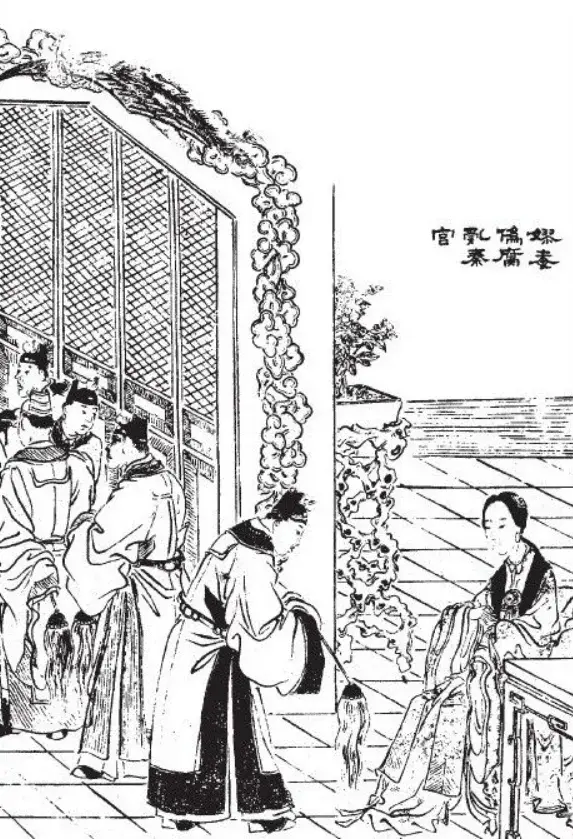
嫪毐
Lao Ai (嫪毐, died 238 BCE) was a native of Handan in the State of Zhao, an influential political figure, paramour of Queen Dowager Zhao (mother of King Zheng of Qin, later Qin Shi Huang), and the Marquis of Changxin during the late Warring States period. Known in his youth for physical strength and virility, he was recruited as a retainer by Chancellor Lu Buwei. Following the premature death of King Zhuangxiang of Qin, Queen…
Lao Ai (嫪毐, died 238 BCE) was a native of Handan in the State of Zhao, an influential political figure, paramour of Queen Dowager Zhao (mother of King Zheng of Qin, later Qin Shi Huang), and the Marquis of Changxin during the late Warring States period. Known in his youth for physical strength and virility, he was recruited as a retainer by Chancellor Lu Buwei. Following the premature death of King Zhuangxiang of Qin, Queen Dowager Zhao continued an illicit liaison with Lu Buwei. As King Zheng matured, Lu Buwei feared exposure and devised a scheme to disguise Lao Ai as a castrated eunuch, plucking his facial hair and forging penal documents to smuggle him into the inner palace to attend the queen dowager. Smuggled into the inner quarters, Lao Ai gained the complete infatuation of Queen Dowager Zhao. Under the pretext of escaping astrological inauspiciousness, the queen dowager relocated with Lao Ai to Dazheng Palace in the ancient capital of Yongcheng, where they cohabited and secretly fathered two sons. In 239 BCE, Lao Ai was enfeoffed as the Marquis of Changxin, receiving lucrative estates in Shanyang and Taiyuan Commandery (which was renamed the State of Lao). Amassing thousands of retainers and private servants, his faction rivaled Chancellor Lu Buwei. In 238 BCE, when King Zheng traveled to Yongcheng for his coming-of-age capping ceremony, Lao Ai, fearing execution over his exposed liaison, forged imperial and dowager seals to launch an armed insurrection at Qinian Palace. Imperial forces under Lord Changping and Lord Changwen crushed the rebels at Xianyang. Captured while fleeing, Lao Ai was torn apart by horse-drawn chariots, his clan was exterminated, his two sons were killed, and thousands of retainers were banished to Shu, ending the gravest domestic crisis of King Zheng's early reign.
Recruited by Lu Buwei, disguised as a eunuch, and introduced to attend Queen Dowager Zhao.
Moved to Dazheng Palace with the queen dowager, covertly cohabiting and fathering two sons.
Enfeoffed as Marquis of Changxin with Taiyuan and Shanyang lands, commanding thousands of retainers.
Forged royal seals to launch an armed coup, routed by loyalist armies under Lord Changping.
Captured, subjected to death by dismemberment, and his entire clan and offspring executed.
Lao Ai was born in Handan, capital of the State of Zhao, gaining notoriety in his youth for his robust build, martial prowess, and exceptional virility. In the twilight of the Warring States period, King Zhuangxiang of Qin passed away, leaving the thirteen-year-old Ying Zheng on the throne under the nominal regency of Chancellor Lu Buwei, who was honored as the second father. Queen Dowager Zhao, widowed at an early age, resumed an illicit relationship with Lu Buwei.
As the young King Zheng grew more perceptive and assertive, Lu Buwei grew terrified that the affair would be exposed, seeking a way to distance himself from the queen dowager without forfeiting her political backing. Hearing of Lao Ai's unusual physical attributes, Lu Buwei inducted him into his retinue. At a banquet, Lu Buwei orchestrated a public demonstration where Lao Ai rotated a heavy wooden wheel with his body, intentionally bringing the spectacle to the queen dowager's attention. Infatuated by reports of his virility, Queen Dowager Zhao insisted on bringing him into the palace.
To bypass strict Qin statutes governing inner palace eunuchs, Lu Buwei colluded with judicial officers to fabricate criminal charges warranting castration against Lao Ai. The corrupt jailers plucked Lao Ai's beard and eyebrows and forged penal certificates, enabling Lao Ai to enter the inner apartments disguised as an emasculated eunuch.
Once ensconced in the inner palace, Lao Ai exerted his charm to captivate Queen Dowager Zhao. When the queen dowager became pregnant, she petitioned King Zheng to relocate her residence to the old Qin capital of Yongcheng, alleging that divinations indicated the palaces of Xianyang brought misfortune upon her health.
At Dazheng Palace in Yongcheng, far removed from the strict oversight of Xianyang, Lao Ai and the queen dowager lived openly as husband and wife. She bore two male infants in secret, concealing them within the compound. The queen dowager entrusted domestic affairs and imperial wealth to Lao Ai, showering him with carriages, horses, hunting parks, and palace robes. All administrative decisions in Yongcheng rested in his hands.
In 239 BCE, as King Zheng approached his twenty-first year and impending majority, Queen Dowager Zhao decreed the formal elevation of Lao Ai to Marquis of Changxin. He was granted the fertile territory of Shanyang (modern Jiaozuo, Henan) as his private revenue estate, while the entirety of Taiyuan Commandery in Hexi was ceded as his personal fiefdom, which Lao Ai insolently renamed the State of Lao. Amassing over a thousand household retainers and several thousand armed servants, ambitious scholar-bureaucrats flocked to his gates. His political faction rapidly expanded, rivaling the authority of Chancellor Lu Buwei.
Intoxicated by sudden power, Lao Ai grew insolent and reckless. During an elaborate drinking party at his mansion, a heated quarrel erupted over gaming stakes between Lao Ai and a senior Qin aristocrat. Flaring with drunken rage, Lao Ai glared at the official and roared: "I am the foster father of the ruling sovereign! How dare a lowly knave like you defy me!"
Horrified by this proclamation, the slighted nobleman fled to Xianyang and secretly reported to King Zheng that Lao Ai was not an emasculated eunuch, had fathered two illegitimate sons with Queen Dowager Zhao, and had sworn an oath with the dowager: "Upon the King's passing, our son shall be installed as the sovereign." Though burning with fury, King Zheng was still awaiting his formal capping ceremony and possessed limited direct military control. He contained his anger, quietly gathering proof while placing Yongcheng under surveillance.
In the fourth month of 238 BCE, King Zheng traveled to the ancestral capital of Yongcheng to conduct his capping ceremony and sword-girding ritual, formally assuming direct sovereign rule. Recognizing that the illicit children had been exposed and that King Zheng's accession would inevitably bring execution, Lao Ai resolved to stage a preemptive coup.
On the jiyou day, while King Zheng was fasting at Qinian Palace, Lao Ai forged the royal seals of the king and the queen dowager. Mobilizing troops under the palace intendant, court guards, cavalry detachments, and Rong-Di tribal auxiliaries, he attacked Qinian Palace to assassinate the sovereign. Forewarned, King Zheng remained calm, dispatching Chancellor Lu Buwei, Lord Changping, and Lord Changwen to assemble the elite imperial guards of the Guanzhong region.
Loyalist forces intercepted the rebels outside Xianyang. Though numerous, the insurrectionists lacked morale and cohesion. In the ensuing clash, imperial forces decapitated several hundred rebels, routing the coup detachment. Lao Ai fled in disarray. King Zheng proclaimed a nationwide bounty: "A reward of the noble rank of Daling and 1.5 million copper coins for capturing Lao Ai alive; the rank of Ling and one million coins for his severed head."
In the ninth month of 238 BCE, Lao Ai was captured while attempting to escape through the mountain passes. Handed over to the court tribunal, his conspirators were identified. King Zheng enacted absolute vengeance: Lao Ai was dragged to the Xianyang market square and torn apart by five horses (chariot dismemberment), his head displayed on a pole; his maternal, paternal, and marital clans were exterminated; twenty principal confederates were decapitated; his two sons by Queen Dowager Zhao were placed in hemp sacks and bludgeoned to death; Queen Dowager Zhao was expelled to Yuyang Palace; and four thousand families of his retainers were stripped of noble ranks and exiled to the wilds of Shu.
Exploiting Queen Dowager Zhao's infatuation, Lao Ai assembled a powerful militarized faction within Qin. Following his investiture as the Marquis of Changxin, he transformed Taiyuan Commandery into an autonomous stronghold, appointing personal officers, levying taxes, and maintaining thousands of mercenaries. His faction formed a destabilizing triumvirate alongside Lu Buwei and the Ying royal lineage, posing an existential challenge to Qin's centralized monarchical authority.
Confronted with imminent reckoning, Lao Ai stole royal seals to command provincial troops in a coup d'etat against Qinian Palace. This insurrection represented the most severe armed challenge to the Qin monarchy since the reforms of Shang Yang. Its suppression eradicated the corrupt influence of palace favorites and consort factions, clearing the path for Qin Shi Huang's autocratic centralization and his subsequent wars of imperial unification.
FIGURES ASSOCIATED WITH THIS DYNASTY