Imperial Birth
Born in Jiangnan as the grandson of Xiao Daocheng and the second son of Xiao Ze and Lady Pei Huizhao.
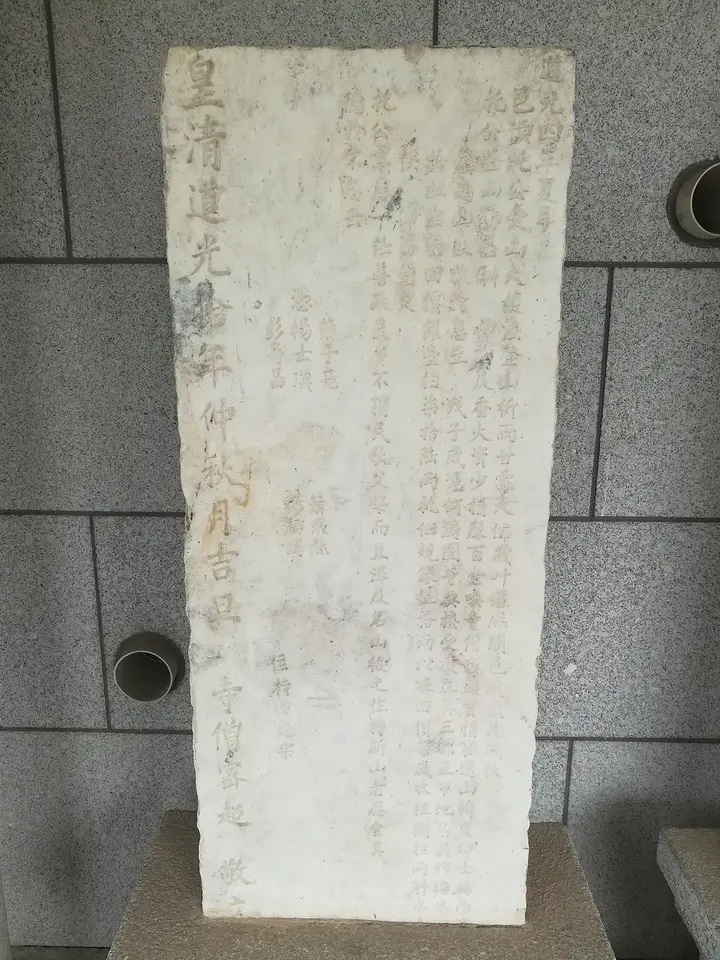
萧子良
Xiao Ziliang (460 – May 4, 494), courtesy name Yunying, was a native of Lanling in South Donghai. A grandson of the founding Emperor Gao (Xiao Daocheng) and the second son of Emperor Wu (Xiao Ze) by Empress Wumu (Pei Huizhao), he was the younger full brother of Crown Prince Wenhui (Xiao Changmao). Entering official service during the late Liu Song dynasty, Xiao Ziliang was created Duke of Wenxi upon the founding of Southern…
Xiao Ziliang (460 – May 4, 494), courtesy name Yunying, was a native of Lanling in South Donghai. A grandson of the founding Emperor Gao (Xiao Daocheng) and the second son of Emperor Wu (Xiao Ze) by Empress Wumu (Pei Huizhao), he was the younger full brother of Crown Prince Wenhui (Xiao Changmao). Entering official service during the late Liu Song dynasty, Xiao Ziliang was created Duke of Wenxi upon the founding of Southern Qi, successively serving as Grand Administrator of Kuaiji and Prefect of Danyang. Celebrated for his administrative benevolence, he abolished predatory central tax missions, dredged ancestral irrigation canals to bring thousands of hectares under cultivation, and disbursed personal funds to succor the poor. In 483, he was elevated to Prince of Jingling, eventually rising to Minister over the Masses, Grand Tutor, and Inspector of Yangzhou. In the history of Chinese literature and thought, Xiao Ziliang occupies a monumental position. In 487, he established his residence at the Western Mansion on Mount Jilong in Jiankang, assembling vast library collections and opening his salon to literary talents from throughout the empire. Under his generous patronage gathered the renowned Eight Friends of Jingling—including Xiao Yan (the future Emperor Wu of Liang), Shen Yue, Xie Tiao, Wang Rong, Xiao Chen, Fan Yun, Ren Fang, and Lu Chui. Championing the tonal theories of Shen Yue, Xiao Ziliang's salon gave birth to the Yongming style of regulated five-character verse, which revolutionized classical prosody and laid the structural foundation for Tang dynasty regulated poetry. Simultaneously, as a devout Buddhist layman, Xiao Ziliang practiced strict vegetarianism and authored the foundational thirty-volume ethical treatise Jingzhuzi. In 489, he engaged the materialist philosopher Fan Zhen in the famous philosophical debate regarding the Mortality of the Soul, defending karmic retribution while displaying immense scholarly tolerance toward his opponent. In 493, following the premature death of Crown Prince Wenhui and Emperor Wu's terminal illness, courtier Wang Rong conspired to elevate the highly revered Xiao Ziliang to the imperial throne. However, Xiao Ziliang hesitated out of fraternal deference, allowing General Xiao Luan to seize the inner palaces and enthrone the youthful imperial grandson Xiao Zhaoye. Although nominally honored as Grand Tutor and Minister over the Masses, Xiao Ziliang fell under intense surveillance from the suspicious emperor and the ambitious Xiao Luan. Closing his doors and succumbing to profound political anxiety, he died of illness in the fourth month of 494 at the age of thirty-five, receiving the posthumous title of Prince Wenxuan. Though lacking the ruthless cunning required for imperial survival, his cultural patronage and moral virtue left an enduring legacy upon Chinese civilization.
Born in Jiangnan as the grandson of Xiao Daocheng and the second son of Xiao Ze and Lady Pei Huizhao.
Appointed Commander of Five Commanderies and Grand Administrator of Kuaiji, reforming judicial administration and suppressing banditry.
Southern Qi was established; created Duke of Wenxi, memorializing Emperor Gao to abolish abusive central tax commissioners.
Appointed Prefect of Danyang; surveyed and dredged the ancient Baixia reservoir, irrigating thousands of hectares of arable land.
Emperor Wu ascended the throne; Xiao Ziliang was elevated to Prince of Jingling with military jurisdiction over five northern commanderies.
Appointed General of the Army Protection and Cavalier Regular Attendant, supervising elite capital palace guards.
Relocated to the Western Mansion on Mount Jilong, establishing his literary salon and gathering the Eight Friends of Jingling.
Elevated to Minister over the Masses and General of Chariots and Cavalry, presiding over ancestral rites and compiling major encyclopedias.
Hosted the famous philosophical debate at the Western Mansion against Fan Zhen's materialist treatise on the Mortality of the Soul.
Disbursed his personal estate to shelter over a thousand abandoned orphans and feed starving refugees following catastrophic floods.
Emperor Wu fell terminally ill; Wang Rong attempted a palace coup to enthrone him, but Xiao Luan intervened to crown Xiao Zhaoye.
Placed under surveillance as Grand Tutor, closed his gates in terror and died in melancholy at age thirty-five, posthumously styled Prince Wenxuan.
Xiao Ziliang was born in the fourth year of Daming (460) during the Liu Song dynasty, tracing his ancestral roots to Zhongduli in Lanling County of South Donghai Commandery. His grandfather Xiao Daocheng was an eminent military general of Liu Song, and his father Xiao Ze was Xiao Daocheng's eldest son. Xiao Ziliang was the second son in the family, distinguished from childhood by his acute intelligence, passion for classical scholarship, and gentle, filial disposition, sharing a profound bond of fraternal affection with his elder brother Xiao Changmao. During the Taiming and Tai'shi eras, as Xiao Daocheng steadily accumulated supreme military authority, Xiao Ziliang received appointments as General Pacifying the North, Junior Clerk to the Prince of Shaoling, and Major of Annan. In early 479, at the age of twenty, Xiao Ziliang was commissioned Bearer of the Staff of Authority, Commander of Military Affairs in Kuaiji, Dongyang, Linhai, Yongjia, and Xin'an, General Who Assists the State, and Grand Administrator of Kuaiji.
Kuaiji Commandery was the economic linchpin of the Sanwu region, blessed with fertile soils and dense populations. However, since the reign of Emperor Xiaowu of Song, the central court had routinely bypassed local magistracies to dispatch central delegates known as Platform Envoys to extract arrears. These central agents abused their authority, terrorizing villages, demanding arbitrary levies, beating local officials, and inflating minor tax arrears a hundredfold, driving impoverished peasants into the mountain wilderness as outlaws. Upon arriving at his post, Xiao Ziliang proved to be an exceptionally compassionate administrator. He traveled across his jurisdiction to inspect peasant households, abolishing predatory surcharges and implementing an enlightened policy toward mountain bandits: granting arable lands, seeds, and draft animals to those who surrendered, while deploying local garrisons to crush unyielding bandit dens. Within months, piracy and brigandage vanished, and civic order was completely restored.
Xiao Ziliang was renowned for his profound reverence for historical antiquity and moral exemplars. When Zhu Bainian, an impoverished scholar celebrated for his filial integrity, passed away leaving his widow destitute, Xiao Ziliang granted her one hundred bushels of grain and exempted an adult laborer from taxes to gather firewood for her household. While inspecting the administrative offices, he discovered an ancient wooden couch once used by the Three Kingdoms Eastern Wu scholar Yu Fan, preserving it with deep veneration. Furthermore, observing that local custom demanded ruinous animal sacrifices at the Temple of Yu the Great, Xiao Ziliang issued an administrative directive: "Emperor Yu wept for the guilty and practiced extreme frugality in diet; simple offerings of melons and zongzi are more than sufficient to convey sincerity." He abolished excessive blood sacrifices, decreeing that annual offerings be restricted to simple woven reed mats and fans, elevating the moral tone of the regional administration.
In the fourth month of 479, Xiao Daocheng deposed the Song emperor and founded the Southern Qi dynasty as Emperor Gao. In recognition of his imperial lineage, Xiao Ziliang was created Duke of Wenxi with an estate of fifteen hundred households. Directly addressing the widespread abuses of the previous dynasty, Xiao Ziliang submitted a famous memorial to Emperor Gao detailing the catastrophic evils of central tax commissioners: "Former platform envoys crowded the imperial highways, showing neither prudence nor diligence, but seeking these appointments out of ruthless greed. The moment they depart the palace gates, their arrogance knows no bounds; quartering themselves in village halls, they practice extortion without restraint. A bolt of cloth is falsely recorded as five; a hundred copper coins are arbitrarily magnified to a thousand. Terrified out of their wits, innocent villagers sell their clothing and exhaust their livestock to satisfy these demands. I humbly submit that all fiscal audits should be entrusted to local commandery administrators according to fixed deadlines, and that all roving central envoys be permanently abolished!" Deeply impressed by his grandson's governance insight, Emperor Gao adopted the proposal, decreeing the immediate abolition of platform envoys throughout the empire.
In the winter of 479, Xiao Ziliang was transferred to the capital region as Bearer of the Staff of Authority and Prefect of Danyang, assuming responsibility for civil administration and public security across Jiankang. In 480, his mother Lady Pei Huizhao passed away. Overcome with grief, Xiao Ziliang observed strict mourning rites and resigned from office. Following the mourning period, Emperor Gao reappointed him General Who Conquers Bandits and Prefect of Danyang. The environs of Jiankang suffered from chronic hydraulic neglect; during spring downpours, the Qinhuai River and surrounding marshes routinely flooded farmland, while summer dry spells caused devastating droughts across the hilly terrain.
Recognizing that stable food supplies were vital to the imperial capital, Xiao Ziliang personally led civil engineers along the northern ridges of Jiankang to survey ancient hydraulic works. He discovered that the Baixia Reservoir, an extensive embankment system constructed during the Eastern Jin dynasty, had fallen into complete disrepair. Xiao Ziliang submitted an exhaustive engineering memorial to Emperor Gao: "Although the territory of Danyang borders the capital, its circumference encompasses nearly a thousand li of plains and wetlands containing numerous ancient dikes. Through poverty and warfare, these agricultural assets have long lain abandoned. I recently dispatched inspectors Yin Mi and Liu Sengyuan to survey Danyang, Liyang, and Yongshi counties, confirming that eight thousand five hundred and fifty-four qing of fertile land can be brought under cultivation. If elevenWan and eight thousand laborers are mobilized to repair the dikes over a single spring, lasting prosperity can be achieved!" Emperor Gao enthusiastically approved the project. Once restored, the Baixia Reservoir impounded waters from the upper Huai streams, irrigating over ten thousand qing of paddy fields and transforming the northern outskirts of Jiankang into a flourishing breadbasket.
In 482, Emperor Gao passed away, and Crown Prince Xiao Ze ascended the throne as Emperor Wu. In 483, in formal recognition of his administrative triumphs, Xiao Ziliang was invested as Prince of Jingling with an augmented estate of two thousand households, appointed Palace Attendant, Bearer of the Staff of Authority, Commander of Military Affairs across five northern commanderies, and General Who Subdues the North. In 484, he entered the central military command as Cavalier Regular Attendant and General of the Army Protection, simultaneously administering the duties of Minister over the Masses. Though holding supreme military authority, Xiao Ziliang was inherently averse to violence; whenever reviewing capital trials and capital sentences, he consistently sought mitigating circumstances to grant imperial clemency, sparing hundreds of condemned lives.
When Emperor Wu launched a sweeping empire-wide census verification campaign that targeted registered households, bureaucratic corruption among verification clerks led to thousands of commoners being wrongfully categorized as wealthy gentry and subjected to confiscatory taxation. Observing rising unrest that eventually triggered peasant rebellions, Xiao Ziliang submitted urgent, confidential memorials to his father, pleading for agricultural mercy: "The state depends upon the populace, and the populace depends upon grain. If tax quotas are pressed with cruel severity during seasons of drought, the people will be driven into banditry. The imperial court should show paternal nurture, cancel outstanding arrears, and rein in inquisitorial clerks!" His courageous interventions substantially tempered the harshest edges of imperial administration, shielding countless families from destitution.
In 487, Xiao Ziliang was formally promoted to Minister over the Masses and General of Chariots and Cavalry, attaining the highest echelon of the imperial government. His elder full brother, Crown Prince Wenhui, presided over the Eastern Palace, while Xiao Ziliang directed affairs from the Western Mansion. With the empire enjoying prolonged external peace and internal prosperity, Xiao Ziliang resolved to deploy his immense wealth and political prestige toward the flourishing of classical culture, morality, and scholarship. That same year, he relocated his official residence to the Western Mansion on Mount Jilong in Jiankang, constructing magnificent pavilions, garden canals, and extensive lecture halls.
Possessing an insatiable passion for literature, Xiao Ziliang founded a dedicated copying bureau within the Western Mansion, employing hundreds of scholars, calligraphers, and scribes to scour Jiangnan for rare scrolls and manuscripts scattered since the fall of the Han and Jin dynasties. Within several years, the private library of the Western Mansion held tens of thousands of volumes, rivaling and in some aspects surpassing the imperial archives. Beyond preservation, Xiao Ziliang directed the compilation of vast reference works and institutional compendiums, including the Comprehensive Register of Ancient and Modern Homonyms, the Fourfold Catalogue of Qi Books, the Treatise on Official Ranks, and diverse literary anthologies. Opening his doors to scholars regardless of aristocratic lineage or southern origins, Xiao Ziliang fostered a golden age of intellectual gathering. Among the hundreds of talents who enjoyed his hospitality, eight individuals achieved immortal literary renown as the Eight Friends of Jingling: Xiao Yan, Shen Yue, Xie Tiao, Wang Rong, Xiao Chen, Fan Yun, Ren Fang, and Lu Chui.
Xiao Ziliang treated these scholars as cherished companions rather than retainers. On tranquil evenings and festival days, he convened elegant literary banquets in the waterside pavilions of the Western Mansion, where wine was served, flutes were played, and poetry was composed late into the night. It was during these gatherings that Shen Yue formulated his groundbreaking phonetic doctrine of the Four Tones and Eight Deficiencies, seeking to harmonize the natural tonal registers of the Chinese language with rhythmic verse structure. Xiao Ziliang embraced and promoted this theoretical breakthrough, actively participating in the composition and critical evaluation of tonally regulated verse. Through the collective genius of the Eight Friends under Xiao Ziliang's patronage, the Yongming style of prosody was born, replacing the loose metrics of early poetry with delicate euphonic balance and strict tonal counterpoint, directly anticipating the regulated poetry of the High Tang.
Parallel to his literary leadership, Xiao Ziliang was celebrated as the foremost Buddhist patron and lay scholar of the Southern Dynasties. Reared in a cultural climate where Buddhism flourished across court society, Xiao Ziliang practiced monastic austerity amidst palatial splendor. Throughout his adult life, he adhered to strict vegetarianism, wore robes of coarse unbleached linen, and faithfully maintained the Buddhist precepts, converting his personal family residence east of Jiankang into the Xianling Monastery to support monastic retreats.
At the Western Mansion, Xiao Ziliang frequently convened grand Buddhist assemblies, including non-discriminating feasts and assemblies of a thousand monks. Ascending the teaching dais in person, he delivered extensive lectures on major Mahayana texts such as the Vimalakirti Nirdesa Sutra and the Lotus Sutra. Integrating monastic discipline with Confucian ethical concepts of filial piety and civic loyalty, he authored the monumental thirty-volume moral treatise Jingzhuzi (The Pure Abider's Path of Pure Conduct), advocating the release of living creatures, charity toward orphans, and internal purification, which became a foundational text for lay Buddhist ethics in southern China.
In 489, during a theological gathering at the Western Mansion, Xiao Ziliang engaged in dialogue with Fan Zhen, an outspoken materialist philosopher serving as a staff officer in his administration. Observing the stark inequities of human society, Xiao Ziliang posed a question: "If you do not believe in the law of karmic cause and effect, how do you account for the vast disparities between the exalted and the humble, the wealthy and the poor in this world?" Fan Zhen famously replied with the metaphor of the wind-blown blossoms: "Human lives are like the blossoms falling from a flowering tree. When shaken by the breeze, some petals drift past silken curtains and settle upon luxurious divans, while other petals are swept over broken fences and plunge into the filth of a cesspool. Those petals that alight upon cushions represent Your Highness; those that fall into the mire represent myself. Wealth and poverty, honor and disgrace, arise entirely from natural happenstance; how can there be any such thing as karmic retribution!"
Stunned by this total rejection of spiritual afterlife, Xiao Ziliang organized a sustained intellectual response when Fan Zhen subsequently published his celebrated treatise, On the Mortality of the Soul, arguing that consciousness is merely an attribute of the physical body and perishes completely upon bodily dissolution. Deeply concerned that the denial of moral retribution would dismantle civic morality, Xiao Ziliang mobilized dozens of eminent courtiers, including Shen Yue, to compose formal refutations. He even dispatched Wang Rong with promises of imperial promotion to persuade Fan Zhen to recant his controversial doctrine. When Fan Zhen proudly laughed and declared that he would never sell his philosophical convictions for high office, Xiao Ziliang harbored no vindictiveness; instead, he admired Fan Zhen's intellectual integrity, allowing the treatise to circulate freely and conducting the controversy as a model of elevated philosophical debate.
During his later years, as Emperor Wu aged and Crown Prince Wenhui grew increasingly extravagant in the Eastern Palace, court and country placed their hopes upon the virtuous and modest Prince of Jingling. Xiao Ziliang was appointed Palace Attendant, Director of the Secretariat, and Inspector of Yangzhou, wielding authority over the core metropolitan province. Despite his preeminence, he consistently maintained absolute humility, avoiding all ostentation to shield himself from factional suspicion within the imperial clan.
In the autumn of 491, catastrophic torrential downpours struck the Yangtze and Lake Tai basins. The floodwaters breached river dikes across Sanwu, submerging hundreds of thousands of hectares of crops and driving the population into catastrophic famine. Starving refugees crowded the roadsides of Jiankang, while dead bodies floated in riverways. Appalled by the devastation, Xiao Ziliang immediately emptied the entire private treasury of his princely estate. He ordered all silks, brocades, and valuables in his storehouses sold to purchase millet and rice, establishing dozens of soup kitchens across the outskirts of Jiankang, Jingkou, and Kuaiji, distributing warm gruel and medical broths twice daily to destitute survivors.
Witnessing that impoverished parents, unable to feed their infants, were abandoning newborn babes along riverbanks and roadsides, Xiao Ziliang dispatched mounted officers to rescue every abandoned child across the capital region. Over one thousand orphans were gathered into dedicated municipal shelters established by Xiao Ziliang, who funded their food, clothing, and wet nurses out of his own pocket. As these children grew older, he hired classical tutors to instruct them in reading and ethics. The grateful populace throughout Jiangnan revered him as a living bodhisattva, erecting shrines in his honor across the southern commanderies.
In the first month of 493, Crown Prince Wenhui passed away unexpectedly at the age of thirty-six, plunging the Southern Qi dynasty into acute succession crisis. Emperor Wu was bedridden with terminal illness. According to ancestral dynastic precedent, the imperial inheritance devolved upon Crown Prince Wenhui's eldest son, Prince of Nanjun Xiao Zhaoye. However, Xiao Zhaoye was notoriously frivolous, deceitful, and addicted to theatrical extravagance, commanding zero respect among senior statesmen. The general consensus of the imperial court held that in times of crisis, the throne should pass to an experienced, mature prince of exemplary moral virtue—a role for which Xiao Ziliang was the universally acclaimed candidate.
Wang Rong, a member of the Eight Friends who commanded the elite palace guards, recognized the turning point of dynastic fortune. In the seventh month of 493, as Emperor Wu lay dying in the Yanchang Hall, Wang Rong donned battle armor, posted guards at the palace gates, and barred Xiao Zhaoye from entering the bedchamber, sending urgent dispatches to Xiao Ziliang imploring him to enter the palace and assume the throne. However, Xiao Ziliang was inherently gentle, hesitant, and terrified of shedding imperial blood; paralyzed by indecision, he failed to march his troops to the palace gates. In this critical vacuum, General Xiao Luan, an astute and ruthless imperial cousin, broke through the perimeter with veteran shock troops. Brandishing Emperor Wu's deathbed testament, Xiao Luan disarmed Wang Rong's guards and ushered Xiao Zhaoye onto the throne. Wang Rong was immediately thrown into the imperial prison and forced to take poison.
Following Xiao Zhaoye's accession, Xiao Luan seized absolute control of the military government. To placate public opinion, the court conferred upon Xiao Ziliang the lofty titles of Grand Tutor and Minister over the Masses. Yet his position had become mortally precarious. The young emperor Xiao Zhaoye harbored intense suspicion toward the uncle who had almost claimed his crown, while the ambitious Xiao Luan regarded the beloved prince as the primary obstacle to his own usurpation, encircling the Western Mansion with spies and military patrols.
Realizing that his moral ideals were helpless against imperial slaughter, Xiao Ziliang fell into profound despair. He severed all contact with former friends and literati, spending his final months in solitary meditation and prayer within his family shrine. Worn down by fear, sorrow, and bitter remorse over the execution of his friends, he fell gravely ill in the spring of 494. On May 4, 494 (the 16th day of the 4th month of Longchang), Xiao Ziliang passed away in his residence on Mount Jilong at the young age of thirty-five. The capital population and scholars across the realm wept bitterly in the streets at the passing of their patron. He was posthumously styled Prince Wenxuan. Only three months after his death, Xiao Luan assassinated Emperor Xiao Zhaoye, launching a ferocious slaughter that wiped out the sons of Emperor Gao and Emperor Wu; yet Xiao Ziliang's legacy of cultural brilliance and humane charity endured forever in the annals of southern literature.
FIGURES ASSOCIATED WITH THIS DYNASTY