Breaking Rebel Lines in Wusun
While garrisoning Chigu City under Marquis Chang Hui, Xin Qingji charged into battle to smash the rebel Wusun Xihou, earning promotion to Gentleman-of-the-Palace and subsequent elevation to Colonel.
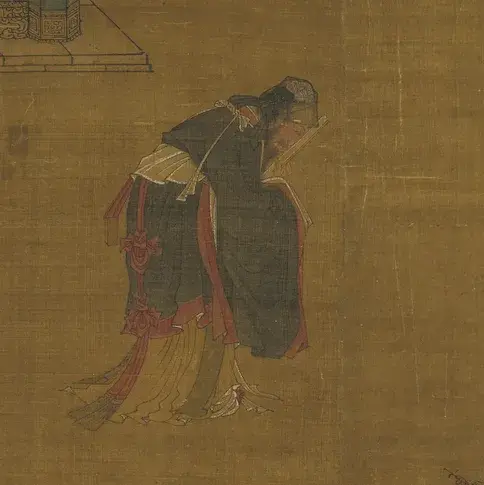
辛庆忌
Xin Qingji (died 12 BCE), styled Zizhen, a native of Didao County in Longxi Commandery (south of modern Lintao, Gansu), was an illustrious military general and high-ranking statesman who served through the reigns of Emperors Xuan, Yuan, and Cheng of the Western Han dynasty. The son of Xin Wuxian, the General Who Defeated the Qiang, Xin Qingji joined the army in his youth through ancestral privilege as Assistant of the Right…
Xin Qingji (died 12 BCE), styled Zizhen, a native of Didao County in Longxi Commandery (south of modern Lintao, Gansu), was an illustrious military general and high-ranking statesman who served through the reigns of Emperors Xuan, Yuan, and Cheng of the Western Han dynasty. The son of Xin Wuxian, the General Who Defeated the Qiang, Xin Qingji joined the army in his youth through ancestral privilege as Assistant of the Right Regiment and accompanied Marquis Chang Hui to open military agricultural colonies at Chigu City in Wusun. In 52 BCE, when Wusun erupted into internal warfare between the Great and Lesser Kunmi, Xin Qingji led the vanguard to shatter the rebel Xihou, for which he was promoted to Gentleman-of-the-Palace and later Colonel, subsequently garrisoning the Kingdom of Yanqi to pacify the Western Regions. Under Emperor Yuan, he served as Chief Clerk of Jincheng, was recommended as Flourishing Talent, and governed Zhangye and Jiuquan commanderies with exceptional civic benevolence and military discipline. Under Emperor Cheng, he advanced to Grand Master for Splendid Happiness and Commander of the Capital Guard (Zhijinwu), before being temporarily demoted due to a family vendetta with the clan of Zhao Chongguo; he was subsequently reinstated through the strong recommendation of Supreme General Wang Feng, serving as Minister of the Household (Guangluxun) and General of the Left. During the crisis when District Magistrate Zhu Yun violently broke the palace balustrade while demanding the execution of the emperor's corrupt tutor Zhang Yu, Xin Qingji dramatically intervened, prostrating himself in the imperial hall until his forehead bled to save Zhu Yun from summary execution. Passing away in 12 BCE, Xin Qingji was celebrated throughout the Western Han for his strategic brilliance, moral integrity, and steadfast defense of righteous officials.
While garrisoning Chigu City under Marquis Chang Hui, Xin Qingji charged into battle to smash the rebel Wusun Xihou, earning promotion to Gentleman-of-the-Palace and subsequent elevation to Colonel.
Following Emperor Yuan's accession, Xin Qingji served as Chief Clerk of Jincheng, was nominated as Flourishing Talent, and governed Zhangye and Jiuquan, winning profound popular acclaim.
Emperor Cheng summoned Xin Qingji to the capital as Grand Master for Splendid Happiness, later promoting him to Commander of the Capital Guard (Zhijinwu).
Implicated in a blood feud between his sons and the clan of Zhao Chongguo, Xin Qingji was demoted to Governor of Jiuquan; within a year, Supreme General Wang Feng strongly recommended his restoration as Zhijinwu.
After a minor procedural infraction, he governed Yunzhong Commandery before being recalled as Minister of the Household, General of the Right, and subsequently General of the Left.
When Zhu Yun broke the palace balustrade demanding the death of imperial tutor Zhang Yu, Xin Qingji threw off his court cap and knocked his head against the stone steps until blood flowed, saving Zhu Yun from death.
Xin Qingji died of old age while serving as General of the Left; his three sons, Xin Tong, Xin Zun, and Xin Mao, all inherited his military competence and attained high commandery governorships.
Xin Qingji was born into a distinguished martial lineage on the western frontier. His father, Xin Wuxian, had served as the General Who Defeated the Qiang under Emperor Xuan, campaigning alongside renowned strategist Zhao Chongguo to pacify the Xianling Qiang tribes around Qinghai Lake. Imbued from childhood with military theory, equestrian archery, and border statecraft, Xin Qingji entered imperial service as Assistant of the Right Regiment (Youxiao Cheng) through his father's meritorious status.
Shortly thereafter, Xin Qingji was assigned to the command of Chang Hui, the Marquis of Changluo, who was dispatched by the Han court to open state-run agricultural garrisons (Tuntian) at Chigu City, the capital of Wusun near modern Lake Issyk-Kul. In 52 BCE, internal discord erupted between the Great Kunmi and Lesser Kunmi of Wusun, and the rebel Wusun Xihou launched an assault against the Han garrison. In the heat of battle, Xin Qingji personally spearheaded a shock assault against the rebel lines, routing the enemy troops and securing the fortress. Impressed by his peerless courage, Chang Hui submitted a commendation to Emperor Xuan, who promoted Xin Qingji to Gentleman-of-the-Palace (Shilang) and soon elevated him to military Colonel (Xiaowei).
Subsequently, as the city-states of the Tarim Basin vacillated between submission to Han and allegiance to the Xiongnu, Xin Qingji was entrusted with garrisoning the Kingdom of Yanqi (modern Yanqi, Xinjiang). Establishing defensive farming colonies and maintaining rigorous administrative fairness, Xin Qingji intimidated hostile steppe factions while fostering peaceful trade among the oasis states, consolidating the eastern flank of the Western Regions. Upon completing his mission, he returned to the capital and was appointed Imperial Receptionist (Yezhe).
In 48 BCE, following the accession of Emperor Yuan, Xin Qingji was appointed Chief Clerk of Jincheng Commandery. In Jincheng, he demonstrated that he possessed sophisticated civil administrative acumen alongside his martial talents. Recognized for administrative excellence, he was recommended as a Flourishing Talent (Maocai) and promoted to Gentleman and Commander of Chariots and Cavalry (Cheqijiang). He subsequently returned to the northwest as Grand Administrator of Zhangye and later of Jiuquan.
During his tenures in Zhangye and Jiuquan, Xin Qingji treated his soldiers with deep affection while governing the civilian populace with leniency and justice. He directed large-scale land reclamation, repaired irrigation channels, and fostered agriculture and animal husbandry along the Hexi Corridor. Under his administration, the frontier commanderies enjoyed sustained peace and abundant harvests, earning him universal praise from border communities.
In 32 BCE, Emperor Cheng summoned Xin Qingji to Chang'an, appointing him Grand Master for Splendid Happiness (Taizhong Dafu) and subsequently promoting him to Commander of the Capital Guard (Zhijinwu), placing him in charge of metropolitan security. Generations earlier, his father Xin Wuxian and Senior General Zhao Chongguo had harbored bitter political enmities over campaigns against the Qiang, which fostered deep resentment between their descendants. A member of the Zhao clan had previously murdered a relative of the Xin family; during Xin Qingji's tenure as Zhijinwu, his son killed a member of the Zhao clan in vengeance. Implicated in the illegal blood feud, Xin Qingji was demoted to Grand Administrator of Jiuquan.
Within a year, Supreme General Wang Feng submitted a passionate memorial to Emperor Cheng: "Xin Qingji previously governed two frontier commanderies with outstanding distinction; upon being summoned to court, both ministers and populace looked up to him with admiration. He is upright in character, combines benevolence with courage, and understands grand military strategy. He is truly a pillar of the state. It is unfitting for me to occupy a position superior to Xin Qingji." Emperor Cheng was deeply moved and reinstated Xin Qingji as Grand Master for Splendid Happiness, later restoring him as Commander of the Capital Guard. Following another minor infraction, he briefly served as Governor of Yunzhong before being recalled to the Nine Ministers as Minister of the Household (Guangluxun).
During the mid-reign of Emperor Cheng, the emperor's former tutor, Marquis of Fuping Zhang Yu, accumulated enormous political influence. Leveraging his special relationship with the emperor and allying with the imperial maternal in-laws, Zhang Yu dominated the court, while cowed ministers dared not criticize his corruption. District Magistrate Zhu Yun of Huaili, a man of fearless rectitude, secured an imperial audience and boldly petitioned Emperor Cheng to grant him the Shangfang dragon-slaying sword to execute Zhang Yu, in order to cleanse the imperial administration.
Infuriated by Zhu Yun's public denunciation of the imperial tutor, Emperor Cheng condemned him for insulting his teacher and ordered palace guards to drag Zhu Yun out for immediate execution. Zhu Yun desperately seized the vermilion balustrade of the palace hall, clinging with such tenacity that the balustrade snapped. While the entire assembly of high ministers stood paralyzed with terror, Xin Qingji stepped forward from the ranks.
Descending to the foot of the imperial dais, Xin Qingji stripped off his court cap and hairpins, prostrating himself before the furious emperor. Pleading with tears, Xin Qingji declared: "Zhu Yun has always been known for his eccentric and fearless candor. If his words are true, he must not be executed; even if his words are mistaken, Your Majesty should show broad imperial tolerance. I am willing to guarantee Zhu Yun's loyalty with my own life!" As the emperor persisted in his rage, Xin Qingji repeatedly struck his forehead against the stone paving steps until blood poured over his face and stained the imperial stairs. Convinced by Xin Qingji's self-sacrificing sincerity and honoring his stature as a pillar of the realm, Emperor Cheng relented and pardoned Zhu Yun. When court attendants later sought to repair the broken balustrade, the emperor ordered: "Leave the broken balustrade unrepaired, so that it may forever commemorate an outspoken minister and a loyal defender!" Xin Qingji's intervention entered Chinese history as an immortal act of bureaucratic valor.
Xin Qingji's moral authority was celebrated across the empire. In the late reign of Emperor Cheng, when ominous cosmic portents troubled the capital, Chancellor's Director of Retainers He Wu memorialized the throne: "In ancient times, Jin Duke Xian could not sleep peacefully while Gong Zhiqi remained in Yu; and Prince Liu An of Huainan abandoned his treasonous plots because Supreme General Wei Qing stood in the Han court. The presence of virtuous commanders in high office deters disasters before they manifest. Minister of the Household Xin Qingji embodies benevolence and righteousness, combines gentleness with unyielding resolve, and possesses far-reaching strategic vision. In frontier commanderies he repeatedly shattered the barbarians; in the capital he commands total loyalty. He is truly a general of genius and a pillar of the empire!" Emperor Cheng appointed Xin Qingji as General of the Right with special court privileges, later advancing him to General of the Left, ranking directly behind the Supreme General.
Throughout his tenure in the highest military commands, Xin Qingji remained humble, frugal, and unassuming. In 12 BCE, he passed away of old age while in active office and was granted an imperial state funeral. His three sons inherited his military talent: eldest son Xin Tong served as Palace Commander, second son Xin Zun governed Jiuquan, and youngest son Xin Mao served as Chief of Water and Parks, all attaining high renown as frontier governors.
From his daring assault at Chigu City that stabilized Wusun to his strategic colonization of Yanqi, Xin Qingji secured the territorial boundaries of the Western Regions Protectorate. Later, during his governorships of Zhangye and Jiuquan, his dual emphasis on strict military vigilance and agricultural development safeguarded the Hexi corridor, creating an era of peace and prosperity along the Silk Road.
In the dramatic confrontation surrounding Zhu Yun's breaking of the balustrade, Xin Qingji demonstrated the highest form of ministerial courage. Risking his life, rank, and family by defying the emperor's lethal wrath, he stained the imperial court steps with his own blood to shield an outspoken critic of corruption. His selfless intervention preserved the spirit of political criticism within the Western Han court and established an eternal model of ministerial integrity.
FIGURES ASSOCIATED WITH THIS DYNASTY