Birth in a Renowned Lineage
Born in Gaoyou, Jiangsu; displayed astonishing precocity, mastering the Thirteen Classics by age eight.
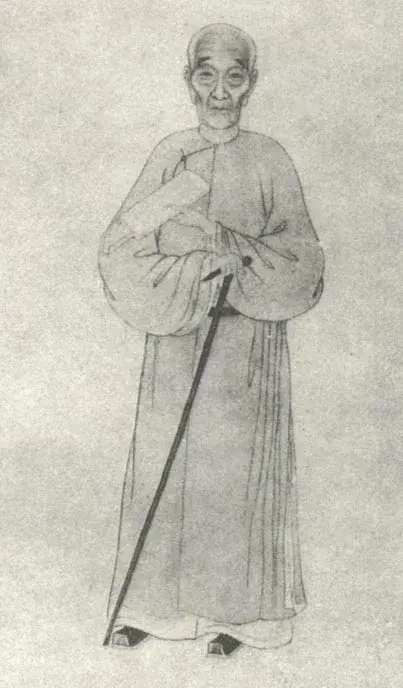
王念孙
Wang Niansun (王念孙, 1744–1832), courtesy name Huaizu (怀祖) and art name Shiqu (石臞), was a native of Gaoyou, Jiangsu Province. He was a preeminent classical scholar, phonetician, textual critic, and hydraulic official of the mid-Qing dynasty, celebrated as a founding master of the Wan School of evidential scholarship. Born into an elite scholar-official lineage, he was recognized as a child prodigy who mastered the Thirteen…
Wang Niansun (王念孙, 1744–1832), courtesy name Huaizu (怀祖) and art name Shiqu (石臞), was a native of Gaoyou, Jiangsu Province. He was a preeminent classical scholar, phonetician, textual critic, and hydraulic official of the mid-Qing dynasty, celebrated as a founding master of the Wan School of evidential scholarship. Born into an elite scholar-official lineage, he was recognized as a child prodigy who mastered the Thirteen Classics by age eight and studied directly under the great evidential scholar Dai Zhen. After passing the imperial examinations as a jinshi in 1775, he served as a Hanlin Bachelor, Secretary and Director in the Ministry of Works, Censor of the Shaanxi Circuit, and Supervising Secretary for Personnel. In 1799, upon the personal assumption of power by Emperor Jiaqing, Wang Niansun boldly submitted the first imperial memorial impeaching the corrupt grand chancellor Heshen, shaking the court with his moral rectitude. He subsequently devoted over a decade to waterways administration, serving as Intendant of the Zhili Yongding River and Shandong Grand Canal circuits, where he personally surveyed flood topographies and drafted Dahe yi (Treatise on River Channeling). In scholarship, Wang Niansun and his son Wang Yinzhi were hailed as the "Two Wangs of Gaoyou," standing alongside Qian Daxin, Lu Wenchao, Shao Jinhan, and Liu Taigong as the "Five Gentlemen." Revolutionizing traditional philology, Wang Niansun rejected the static method of analyzing character forms in favor of seeking ancient meanings through ancient sounds, uncovering the phonetic principles of semantic extension (yitong and yilei). He systematized archaic Chinese phonology into twenty-one ancient rhyme categories (guyun ershiyibu). Over ten grueling years, he completed his masterwork Guangya shuzheng (Sub-commentary on the Expanded Erya), and later produced Dushu zazhi (Reading Notes), in which he formulated the celebrated sixty-two canons of textual scribal errors, establishing an enduring scientific paradigm for Chinese classical philology. He passed away in Beijing in 1832 at the age of eighty-nine.
Born in Gaoyou, Jiangsu; displayed astonishing precocity, mastering the Thirteen Classics by age eight.
Placed first in the prefectural examination, winning praise from Educational Commissioner Liu Yong.
Received by Emperor Qianlong during his southern tour and granted the juren degree by special imperial favor.
Joined the literary secretariat of Zhu Yun, collaborating with Wang Zhong, Zhang Xuecheng, and Shao Jinhan on philological studies.
Achieved the jinshi degree, entered the Hanlin Academy, and was reassigned to the Ministry of Works, launching his hydraulic career.
Served as Collator of Seal and Clerical Scripts in the Siku Quanshu Commission and co-authored Heyuan jilüe.
Began writing Guangya shuzheng, spending a decade synthesizing phonetic alternation and semantic evolution.
Impeached Grand Councilor Heshen upon Jiaqing's accession; appointed Intendant of the Yongding River Circuit.
Accepted responsibility for a river breach; retained to supervise repairs and subsequently transferred to the Shandong Canal Circuit.
Stepped down from bureaucratic service following recurring floods along the Yongding River, retiring with his official rank.
Integrated Gu Guangqi's critical collations into Dushu zazhi, expanding his renown across Qing scholarly circles.
Passed away at his residence in Beijing at the age of eighty-nine, mourned as a titan of evidential learning.
Wang Niansun was born on April 25, 1744, in Gaoyou, Yangzhou Prefecture, Jiangsu Province, into an eminent lineage of scholar-officials. His father, Wang Anguo, was a celebrated statesman who rose to Minister of Personnel and concurrent Supervisor of the Ministry of Works, renowned for his strict integrity and incorruptibility. Nurtured in this disciplined scholarly tradition, Wang Niansun exhibited extraordinary intellectual gifts from early childhood. Under his father's rigorous tutelage, he mastered the entire corpus of the Thirteen Classics by age eight, while reading extensively across the dynastic standard histories and Sima Guang's Comprehensive Mirror in Aid of Governance.
As a youth, Wang Niansun became a disciple of Dai Zhen, the intellectual patriarch of the Wan School of Qing evidential scholarship. Dai Zhen's pioneering methodology—emphasizing rigorous empirical verification, philological rigor, and investigating semantics through phonetics—exerted a decisive and lifelong influence on Wang's intellectual trajectory. In 1761, at age seventeen, Wang Niansun placed first in the Yangzhou prefectural examination. Both Educational Commissioner Liu Yong and Salt Distribution Commissioner Lu Jianzeng showered him with admiration, recognizing him as a future leader of classical scholarship.
In 1765, Emperor Qianlong undertook his fourth southern inspection tour. While the imperial retinue rested in Yangzhou, local sons of high officials were granted an imperial audience. Wang Niansun presented an essay of his own composition. Impressed by his erudition and elegant classical prose, Emperor Qianlong conferred upon him the juren degree by special imperial decree. In 1766, Wang Niansun traveled to Beijing for the metropolitan examinations. During his stay, he paid respects to leading scholars including Zhu Yun, Cheng Yaotian, and Ren Dachun. On his journey home, he studied Jiang Yong's Standards of Ancient Rhymes, realizing that Gu Yanwu's ten-category ancient rhyme system was overly rigid, and began formulating his own twenty-one-category archaic phonological scheme based on the Classic of Poetry.
In 1769, Wang Niansun sat for the metropolitan examinations a second time without success. Undaunted, he engaged in deep discussions with Zhu Yun regarding the six principles of Chinese character formation, and commissioned his friend Li Wenzao to acquire a rare Northern Song block-printed edition of the Shuowen jiezi to ground his lexical studies. In the winter of 1772, when Zhu Yun served as Educational Commissioner of Anhui and gathered promising scholars, Wang Niansun joined his staff alongside the gifted Yangzhou scholar Wang Zhong. In this vibrant intellectual retreat, Wang Niansun collated Xu Kai's recension of the Shuowen jiezi for Zhu Yun, composing an influential analytical preface, while engaging in daily scholarly exchanges with Shao Jinhan, Zhang Xuecheng, Hong Liangji, and Huang Jingren.
In 1775, at age thirty-two, Wang Niansun passed the metropolitan examinations and obtained the jinshi degree, being chosen as a Bachelor in the Hanlin Academy. Upon concluding his Hanlin training, his practical grasp of administrative statecraft earned him an appointment as Secretary in the Ministry of Works. He soon advanced to Bureau Director in the Department of Waterways, entering the sphere of national water conservation and canal maintenance. In this role, he thoroughly studied imperial administrative regulations, classical treatises like Li Daoyuan's Commentary on the Water Classic, and historical hydraulic gazetteers.
Later, Wang Niansun transitioned to the surveillance bureaucracy, serving as Censor of the Shaanxi Circuit and Supervising Secretary in the Office of Scrutiny for Personnel. In 1780, classical master Lu Wenchao sent his collated manuscript of the Da Dai Liji to Wang Niansun, seeking his critical revisions. That same year, Wang was appointed Collator of Seal and Clerical Scripts for the imperial Siku Quanshu project. In 1782, Emperor Qianlong decreed the compilation of Heyuan jilüe (A Brief Account of the River Sources). Because of his hydraulic erudition, Wang Niansun was appointed compiler alongside Ren Dachun and Wu Shenglan. In 1788, he formally commenced writing Guangya shuzheng. The following year, philologist Duan Yucai visited the capital, and the two scholars forged an enduring intellectual brotherhood, refining their theories of ancient phonology.
Throughout his bureaucratic career, Wang Niansun maintained a reputation for unyielding moral fortitude. While dedicated to classical studies, he was fearless in remonstrance. As a supervisory censor, he submitted frank memorials detailing fiscal shortfalls, salt monopoly abuses, price stabilization, and official appointments, earning deep respect for his unbending impartiality.
In the first month of 1799, the retired Emperor Qianlong died, and Emperor Jiaqing assumed personal rule. At the time, Grand Councilor Heshen had monopolized power for over two decades, controlling imperial finances and surrounding himself with extensive networks of sycophants. The court was paralyzed with fear, and no minister dared to challenge him openly. Discerning Emperor Jiaqing's determination to eradicate corruption, Wang Niansun stepped forward during the imperial mourning period to draft the historic first memorial indicting Heshen.
Wang Niansun laid out dozens of specific charges against Heshen, accusing him of usurping imperial authority, embezzling state treasuries, extorting provincial governors, and distorting bureaucratic promotions. This fiercely argued indictment provided the legal catalyst Emperor Jiaqing needed to arrest Heshen, who was subsequently condemned and forced to commit suicide. Concurrently, facing the White Lotus Rebellion in Hubei and Sichuan, Wang Niansun submitted a six-point strategic memorandum grounded in classical statecraft, winning high praise from the emperor.
Recognizing Wang Niansun's exceptional competence in hydraulic engineering, Emperor Jiaqing promoted him in 1799 to Intendant of the Zhili Yongding River Circuit. The Yongding River, notorious for its torrential silt-laden currents, was the most perilous watercourse threatening the capital region. Wang Niansun rejected comfortable desk-bound supervision, donning peasant clothes and straw sandals to traverse hundreds of li along the dikes in all weathers. He surveyed treacherous embankment bottlenecks, recorded flow velocities, and eliminated bureaucratic corruption among river overseers.
In 1801, relentless summer rains triggered a catastrophic breach along the Yongding dikes. Wang Niansun accepted personal responsibility and was stripped of rank, but the emperor ordered him to remain on site to oversee reconstruction. Upon completing the works, he was reinstated and dispatched to Henan to survey a breach along the Yellow River at Hengjialou, followed by assignments managing waterways at Taizhuang. He was then promoted to Intendant of the Shandong Grand Canal Circuit, directing canal grain transport defenses for six years.
In Shandong, when a sharp dispute arose between the Director-General of Waterways and the Governor of Shandong over diverting Yellow River waters into the canal, Emperor Jiaqing summoned Wang Niansun to court. Wang convincingly demonstrated that bringing silt-heavy Yellow River water into the canal would clog Dongping and Baoying lakes, causing long-term ecological disaster. In 1809, Wang collaborated with Zhao Peixiang on judicial matters and was reappointed to the Yongding River Circuit, surveying the Tang and Zhulong rivers in western Zhili. In 1810, following another major summer flood, Wang Niansun resigned due to ill health, and the emperor granted his honorable retirement with original official rank.
After retiring, Wang Niansun resided alternately in Yangzhou and Beijing, withdrawing entirely from secular administration to dedicate his remaining years to classical philology. His scholarly stature was revered throughout the empire as a supreme intellectual authority. Guided by his patient mentoring, his eldest son Wang Yinzhi achieved the highest academic honors, rising to Minister of Works and Minister of Rites. Together, father and son established the renowned Gaoyou School of Qing evidential scholarship.
In his final years, Wang Niansun continued to refine his masterworks Guangya shuzheng and Dushu zazhi, collating ancient texts such as the Huainanzi, Guanzi, Mozi, and Xunzi. In 1821, he published critical notes on the Huainanzi based on Gu Guangqi's recensions, evaluated Ding Lüheng's ancient rhyme treatises, and corresponded with Jiang Yougao on historical linguistics. In 1823, on his eightieth birthday, statesmen and scholars across China composed celebratory verses in his honor. In 1825, Emperor Daoguang conferred upon him fourth-rank ministerial honors and invited him to attend the prestigious Luming Banquet for a second time. On February 25, 1832, Wang Niansun passed away peacefully at his Beijing residence at age eighty-nine, mourned across China as an incomparable master of learning.
Wang Niansun's foremost scholarly monument is his ten-volume Guangya shuzheng (Sub-commentary on the Expanded Erya). The original Guangya, compiled by Cao Xian during the Three Kingdoms period, was an encyclopedic treasury of pre-Qin and Han vocabulary, but centuries of transmission had corrupted the text with thousands of copyist errors. Beginning in 1788, Wang Niansun devoted ten years of monastic research to the text, completing his commentary in 1796.
In this work, Wang Niansun made a breakthrough by discarding the traditional fixation on external graph forms in favor of historical phonetics. He formulated the foundational principle: "The essence of exegesis resides in sound; words sharing the same sound often share the same meaning." By tracking archaic phonetic shifts and rhyme categories, he used sound to uncover original semantic roots, differentiating loan characters from root words and correcting over a thousand scribal errors. He developed the theoretical concepts of semantic families (yilei) and semantic connectivity (yitong), authoring specialized studies such as Shi Da (Explaining Greatness) to trace etymological cognates. His work transformed traditional glossing into a rigorous theoretical science.
In the realm of historical Chinese phonology, Wang Niansun built upon the earlier work of Gu Yanwu and Jiang Yong to construct a definitive classification of Old Chinese phonology. Analyzing all rhyming syllables across the pre-Qin Classic of Poetry and Songs of Chu, supplemented by phonetic loan evidence from early classical literature, he systematized archaic rhyming categories into twenty-one distinct ancient rhyme groups, documented in his Guyun pu (Tables of Ancient Rhymes).
Wang Niansun's crucial theoretical insight lay in demonstrating the internal acoustic laws governing phonetic alternation, particularly the relationship between open, nasal, and checked codas (yinyang duizhuan). By establishing that semantic derivation operated through regular phonetic shifts, he freed the study of ancient Chinese phonology from the anachronistic constraints of the medieval Qieyun system, laying an unshakeable foundation for modern historical Chinese linguistics.
In textual criticism and classical collation, Wang Niansun's eighty-two-volume Dushu zazhi (Reading Notes) stands as a masterwork of evidential methodology. The work provides extensive, line-by-line textual restorations for challenging ancient texts including the Lost Book of Zhou, Stratagems of the Warring States, Records of the Grand Historian, Book of Han, Guanzi, Mozi, Xunzi, and Huainanzi. For the Huainanzi alone, he rectified more than nine hundred textual corruptions.
More importantly, Wang Niansun elevated textual criticism from intuitive guesswork to an inductive science. From his vast collation experience, he extracted the celebrated sixty-two canons of scribal corruption, categorizing textual errors into systematic patterns such as inverted characters, accidental interpolations, omissions, context-induced intrusions, and graphic confusions resulting from cursive script. He established the golden rule of textual collation: "Correct boldly when internal and external evidence is irrefutable; leave unchanged when proof is deficient." His methodology directly inspired his son Wang Yinzhi to author Jingyi shuwen and Jingchuan shici, which analyzed 160 classical grammatical particles.
During the late Qianlong era, Grand Councilor Heshen dominated the central court for more than twenty years, building an all-encompassing network of political cronyism and extortion while ordinary officials remained silent out of terror. In 1799, upon Emperor Jiaqing's assumption of direct imperial rule, Wang Niansun demonstrated singular political courage by submitting the opening memorial that dismantled Heshen's regime.
Wang Niansun's indictment went far beyond exposing financial embezzlement, cutting to the constitutional core of Heshen's crimes: forging imperial decrees, subordinating the Grand Secretariat, persecuting upright censors, and corrupting imperial personnel selections. His bold intervention broke the prevailing climate of fear, directly prompting Emperor Jiaqing to arrest Heshen and seize his colossal fortune, striking a historic blow against institutional corruption.
Wang Niansun was not merely a cloistered scholar; he was a dedicated civil engineer who put Confucian statecraft into direct practice. Serving as Intendant of the Zhili Yongding River and Shandong Grand Canal circuits for more than a decade, he conducted empirical surveys across the Yellow River, Grand Canal, and Hai River systems, compiling his influential hydraulic treatise Dahe yi.
In flood mitigation, he championed adapting to natural topography rather than imposing artificial blockages. When Yellow River breaches occurred at Hengjialou and Taizhuang, he was personally dispatched to direct emergency defenses. Confronting water shortages in Shandong's Lake Weishan, he identified silt accumulation along the Niutou River and successfully dredged the channel to restore tributary inflows. At the Linqing Sluice, where low-lying banks caused canal spillage, he reinforced embankments to retain the Wen River waters, timing sluice openings to flush out accumulated sediment. His resolute opposition to reckless schemes diverting the Yellow River into the Grand Canal protected thousands of li of farmland from recurrent inundation.
FIGURES ASSOCIATED WITH THIS DYNASTY