Youth in Shanyin
Born into a farming family in Shanyin, Kuaiji; transcribed books for wages, memorizing classics and studying astronomy.
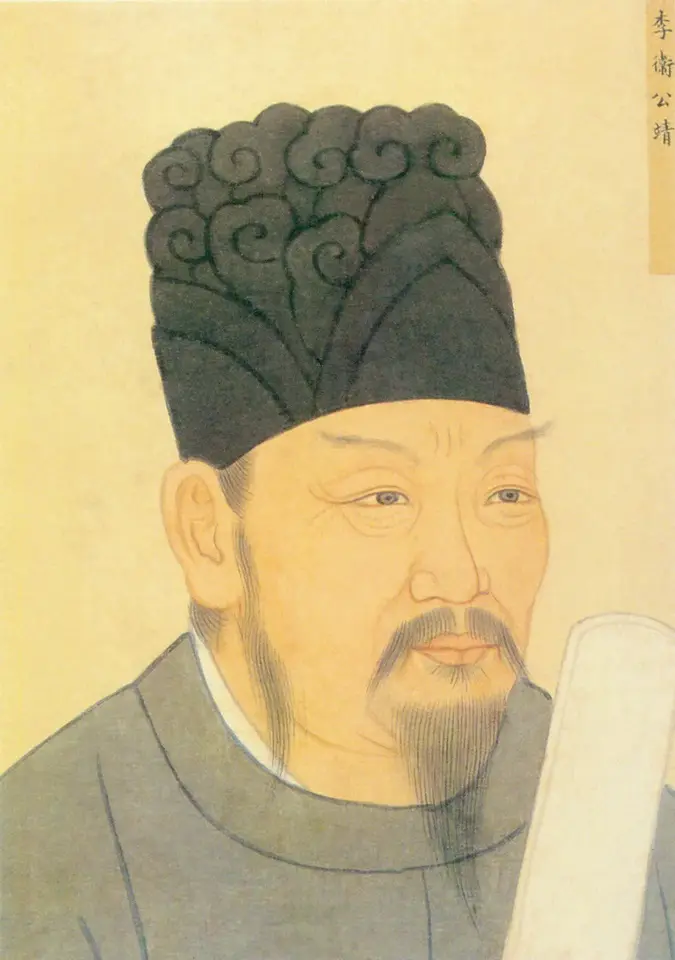
阚泽
Kan Ze (阚泽; d. 243), courtesy name Derun, was a native of Shanyin County, Kuaiji Commandery (present-day Keqiao District, Shaoxing, Zhejiang Province). He was an illustrious Confucian classicist, astronomer, and core statesman of Eastern Wu during the Three Kingdoms period, serving as Grand Tutor to the Crown Prince concurrent with Director of the Secretariat and enfeoffed as Marquis of a Chief District. Revered as an…
Kan Ze (阚泽; d. 243), courtesy name Derun, was a native of Shanyin County, Kuaiji Commandery (present-day Keqiao District, Shaoxing, Zhejiang Province). He was an illustrious Confucian classicist, astronomer, and core statesman of Eastern Wu during the Three Kingdoms period, serving as Grand Tutor to the Crown Prince concurrent with Director of the Secretariat and enfeoffed as Marquis of a Chief District. Revered as an intellectual beacon of the Jiangdong scholarly community, he was acclaimed by contemporary grand scholar Yu Fan as the "Yang Xiong of Shu" and the "Dong Zhongshu of the present age," serving as Sun Quan's revered ideological mentor and imperial preceptor. Born into an impoverished farming family, Kan Ze was intensely devoted to learning from early youth. Lacking the financial means to purchase books or writing materials, he hired himself out to transcribe classical texts for wealthy patrons, using his wages to buy paper and ink. Through this employment, he memorized every text he transcribed, mastering the Confucian classics, historical chronicles, astronomical algorithms, and calendrical systems. Recommended as Filial and Incorrupt, he served with distinction as Chief of Qiantang and Magistrate of Chen County. In 219, when Sun Quan was appointed General of Chariots and Cavalry, he recruited Kan Ze as Clerk of the Western Section. Following Sun Quan's imperial accession in 229, Kan Ze became Master of Writing, subsequently rising to Director of the Secretariat concurrent with Palace Attendant, overseeing central imperial deliberations. In 242, he was promoted to Grand Tutor to the Crown Prince while continuing to direct the Secretariat, educating Crown Prince Sun He and Prince of Lu Sun Ba. Kan Ze was renowned for his modesty, integrity, and adherence to legal norms; his scholarly commentary on the Qianxiang Calendar established the astronomical orthodoxy of the Wu state, while his consistent counsel against brutal punishments preserved imperial moderation. Following his death in the winter of 243, Sun Quan mourned him profoundly, abstaining from food for several days.
Born into a farming family in Shanyin, Kuaiji; transcribed books for wages, memorizing classics and studying astronomy.
Recommended as Filial and Incorrupt; served as Chief of Qiantang and Magistrate of Chen County, promoting agriculture and education.
Recruited by Sun Quan as Clerk of the Western Section, overseeing civil service assessments and strategic planning.
Appointed Master of Writing upon Sun Quan's imperial accession, helping formulate court protocols and dynastic institutions.
Promoted to Director of the Secretariat concurrent with Palace Attendant, supervising imperial correspondence and policy decisions.
Appointed Grand Tutor to the Crown Prince while retaining direction of the Secretariat, compiling streamlined classical treatises for the princes.
Died in office during the winter; Sun Quan was deeply grief-stricken and abstained from meals for several days.
Kan Ze was born into a family of agricultural laborers in Shanyin County, Kuaiji Commandery. His family lived in persistent poverty, completely incapable of paying academic tuition or purchasing costly bamboo slips, paper, or brushes. Possessing an exceptional intellect and unyielding ambition, Kan Ze resolved to elevate his station through classical scholarship.
Confronted with an utter lack of books at home, Kan Ze offered his labor to local gentry and library-holding households, working as a hired copyist in exchange for paper, ink, and meager subsistence wages. Exhibiting extraordinary focus and photographic recall, he memorized the entire contents of every volume he transcribed before returning it. In addition, whenever he learned of renowned scholars lecturing on classical exegesis in distant districts, Kan Ze journeyed on foot to attend their discourses and question them on intricate philosophical passages.
Through years of tireless study, Kan Ze acquired comprehensive mastery over the Confucian Six Classics, the writings of the Hundred Schools, and dynastic histories, while also conducting profound mathematical research into celestial motions and calendrical astronomy. He not only expounded on classical moral philosophy with piercing clarity but also calculated the planetary and lunar orbits with scientific precision. His reputation as an upright, prodigiously learned scholar spread rapidly across the Jiangdong region.
During the Jian'an era of the Eastern Han dynasty, Kan Ze was recommended by local authorities as Filial and Incorrupt, marking the formal commencement of his official career. His initial appointment was as Chief of Qiantang County in Wu Commandery. In Qiantang, Kan Ze reduced corvee burdens, encouraged sericulture, founded community schools, and administered the county with fairness and compassion, earning widespread acclaim.
Owing to his sterling record, Kan Ze was promoted to Magistrate of Chen County in Guiyang Commandery. Located on the southern frontier, the region was characterized by ethnic strife and unruly local clans. Upon arriving in Chen County, Kan Ze restructured the administrative apparatus, propagated moral codes, and combined benevolent persuasion with impartial statutory enforcement, swiftly establishing social stability and gaining the enduring gratitude of both Han and indigenous populations.
In 219, Sun Quan was enfeoffed by the Han court as General of Chariots and Cavalry, directing civil and military administration throughout the southern realms. Seeking scholars who united theoretical scholarship with administrative competence, Sun Quan recruited Kan Ze as Clerk of the Western Section. In this sensitive office, which governed bureaucratic selection and merit evaluation, Kan Ze demonstrated unflinching impartiality, selecting numerous capable scholars for Sun Quan's burgeoning administration.
In 229, Sun Quan assumed the imperial title at Wuchang, founding the Eastern Wu dynasty. At this foundational moment, the court required a rigorous institutional framework reflecting classical legitimacy. Sun Quan promptly appointed Kan Ze as Master of Writing, entrusting him with central policy decisions and legislative drafting.
During the Jiahe era, Sun Quan restructured central administrative power by expanding the Secretariat to manage executive documents, promoting Kan Ze to Director of the Secretariat with the concurrent honor of Palace Attendant. Holding supreme authority over the preparation of imperial edicts, petitions, and the transmission of sovereign decrees, Kan Ze functioned at the very core of imperial decision-making. Sun Quan relied heavily on his wisdom, routinely consulting him before finalizing major military or administrative measures.
Whenever Sun Quan grew frustrated with bureaucratic inefficiency and contemplated draconian measures, Kan Ze consistently urged restraint rooted in Confucian ritual and statutory law. Observing corruption in certain government departments, Sun Quan once proposed adding severe penal articles and summary regulations to intimidate the bureaucracy. Kan Ze calmly intervened, advising: "The governance of the realm must adhere to classical rites and codified statutes; it is improper to disturb the minds of the people with severe corporal tortures and petty prohibitions." Recognizing the wisdom of his counsel, Sun Quan repeatedly rescinded harsh decrees.
In 242, Sun Quan designated Sun He as Crown Prince and enfeoffed Sun Ba as Prince of Lu. To ensure that the dynastic heirs received thorough training in classical statecraft, Sun Quan issued an imperial decree appointing Kan Ze as Grand Tutor to the Crown Prince, while permitting him to retain his central executive post as Director of the Secretariat. This dual assignment reflected Sun Quan's boundless esteem for Kan Ze's moral authority.
During his tenure guiding the heir apparent, Kan Ze observed that classical commentaries accumulated since the Han dynasty had become excessively verbose, contradictory, and burdened with pedantic speculation, baffling young students and encouraging intellectual sophistry. To enable Crown Prince Sun He and Prince Sun Ba to grasp the essential principles of benevolent governance, Kan Ze devoted immense labor to editing classical commentaries, purging redundant verbiage and compiling concise, lucid manuals. Crown Prince Sun He treated him with the utmost reverence, honoring him as the supreme imperial preceptor.
In broader political affairs, Kan Ze demonstrated humanitarian foresight. When the tyrannical official Lyu Yi fell from favor after fabricating treason charges against high ministers, judicial authorities sought to appease public outrage by proposing that Lyu Yi be subjected to burning and dismemberment by chariots. Sun Quan sought Kan Ze's opinion on this matter. Kan Ze replied firmly: "In an enlightened and orderly era, the imperial court must never revive such barbaric, non-statutory cruelties; executing him by lawful decapitation is entirely sufficient." Sun Quan accepted his recommendation, maintaining the humanitarian boundaries of the imperial legal code.
Throughout his lifetime, Kan Ze remained exceptionally modest, composed, and unassuming. Despite holding the highest civilian offices, he never displayed arrogance; whenever minor clerks approached him with questions, he adjusted his robes and replied with meticulous courtesy. When critics spoke ill of his scholarship or personal habits, Kan Ze never retaliated or engaged in disputes; instead, he assumed an expression of self-reproach, attributing criticism to his own inadequacies, which caused groundless gossip to dissipate naturally.
In the winter of 243, Kan Ze succumbed to illness while serving in office. The announcement of his death elicited universal mourning among the officials and literati of Eastern Wu. Sun Quan was devastated by the loss of his trusted mentor and foundational counselor, lamenting that the pillar of the state had fallen; he abstained from taking meals for several days in mourning. The emperor decreed a state funeral of high honor, recording Kan Ze's exemplary conduct in the imperial archives and bestowing generous honors upon his descendants.
Kan Ze stood as one of the paramount architects of southern classical scholarship during the Three Kingdoms era. Amid the turmoil of the late Han, northern scholars migrated south, but southern gentry clans predominantly prioritized martial power and familial aggrandizement. Rising from agrarian poverty, Kan Ze revitalized the intellectual landscape of Jiangdong through his profound erudition.
He was a consummate authority on the Zuo Zhuan, Classic of Documents, Record of Rites, and Han rhymeprose. His contemporary Yu Fan, a scholar famous for his unsparing critiques, held Kan Ze in unbounded admiration, exclaiming: "Kan Ze is lofty and exceptional, truly the Yang Xiong of Shu! In Confucian virtue and moral practice, he matches Dong Zhongshu of the Western Han!" Through extensive teaching at court and across commanderies, Kan Ze embedded Confucian principles of ritual deference and benevolent rule into Eastern Wu governance.
In addition to his classical scholarship, Kan Ze achieved monumental breakthroughs in mathematical astronomy. At the end of the Eastern Han, Liu Hong created the Qianxiang Calendar, the world's first astronomical system to incorporate the irregular velocity of the moon; however, due to its complex mathematical equations, contemporary scholars found it nearly incomprehensible.
Kan Ze conducted intensive research into the mathematical modeling of the Qianxiang Calendar, authoring the Commentary on the Qianxiang Calendar. He not only corrected several computational discrepancies in Liu Hong's original formulations but also established systematic algorithms for predicting solar and lunar eclipses. Persuaded by Kan Ze's theoretical arguments, Sun Quan formally promulgated the Qianxiang Calendar as the official state calendar of Eastern Wu in 223. Kan Ze's astronomical scholarship later provided vital conceptual groundwork for Zu Chongzhi's precision calculation of pi and the Daming Calendar.
Throughout the formative and centralizing phases of the Eastern Wu state, Kan Ze served as an unyielding defender of the rule of law and humanitarian ethics. Sun Quan's temperament was decisive and prone to harshness, and in his later years, growing suspicion made him susceptible to imposing severe punishments to intimidate subordinates.
Following the exposure of Lyu Yi's treacherous schemes, court ministers sought popular vengeance by demanding archaic mutilating penalties. Kan Ze took a courageous stand, arguing that an enlightened administration must never revive barbaric executions, successfully preventing the reintroduction of extra-statutory tortures. Whenever court debates touched on judicial penalties, Kan Ze championed adherence to codified statutes and moral restraint, establishing a vital safeguard between absolute imperial power and the rights of subjects.
As Grand Tutor to the Crown Prince, Kan Ze identified a fatal flaw in traditional classical education: excessive textual pedantry. From the Western Han onward, commentators had accumulated tens of thousands of words explaining single phrases, forcing young scholars to exhaust their youths without acquiring practical understanding of statecraft.
To train the imperial heirs effectively, Kan Ze boldly condensed and clarified the classical canon. He expunged far-fetched interpretations and redundant verbiage from the commentaries on the Five Classics, retaining only the essential doctrines directly relevant to personal cultivation, family governance, and state administration. This pedagogical focus on practical governance profoundly shaped the education of the imperial princes and helped pioneer the transition from scholastic pedantry to early medieval intellectual philosophy.
FIGURES ASSOCIATED WITH THIS DYNASTY