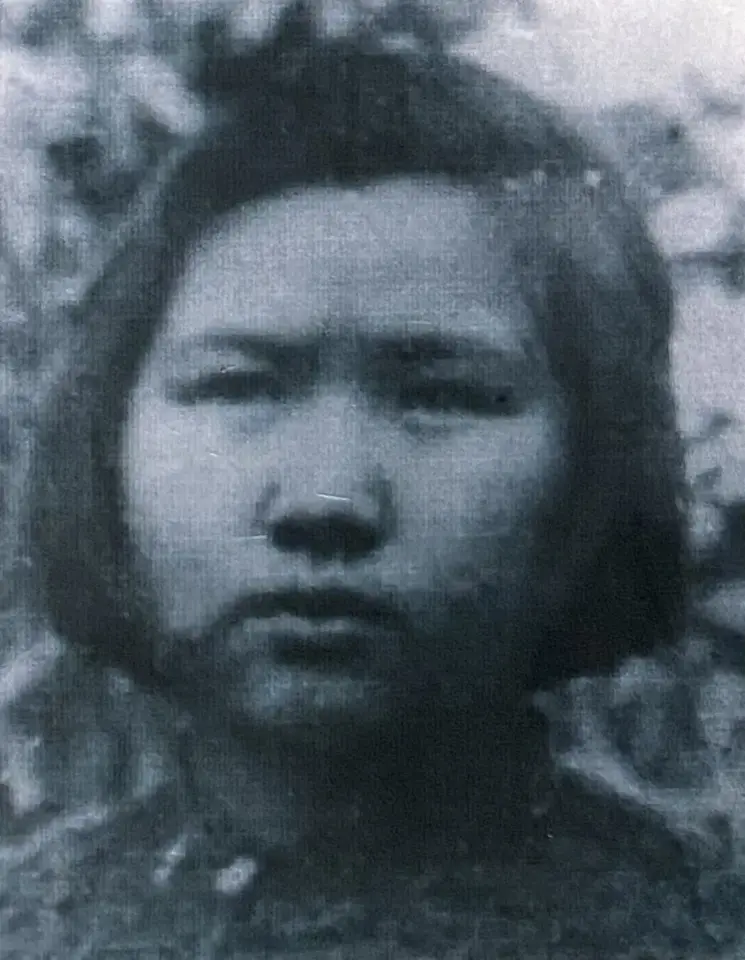
Biography
Aristocratic Lineage and Renown as Yang Sanlang
Yang Zan, originally named Yang Hui with the courtesy name Hengsheng, traced his ancestral roots to Huayin in Hongnong (modern Huayin, Shaanxi). He was born in 550, the sixteenth year of the Datong reign in the Western Wei dynasty. His father was Yang Zhong, a founding military hero of both the Western Wei and Northern Zhou dynasties who ranked among the Twelve Grand Generals and Eight Pillar Generals, was ennobled as the Duke of Sui, and was posthumously revered as Emperor Wuyuan of the Sui Dynasty. His biological mother was Yang Zhong's primary consort, Empress Yuanming Lü Kutao. Among his siblings, Yang Zan ranked third, being the younger full brother of Emperor Wen of Sui (Yang Jian) and Prince Jing of Cai (Yang Zheng).
Reared within the innermost circles of the Guanzhong military aristocracy, Yang Zan displayed qualities markedly distinct from his elder brother Yang Jian. Whereas Yang Jian possessed an austere, imposing, and stern countenance, Yang Zan was celebrated for his tall, graceful stature, extraordinarily handsome features, and calm, dignified manners. As he matured, Yang Zan devoted himself passionately to classical texts and historical treatises, possessed an unassuming and gentle disposition, and took great pleasure in befriending literary scholars and prominent elites throughout the region. Amidst the martial ethos of the Northern Zhou nobility, Yang Zan's erudition and physical beauty captivated both court grandees and the populace alike, earning him the widespread, affectionate moniker of "Yang Sanlang" (The Third Young Master Yang).
Imperial Marriage and Guarding the Imperial Capital
During the Baoding era of the Northern Zhou, Yang Zan was created the Commandery Duke of Jingling in recognition of his father's illustrious military achievements and dynastic privilege. Considering the foundational importance of the Yang family in the Northern Zhou military establishment and Yang Zan's own exceptional personal charm, Emperor Wu of Northern Zhou (Yuwen Yong) personally matched his younger maternal sister, Princess Shunyang, with Yang Zan in marriage.
Following this royal union, Yang Zan rose rapidly through the court hierarchy as a favored imperial in-law. He embarked on his official career as a Senior Gentleman in Right Attendants, served as Grand Master of Imperial Attendants, and by the fourth year of Baoding (564) was promoted to Imperial Scribe (Nayan), an office controlling imperial communications and palace edicts, accompanied by the rank of Grand General of Equivalent Quality (Yitong Sansi). Emperor Wu, inherently suspicious of imperial relatives and veteran commanders, exhibited an extraordinary degree of affectionate trust toward his cultured, prudent brother-in-law.
In 576 (the fifth year of Jiande), Emperor Wu personally commanded the entire armed forces of the Northern Zhou in a decisive campaign to conquer Northern Qi. All royal imperial princes, including Prince Zhao (Yuwen Zhao) and Prince Qiao (Yuwen Jian), were ordered to join the imperial retinue on the battlefront. Yet for the vital task of safeguarding the capital Chang'an, Emperor Wu firmly entrusted Yang Zan with the sole regency. Grasping Yang Zan's hands before departure, Emperor Wu declared: "The affairs of the Six Ministries, both within and outside the imperial court, are exceedingly heavy and complex; I now entrust them entirely to you, my worthy brother! I shall focus on subduing the eastern realm; with you guarding Chang'an, I harbor no worries looking west." This extraordinary assignment demonstrated the sovereign's profound reliance upon Yang Zan.
Regency Tensions and Fraternal Discord
In 578 (the first year of Xuanzheng), Emperor Wu passed away and his son Emperor Xuan (Yuwen Yun) ascended the throne. Yang Zan was elevated to Grand Master of the Ministry of Personnel and awarded the superior rank of Grand Pillar of State. In May 580 (the second year of Daxiang), the erratic and tyrannical Emperor Xuan died suddenly, leaving the young child Emperor Jing on the throne.
At this critical juncture, Yang Jian, bearing the prestigious standing of maternal grandfather to the crown prince and Duke of Sui, entered the forbidden palace through forged imperial decrees engineered by Liu Fang and Zheng Yi, thereby usurping supreme civil and military control over Northern Zhou. Aware that dynastic transition was a perilous gamble that could trigger clan eradication, Yang Jian dispatched his eldest son Yang Yong to summon Yang Zan to the palace to deliberate on political succession.
However, Yang Zan had long harbored personal friction and philosophical disagreement with his elder brother. Deeply indebted to Emperor Wu's patronage and bound by marriage to Princess Shunyang, Yang Zan felt profound allegiance toward the Yuwen imperial house. Crucially, Yang Zan was an inherently cautious aristocrat. Observing prominent generals like Yuchi Jiong in Xiangzhou and Sima Xiaonan in Yunzhou rallying rebellions against Yang Jian, he dreaded that should Yang Jian's usurpation stumble, the entire Yang clan would be utterly wiped out.
Upon receiving Yang Yong's message, Yang Zan adamantly refused to enter the palace, sharply warning the envoy: "As the Duke of Sui, my elder brother cannot even guarantee the safety of his own household! Why should he embark on such a perilous treasonous venture, courting the doom of our entire lineage?"
After consolidating his authority, Yang Jian, seeking to unify his family and quell suspicions, magnanimously elevated Yang Zan to Grand General. Soon after, Yang Jian appointed him Grand Master of Rites (Da Zongbo) to oversee state rituals and legal codification, conferring upon him the rank of Grand Pillar of State and the title Duke of Shao. Nevertheless, observing Yang Jian sidelining the young emperor and ruthlessly purging Yuwen princes, Yang Zan repeatedly coordinated with clandestine operatives, plotting to assassinate Yang Jian to avert dynastic warfare. Yang Jian uncovered these conspiracies but, moved by biological brotherhood, chose repeatedly to overlook and pardon his younger brother's insubordination.
Ennoblement as Prince of Teng and Administrative Departure
In February 581, Yang Jian accepted the abdication of Emperor Jing, founded the Sui Dynasty, established Daxing as the capital, and became Emperor Wen of Sui.
Following his accession, Emperor Wen lavishly enfeoffed his imperial kindred. On the day of Xinwei in the second month of Kaihuang, Emperor Wen officially created Yang Zan the Prince of Teng and invested him with the pivotal governance of Yongzhou (the metropolitan governor of Daxing and Chang'an). In the early years of his reign, Emperor Wen preserved warm fraternal sentiments toward his handsome brother. Whenever hosting intimate family banquets in the palace, Emperor Wen insisted that Yang Zan share the imperial couch, conversing informally without sovereign solemnity and affectionately calling him by his childhood pet name, "Ah San".
However, Yang Zan had little appetite for bureaucratic routine or autocratic governance. While serving as Governor of Yongzhou, Yang Zan favored literati detachment and disliked meticulous administrative discipline. After subordinate officials committed administrative infractions that violated state statutes, official censors impeached him. Emperor Wen seized the opportunity to relieve Yang Zan of his provincial governorship and instructed him to retire to his princely manor as an imperial prince, thus removing him entirely from the inner core of state policymaking.
The Sorcery Controversy and Tragic Demise at Liyuan
The ultimate catalyst that precipitated Yang Zan's ruin stemmed from irreconcilable domestic tensions between his consort Princess Shunyang and the Sui imperial court.
Yang Zan's wife was the biological younger sister of Emperor Wu of Northern Zhou. Watching Yang Jian extinguish Northern Zhou and systematically execute dozens of Yuwen princes, Princess Shunyang harbored boundless grief and vengeful fury against the new regime. Even prior to Yang Jian's ascension, Princess Shunyang had repeatedly clashed with the stern and domineering Empress Dugu over etiquette and status. Once Northern Zhou collapsed and she was reduced to the rank of Princess Consort of Teng, her resentment grew unmanageable.
In her desperation, the consort covertly erected a sorcery altar within the innermost chambers of the princely mansion, carving wooden effigies and performing incantations to curse Empress Dugu and Emperor Wen. When the plot was exposed, the court was convulsed with outrage. While infuriated, Emperor Wen refrained from executing her out of regard for Yang Zan; instead, he issued a stern decree commanding Yang Zan to divorce her immediately and cast her out of his household.
Confronted with the imperial mandate, Yang Zan, who was deeply attached to his wife throughout decades of marriage, demonstrated remarkable marital loyalty. Refusing to abandon his wife, Yang Zan removed his princely headdress, knelt barefoot at the steps of Daxing Palace, and wept uncontrollably before Emperor Wen, begging for her survival and pledging his own life as security.
Faced with his brother's desperate pleas, Emperor Wen felt deeply humiliated and angered before his assembled courtiers. Reluctantly, the emperor rescinded the divorce edict, but issued a scathing decree: Princess Shunyang was stripped entirely of imperial clan registry and degraded to common status.
Following this confrontation, Emperor Wen's suspicions and estrangement deepened inexorably. Fraternal affection dissolved, the warm days of sharing couches and informal intimacy vanished, and imperial favor dwindled into cold neglect.
In 591 (the eleventh year of Kaihuang), Emperor Wen visited the scenic imperial park of Liyuan (Chestnut Garden) on the outskirts of Jinling for an imperial hunt and banquet, summoning the Prince of Teng to accompany his retinue. During the festivities, Yang Zan, merely forty-two years of age and previously in robust health, suddenly collapsed and died following the banquet. Official histories coldly recorded his demise as "died abruptly" (baohong).
The sudden death of Yang Zan sent shockwaves through the empire. Broad consensus among contemporary officials and scholars held that Emperor Wen, harboring lasting suspicion toward Yang Zan's enduring popularity and latent dissent, had secretly poisoned him with tainted wine during the feast at Liyuan.
Following his death, Emperor Wen arranged official funerary rites and bestowed the posthumous epithet "Mu", after which he was recorded in dynastic annals as Prince Mu of Teng. His eldest son Yang Lun succeeded to the princely title. The once-celebrated "Yang Sanlang" of Chang'an had ultimately become a tragic casualty of imperial despotism and filial intrigue.
Major Achievements
Renowned Aristocrat and Acclaim as Yang Sanlang
Born into the founding aristocratic lineage of the Hongnong Yang clan, he gained widespread acclaim in youth for handsome deportment, vast erudition, and generous patronage of literati.
Celebrated for his cultural elegance throughout the Guanzhong region, he achieved empire-wide renown during Northern Zhou as "Yang Sanlang".
Imperial Marriage and Regency over Capital Ministries
Ennobled as Commandery Duke of Jingling, he wedded Emperor Wu's sister Princess Shunyang and served as Imperial Scribe (Nayan) and Grand Master of Imperial Attendants.
During the grand 576 campaign against Northern Qi, Emperor Wu uniquely tasked Yang Zan with superintending the capital Chang'an and all Six Ministries, leaving the sovereign free from western anxieties.
Moral Dissuasion against Usurpation and Clan Protection
When Emperor Xuan died and Yang Jian seized regency, Yang Zan foresaw disaster, refused summons, and boldly warned that excessive ambition would court total clan ruin.
While serving as Grand General, Grand Master of Rites, and Duke of Shao, he covertly resisted Yang Jian's power grab, yet was repeatedly pardoned due to fraternal ties.
Princely Enfeoffment and Retirement from Administration
Upon the founding of Sui, he was ennobled as Prince of Teng and Governor of Yongzhou, frequently sharing couches and informal intimacy with Emperor Wen.
Subsequently dismissed from administrative office due to legal violations, he retired to his princely mansion, completely withdrawing from court decision-making.
Marital Devotion, Defiance, and Tragic Fall at Liyuan
When his wife engaged in sorcery against Empress Dugu, Emperor Wen ordered a divorce; Yang Zan steadfastly refused and wept to save her, alienating imperial favor.
In 591, he died abruptly at Liyuan at the age of forty-two, widely believed to have been poisoned by Emperor Wen, and received the posthumous title Mu.