Itinerant Rejections
Born in Gangcheng, Yan; traveled through Zhao, Han, and Wei without securing office; physiognomist Tang Ju predicted he had forty-three years of ministerial life remaining.
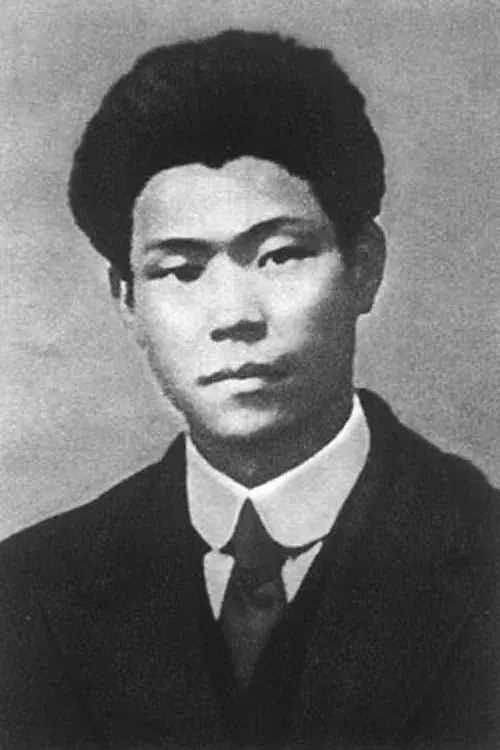
蔡泽
Cai Ze (dates of birth and death unrecorded), a native of Gangcheng in the state of Yan (modern Huai'an, Hebei Province), was an eminent political strategist, rhetorician, and Chancellor of Qin during the late Warring States period, granted the noble title of Lord Gangcheng (Gangcheng Jun). In his early career, he traveled extensively through the states of Zhao, Han, and Wei seeking political office. Due to his unusual…
Cai Ze (dates of birth and death unrecorded), a native of Gangcheng in the state of Yan (modern Huai'an, Hebei Province), was an eminent political strategist, rhetorician, and Chancellor of Qin during the late Warring States period, granted the noble title of Lord Gangcheng (Gangcheng Jun). In his early career, he traveled extensively through the states of Zhao, Han, and Wei seeking political office. Due to his unusual appearance and unpropitious circumstances, he was repeatedly dismissed by contemporary rulers. Seeking counsel from the celebrated physiognomist Tang Ju, Cai Ze was told that he possessed forty-three years of life remaining; Cai Ze laughed, declaring that forty-three years of enjoying supreme ministerial wealth and political authority would be entirely sufficient. In 255 BCE, Cai Ze learned that the Chancellor of Qin, Fan Ju (Marquis Ying), was embroiled in a severe political crisis following the surrender of General Zheng Anping to Zhao and the execution of Wang Ji for treason. Recognizing a strategic opening, Cai Ze entered Xianyang and used provocative proclamations to secure an audience with Fan Ju. In their ensuing dialogue, Cai Ze blended Daoist philosophies of natural balance with historical analysis, illustrating how ancient heroes such as Shang Yang, Wu Qi, Wen Zhong, and Bai Qi had attained supreme glory only to suffer violent deaths by failing to retire in time. Convincing Fan Ju to emulate Fan Li by stepping down at the zenith of his success to preserve life and reputation, Cai Ze persuaded the Chancellor to yield office voluntarily. Upon Fan Ju's enthusiastic recommendation, King Zhaoxiang of Qin appointed Cai Ze as Guest Minister and soon elevated him to Chancellor. During his administration, Cai Ze directed the military and political campaign that extinguished the remnants of the Eastern Zhou royal house, transferring the symbolic Nine Cauldrons to Xianyang. Sensing rising court jealousy after several months in power, Cai Ze put his own philosophy of timely retreat into practice, resigning the chancellorship to avoid calamity. Enfeoffed as Lord Gangcheng, he served four successive Qin rulers—King Zhaoxiang, King Xiaowen, King Zhuangxiang, and King Zheng (Qin Shi Huang). During his later years, he served as Qin's ambassador to Yan, successfully securing Crown Prince Dan as a hostage to form a northern alliance against Zhao. He stands as a rare example of a Warring States strategist who attained paramount rank while securing lifelong prosperity and survival.
Born in Gangcheng, Yan; traveled through Zhao, Han, and Wei without securing office; physiognomist Tang Ju predicted he had forty-three years of ministerial life remaining.
Entered Qin following the political scandals involving Fan Ju's protégés, proclaiming publicly that he would replace Fan Ju within three days.
Met Fan Ju in the prime minister's residence; cited the violent deaths of four legendary ministers to persuade Fan Ju to step down gracefully.
Received by King Zhaoxiang and appointed Chancellor of Qin; engineered the annexation of the Eastern Zhou royal territory and was created Lord Gangcheng.
Recognizing rising jealousy and slander at court, resigned the chancellorship on grounds of illness after several months, preserving noble rank and favor.
Dispatched by King Zheng to his homeland of Yan; spent three years negotiating an anti-Zhao alliance, securing Crown Prince Dan as a political hostage in Qin.
Lived peacefully in Qin across four reigns, enjoying honors and wealth as an elder statesman before passing away of natural causes.
Cai Ze was born in Gangcheng in the northeastern border state of Yan. Gifted with an expansive intellect, he read extensively across the philosophical traditions of antiquity, developing a mastery of geopolitical analysis, diplomatic maneuvering, and the rhetorical arts of the School of Diplomacy.
However, during the late Warring States period, aristocratic lineage and physical presence often dictated political appointments. Cai Ze possessed a remarkably grotesque appearance: a flattened, upturned nose, a protruding forehead, a hunched spine, and sagging shoulders, presenting an impoverished and uninspiring figure. Traveling through the central plains states of Zhao, Han, and Wei to present statecraft memorials to reigning monarchs, he was repeatedly ridiculed and turned away by courtiers who judged him purely on his outward demeanor. Exhausting his funds, Cai Ze was reduced to severe hardship.
While traveling through Daliang, the capital of Wei, Cai Ze sought out the renowned physiognomist Tang Ju to enquire into his destiny. Tang Ju observed Cai Ze closely and stated: "Sir, your features are eccentric: a low nose, wide forehead, and hunched back. According to my calculation, you have forty-three years of life remaining."
Cai Ze burst into laughter and replied: "Wealth, honor, and renown are what men seek. If I can feast upon rich meats, ride swift steeds, bind gold around my waist, and bear the prime minister's seal among the feudal lords, holding authority over the realm for forty-three years, it is more than enough! Why should I desire a longer, obscure life?"
Moved by Cai Ze's grand aspiration, Tang Ju remarked: "Do not despair, sir. Head westward to the mighty kingdom of Qin. Forty-three years hence, you shall serve as Chancellor directing the affairs of that realm." Inspired by this prophecy, Cai Ze resolved to seek his fortune in Xianyang.
During this epoch, the central court of Qin was rocked by serious internal turmoil. Under King Zhaoxiang, Chancellor Fan Ju (Marquis Ying) had dominated Qin foreign and domestic policy through his "befriend the distant, attack the near" strategy, successfully assisting the king in expelling the Queen Dowager's relatives, including the Marquis of Rang, Wei Ran. However, following the Battle of Changping, Fan Ju had grown envious of General Bai Qi's mounting military laurels, persuading King Zhaoxiang to halt the offensive and later engineering Bai Qi's forced suicide, arousing latent hostility among Qin's military officers.
Even more damaging to Fan Ju's position were the disasters involving his closest protégés. In his youth, Fan Ju had been saved from death by Zheng Anping and Wang Ji. After attaining supreme power, Fan Ju had rewarded them lavishly, appointing Zheng Anping as a senior general and Wang Ji as Administrator of Hedong. Subsequently, Zheng Anping surrendered twenty thousand Qin soldiers to Zhao during the siege of Handan, while Wang Ji was executed in Hedong for treasonous communication with rival states.
Under the unyielding legal statutes of Qin, any official who recommended an officer who subsequently committed treason was subject to the identical capital penalty. Although King Zhaoxiang issued a special decree shielding Fan Ju and forbidding any discussion of the matter, Fan Ju was acutely conscious of the resentment smoldering among native Qin nobles and lived in constant terror of sudden downfall.
Observing these developments from afar, Cai Ze perceived that Fan Ju had reached the precipice of ruin. Recognizing that King Zhaoxiang sought to consummate imperial unification but required fresh strategic intellect, Cai Ze realized that an extraordinary opportunity had opened for him to supplant Fan Ju.
In 255 BCE, Cai Ze crossed Hangu Pass and arrived in Xianyang. Instead of seeking quiet patronages, he adopted a calculated strategy of public provocation, openly proclaiming in the streets: "Cai Ze of Yan is a scholar of supreme wisdom! Upon entering Qin, I will cause the King of Qin to appoint me Chancellor within three days, taking the place of Marquis Ying!"
When informed of this arrogant boast, Fan Ju was incensed, remarking to his retinue: "The wisdom of the Three Kings and Five Thearchs, and the depths of all philosophical masters, are completely within my grasp! What extraordinary skill can this vagabond boast to replace me?" He dispatched officers to bring Cai Ze to the chancellery for confrontation.
Entering the great hall, Cai Ze looked upon Fan Ju, offering only a polite bow without prostrating himself, radiating quiet confidence. Suppressing his irritation, Fan Ju demanded: "You have proclaimed in the markets that you will supplant me within three days. What magical scheme enables you to speak with such presumption?"
Cai Ze remained calm, taking his seat before launching into one of the most celebrated philosophical treatises on ministerial power recorded in Chinese history.
He began by establishing cosmic principles: "Spring produces and summer matures; autumn harvests and winter stores. This is the great rhythm of the four seasons. When the sun reaches its zenith, it begins to decline; when the moon waxes full, it begins to wane; when things reach their extreme, they reverse. Is this not the immutable law of Heaven and Earth? In serving as a minister, is not the ultimate ideal to achieve immense merit, preserve one's physical body, enjoy supreme wealth, and transmit noble estates to future generations?" Fan Ju replied: "Indeed."
Cai Ze then marshaled tragic historical precedents: "In ancient times, Shang Yang reformed Qin laws for Duke Xiao, opening fields and clarifying rewards, rendering Qin invincible throughout the realm. Yet upon Duke Xiao's death, Shang Yang was torn apart by chariots. Wu Qi reformed Chu for King Dao, subduing rival states and expanding territory, yet when King Dao died, Wu Qi was riddled with arrows and executed. Wen Zhong assisted King Goujian of Yue in destroying Wu, washing away the disgrace of Kuaiji, yet Goujian bestowed a sword ordering his suicide. Lord Wu'an, Bai Qi, captured Yan and Ying, routed Zhao at Changping, and took over seventy cities, yet was forced to slit his throat at Duiyou!"
Fixing his gaze upon Fan Ju, Cai Ze pressed forward: "These four men possessed incomparable merit, yet all died violent deaths! Does Your Excellency believe that your achievements on behalf of Qin surpass those of Shang Yang, Wu Qi, Wen Zhong, and Bai Qi?" Fan Ju lowered his head and conceded: "I do not."
Cai Ze drove home his strategic counsel: "Your Excellency has repaid your private benefactors, avenged personal grievances, and expanded Qin's borders by thousands of li. Your career has reached its peak. Yet Zheng Anping surrendered at Handan, and Wang Ji was executed in Hedong; does Your Excellency's heart not tremble with dread day and night? The King shields you out of personal sentiment, but the nobles and ministers harbor bitter resentment!
If Your Excellency does not step down now, return your chancellor's seal, and emulate Tao Zhu Gong (Fan Li) in retiring to wander the lakes and rivers, the violent fate of Shang Yang, Wu Qi, and Bai Qi will inevitably fall upon your head! Knowing when to advance and when to retreat is the mark of supreme wisdom. I pray Your Excellency reflect upon this deeply!"
This speech pierced through Fan Ju's anxieties. Recognizing the terrifying accuracy of Cai Ze's analysis, Fan Ju arose from his seat, bowed low before Cai Ze, and declared: "Your words are gold and jade! How could I dare disobey your counsel!"
Fan Ju welcomed Cai Ze as an honored guest for several days. Shortly thereafter, Fan Ju submitted his resignation to King Zhaoxiang citing advanced age and infirmity, advising the king: "The guest scholar Cai Ze of Yan is an extraordinary talent of the realm. His understanding of dynastic statecraft far surpasses my own. If Qin employs him as Chancellor, the empire can be unified without delay!"
Stunned by Fan Ju's recommendation and having heard of Cai Ze's triumph in the chancellery debate, King Zhaoxiang summoned Cai Ze to the palace for an imperial audience.
In his court presentation, Cai Ze analyzed the exhaustion and internal dissension among the eastern states, proposing that Qin should eradicate the royal house of Zhou to eliminate its symbolic authority, before swallowing the central plains. King Zhaoxiang was delighted, marveling that they had met so late in his reign, and immediately appointed Cai Ze as Guest Minister to plan the annexations.
In late 255 BCE, Fan Ju formally surrendered his seal of office. King Zhaoxiang appointed Cai Ze as Chancellor of Qin (Xiangbang), granting him supreme civil authority over the bureaucracy.
As Chancellor, Cai Ze directed the mobilization of the state's military apparatus. That winter, when the ruler of Eastern Zhou allied with rival princes to oppose Qin, Cai Ze advised King Zhaoxiang to deploy an army that quickly overrun the Zhou royal demesne. King Nan of Zhou was deposed, and the Nine Cauldrons and ancestral royal treasures of Zhou were transported to Xianyang, terminating more than eight centuries of Zhou dynastic rule. For his role in this milestone, King Zhaoxiang enfeoffed Cai Ze as Lord Gangcheng (Gangcheng Jun).
However, after serving as Chancellor for several months, Cai Ze observed signs of intrigue within the Qin court. As an outsider from Yan who had risen swiftly to the highest executive post, he provoked bitter hostility among native Qin commanders and entrenched aristocrats. Slanderous rumors alleging foreign disloyalty began circulating before the king.
True to his philosophy of "knowing when to retreat," Cai Ze refused to cling to power. Rather than engaging in court infighting, he immediately presented his chancellor's seal to King Zhaoxiang, requesting permission to retire on grounds of severe illness.
Impressed by his restraint and adherence to principle, King Zhaoxiang accepted his resignation from executive office while permitting him to retain the titles, revenues, and prestige of Lord Gangcheng, allowing him to reside in Xianyang as an elder counselor.
Relieved of executive burdens, Cai Ze lived in honor and security. His political acumen made him an indispensable advisor to four generations of Qin monarchs: King Zhaoxiang, King Xiaowen, King Zhuangxiang, and King Zheng (Qin Shi Huang).
In 244 BCE, seeking to neutralize the military threat of Zhao in the north, King Zheng dispatched the veteran Lord Gangcheng to his native state of Yan to forge a coalition against Zhao.
Cai Ze remained in Yan for three years, utilizing his connections and diplomatic eloquence to convince King Xi of Yan. In 241 BCE, Yan dispatched Crown Prince Dan to Xianyang as a diplomatic hostage, cementing a mutual alliance against Zhao that shielded Qin's northern flank during the subsequent campaigns of territorial unification.
Cai Ze passed away peacefully in Qin at an advanced age. In a brutal era when triumphant statesmen frequently met bloody ends, Cai Ze achieved the supreme political ideal: gaining immense renown, directing imperial affairs, preserving his life, and departing with his honors intact.
Cai Ze demonstrated extraordinary strategic perception by identifying the precise moment of Fan Ju's political vulnerability. Arriving in Xianyang without established connections, he orchestrated an audience through bold rhetoric.
In his discourse, he synthesized Daoist concepts of cyclical decline with historical examples, convincing one of the era's most ruthless chancellors to relinquish power peacefully. This debate stands as a masterpiece of psychological persuasion and political philosophy.
During his tenure as Chancellor of Qin, Cai Ze oversaw the final destruction of the Zhou dynasty. By extinguishing the Eastern Zhou ruler and seizing the Nine Cauldrons, he dismantled the ceremonial legitimacy of the ancient feudal order.
This achievement established Qin as the sole legitimate claimant to universal dominion over China, laying the symbolic foundation for the imperial title later adopted by Qin Shi Huang.
Cai Ze's most remarkable personal accomplishment was his ability to practice what he preached. Recognizing that court slander threatened his standing, he willingly relinquished the chancellorship after only a few months.
By retreating gracefully to the rank of Lord Gangcheng, he avoided the lethal intrigues that destroyed contemporaries like Shang Yang and Bai Qi, maintaining high honors across four reigns.
In his twilight years, Cai Ze undertook a crucial diplomatic mission to the state of Yan on behalf of King Zheng. Spending three years at the court of Ji, he negotiated the dispatch of Crown Prince Dan to Qin as a hostage.
This diplomatic triumph secured Qin's northern perimeter, preventing Yan from entering an anti-Qin coalition and enabling Qin to concentrate its military power upon the central plains.
FIGURES ASSOCIATED WITH THIS DYNASTY